
‘Ungaludan Stalin’ camps to be held from July 15 across Chennai wards

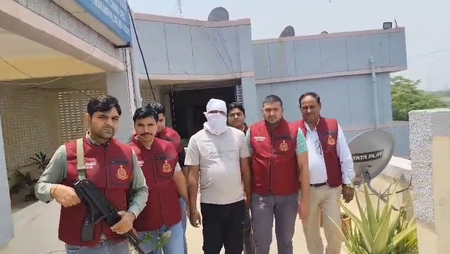
New Delhi, May 30 (IANS) The Delhi Police Crime Branch has busted an interstate syndicate involved in the theft and resale of high-end vehicles, a statement said on Friday.
The gang used a sophisticated modus operandi to sell stolen cars through online platforms by forging documents, opening bank accounts with fake identities, and tampering with engine and chassis numbers.
In a series of coordinated operations, the police arrested a key member of the gang and recovered eight luxury vehicles.
According to Delhi Police, the breakthrough came with the arrest of Rakesh Patel alias Pappu (38), a core operative of the syndicate, near Sahibabad Railway Station in Ghaziabad on April 21, 2025.
Acting on a tip-off, police apprehended him while he was attempting to sell a stolen Maruti Wagon-R via an online platform.
Patel, a resident of Sahibabad, Ghaziabad (UP), and originally from Mohiuddin Nagar, Samastipur (Bihar), played a central role in managing theft operations and delivering stolen vehicles across states.
His associates arranged vehicles, counterfeit documents, and fake number plates.
The gang’s method was notably elaborate. After stealing a car, they searched online car-selling portals for vehicles of the same make, model, and colour.
Using open-source information, they identified details of genuine owners and forged documents in the owner’s name — featuring the photograph of one of the accused. They also opened bank accounts using these fake identities.
To avoid detection, the syndicate would tamper with the stolen car’s engine and chassis numbers to match those of the legitimate vehicle. Fake Registration Certificates (RCs) were then prepared, making the stolen car appear genuine. Once the vehicle was thus ‘cloned,’ it was listed for sale on online platforms.
The syndicate targeted high-demand vehicles, often choosing cars parked in low-surveillance or roadside areas. The police noted the gang’s use of advanced technological tools to support their operations.
A team led by Inspector Arun Sindhu of the Crime Branch spearheaded the investigation, which led to the arrest and recovery of the stolen vehicles.
–IANS
skp/

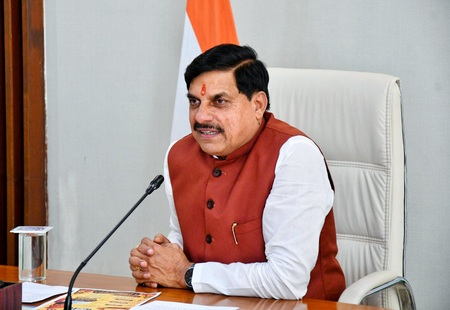
Bhopal, Jun 23 (IANS) More than nine lakh suggestions have been received and documented regarding the Uniform Civil Code (UCC), so far. Around 90% of these suggestions have expressed strong support for the implementation of UCC, Madhya Pradesh Chief Minister Mohan Yadav told his cabinet colleagues on Tuesday.
State Micro, Small and Medium Enterprises Minister Chaitanya Kumar Kashyap sharing the major outcomes of the cabinet meeting with media, said that Chief Minister Mohan Yadav informed them, “Support has come from many women and men of the minority community as well. Many Muslim women have also extended their backing to the Uniform Civil Code,” Minister Kashyap said.
He added that the remaining issues are being compiled. After incorporating all feasible suggestions by June 30, the draft of the Uniform Civil Code will be finalised by July 5. The Minister described the UCC outreach as a massive and significant public campaign.
“Suggestions were sought from every district and every citizen. The state government sent over 3 crore SMSs to people across various sections of society. Through this extensive exercise, more than nine lakh suggestions have been received,” he informed.
He further revealed that a high-power committee on UCC, which is headed by a Supreme Court judge Ranjana Desa, is meticulously examining all suggestions.
“The committee is considering every input. The final draft of the Bill will be prepared after thorough review and will be submitted to the government by July 5. If possible, the government will introduce the Civil Code Bill in the upcoming Assembly session,” Kashyap added.
The Minister emphasised that this widespread consultation reflects the government’s commitment to inclusive and participatory governance. He noted that the response from citizens, particularly the significant support from minority communities, demonstrates broad acceptance of the Uniform Civil Code across Madhya Pradesh.
The minister assured that the government remains dedicated to incorporating public feedback and moving forward with the legislation in a time-bound manner.
–IANS
sktr/mr
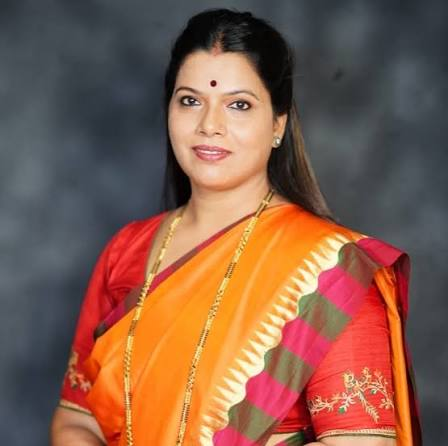
Mumbai, Feb 7 (IANS) The BJP’s nomination of Ritu Tawde for the mayoral post of the Brihanmumbai Municipal Corporation is not just a routine civic decision — it is a carefully calibrated political move aimed at reshaping Mumbai’s power structure.
Coming after decades of Shiv Sena dominance over the BMC, Tawde’s candidature signals the BJP’s intent to assert itself as the principal force in the city’s civic and cultural politics.
Her profile — Marathi, a two-time corporator, and a woman leader — fits neatly into the party’s broader electoral strategy.
At the same time, Eknath Shinde-led Shiv Sena named Sanjay Ghadi as its candidate for BMC’s Deputy Mayor.
The mayoral and deputy mayoral elections will be held on February 11, 2026, with voting by 227 elected corporators scheduled at 11.30 a.m.
Tawde, a two-time corporator from Ward 132 (Ghatkopar East), is a prominent Marathi face of the BJP and has earlier served as Chairperson of the BMC Education Committee.
If elected, she will become Mumbai’s first BJP Mayor in over four decades — since Prabhakar Pai in 1982 — and the first non-Shiv Sena Mayor in 25 years.
The mayor’s post was reserved for a Woman (General category) through a lottery system. By nominating Tawde, the BJP has sought to project a “Marathi – Konkani – Hindu” leadership face for the city.
For the deputy mayor’s post, the Shiv Sena has nominated Sanjay Ghadi, a senior corporator from Ward 5 (Dahisar).
Ghadi, who was earlier with the Shiv Sena (UBT), joined the Shinde faction following the party split in 2022. As per the alliance arrangement, Ghadi will serve as Deputy Mayor for 15 months, after which the post will be rotated among four Shiv Sena corporators during the five-year term.
The nomination papers were filed at the BMC headquarters on Saturday, following the civic elections held on January 15.
The MahaYuti alliance holds a clear majority in the civic body, with 118 corporators — BJP 89 and Shiv Sena 29. In comparison, the opposition comprises Shiv Sena (UBT) with 65 corporators, Congress 24, and others, including MNS and NCP, 20.
The election will formally bring to an end nearly four years of administrative rule at the BMC, which has been governed by a state-appointed administrator since March 2022.
Earlier, the MahaYuti alliance — comprising the BJP, Eknath Shinde’s Shiv Sena and Ajit Pawar’s NCP — registered a landslide victory in the January 2026 civic elections held across 29 municipal corporations, significantly reshaping Maharashtra’s local political landscape ahead of future state-level contests.
–IANS
sj/skp