
Italy has not lived up to expectations on Ceuta crisis: Spanish Foreign Minister

Madrid, Aug 3 (IANS) Spanish Foreign Minister Jose Manuel Albares on Monday said that Italy has not lived up to expectations while reacting to the Ceuta migration crisis, noting that Italy is the country with the highest number of irregular entries in Europe, local media reported.

“There have been countries and governments that have not lived up to expectations, as well as politicians and parties, even in Spain,” Albares stated to broadcaster RTVE. “The Italian government was one of them. Here in Spain, I hear irresponsible statements from the Popular Party and Vox,” he continued, Italian News Agency Adnkronos reported.

“As for Italy,” Albares recalled, “it is the country with the highest number of irregular entries in Europe, while Spain has the lowest number. Italy would like to resolve the situation in Lampedusa as the one in Ceuta was resolved,” he stressed further.

Convinced of the “specificity” of the border of both autonomous cities, he demanded unity from all political forces around two Spanish cities, Ceuta and Melilla, and unity from all Europeans around two European cities at the current moment.

“It is the only external land border of the European Union (EU) with Africa. We cannot treat that border as we would any other border city in Europe,” argued the head of Spanish diplomacy, insisting that this also be recognised by Brussels, in view of the meeting of Interior Ministers to be held on Tuesday.

“Strengthen these mechanisms and remind all EU states that without solidarity, there is no Europe,” he emphasised.

Albares also emphasised Morocco’s collaborative attitude from the outset.

“The vast majority of those who entered have already returned to Morocco, and we continue to offer our collaboration so that even the last person who entered can return,” the minister declared in an interview with the program ‘La Hora de la 1’, Adnkronos reported.

According to Albares, what happened in the autonomous city between last Thursday and Friday, when at least 50,000 people from Morocco arrived irregularly, by swimming, is an “unprecedented event,” but equally so is “the repatriation” in 48 hours of those thousands of people, with the “full collaboration” of Morocco.

Asked if the African country is a reliable partner, the minister was categorical: “I stick to the facts. And the facts are that, from the very first moment, Morocco offered its collaboration to try to stop that flow of people and, above all, for them to return immediately.”

–IANS

ksk/as
Japan PM visits earthquake-affected region to assess situation

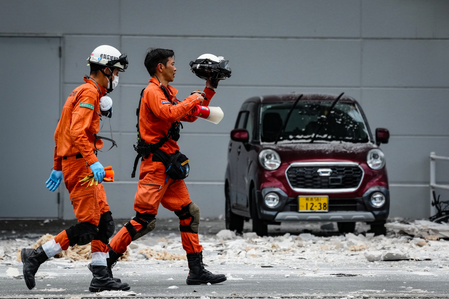
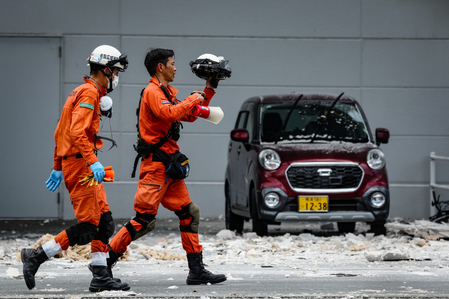
Tokyo, Aug 3 (IANS) Japanese Prime Minister Sanae Takaichi on Monday visited Kumamoto Prefecture in southwestern Japan following a powerful earthquake that struck the region last week, causing widespread destruction, local media reported.

“The government will do everything that it can do,” Takaichi told the residents affected by the 7.1-magnitude earthquake on July 28, Kyodo News Agency reported.

Takaichi visited an evacuation shelter in the town of Hikawa, wearing a disaster response uniform.

She also observed the Aeon shopping mall in the town of Kashima from a helicopter where an explosion occurred after the quake, killing seven people. She also saw the paper plant in Yatsushiro where nine people died.

Aerial footage filmed by public broadcaster NHK helicopter on July 28 showed severe damage to the structure. Sections of the building’s exterior wall had peeled away, exposing steel framework, while part of the roof appeared to have collapsed. A large hole was also visible on the rooftop.

“Takaichi’s government has been eager to promote secondary evacuations to lodging facilities and to strengthen support for people sleeping in cars or remaining in their homes following the quake, government officials said. It is also considering tapping the fiscal 2026 budget’s reserve funds, which total about 1 trillion yen ($6.4 billion),” stated Kyodo News.

She also discussed growing concerns about heatstroke and disaster-related deaths at evacuation sites with local authorities as temperatures reached 40 C in parts of the prefecture.

According to the country’s Meteorological Agency, the earthquake struck Kumamoto Prefecture at a depth of 10 kilometres at 4:27 pm (local time).

A tsunami warning of one metre was also issued for the Ariake Sea and Yatsushiro Sea in southwestern Japan.

The cities of Uki and Hikawa were the hardest hit areas, which registered the maximum level of 7 on Japan’s seismic intensity scale. The Meteorological Agency says that at a seismic intensity of 7, people cannot remain standing or move without crawling and may be thrown through the air.

–IANS

ksk/as

Pakistan needs to learn from 1971 to address its fractured present

New Delhi, Aug 3 (IANS) Amidst Pakistan’s internal challenges, including political polarisation and economic crisis that are weakening institutions, and unrest in its provinces exposing the failures of centralisation, the shadow of 1971 looms large. Ignoring regional voices, analysts warn, could lead to another irreversible loss.

The choice before its rulers today is clear: either repeat history’s mistakes or chart a new course of dialogue, inclusion and reform. The stakes are nothing less than the survival of the nation itself.

Pakistan’s political-military establishment, historically prone to heavy-handed responses, risks repeating mistakes that broke the nation in 1971, when East Pakistan seceded to form Bangladesh. The echoes of that tragedy are unmistakable.

The most visible crisis today stems from political polarisation. Pakistan’s political canvas has become a battlefield where parties weaponise institutions against each other. The judiciary, Parliament and even the Election Commission are accused of bias, eroding trust in governance and propping the military as the ultimate arbiter – a role it has historically embraced but which has often deepened divisions.

Decisions are made through a security lens, whether deploying troops in Balochistan or curbing dissent in urban centres, alienating provinces that see the military as both an occupying force and an economic competitor. Military interference in economic and diplomatic ventures is creating more trouble than solutions, widening the disconnect between urban and rural constituencies, elites and marginalised groups, and provinces and the centre.

Unrest in Balochistan and Khyber Pakhtunkhwa has intensified. Balochistan, Pakistan’s largest province by area but least developed, has long complained of exploitation. Its natural resources enrich federal coffers, yet its people remain impoverished. Complaints are often met with military operations, alienating civilians and fuelling resentment.

In Khyber Pakhtunkhwa, the legacy of militancy and counterinsurgency has left scars. Renaming the North-West Frontier Province has not changed realities for the Pashtun community. Integration into mainstream politics remains incomplete, and the perception of being a buffer zone persists.

Meanwhile, Pakistan-occupied Jammu and Kashmir (PoJK) remains gripped by protests, boycotts and allegations of rigged polls, exposing the hollowness of Islamabad’s so-called democratic exercise. Authorities are using force, leading to several deaths in recent days. The ongoing three-phase elections have been widely dismissed as a fig leaf to mask Pakistan’s illegal occupation and systematic repression.

As cries for development rise, a lack of political will and economic squeeze limit the government’s ability to invest in projects that could ease provincial grievances. This reflects economic disparities that fuelled East Pakistan’s resentment. Balochistan, Khyber Pakhtunkhwa and PoJK’s calls for greater control over resources echo East Pakistan’s earlier pleas for recognition.

At that time, political-military decisions in Islamabad dismissed the electoral mandate of the Awami League, which had won a majority. Instead of compromise, the state chose coercion. Military action against Bengali civilians and political leaders inflamed grievances, leading to civil war and eventual independence.

–IANS

jb/dan

Iran says talks with Oman focused on designating temporary route for safe shipping in Hormuz Strait

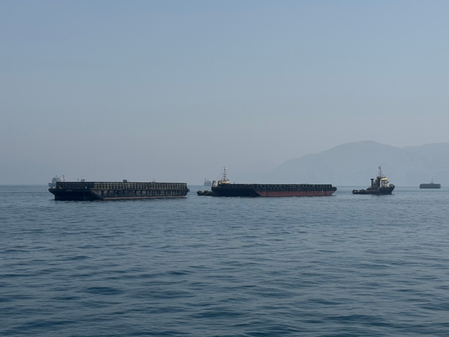
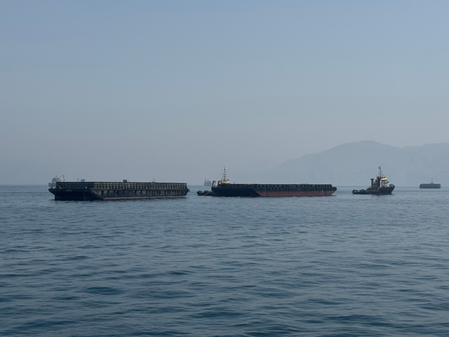
Tehran, Aug 3 (IANS) Iranian Foreign Ministry spokesman Esmaeil Baghaei said Monday that negotiations between Iran and Oman are focused on reaching an agreement on designating a “temporary” route to ensure safe shipping in the Strait of Hormuz.

“The negotiations have been focused on the idea that the southern route, which passes through Oman’s waters, and the northern route, which passes through Iran’s territorial waters, would turn into an intermediate route,” Baghaei said at a weekly press conference in Tehran.

He said the talks are centred on a round-trip corridor, not two or three separate routes, and the intermediate route will be used temporarily until a permanent one is finalised, Xinhua News Agency reported.

The waterway’s closure stems not from differences between Iran and Oman, but from US-Israeli “military aggression” against Iran, Baghaei said, adding the strait’s status will stay unchanged as long as Washington continues its “malicious” actions against the country.

Speaking at a cabinet meeting in Tehran on Sunday, Iranian Foreign Minister Seyed Abbas Araghchi said the negotiations between Iran and Oman are in their final stages, according to the official news agency IRNA.

Baghaei also said at the press conference the country will take every necessary action to hold Ukraine to account for its recent attack on an Iranian vessel.

On July 25, Ukrainian President Volodymyr Zelensky said his country’s forces had hit a Russian warship and vessels used for transporting Iran-linked military cargo in the Caspian Sea.

US President Donald Trump said Sunday that negotiations with Iran will begin Monday afternoon, noting that Saudi Arabia, the United Arab Emirates (UAE) and Qatar had asked the United States to call off planned strikes because “they think there’s a deal.”

“There’s a deal on (the Strait of) Hormuz, and then there will be a deal on the nuclear, or you might call it the denuclearisation of Iran,” Trump told reporters on Air Force One en route to Joint Base Andrews.

Claiming that Iran had also asked the United States to pull back the planned strikes, Trump said that “now what we’re doing is we’re talking to them in the form of a negotiation.”

Saudi Crown Prince and Prime Minister Mohammed bin Salman Al Saud spoke on the phone with Trump on Saturday and “expressed concern and asked for clarity” about the proposed plan of action against Iran, a US official told news outlet Axios.

–IANS

ksk/as

Taiwan’s survival relies on forging defence partnership with Japan: Report

Taipei, Aug 3 (IANS) The possibility of China’s invasion of Taiwan is a scenario openly practised in military exercises launched by Beijing and based in its political doctrine. Taiwan cannot depend only on its distant allies, and its survival relies on having a defence partnership with Japan, a report has detailed.

“For Taiwan, survival depends not only on its own resilience but on the strength of its alliances. Among potential partners, Japan stands out as the most proximate, capable and politically aligned actor. Taiwan must therefore deepen its defence linkages with Japan, not as a symbolic gesture, but as a strategic necessity,” Khedroob Thondup, nephew of Tibetan spiritual leader Dalai Lama, wrote in a report in the European Times.

Taiwan and Japan are bound geographically. The Ryukyu Islands stretch from Kyushu to Taiwan, creating a natural corridor through which any Chinese military operation would pass. Japan’s southern flank would be exposed, and its sea lines would be threatened if Taiwan were to falter.

Similarly, Taiwan will become isolated if Japan falls, implying that their fates and defence are intertwined. A closer defence framework between Japan and Taiwan would bolster deterrence by complicating China’s calculus and increasing the costs of aggression.

Taiwan and Japan should conduct regular joint exercises to improve interoperability between their forces, enhance intelligence sharing on Chinese military activities, create coordinated logistics and contingency planning for a prolonged conflict, and legal frameworks that would facilitate the deployment of Japanese forces backing Taiwan’s defence, the report in the European Times mentioned.

“Taiwan cannot afford to rely solely on distant allies. Its survival depends on forging a defence partnership with Japan that is as practical as it is political. For Japan, defending Taiwan means defending itself. For Taiwan, linking arms with Japan is the clearest path to deterrence. The time for ambiguity has passed. The time to deepen practical defence cooperation is now,” wrote Thondup.

Last month, Taiwan criticised the China Coast Guard (CCG) for patrolling east of the island, terming the action an unlawful expansion of authority in contravention of international law and posing a threat to regional stability. Taiwan’s Mainland Affairs Council (MAC) said that China has no sovereignty, jurisdiction, or law enforcement authority in waters east of Taiwan, Taipei Times reported.

In a statement, the MAC said: “Repeating an illegal act does not make it lawful, nor will such actions gain international recognition.” The MAC’s statement came after China announced the launch of a new coast guard patrol east of Taiwan.

The MAC said that Taiwan’s Coast Guard Administration (CGA) and all government agencies would take necessary measures to protect the nation’s sovereignty and ensure the security of its surrounding waters in response to what it termed China’s increasing destabilising actions.

It further said that Taiwan will continue to work with its democratic partners to uphold freedom of navigation and the security of regional sea lanes while firmly opposing any attempts to change the international order through force or coercion.

–IANS

akl/as

Conducted 48 operations, killed 97 Pakistani military personnel in July: Baloch armed group

Quetta, Aug 3 (IANS) The Balochistan Liberation Front (BLF) has claimed that as many as 97 Pakistani military personnel and five alleged informants were killed while 15 other military personnel were injured in 48 operations carried out by the group in Balochistan last month, local media reported on Monday.

In its monthly operational report, BLF spokesperson Major Gwahram Baloch said the operations carried out by the group targetted the Pakistani military and other state forces, military and economic installations, communication systems and surveillance infrastructure, The Balochistan Post reported.

The attacks were conducted in Kahan, Chagai, Kharan, Kalat, Mastung, Khuzdar, Basima, Mand, Tump, Gomazi, Jhao, Quetta, Zamuran, Surab, Mashkel, Buleda, Karachi, Pasni, Rakhni, Naal, Khudan, Balnegwar and Mashkay. The BLF said the attacks were conducted to paralyse what it termed as the “colonial structure” of the Pakistani state in Balochistan, stop the exploitation of resources and weaken its military control.

Gwahram Baloch described the attack targeting Pakistani military convoy at Macro Stop in Mastung’s Khadkocha on July 22 as the month’s largest and deadliest operation. It claimed that 17 Pakistani military personnel were killed and 10 others were injured in Mastung while the convoy suffered material damage.

The BLF said its fighters created blockades and took control at nine points on key highways in July to disrupt military supply routes and hold military dominance in the area.

According to the statement released by the group, military personnel and material losses were reported after seven Pakistani military convoys were ambushed. The group said that its fighters conducted coordinated attacks on six major military camps and seven checkpoints, The Balochistan Post reported.

The BLF claimed that its fighters destroyed two drones used for aerial reconnaissance, surveillance and three ground surveillance cameras. The group said that 15 Pakistani military vehicles were destroyed and five modern weapons were seized from Pakistani personnel during operations and explosions carried out by the fighters.

According to the statement, the BLF used various guerrilla tactics for the attacks carried out in July, which included 16 attacks conducted using heavy weapons, eight ambushes, five intelligence-based covert operations, four sniper attacks, two grenade launcher attacks, two IED attacks and one hand-grenade attack.

The Baloch armed group’s statement comes amid a rise in attacks targeting law enforcement personnel in Pakistan, especially in the border provinces of Balochistan and Khyber Pakhtunkhwa.

On July 22, a police personnel was killed after unidentified assailants opened fire on him in Sarvekai area of Upper South Waziristan district in Khyber Pakhtunkhwa province.

The officials said the police constable, deployed at Sarvekai police station, was heading to perform his official duty when unidentified assailants opened fire on him near a stream in the Moley Khan Sarai area, Pakistani daily Dawn reported. He succumbed to his injuries at the site of the incident before medical assistance could reach him.

After the incident, police and law enforcement personnel rushed to the site of the incident and collected evidence. Police officials said that a probe was being conducted from multiple angles.

–IANS

akl/as

Pakistan: Death toll in Swat police station suicide attack rises to 17

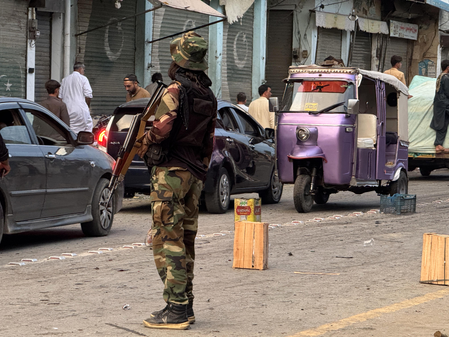
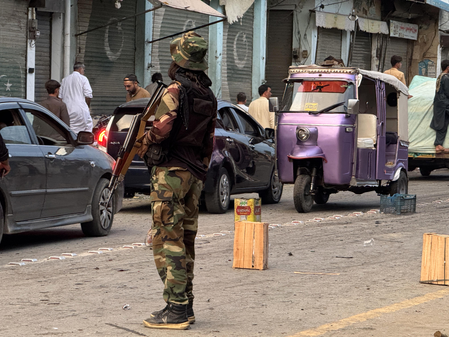
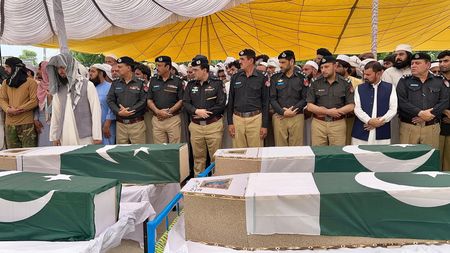
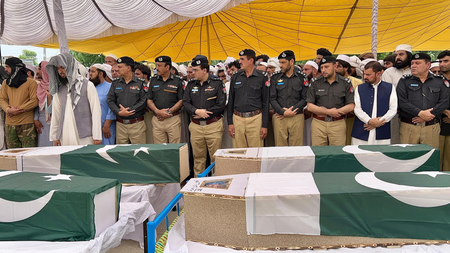
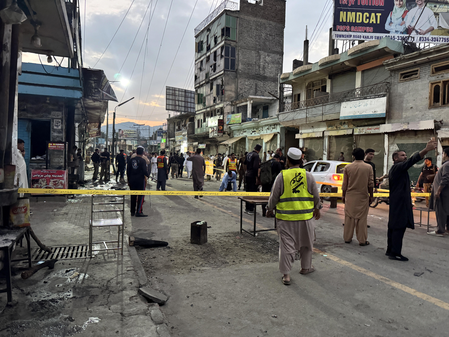
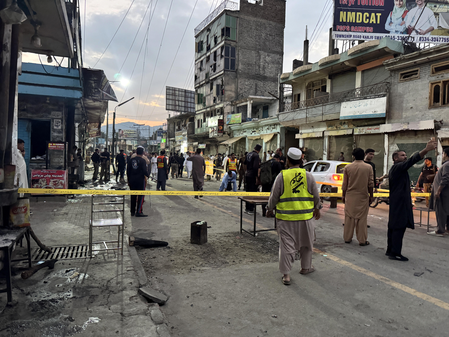
Islamabad, Aug 3 (IANS) The death toll from the suicide bombing at Kabal Police Station in Swat district of Pakistan’s Khyber Pakhtunkhwa province has risen to 17 after two more injured police personnel succumbed to their injuries, local media reported on Monday.

Police authorities said that two police personnel injured in the suicide blast died while undergoing treatment at the hospital. With the latest fatalities, the number of police personnel who have been killed in the attack rose to seven while the total fatalities from the attack climbed to 17. Police said that 13 injured police personnel were undergoing treatment at the hospital, Pakistan-based Samaa TV reported.

The incident took place near the gate of the police station, where hundreds of people had gathered to participate in a public demonstration at Kabal Chowk, leading Pakistani daily Dawn reported.

Swat District Police Officer Umar Khan said that the suicide bomber detonated his explosives after police personnel tried to stop him at the station’s entry gate. According to the DPO, security forces cordoned off the area and launched an investigation into the incident.

The incident occurred amid a rise in attacks targeting law enforcement personnel in Pakistan, especially in the border provinces of Balochistan and Khyber Pakhtunkhwa.

On July 22, a police personnel was killed after unidentified assailants opened fire on him in Sarvekai area of Upper South Waziristan district in Khyber Pakhtunkhwa province, local media reported, citing officials.

The officials said the police constable, deployed at Sarvekai police station, was heading to perform his official duty when unidentified assailants opened fire on him near a stream in the Moley Khan Sarai area, Dawn reported. He succumbed to his injuries at the site of the incident before medical assistance could reach him.

After the incident, police and law enforcement personnel rushed to the site of the incident and collected evidence. A search operation was initiated to find and arrest the perpetrators. Police officials said that a probe was being conducted from multiple angles.

–IANS

akl/as

PoK unrest deepens as protesters defy Pakistan’s midnight crackdown

New Delhi, Aug 3 (IANS) The situation in Pakistan-occupied Kashmir (PoK) worsened overnight as protesters refused to disperse and security forces allegedly opened fire on demonstrators.

Reports from PoK said that the security forces launched a midnight crackdown on protesters, with gunfire reported in Rawalakot.

An Intelligence Bureau official said the reported gunfire came as scores of women and children joined the ongoing protest. Many women and children have remained at the protest site for the past 50 days, with dozens more joining them on Sunday.

Pakistan, which has refused to accept the demands raised by the people of PoK, has instead continued to deploy more security personnel at protest sites across the region.

An official said that to date, more than 40 persons have been killed by the security forces.

“The fear is that a desperate Pakistan may start targeting women and children only to spread fear among the people in the region. They can go to any lengths to put down the protests, and this could result in a human tragedy of an unimaginable level,” the official said.

The protests began with the people of the region asking for better amenities and more development. The protests have intensified after the election process began in PoK.

The allegedly rigged elections have also deepened differences within the ruling coalition, with tensions emerging between the Pakistan Muslim League-Nawaz (PML-N) and the Pakistan Peoples Party (PPP), according to protesters.

The PPP has accused the PML-N of colluding with the Pakistan Army to rig the elections. Protesters and opposition leaders also allege that Field Marshal Asim Munir is seeking tighter control over PoK by ensuring the installation of a leader aligned with the military establishment.

Protesters have now announced plans to march to Muzaffarabad to voice their opposition to what they describe as a heavily manipulated election. They allege that Pakistan’s extensive interference in the administration of PoK has undermined the democratic process and left the region with little or no development.

Another official said that the protesters, who have held out against every atrocity committed by the security forces, are not going to leave anytime soon. There have been protests in PoK earlier, but Pakistan has always managed to put them down. This was done either by force or by making promises which were never kept by the political class of Pakistan.

“This time, the situation is different. The people of the region are determined to make their voices heard, even if it comes at a very high cost,” the official said.

Officials say that the security buildup is massive. They have been instructed to carry out intermittent firing at protest sites at regular intervals.

Pakistan hopes it can scare the protesters and get them back down, the official added.

Experts say that the situation in the region was already tense, and the completion of the electoral process is unlikely to restore normalcy anytime soon.

In fact, matters are only going to get worse, and the new government in PoK will find it very difficult to function. The people are demanding accountability, and they are well aware that the new government has come to power only after a lot of rigging took place, the experts say.

Officials say that PoK would continue to remain on the edge.

The challenge for Pakistan has grown significantly as the protests are no longer confined to Rawalakot. People from across Pakistan-occupied Kashmir (PoK) have joined the agitation, which is now spreading rapidly across the region. Once larger crowds begin to mobilise, Pakistani security forces will face an increasingly difficult task in containing the unrest, the official said.

–IANS

vn/snj/skp

CNG shortage, high fares disrupts life in Bangladesh

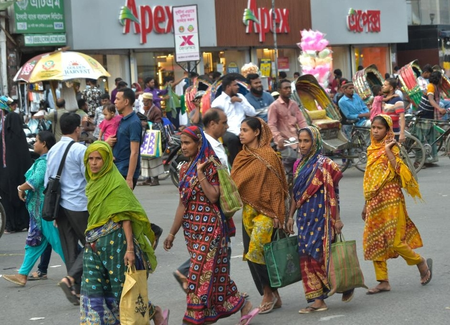
Dhaka, Aug 3 (IANS) People in Dhaka and other areas of Bangladesh have been facing hardships as many compressed natural gas (CNG)-powered auto-rickshaws and public transport vehicles have not been operating due to an ongoing gas shortage in the country, local media reported on Monday.

Transport services have been disrupted because vehicles did not receive an adequate gas supply after waiting in long queues for hours, leaving commuters facing problems.

Many vehicle drivers said that they stood in queues late at night until the following morning or even afternoon to get a gas supply, Bangladesh-based leading daily The Dhaka Tribune reported.

Students, office-goers and patients have been facing problems in reaching their destinations on time due to the unavailability of public transport on the roads.

“On other days, I can easily get a CNG by standing on Banasree E-Block Avenue Road. But today, even after waiting for more than 1 hour, I did not find a single empty vehicle,” The Dhaka Tribune quoted a commuter as saying.

Commuters even said that many drivers were asking for higher fares as there was a shortage of public transport on the road. They said that auto-rickshaws operating on CNG did not take fare as per meters while contract fares had doubled and, in some cases, tripled.

Meanwhile, transport owners said that more than half of their vehicles were not operating due to a shortage of gas supply, leading to financial losses for both owners and drivers.

The ongoing gas crisis in Bangladesh has reportedly been caused by a fire at a floating storage and regasification unit (FSRU) in Cox’s Bazar on July 21, which damaged one of its two boilers and forced the facility to stop operations.

The incident reduced Bangladesh’s gas supply to below 2,150 million cubic feet per day (mmcfd), down from an average of around 2,700 mmcfd that had been maintained over the past year, despite the national daily demand standing at nearly 3,800 mmcfd, Bangladeshi media outlet United News of Bangladesh (UNB) reported.

The gas supply reduction has also impacted household kitchens, with gas pressure reducing to near zero or flickering feebly in many parts of Dhaka.

Residents in areas like Mirpur, Badda, Kalabagan, Kafrul, Mohammadpur, Kazipara, West Tejturi Bazar and Rampura said that gas stoves remained unlit or unusable for days.

Disruption of regular gas supply has forced many low-income families to build temporary clay stoves and cook with firewood. Others who can afford it have started using expensive electric cookers or LPG cylinders, further increasing their household spending.

–IANS

akl/sd/

PoK protesters accuse Pakistani forces of assaulting unarmed civilians; call for UN intervention

Islamabad, Aug 3 (IANS) Amid the ongoing unrest in Pakistan-occupied Kashmir (PoK), the Joint Awami Action Committee (JAAC) has shared a video on social media platform X showing Pakistani forces dragging and assaulting an unarmed civilian on the road in Muzaffarabad city of the occupied territory.

The JAAC urged the United Nations, the Office of the UN High Commissioner for Human Rights (OHCHR), Amnesty International, Human Rights Watch, international media, and diplomatic missions to examine the footage, independently verify the facts, and press for an immediate, independent and impartial investigation into the reported events.

While sharing the footage on X, the JAAC stated, “We call on the United Nations, the Office of the UN High Commissioner for Human Rights (OHCHR), Amnesty International, Human Rights Watch, international media, and diplomatic missions to examine this footage, independently verify the facts, and press for an immediate, independent and impartial investigation into the reported events. We also urge the International Committee of the Red Cross (ICRC) to closely monitor the humanitarian situation and ensure that those who are injured and other civilians affected receive protection and humanitarian assistance in accordance with its mandate.”

Earlier in the day, JAAC put forward the proposals aimed at promoting peace, stability and meaningful dialogue. The group said that the decision was taken despite the grave situation in PoK, where security forces opened fire on unarmed and peaceful civilians.

On Sunday, people in PoK continued to participate in the long march that began on June 9. The JAAC said that the protest held on Sunday demonstrates that the movement is rooted in the demands of the public for fundamental rights, justice, and the implementation of commitments made by the authorities.

“The Long March that began on 9 June continues. Despite weeks of arrests, killings, injuries, and intimidation, the people continue to march with determination. Today’s protest is another reminder that this movement is rooted in the people’s demand for fundamental rights, justice, and the implementation of commitments made by the authorities. This movement belongs to the people. As long as those legitimate demands remain unmet, the voices of the people will continue to be heard,” the JAAC posted on X.

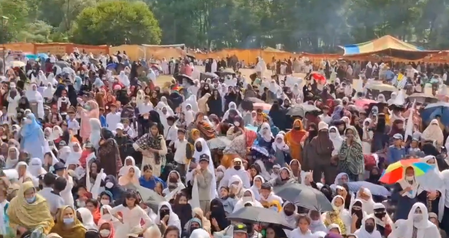
A large number of people held a sit-in protest at D-Chowk in Rawalkot of PoK on Sunday and prepared to start a peaceful long march towards Muzaffarabad.

According to a statement released by the Joint Awami Action Committee (JAAC), security forces have been carrying out intermittent heavy firing. The JAAC said that women and children were holding a protest sit-in at Dreak, and it will continue until the demands of the movement are acted upon. The protesters shouted slogans like “Aawaz do hum ek hai, Kashmir ke pahadon mein hum ek hai.”

While sharing visuals from the protest site on X, the JAAC said: “Rawalakot: At D-Chowk, the public is staging a temporary sit-in protest, and a peaceful long march toward Muzaffarabad could commence at any time—security forces are carrying out intermittent heavy firing. However, no martyrdoms have been reported in Rawalakot.”

“At Dreak, where a protest sit-in was held for 50 days, women and children are now maintaining the sit-in, and it will continue until the movement’s recognised demands are acted upon. The Kashmiri people, united as one nation, have resolved that under no circumstances will they betray the blood of their martyrs,” it added.

On Saturday, JAAC member Sardar Umar Nazir Kashmiri said that more than 50 people have been killed and hundreds injured over the past four days in a brutal crackdown by Pakistani forces in PoK. The actual death toll is anticipated to be much higher.

–IANS

akl/sd/