New Delhi, Dec 25 (IANS) Bangladesh Nationalist Party (BNP) Acting Chairman Tarique Rahman has a plan, he told his countrymen on Thursday, December 25, in Dhaka, but did not deal much with its details.
Both the parents of the 60-year-old BNP leader had stints as head of government at different times. While his father Ziaur Rahman was the sixth President of Bangladesh from 1977 until his assassination in 1981, Tarique’s mother was the first female Prime Minister to hold office between 1991-1996, and again, from 2001 to 2006.
Given that history, together with the fact that he has returned a little ahead of Bangladesh’s high-stakes February general election, the content had to be political. However, he kept short of projecting himself as the prospective premier in his short speech, though highlighting his family’s legacy on occasions.
However, his return after a 17-year hiatus signals BNP’s intent to reclaim leadership and mobilise mass support. He spoke of a country where there will be peace, security, and unity, where the current volatility has posed a major threat to law and order and to life itself.
“I have a plan for the people of my country; for my country,” he stated in English, in between a speech in clipped Bengali – unlike the regular, local conversational tone – that may be the result of a long 17 years in exile in the United Kingdom.
That plan is yet to be elaborated, and it will only be known later whether it will be holistic and include opponents and critics. BNP’s principal Opposition party, Awami League, remains excluded from the 2026 elections; its main challenger, Sheikh Hasina, has taken refuge in neighbouring India.
Tarique should know; he has himself been in exile and has reiterated allegations of suppression and political alienation under the Hasina regime. The assertions were there again in his Thursday speech, but not the fate of his political opponent, currently facing a death sentence.
Yet, some may find the statement “the people of Bangladesh want to reclaim their right to speak and their democratic rights” can perhaps be tied to the recent ban on Awami League leaders from contesting polls.
Meanwhile, he did insist on an all-inclusive society, encompassing citizens of all faiths and religions, but did not directly condemn the arson and killings or offer extensive condolences for the victims.
He paid tributes to Osman Hadi and referred to the need to “regain economic rights” that highlight the economic grievances of ordinary citizens; tied economic justice to the sacrifices of 1971 and 2024, suggesting continuity between past struggles and present demands.
Tarique’s speech positions BNP as the primary alternative force before the February election, appealing to democratic aspirations at a time when many feel disenfranchised.
By invoking Bangladesh’s 1971 Liberation War, the 1975 uprising, and the 1990s mass movement, he positioned himself as heir to Bangladesh’s democratic struggles.
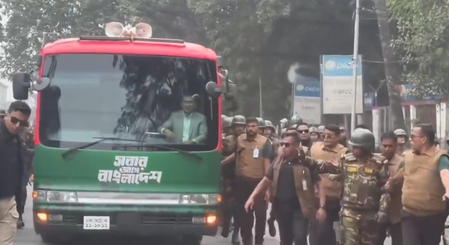
It is yet to be seen if the massive crowd – along the path he took on Dhaka’s streets, those at the event, and people listening to his speech elsewhere found in him the leader they are seeking.
And time will also reveal the content of the plan he has brought from Britain to build a new hope and a new beginning for the people in his country in these tumultuous times.
–IANS
jb/dan