Washington, Jan 20 (IANS) The United States is already engaged in an active and escalating cyber conflict with its adversaries, senior American lawmakers have warned, cautioning that attacks on critical infrastructure and national systems are occurring in real time and growing harder to detect or deter.
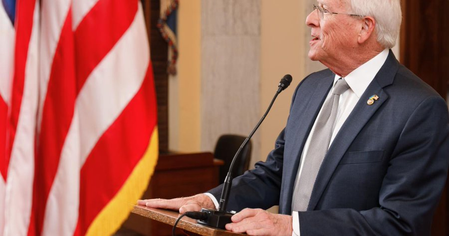
Senate Armed Services Committee Chairman Roger Wicker during a confirmation hearing said cyber threats are no longer hypothetical. “This is not a theoretical threat,” he said. “This is an ongoing fight occurring right now, even as we speak.”
Wicker said US Cyber Command has become the “first and last line of defense” in the cyber domain, operating largely out of public view while confronting increasingly sophisticated adversaries.
As such, he warned that hostile actors are investing heavily in technologies designed to evade detection and overwhelm defenses.
“We see this challenge manifesting in the homeland, where our critical infrastructure remains vulnerable to sophisticated attacks,” Wicker said. He added that similar threats are visible globally, particularly as the US seeks to posture its cyber forces for potential conflict in the Indo-Pacific.
In his confirmation hearing to lead US Cyber Command and serve simultaneously as director of the National Security Agency, Lieutenant General Joshua Rudd told senators that cyber operations are now inseparable from modern warfare and national defense.
“For decades, I have had the opportunity to be a leader, consumer, enabler, generator and integrator of the intelligence and operational capabilities of NSA and Cyber Command,” he said.
He described cyber as a domain that requires speed, integration, and constant readiness. “The current strategic environment definitely requires speed, agility, integration of all of our capabilities,” Rudd said, noting that cyber effects are now embedded across military operations.
Ranking Member Jack Reed warned that the United States is entering what he described as a “window of vulnerability,” particularly as adversaries such as China and Russia integrate cyber tools with artificial intelligence and information warfare.
Reed questioned whether Cyber Command is adequately prepared for that challenge, noting that the command has been without a Senate-confirmed leader for months and is undergoing structural changes under what is known as “Cyber Command 2.0.”
Rudd said protecting democratic processes remains a priority. “Any foreign attempt to undermine the American process of democracy has got to be safeguarded,” he said, adding that Cyber Command works closely with other agencies to address those threats.
The hearing also exposed divisions over whether the US should adopt a more explicit offensive cyber posture. Senator Dan Sullivan argued that deterrence requires more than defense. “Isn’t offense a good defense?” he asked, suggesting that adversaries face little consequence for persistent cyber attacks.
Rudd said Cyber Command must be capable of both defense and offense but emphasised that decisions to deploy offensive cyber tools rest with civilian leadership. “We need to have the capability to do both,” he said.
Other senators pressed Rudd on safeguards to prevent misuse of cyber and intelligence tools against American citizens. Senator Elissa Slotkin asked whether he would reject any attempt to use NSA capabilities against Americans without a foreign nexus.
–IANS
lkj/rs