Washington, Jan 20(IANS) US senators have warned that China is aggressively expanding its political, economic, and security footprint across South America, using infrastructure control, strategic investments, and diplomatic pressure to undermine US interests and weaken Taiwan’s international standing.
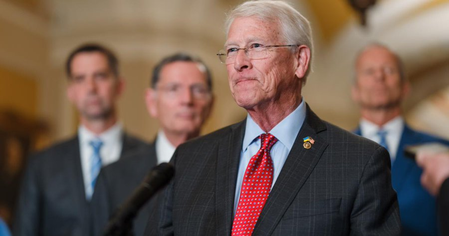
Senate Armed Services Committee chairman Roger Wicker, during a hearing, said China’s activities in the region go far beyond trade. “Across South America, the Chinese influence threatens US interests by controlling critical infrastructure, telecommunications systems, and ports,” he said.
Wicker accused Beijing of using large-scale purchases of strategic materials such as copper, oil, and lithium to deepen economic dependence and limit US access to critical resources. He said China has also leveraged that influence to persuade countries to sever diplomatic ties with Taiwan.
“China has successfully persuaded multiple countries in the region to switch diplomatic recognition from Taiwan to the People’s Republic of China,” Wicker said, calling the effort a direct challenge to Taiwan’s international standing.
The remarks came as lawmakers reviewed the nomination of Lieutenant General Francis Donovan to lead US Southern Command, which oversees US military operations in South America and the Caribbean.
Wicker said China’s growing presence in the region includes defense cooperation through arms sales, police training, and expanding space and cyber partnerships. “All to the detriment of our country,” he said.
Senators also warned that China is not acting alone. Wicker said Russia and Iran are coordinating with Beijing to counter US commercial, political, and security interests in the Western Hemisphere. He said the three countries exploit corruption and partner with authoritarian regimes to gain economic leverage, intelligence access, and political influence close to US territory.
Russia, he said, has expanded security ties with regimes in Venezuela, Nicaragua, and Cuba by selling arms, providing military advisers, and increasing intelligence operations in exchange for access to airfields and ports. “Moscow has exploited local corruption to access the global financial system, evade US sanctions and sustain its brutal campaign against the Ukrainian people,” Wicker said.
Iran, meanwhile, was accused of using Hezbollah-linked networks in parts of South America for fundraising, money laundering, and illicit trafficking. Wicker said those activities help finance Tehran’s terrorism operations worldwide.
Ranking Member Jack Reed said China and Russia have gained influence in the region by investing in strategic locations while the US military has historically focused its resources elsewhere. He questioned whether US Southern Command is properly resourced to counter near-peer competitors rather than traditional missions such as counter-narcotics and disaster response.
If confirmed, Donovan told senators he would closely examine China’s and Russia’s activities across the region. He said Beijing has embedded itself in key lines of communication, including ports, airfields, and transportation infrastructure, allowing it to gain access and influence that could be leveraged during a conflict.
“You look where China is infusing itself into key locations in South America,” Donovan said. “Ports, airfields, roads, tunnels, Panama Canal — everywhere they can gain influence.”
Several senators warned that China’s growing role in the region extends beyond economics. Senator Jim Banks said Beijing’s presence supports broader strategic competition with the United States and complements China’s military posture elsewhere.
Donovan said countering that influence would require a mix of military, economic, and diplomatic tools. “We have to find ways to counter them even more successfully,” he said, adding that many responses would come from economic and non-military measures backed by credible security options.
The hearing underscored bipartisan concern that China’s campaign in South America is reshaping alliances, weakening Taiwan diplomatically, and creating long-term strategic challenges for the United States.
–IANS
lkj/rs