Islamabad, Feb 25 (IANS) A growing number of people are being accused of blasphemy for digital crimes in Pakistan, with human rights group terming it as “blasphemy business” in which fabricated evidence, digitally doctored screenshots or false witness statements are used for filing police complaints.
A recent report has highlighted that, In December 2025, the Lahore High Court’s Rawalpindi bench acquitted six people who had been sentenced to either life imprisonment or death in a digital blasphemy case.
“In its observations, the court also alluded to the growing rise of ‘blasphemy businesses’, noting the increasing use of fabricated or unverified digital content to implicate individuals in capital offences. The targetted individuals, predominantly from religious minority or low-income communities, are then pressured to pay intermediaries to avoid prosecution, quash cases, or negotiate with complainants and clerical authorities. This marks a shift from opportunistic blasphemy accusations to systematic entrapment operations run by organised crime networks that weaponise these provisions for extortion,” Niala Mohammad, Director of Research for Afghanistan and Pakistan at the Centre for the Study of Organised Hate and Cecil Shane Chaudhry, South Asia Deputy Team Leader at Christian Solidarity Worldwide, jointly wrote in a report for Center for the Study of Organised Hate.
A young man in Rawalpindi who was trying to find a job was contacted on WhatsApp by someone posing as a female recruiter who built rapport before sending him a sexually explicit image overlaid with Islamic scripture. After he questioned her, she claimed that it was a mistake and stated that he share the picture with her again, according to the report. Reluctant but desperate to find a job, he sent the image to her. Days later, she asked him to meet for what she said was a job interview. He was beaten by four men waiting there, who seized his phone and handed him over to the authorities. The image shared with him under false pretences was enough for making a blasphemy charge against him.
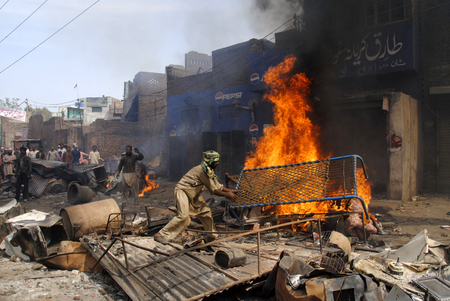
The report in Centre for the Study of Organised Hate stated, “Pakistan’s blasphemy laws, especially Section 295-C of the Pakistan Penal Code, which mandates a death sentence for insulting the Prophet Muhammad, along with other perceived offences, have produced a high-risk environment where even an unsubstantiated allegation can result in arrest, mob violence, or extrajudicial killing. At least 104 people have been killed extrajudicially following blasphemy allegations between 1994 and 2024.”
“In this climate, the business of blasphemy thrives, and the allegation itself holds such destructive power that it becomes a tool through which lives can be threatened, upended, or permanently altered. Rights organisations and victim advocates point to the involvement of actors with ties to religious groups and, in some cases, complicity from individual officials within the Federal Investigation Agency (FIA). FIA officers have allegedly registered complaints without forensic verification, accepted screenshots at face value, or acted on anonymous digital tips,” it added.
Private online vigilante groups which have connection with extremist organisations like the Tehreek-e-Labaik Pakistan (TLP) are at the forefront for prosecuting online blasphemy cases, with Legal Commission on Blasphemy Pakistan (LCBP) being the most active group. LCBP is an organisation whose stated mission is to take “decisive action against blasphemy.” According to the National Commission for Human Rights (NCHR), Pakistan’s FIA Cyber Crime Wing charges hundreds of young and vulnerable people with blasphemy on the basis of social media content, often in coordination with groups that benefit from the business of accusations of blasphemy.
According to the report, religious minorities in Pakistan are particularly vulnerable, with Christians, Ahmadis, Hindus, Sikhs, and Shia Muslims facing legal discrimination and societal hostility, making them primary targets. The overlap between organised blasphemy networks and pre-existing sectarian enmity turns individual cases into community-wide threats. Lawmakers in Pakistan remain hesitant to challenge groups that use blasphemy as a mobilising tool. Probe into mob violence rarely lead to sustained accountability and charges against vigilantes are often dropped or weakened over time.
–IANS
akl/as