New Delhi, March 2 (IANS) The fragile ceasefire between the Afghan Taliban and Pakistan collapsed when the latter declared an open war with Kabul. The first round of strikes went in Pakistan’s favour, and this boosted its army’s morale.
Pakistan may be one up on Afghanistan when it comes to air power, but when it comes to boots on the ground, the Taliban is no pushover, as it has had the experience of fighting both the Soviets and allied forces.
Within the army circles, there is a growing chorus to effect regime change in Afghanistan. The Pakistanis have, without proof, blamed Afghanistan for backing the Tehreek-e-Taliban Pakistan (TTP). Tensions have been high between the two sides, and the recent posturing by the Taliban, which sought to share good ties with India, also became an irritant for the Pakistanis.
Officials say that there is a lot of chatter within the Pakistan establishment about effecting regime change. The official added that India is closely monitoring the situation as it wants stability in the region.
Under the given circumstances, effecting a regime change in Afghanistan would be nothing short of a disaster for the Pakistanis, the officials explained.
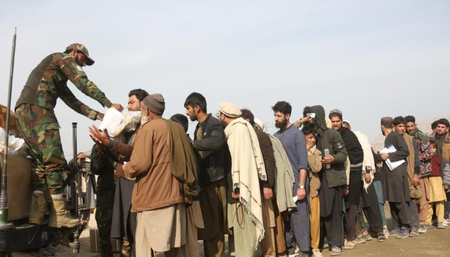
In the battle against the Taliban, there was one crucial mistake that the Pakistanis committed, another official said. Pakistan began throwing out the Afghan refugees, including those who had settled in Pakistan for several decades. This move has caused a major resentment against Islamabad among the Afghan people.
Those Afghan people who did not stand by the Taliban are now backing the regime. Effectively, this sympathy wave that was caused by Pakistan’s miscalculation has worked in the favour of the Taliban as the people are there with them, the official explained.
Now that the people of Afghanistan are strongly backing the Taliban, Pakistan’s original plan of infiltrating Afghanistan has become next to impossible. Earlier, the Pakistanis had planned on roping in people from Afghanistan who were opposed to the Taliban and use that to their advantage, which in turn would have helped them infiltrate the country.
An Intelligence Bureau official said that now that the plan seems hard to execute, as the entire local population of Afghanistan stands against the Pakistanis. It is not just the Taliban, but even the population of the country considers Pakistan as their main enemy.
Prior to the situation escalating into a full-blown war, both the Pakistanis and representatives of the Taliban had met in Turkey and Qatar. Pakistan raised the issue relating to the TTP as well as the Durand Line.
While the Taliban was willing to talk on the Durand Line, it made it clear that it had not allowed the TTP to use Afghanistan as a launchpad. However, the Taliban delegation was unhappy with the tone of the Pakistani representatives. They were not speaking to the Taliban as equals. They were looking to dictate terms to the Taliban, and this apparently did not go down too well.
Although the Pakistanis had said then that the talks were productive, the fact is that the Taliban were unhappy with the terms as well as the tone in which they were addressed. This explains why the ceasefire remained fragile all along, an official said.
Afghanistan watchers say that the Taliban was not ready to compromise on issues relating to the Durand Line. Experts say that the position of Afghanistan will not change at any cost. Even when Mullah Omar was at the helm, he had refused to accept the Durand Line as the official international border between the two countries.
Experts say that the Mullah Omar-led regime was, in fact, more dependent on Pakistan when compared to today’s Taliban.
Officials say that the plans of effecting a regime change in Afghanistan are not something Pakistan will be able to do. Now that the local population and the Taliban are on the same page due to Pakistan’s misadventure of throwing out the refugees, the road ahead for Islamabad looks tough in Afghanistan, the official also explained.
–IANS
vn/dpb