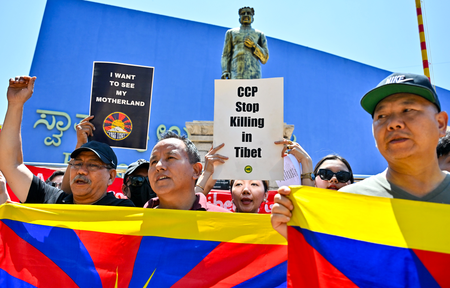
Washington, April 30 (IANS) Two top US senators have introduced legislation requiring the State Department to determine whether China’s actions in Tibet amount to genocide or crimes against humanity, stepping up pressure on Beijing over its policies in the region.
Republican Senator Rick Scott and Democratic Senator Jeff Merkley unveiled the “Tibet Atrocities Determination Act”, coinciding with Martyr’s Day on April 29, observed by the Tibetan Youth Congress to honour Tibetans who have died for the region’s freedom.
The bill directs the Secretary of State to make a formal determination within one year on whether acts carried out by Chinese authorities meet the legal definition of genocide or constitute crimes against humanity.
Scott accused Beijing of widespread abuses. “Communist China is committing genocide in Tibet. There is no way around it,” he said. He cited “systematic killings, torture, forced sterilisation, forced displacement, government-sanctioned kidnapping, and a myriad of other crimes against humanity in its oppression of the Tibetan people.”
The Senator from Florida said such actions were consistent with broader repression by the Chinese government, including against Uyghurs and other groups. “The bloodshed needs to end, and China needs to be held accountable for all of it,” Scott said.
Merkley said the United States must respond to what he described as escalating violations. “In the face of China’s continued assault on Tibetans — escalating cultural erasure, child separation, surveillance, imprisonment, and torture — America can’t stand silent,” he said. “As the Chinese government continues to ignore the rights of the Tibetan people under international law, we must be clear that these crimes will not be ignored.”
The proposed legislation sets out criteria for the determination, including evidence of “systematic killing,” “serious bodily or psychological harm,” and policies designed to destroy a population through forced displacement or deprivation of basic needs.
It also calls for scrutiny of measures such as enforced sterilisation and the “forced transfer of children,” including through what it describes as China’s “colonial boarding school system.”
The bill, among other things, requires the State Department to submit a report to Congress detailing the evidentiary basis for its determination. This includes documentation of policies aimed at “sinicising Tibetan Buddhism or repressing Tibetan language and culture,” along with findings from State Department reports and other credible analyses.
It also calls for recommendations on US policy responses, including potential sanctions, visa restrictions and diplomatic actions. The Secretary of State may consult experts, non-governmental organisations and members of the Tibetan diaspora while preparing the report.
The move reflects growing bipartisan concern in Washington over China’s human rights record, particularly in regions with distinct ethnic and religious identities.
China has consistently rejected allegations of abuses in Tibet, saying its policies are aimed at development, stability and national unity.
US administrations and human rights organisations have for years raised concerns over restrictions on religion, language and cultural expression in Tibet, alongside reports of detention, disappearances and policies affecting Tibetan children.