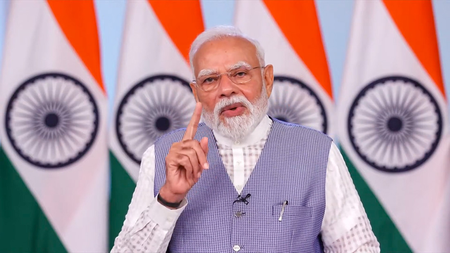
New Delhi, July 30 (IANS) Prime Minister Narendra Modi, chairing a meeting of the Cabinet Committee on Security (CCS) on Thursday, issued directions for making all efforts to safeguard the interests of Indian citizens and the country’s diaspora from the adverse impact of the West Asia conflict.
The CCS meeting was held to review the situation in the context of the ongoing West Asia conflict and measures taken by various Ministries and Departments to ensure adequate energy and fertiliser supplies and safety of Indian seafarers, according to an official statement issued after the meeting.
During the meeting, the fertiliser requirement for the ensuing Rabi season was assessed, and alternative sources of fertilisers were also discussed.
The Prime Minister said that all measures should be taken for ensuring uninterrupted supply of fertilisers.
The situation regarding seafarers serving on domestic as well as foreign-flagged vessels in conflict zones was also deliberated with the Prime Minister directing that a mechanism be established to provide timely information, emergency assistance and counselling to seafarers and their families. The discussion comes in the backdrop of commercial ships coming under attack in the Middle East region.
PM Modi also highlighted that in order to ensure energy independence, emphasis should be made on renewable energy sources including solar energy and other non-fossil-fuel based sources.
The Prime Minister also said that a whole-of-government approach should continue to be adopted to tackle the challenges arising due to the crisis. He said that a unified coordinated mechanism be put in place for regular monitoring of all the developments to ensure expeditious implementation of appropriate measures to safeguard the interests of the citizens.
The Cabinet Secretary briefed the CCS about the present geo-political situation. He spoke about the initiatives taken to ensure adequate supply of petroleum products, including LNG, LPG and fertilisers. He said that sources for procurement of LPG have already been diversified and the overall stock and supply position of major petroleum products remain adequate.
He further stated that the availability of adequate crude oil has enabled Central Public Sector Enterprise (CPSE) refineries to operate at utilisation levels exceeding 100 per cent, ensuring continued production of petrol, diesel and other petroleum products. Initiatives have also been taken to expand Piped Natural Gas (PNG) connections, which have resulted in a substantial increase in PNG connections.
The top bureaucrat also said that the government is facilitating industrial substitution of LPG through expansion of the National Gas Grid, augmentation of LNG imports and regasification infrastructure, expansion of City Gas Distribution networks, and time-bound pipeline and last-mile connectivity approvals under the Pipeline Infrastructure Order, 2026.
–IANS
sps/vd