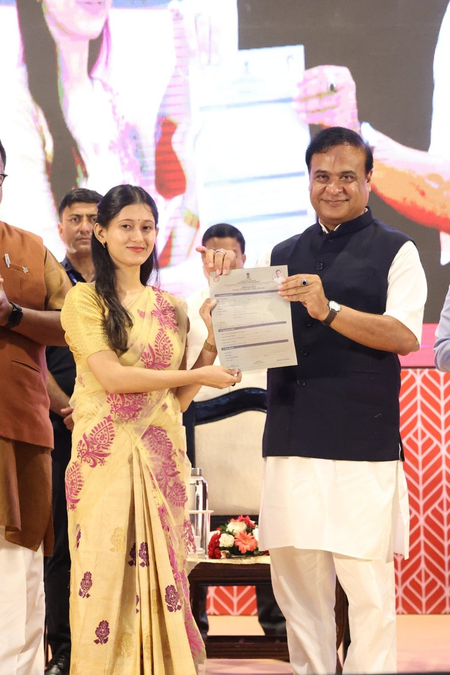
Guwahati, Oct 12 (IANS) Assam Chief Minister Himanta Biswa Sarma on Monday highlighted the Mukhya Mantrir Nijut Moina scheme, describing it as a significant step towards combating child marriage and preventing girls from dropping out of education.
In a post on X marking the second day of Navratri, dedicated to Maa Brahmacharini, Sarma drew a parallel between the deity’s teachings and the determination of girls pursuing education in Assam.
The Chief Minister said that under the Nijut Moina scheme, girl students enrolled in Higher Secondary, undergraduate and postgraduate courses at government and government-aided institutions receive monthly financial assistance for 10 months annually.
Under the scheme, students at the Higher Secondary School level receive Rs 1,000 per month, undergraduate students Rs 1,250, while postgraduate students are entitled to get Rs 2,500 per month.
“This is not just a scholarship. It is a firm stand against child marriage and early dropout,” Sarma said in his post.
He emphasised that the initiative seeks to reinforce the importance of girls’ education among families and ensure that the state government supports young women as they pursue their academic ambitions.
According to Sarma, the scheme sends a message that educating daughters is a worthwhile investment and that financial assistance can help them continue their studies instead of being pushed into early marriage.
Drawing on the religious significance of Navratri, the Chief Minister said that when a girl chooses books over an early marriage, she is undertaking her own form of tapasya, or penance.
He also invoked Maa Brahmacharini’s blessings for beneficiaries of the scheme, wishing them focus, wisdom and the courage to pursue their aspirations without limitations.
The Nijut Moina scheme is among the Assam government’s initiatives aimed at encouraging girls to continue their education and addressing social challenges associated with early marriage and educational discontinuation.
The scheme’s financial assistance is intended to ease some of the costs associated with pursuing education and encourage families to support their daughters’ academic progress.
Sarma’s message combined the religious significance of Navratri with the state government’s emphasis on women’s education, presenting educational empowerment as both a social priority and a means of enabling girls to shape their own futures.
–IANS
tdr/skp