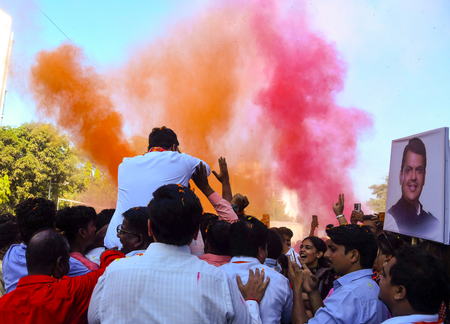
Mumbai, Jan 16 (IANS) In the high-stakes battle for the 227-member Brihanmumbai Municipal Corporation (BMC) elections, the BJP, in alliance with the Shiv Sena, achieved its Mission Mumbai. The BJP emerged as the single-largest party by winning 88 seats. While it holds a significant lead over its rivals, the numbers suggest that no single party has crossed the magic halfway mark on its own (114 out of 227 seats), pointing towards the necessity of alliances to control the civic body.
However, the BJP, with the Shiv Sena’s 28 corporators, is in a comfortable position to secure the mayoral post which the party has aimed for over many years.
One of the most critical storylines in this election is the split between the two Sena factions. Shiv Sena (UBT), led by Uddhav Thackeray, has shown strong resilience, leading in 65 seats, and remains the primary challenger to the BJP. Shiv Sena (Shinde faction) is leading in 28 seats.
The Eknath Shinde-led Shiv Sena, which had claimed to be the “real” Sena following its wins in the state Assembly elections and the recent polls held for nagar parishads and nagar panchayats, failed to keep its victory march at the same speed. This is despite giving entry to former corporators affiliated with the Uddhav Thackeray-led Shiv Sena into the party fold.
The Shiv Sena (UBT) faction, which fought the elections together with the Raj Thackeray-led Maharashtra Navnirman Sena (MNS), currently holds more than double the leads of the Shinde faction, suggesting that a larger portion of the traditional Sena voter base may have remained with the Thackeray camp in this specific count. Although the two brothers reached out to voters flagging the cause of Marathi identity and Marathi Manoos, they were unable to cross the halfway mark of 114 seats.
However, the Thackeray brothers together gave a tough fight to the BJP–Shiv Sena combine in the race for a majority till the results of the last seat were announced.
Dominating the tally, the BJP has consolidated its position as the heavyweight in Mumbai politics. However, it failed to meet its 150-plus target despite focusing on strengthening the mandal-level party network and an extensive outreach to voters.
The BJP, in particular, countered the Thackeray brothers’ emotional appeal with the development plank, urging Mumbaikars to vote for a triple-engine government to expedite the city’s growth in an uninterrupted manner.
The Congress, which contested the elections in an alliance with the Vanchit Bahujan Aghadi, has been relegated to the fourth position. While still a factor, its influence appears diminished compared to the BJP and Shiv Sena (UBT).
AIMIM sprang a surprise by winning eight seats, compared to two seats won by the Samajwadi Party. The party has hinted at consolidating its presence in Mumbai and the rest of Maharashtra ahead of the next Assembly polls slated for 2029. It holds a significant pocket of influence that could be vital in specific wards.
Raj Thackeray’s party won six seats, maintaining a small but potentially decisive presence. However, the party will have to increase its focus on strengthening its organisational network while keeping its alliance with Shiv Sena (UBT) intact.
The two NCP factions (NCP and NCP–Sharad Pawar) together have won four seats, indicating a limited footprint in the Mumbai municipal area compared to other parts of Maharashtra.
(Sanjay Jog can be contacted at sanjay.j@ians.in)
–IANS
sj/pgh