India, Sri Lanka to boost health technology assessment

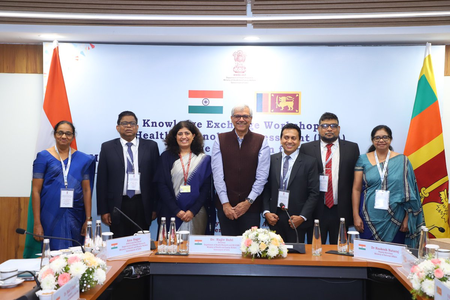
New Delhi, Feb 10 (IANS) The five-day India-Sri Lanka workshop on Health Technology Assessment (HTA) is a significant strategic milestone in bilateral healthcare diplomacy and HTA knowledge exchange, underscoring India’s commitment to supporting regional health initiatives, senior government officials have said.

The knowledge exchange workshop on HTA formally commenced at the Sushma Swaraj Bhawan here, hosted by the Department of Health Research (DHR), Ministry of Health and Family Welfare, in collaboration with the Ministry of External Affairs.

It aims to develop a strategic pathway for advancing and institutionalising HTA in Sri Lanka, according to Ministry of Health and Family Welfare.

Dr. Rajiv Bahl, Secretary DHR and DG of Indian Council of Medical Research (ICMR), welcomed the delegates and addressed the inaugural session.

According to a ministry statement, Anu Nagar, Additional Secretary, DHR, highlighted the impactful contributions of HTAIn (Health Technology Assessment in India) to India’s healthcare landscape, and expressed confidence that this knowledge exchange will benefit the institutionalisation of HTA in Sri Lanka.

The official statement further said that HTAIn plays a pivotal role in evaluating healthcare technologies and ensuring cost-effective, evidence-based health interventions across India.

“The five-day workshop will cover a wide range of topics, including HTA institutional frameworks, governance, methodologies, pricing, and procurement decisions,”it added.

The objectives include identifying potential collaborative initiatives to strengthen HTA capacities and systems in both nations.

To facilitate the process of transparent and evidence informed decision making in the field of health, the government has created an institutional arrangement called the Health Technology Assessment in India (HTAIn) under the Department of Health Research (DHR).

HTAIn is entrusted with the responsibility to collate and where needed generate evidence related to the clinical effectiveness, cost-effectiveness, and safety of medicines, devices and health programs using the Health Technology Assessment (HTA) approach.

—IANS

na/
Sharad Pawar undergoes preliminary check-up at Ruby Hall Clinic (Lead)

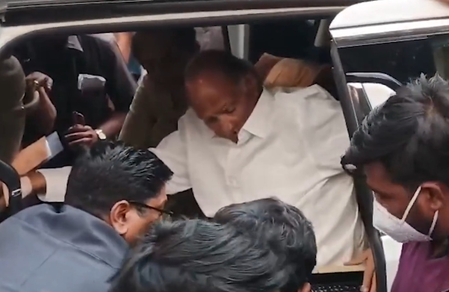
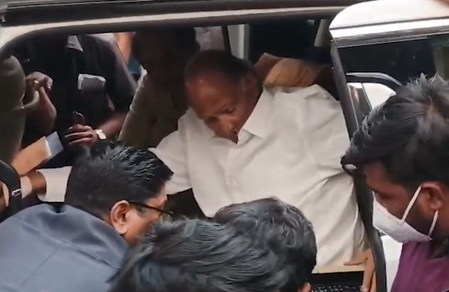
Pune, Feb 9 (IANS) Nationalist Congress Party (Sharad Pawar faction) president Sharad Pawar was admitted to Ruby Hall Clinic around 4 pm on Monday. ​

​Accompanying him were his wife, Pratibha Pawar, daughter Supriya Sule, son-in-law Sadanand Sule, and grandson Rohit Pawar. Dr Abhijeet Lodha is treating Pawar, and a preliminary medical examination has been conducted.​

Sule in her post in X said, “Baba has developed chest congestion and will need a 5-day course of antibiotics. Fortunately, all other vital parameters are normal. Thank you all for your good wishes and constant support. A heartfelt thank you to all the doctors from the bottom of my heart.”​

The initial assessment shows that Pawar’s heart rate and oxygen levels are stable. However, his respiratory rate is slightly elevated. There is a possibility that he may be kept under hospital observation for a day. Meanwhile, party workers have been requested not to crowd the hospital. Supriya Sule also spoke to the doctors, requesting that treatment be carried out strictly in accordance with the hospital’s protocol, the NCP SP release said.​

Ruby Hall Clinic’s Dr Abhijeet Lodha addressed the media, stating, “Sharad Pawar’s condition is stable. His preliminary examination has been completed. Since his oxygen levels and heart rate are normal, there is no cause for concern at present. Due to continuous travel and engagements over the past few days, he has experienced fatigue. As there is some chest congestion, a respiratory examination has also been conducted. He has been admitted to a private room and does not require oxygen support or a ventilator. Reports of further tests will be available in the next two to three hours, after which the Pawar family will decide on the next steps.”​

NCP SP legislator Rohit Pawar said, “Over the past ten to twelve days, Sharad Pawar has had a very hectic schedule. Due to physical exhaustion and mild breathing discomfort, he was admitted to Ruby Hall Clinic in his private vehicle. Doctors have conducted all necessary tests, and the reports have come back normal. I personally spoke to the doctors. Supriya Sule also stated that treatment should be carried out strictly in accordance with the hospital’s protocol. Once the remaining test reports are received, a decision will be taken on whether he should stay in Pune or be shifted to Mumbai.”​

As Ruby Hall Clinic treats many patients every day, an appeal has been made to party workers not to gather in the hospital area and create inconvenience for other patients, Rohit Pawar stated while speaking to the media.

​–IANS

sj/dan

Special camp under PMSMA ensures comprehensive health check-ups for pregnant women in Burhanpur

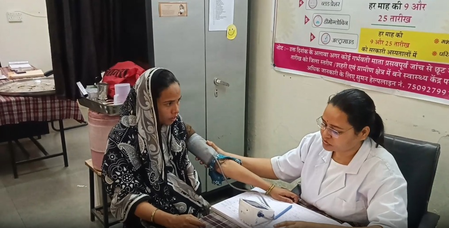
Burhanpur (Madhya Pradesh), Feb 9 (IANS) Under the Pradhan Mantri Surakshit Matritva Abhiyan (PMSMA), a special health camp was organised at the OPD of the District Hospital in Burhanpur on Monday, during which comprehensive physical and mental health check-ups of over 40 pregnant women were conducted.

During the camp, more than six women were identified as high-risk pregnancies and were provided timely medical treatment, necessary diagnostic tests and expert consultations to prevent complications and ensure safe deliveries.

As part of the initiative, pregnant women and their family members were educated about the importance of four mandatory antenatal check-ups, the need for mental health care during pregnancy, its early identification and overall significance. Special emphasis was laid on institutional deliveries to ensure maternal and neonatal safety.

Information was also shared about the 24×7 free assistance services available under the CCP, FCC and PMH programmes, including prenatal, postnatal and mental-emotional counselling. Beneficiaries were guided on accessing support from home through Tele-MANAS, the Manhit App and the Suman Sakhi helpline.

The PMSMA campaign is conducted on the 9th and 25th of every month, with the objective of strengthening maternal and child safety, promoting institutional deliveries and reducing maternal and infant mortality rates.

Beneficiaries expressed satisfaction with the services and gratitude towards Prime Minister Narendra Modi for prioritising women’s health through such initiatives.

Manisha Awase, a beneficiary said, “Here, all facilities are free, medicines and treatment are provided without any cost.”

Another beneficiary, Yogita Dipesh Bhalerao, said that all medical tests, which are usually expensive at private hospitals, were conducted free of cost. “The Prime Minister has launched many schemes for women, and they have been very beneficial,” she added.

Dr Poonam Singhal, Gynaecologist, said special camps are organised twice a month under PMSMA to closely monitor high-risk cases such as women with hypertension, diabetes or previous C-section deliveries.

Echoing similar views, Dr Rehana Bohra said the scheme prioritises high-risk patients and plays a crucial role in ensuring safe motherhood.

District PMSMA In-charge Seema David said the programme is well-structured and aimed at strengthening maternal healthcare services at the grassroots level.

–IANS

sn/rad

Thyroid health a national priority, time to push awareness and research partnerships: Minister

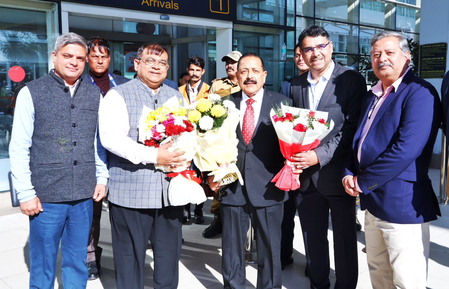
Mumbai, Feb 9 (IANS) Union Minister Dr Jitendra Singh on Monday said that thyroid disorders are a national concern linked to productivity, demographics and nation building.

Dr Singh urged the Indian Thyroid Society and the wider medical fraternity to intensify awareness, research collaboration and early detection, according to an official statement.

The minister told the endocrinologists at a conference of the Indian Thyroid Society that undiagnosed thyroid conditions, particularly hypothyroidism, reduce energy levels, workforce efficiency and long-term output in a country where over 70 per cent of the population are aged under 40 years.

As around 42 million Indians are living with thyroid disorders, Singh said the scale of the challenge demands proportionate research attention and public health response.

He called for stronger multidisciplinary coordination across life sciences, medical sciences, and allied sectors to address thyroid disorders in a comprehensive manner, adding that medical issues of this magnitude cannot be left to a single domain and require wider societal awareness and institutional collaboration.

Hypothyroidism affects nearly 11 per cent of adults and many remain undiagnosed. Undetected hypothyroidism in pregnancy causes congenital hypothyroidism and irreversible neurodevelopmental harm in children.

Further, the minister highlighted the Biopharma Shakti Mission, India’s biotech advances and the establishment of the Anusandhan National Research Foundation and a Rs 1 lakh crore Research Development and Innovation framework to strengthen research with private and philanthropic participation.

He cited India’s progress in biotechnology, including the development of the country’s first indigenously-developed antibiotic effective against resistant infections, successful gene therapy trials for haemophilia, and the rollout of the DNA vaccine during the COVID-19 pandemic.

–IANS

aar/na

Pak stares at $1.2 billion of vaccine import bill by 2031 as India halts supply

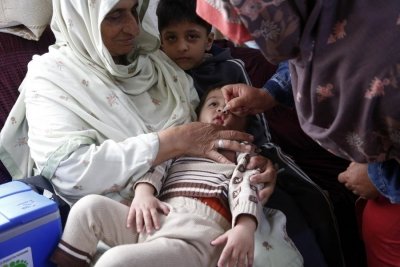
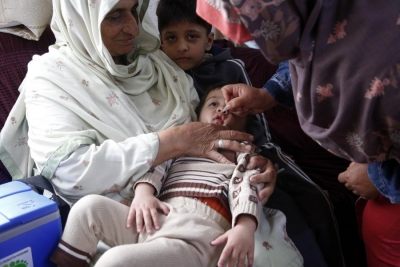
New Delhi, Feb 9 (IANS) The disruption in affordable pharmaceutical imports from India, especially vaccines, has sharply increased Pakistan’s financial burden and the country stares at an annual import bill of $1.2 billion by 2031, according to reports.

The disruption due to last year’s military clashes exposed Islamabad’s heavy reliance on foreign manufacturing and donor support for routine immunisation as the country provides 13 vaccines free of cost but with zero domestic vaccine production, reports said.

Pakistan Health Minister Mustafa Kamal said a halt in Indian vaccine shipments is already hurting the economy and the situation could be more dire when international support for vaccine procurement ends by 2031.

“Pakistan contributes 51 per cent of the cost now, and unless we start local production of vaccines, we will face an annual import bill of $1.2 billion by 2031,” the minister was quoted as saying in reports.

The minister further said that Pakistan has traditionally procured cheap vaccines for immunisation and other requirements from India through Global Alliance for Vaccines and Immunisation (GAVI). Gavi served as a global purchasing and funding platform for poorer countries.

Pakistan currently imports vaccines at an annual cost of about $400 million, of which around 49 per cent is covered by international organisations operating through GAVI, the minister said.

GAVI helped secure millions of COVID‑19 doses from Indian manufacturers under the COVAX facility. The minister claimed that the government has begun preparatory work to build domestic vaccine production rather than wait for donor support to lapse.

With a surging population due to 6.2 births annually the demand for vaccines continues to skyrocket, making the absence of domestic production a serious vulnerability.

India halted its supply after the launch of Operation Sindoor on May 7, 2025, which targeted terror infrastructure in Pakistan and Pakistan-occupied Kashmir in retaliation for the Pahalgam attack that killed 26 civilians.

–IANS

aar/na

AI use of massive national health care data to boost S. Korea’s bio sector

Seoul, Feb 9 (IANS) South Korea could significantly strengthen the competitiveness of its bio-health industry by leveraging its abundant, high-quality bio data through artificial intelligence (AI), a central bank report showed on Monday.

According to the report by the Bank of Korea (BOK) on measures to foster the advanced bio-health sector, South Korea lags behind leading countries in such areas as innovative new drugs and advanced medical devices, while the global market is expected to grow at an average annual rate of 5 percent over the next five years amid population aging and other factors.

From 2016 to 2023, the country ranked ninth worldwide in the number of bio-health patent applications filed in the United States, while it ranked fourth overall across all sectors, reports Yonhap news agency.

“AI can reduce new drug development timelines by up to 50 percent, significantly lower research and development costs, and create new markets,” the report said. “Under these circumstances, South Korea has an opportunity to overcome the limitations of its current industrial ecosystem and overtake leading nations.”

In particular, the country possesses health insurance and clinical data collected from 50 million people under a single national health insurance system, which is “exceptionally rare worldwide and a national strategic resource in the AI era,” the BOK noted.

To capitalise on such advantages, the central bank proposed a national bio data approval system, under which an authority would conduct prior reviews and approve data use only for research that meets public interest criteria, and the government would ease regulations for approved projects.

Meanwhile, South Korea’s biotechnology industry output grew nearly 10 percent in 2024 from a year earlier despite persistent global trade uncertainties, industry data showed.

The country’s biotechnology industry production came to 22.92 trillion won (US$15.7 billion) in 2024, up from 20.87 trillion won in 2023, the Ministry of Trade, Industry and Energy (MOTIE) said, citing a survey by the Korea Biotechnology Industry Organization (KoreaBIO).

The figure marked a recovery following a 12 percent on-year decline in 2023, signalling renewed growth momentum in the sector.

—IANS

na/

Fake mental hospitals, insurance scam showcases China’s struggle with ageing population

New Delhi/Beijing, Feb 7 (IANS) Rise in fake mental hospitals, and insurance scams in China shines a spotlight on how the country is struggling to deal with its ageing population, according to a media report.

The Diplomat reported a recent scam where private psychiatric hospitals were admitting patients on false pretenses to defraud the government out of vast quantities of medical funds.

Citing the Beijing News, the report noted dozens of psychiatric hospitals in Xiangyang and Yichang cities, which offer inpatient hospitalisation either for a small fee or for free.

This comes as treatment in China is usually covered by medical insurance programmes, where patients would generally be expected to pay at least a certain percentage of the cost of their treatment.

However, an undercover reporter recorded treatments worth about 140 yuan per day per patient and claimed reimbursement for most of that from government-run medical insurance.

While some of these scam hospitals only had a few patients, some had well over 100. The patients were mainly alcoholics and elderly people drawn in by the prospect of free food and shelter.

In addition, the reporter found poor conditions in the hospitals, with physical and verbal abuse common. Patients were also forced into cleaning the hospital, bathing other patients, and performing other menial work.

Importantly, some hospitals also made it hard for patients to leave once they had been admitted, and it could stretch for years.

“This highlights the limitations of China’s current elder care system, which assumes that the vast majority of elderly people will be cared for at home, by their families,” the report said.

“Many of the elderly people recruited for the scam came from rural areas, where pensions are particularly tiny, and government services are weaker. Moreover, countless villages have been hollowed out as working-age people seek work elsewhere, leaving many rural elderly isolated from their families,” the report said.

–IANS

rvt/

Health Minister Nadda urges youth to work responsibly, give back to society

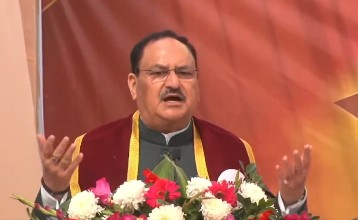
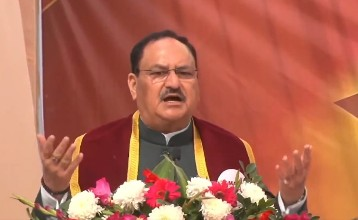
New Delhi, Feb 7 (IANS) Union Minister for Health & Family Welfare JP Nadda on Saturday urged youth to work responsibly and to give back to society.

Addressing the convocation ceremony 2025-26 of Manav Rachna Educational Institutions (MREI), Nadda said it is not just the culmination of an academic journey but the beginning of a new phase of responsibility towards the nation and society.

He emphasised that the graduating cohort is privileged to be entering their professional lives during the second phase of Amrit Kaal, leading up to 2047, when India aspires to become a fully developed nation.

“This phase presents both immense opportunities and equally significant responsibilities; the youth must contribute meaningfully to the national development,” Nadda said.

“Always carry the sentiment that society has enabled their success and, in return, they must strive to give back by serving society selflessly and meaningfully,” said Nadda.

He also urged the graduating students to move forward guided by strong values, ethical conduct, and a commitment to public service.

During the ceremony, the Minister also highlighted the transformative progress achieved under the visionary leadership of Prime Minister Narendra Modi over the last 11 years.

“23 AIIMS have been established, up from just six earlier, creating a robust network of state-of-the-art healthcare institutions across the country,” Nadda said.

He further stated that India has made remarkable advances across healthcare indicators, ranging from maternal and child health to communicable and non-communicable diseases, especially in tuberculosis and malaria cases and deaths.

The Minister also highlighted a significant drop in out-of-pocket healthcare expenditure, with initiatives such as Ayushman Bharat, Ayushman Arogya Mandirs, and large-scale population screening programmes, making healthcare more accessible and affordable.

A total of 2,150 students from diverse disciplines, including engineering, management, law, education, sciences, and healthcare, were awarded degrees during the convocation.

This included 521 undergraduate students, 58 postgraduate students, and 11 doctoral scholars, marking a significant academic milestone for the graduating cohort.

–IANS

rvt/

Health industry welcomes interim bilateral trade agreement between India, US

New Delhi, Feb 7 (IANS) Health industry leaders on Saturday welcomed the interim agreement on the bilateral trade deal between India and the US.

As part of the interim framework, the US will slash reciprocal tariffs on Indian goods to 18 per cent. The US will also remove the reciprocal tariff on generic pharmaceuticals, among other sectors like gems and diamonds, and aircraft parts.

Although full details are yet to emerge, the interim India-US trade deal framework indicates that India has received the “best deal’ from the United States compared to others, including all its neighbours.

“AiMeD welcomes the US-India joint statement on trade barriers and clarifies that CDSCO import licenses for US devices are already faster than for Indian manufacturers, who face mandatory inspections unlike overseas firms,” said Rajiv Nath, Forum Coordinator, the Association of Indian Medical Devices (AiMeD).

“The US leads imports at Rs 14,000 crore (20 per cent share), surpassing China’s Rs 12,000 crore, with our US exports at $750 million vs. $1.6 billion imports last year. US FDA’s preference for ACSA over NABL labs adds asymmetry. Indian medtech battles Chinese WANA dumping, EU CE delays, Japan’s yen weakness, and Indonesia’s biases, plus CDSCO hurdles. We urge reciprocal fairness, making trade mutually advantageous to empower both nations’ innovations,” he added.

Further, the agreement noted that, based on the findings of the US Section 232 investigation of pharmaceuticals and pharmaceutical ingredients, India will also receive negotiated outcomes with respect to generic pharmaceuticals and ingredients.

“Strengthening the India-US medicines partnership is important, as medicine security is a part of national security. Generics are exempted from tariffs. As noted in the joint statement, overall pharmaceuticals (including generics) are subject to ongoing US Section 232 investigation. This is consistent with the approach across FTAs,” added Sudarshan Jain, Secretary General, Indian Pharmaceutical Alliance.

–IANS

rvt/

Aircraft parts to red sorghum, here are key terms of India-US interim trade pact

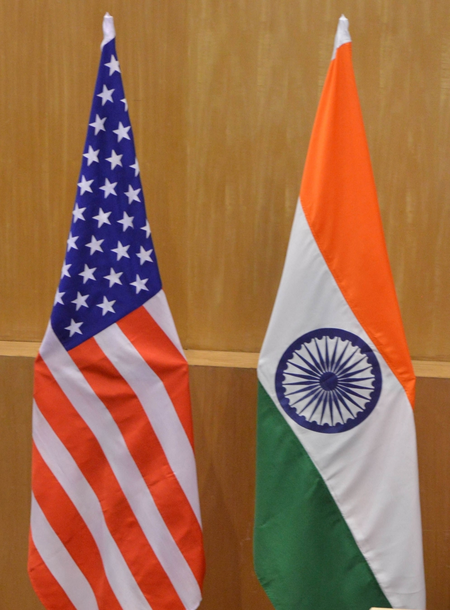
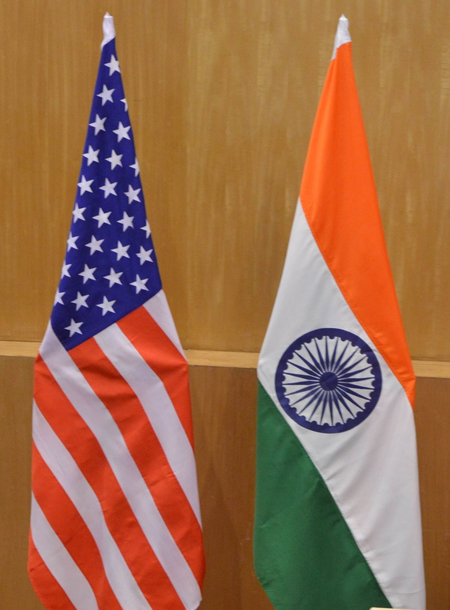
New Delhi, Feb 7 (IANS) India and the US have reached a framework for an interim agreement regarding reciprocal and mutually beneficial trade, which will include additional market access commitments and support more resilient supply chains.

As part of the pact, the US will also tariffs on certain aircraft and aircraft parts of India imposed to eliminate threats to national security found in Proclamation 9704 of March 8, 2018.

Similarly, consistent with US national security requirements, India will receive a preferential tariff rate quota for automotive parts subject to the tariff imposed to eliminate threats to national security found in Proclamation 9888 of May 17, 2019.

“Contingent on the findings of the US Section 232 investigation of pharmaceuticals and pharmaceutical ingredients, India will receive negotiated outcomes with respect to generic pharmaceuticals and ingredients,” according to a joint statement.

Also, India will eliminate or reduce tariffs on all US industrial goods and a wide range of US food and agricultural products, including dried distillers’ grains (DDGs), red sorghum for animal feed, tree nuts, fresh and processed fruit, soybean oil, wine and spirits, and additional products.

The US will now apply a reciprocal tariff rate of 18 per cent under Executive Order 14257 of April 2, 2025, on originating goods of India, including textile and apparel, leather and footwear, plastic and rubber, organic chemicals, home décor, artisanal products, and certain machinery.

“Subject to the successful conclusion of the Interim Agreement, it will remove the reciprocal tariff on a wide range of goods identified in the Potential Tariff Adjustments for Aligned Partners Annex to Executive Order 14346 of September 5, 2025, including generic pharmaceuticals, gems and diamonds, and aircraft parts,” according to the statement.

The statement further stated that the US and India commit to provide each other preferential market access in sectors of respective interest on a sustained basis.

Recognising the importance of working together to resolve long-standing concerns, India also agrees to address long-standing non-tariff barriers to the trade in U.S. food and agricultural products.

India intends to purchase $500 billion of US energy products, aircraft and aircraft parts, precious metals, technology products, and coking coal over the next 5 years.

—IANS

na/