India safeguards agriculture sector, boosts farmer incomes in US deal: FM Sitharaman

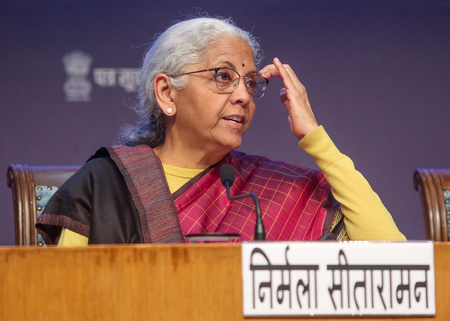
New Delhi, Feb 7 (IANS) India has safeguarded the sensitivities of its agriculture and animal husbandry sectors in the interim US trade deal, Finance Minister Nirmala Sitharaman said on Saturday.

As part of the interim trade deal framework, the US will slash reciprocal tariffs on Indian goods to 18 per cent, providing a huge market opportunity in key sectors such as textiles and apparel, leather and footwear, plastic and rubber products, organic chemicals, home decor, artisanal products, and select machinery in the world’s largest economy.

“The framework protects key farm and dairy products, spices, and staples, strengthening farmer incomes,” said FM Sitharaman.

The Agreement reflects India’s commitment to safeguarding farmers’ interests and sustaining rural livelihoods by completely protecting sensitive agricultural and dairy products, including maize, wheat, rice, soya, poultry, milk, cheese, ethanol(fuel), tobacco, certain vegetables, meat, etc.

The United States and India commit to provide each other preferential market access in sectors of respective interest on a sustained basis.

The United States and India will also establish rules of origin that ensure that the benefits of the Agreement accrue predominately to the United States and India., according to a White House statement.

“The United States and India will address non-tariff barriers that affect bilateral trade. Recognising the importance of working together to resolve long-standing concerns, India also agrees to address long-standing non-tariff barriers to the trade in U.S. food and agricultural products,” said the statement.

The White House further stated that they will work towards further expanding market access opportunities through the negotiations of the BTA. The United States affirms that it intends to take into consideration, during the negotiations of the BTA, India’s request that the United States continue to work to lower tariffs on Indian goods.

India will also get exemptions under section 232 on aircraft parts, tariff rate quota on auto parts and negotiated outcomes on generic pharmaceuticals, leading to tangible export gains in these sectors.

—IANS

na/
17,990 Jan Aushadhi Kendras opened across India till December 31: Govt

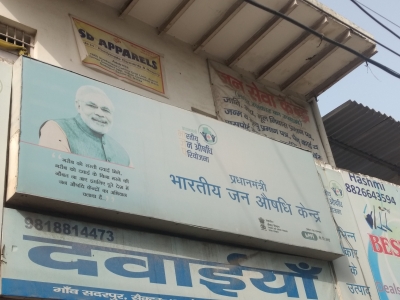
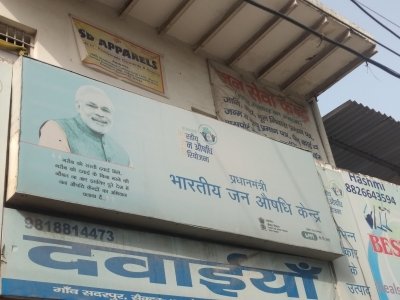
New Delhi, Feb 6 (IANS) A total of 17,990 Jan Aushadhi Kendras (JAKs) have been opened across the country till December 31, Union Health Minister JP Nadda informed the Parliament on Friday.

In a written reply in the Lok Sabha, the Nadda shared the state-wise number of JAKs opened across the country and the district-wise number of JAKs.

“Under the Pradhan Mantri Bhartiya Janaushadhi Pariyojana (PMBJP) scheme, a total of 17,990 Jan Aushadhi Kendras (JAKs) have been opened across the country as on December 31, 2025, of which 1,058 JAKs have been opened in the State of Bihar,” the Minister said.

The flagship scheme, PMBJP, was launched in 2014 with just 80 centres.

The JAKs provide essential medicines more accessible to people and reduce the out-of-pocket expenditure. These government pharmacies provide generic medicines, which are available at lower prices but are equivalent to expensive branded drugs in quality and effectiveness.

“The product basket under the Pradhan Mantri Bhartiya Janaushadhi Yojna has 2,110 medicines and 315 surgicals, medical consumables and devices, covering all major therapeutic groups, such as cardiovascular, anti-cancer, anti-diabetic, anti-infectives, anti-allergic and gastro-intestinal medicines and nutraceuticals such as protein powder, protein powder for women, 100 per cent whey protein, etc,” Nadda said.

Jan Aushadhi Kendras are opened by inviting online applications from individual entrepreneurs, non-governmental organisations, societies, trusts, firms, private companies, etc.

So far, 767 districts have already been covered under the scheme, including 38 districts in Bihar, the Minister said.

Further, the government has also taken concrete measures to ensure continuous inspection, testing, and standardisation of medicines at JAKs.

Only plants that are certified as WHO Good Manufacturing Practices (GMP) compliant by the Central Drugs Standard Control Organisation (CDSCO) after direct inspection are eligible for supply at the centres.

Distribution is done only after 100 per cent pre-testing of all medicine batches.

The samples are tested only at labs accredited and periodically inspected by the National Accreditation Board for Testing and Calibration Laboratories (NABL) and, in addition, assessed by PMBI for Good Laboratory Practices (GLP) compliance.

–IANS

rvt/

2 lakh Anganwadis upgraded for better nutrition, early childhood care in 2025: Govt

New Delhi, Feb 6 (IANS) A total of 2 lakh Anganwadi Centres across the country have been approved for upgradation as Saksham Anganwadis with improved nutrition and early childhood care and education till December last year, Annpurna Devi, Union Minister for Women and Child Development, told the Parliament on Friday.

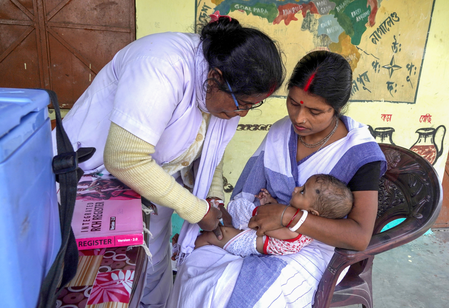
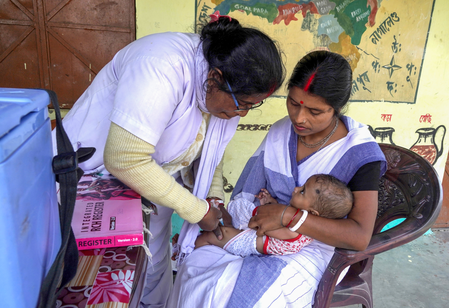
Under Mission Poshan 2.0, two lakh Anganwadi Centres located in Government buildings at 40,000 AWCs per year are strengthened as Saksham Anganwadis.

“Saksham Anganwadis are provided with better infrastructure than the conventional Anganwadi centres with LED screens, water filtration system, Poshan Vatika, ECCE material, and BALA paintings,” Devi said, while answering a query in the Lok Sabha.

The Minister said that under Saksham Anganwadi and Mission Poshan 2.0, IT systems have been leveraged to strengthen and bring about transparency in nutrition delivery support systems at the Anganwadi Centres.

In addition, the ‘Poshan Tracker’ application was rolled out to facilitate monitoring and tracking of all AWCs, Anganwadi Workers (AWWs), and beneficiaries on defined indicators.

“Technology under Poshan Tracker is also being leveraged for dynamic identification of stunting, wasting, and under-weight prevalence among children,” Devi said.

It has also facilitated near real-time data collection for Anganwadi Services, such as opening and closing of AWCs, daily attendance of children, growth monitoring of children, early childhood care and education (ECCE) activities, delivery of hot cooked meal (HCM)/take home ration (THR-not raw ration), growth measurement, etc.

The App also offers counselling videos on key behaviours and services which help disseminate messages on birth preparedness, delivery of the child, post-natal care, breastfeeding, and complementary feeding.

Further, for last-mile tracking of Service Delivery, a Facial Recognition System (FRS) has been developed in the Poshan Tracker Application for the distribution of Take-Home Ration to ensure that benefit is given only to the intended beneficiary registered in Poshan Tracker.

–IANS

rvt/

AI-powered digital stethoscopes show promise in bridging screening gaps

New Delhi, Feb 6 (IANS) As tuberculosis (TB) continues as the deadliest infectious cause of deaths globally, a new study has shown that artificial intelligence (AI)-enabled digital stethoscopes can help fill critical screening gaps, especially in hard-to-reach areas.

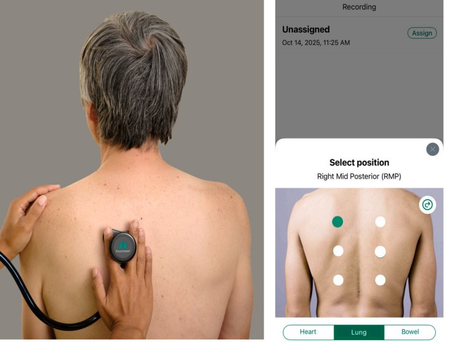
In a commentary published in the journal Med (Cell Press), global experts contended that stethoscopes combined with digital technology and AI can be a better option against the challenges faced in screening programmes, such as under-detection, high cost, and inequitable access.

“AI-enabled digital stethoscopes have demonstrated promising accuracy and feasibility for detecting lung and cardiovascular abnormalities, with promising results in early TB studies. Training and validation in diverse, high-burden settings are essential to explore the potential of this tool further,” said corresponding author Madhukar Pai from McGill University, Canada, along with researchers from the UAE, Germany, and Switzerland.

Despite advancements in screening and diagnostic tools, an estimated 2.7 million people with TB were missed by current screening programmes, as per data from the World Health Organization (WHO). Routine symptom screening is also likely to miss people with asymptomatic or subclinical TB.

While the WHO recently recommended several AI-powered computer-aided detection (CAD) software, as well as ultra-portable radiography hardware, higher operating costs and upfront hardware act as a deterrent.

This particularly appeared difficult in primary care settings and or among pregnant women due to radiation concerns.

At the same time, AI showed significant potential for screening, including applications beyond CAD of TB from radiographs, said the researchers.

“One application of AI for disease screening is to interpret acoustic (sound) biomarkers of disease, with potential to identify sounds that appear nonspecific or are inaudible to the human ear,” they added, while highlighting the potential of AI in detecting and interpreting cough biomarkers and lung auscultation to analyse breath sounds.

Studies from high-TB burden countries, including India, Peru, South Africa, Uganda, and Vietnam, highlighted that AI-enabled auscultation could hold promise as a TB screening and triage tool.

“AI digital stethoscopes may become useful alternatives to imaging-based approaches for TB screening, with the potential to democratise access to care for populations underserved by radiography,” the researchers said.

“Importantly, AI digital stethoscopes offer a scalable, low-cost, and person-centered tool that could bring us closer to reaching TB case finding goals,” they added.

–IANS

rvt/

Gold, silver prices slip amid profit booking, dollar gains

Mumbai, Feb 6 (IANS) Gold prices fell moderately, while silver lost over 3 per cent on Friday due to a stronger dollar and a rout in global technology stocks.

MCX gold February futures fell 0.97 per cent to Rs 1,50,590 per 10 grams around 10.40 am on an intraday basis. Meanwhile, MCX silver March futures plunged 3.71 per cent to Rs 2,34,775 per kg.

On the MCX, silver prices had declined as much as 6 per cent to their day’s low of Rs 2,29,187 per kg earlier during the session before a strong rebound.

Commodities denominated in dollars became more expensive for holders of other currencies as the US dollar got poised for its strongest weekly performance since November, hovering close to a two-week high.

Silver’s sharp correction has reignited concerns over stretched valuations and heightened volatility, even as analysts maintained that the white metal’s longer-term fundamentals remain constructive.

Investment banker JP Morgan warned that silver’s rich valuations could trigger disproportionate downside during bouts of market stress, adding that downside may be cushioned in the near term, with prices stabilising for a recovery next year.

Analysts called the sharp drop in precious metals a “technical correction” due to longer-term drivers such as geopolitical uncertainty, central-bank buying, and macro uncertainty remaining intact.

The broader uptrend in COMEX gold remains intact, with the recent decline reflecting profit booking and healthy price digestion rather than trend reversal, they said.

Market watchers advised investors to do staggered allocations rather than lump-sum investments to reduce entry risk.

Strong support is seen in the Rs 1,37,000 to Rs 1,42,000 zone for MCX gold futures, while resistance is anchored around the Rs 1,65,000 to Rs 1,75,000 zone, they said.

Regarding COMEX silver, they said that a sustained move beyond $85–$92 could lead to an upside momentum up to $95–$105, with the medium- to long-term outlook remaining constructive on steady industrial demand and structural supply constraints.

–IANS

aar/rvt/

Covid vaccine not linked to decrease in fertility: Study

New Delhi, Feb 6 (IANS) Amid several claims of vaccination and reduced fertility, a study of nearly 60,000 women showed that the Covid vaccine played no role in a decrease in childbirth.

Since the beginning of the Covid-19 pandemic, unfounded rumours have circulated, especially on social media, alleging that vaccination impairs chances of becoming pregnant.

In the later stages of the pandemic, there was a decrease in the number of children born in some countries, including Sweden. This raised the question of whether this could be due to the new vaccines.

“Our conclusion is that it’s highly unlikely that the mRNA vaccine against Covid-19 was behind the decrease in childbirth during the pandemic,” said Toomas Timpka, professor of social medicine at Linköping University, Sweden.

The study, published in the journal Communications Medicine, found no statistically significant difference between vaccinated and unvaccinated women in childbirths and miscarriages.

“We see no difference in childbirth rates between those who have taken the vaccine and those who haven’t. We’ve also looked at all registered miscarriages among those who became pregnant, and we see no difference between the groups there either,” Timpka said.

Their analysis is based on a study of almost 60,000 women aged 18 to 45 years in Sweden.

Of these women, 75 per cent were vaccinated once or more against Covid from 2021 to 2024. The researchers used data on childbirths, vaccinations, miscarriages, and deaths from health care records.

The results are in line with several previous studies that have not found any association between the Covid vaccine and fertility.

Importantly, the study examined conception and pregnancy in the general population, unlike most previous research, which “focused on couples undergoing fertility treatment.”

The researchers also adjusted their findings for factors other than Covid that could have affected conception rates, such as age and underlying illness.

Several studies have shown that Covid infection can be dangerous for pregnant women, but vaccination can reduce that risk substantially.

“Present scientific evidence is clear that the protection against severe disease a Covid-19 shot provides clearly outweighs possible risks,” Timpka said.

“Women who want to start a family and who are on the fence about whether to get a Covid-19 shot should not hesitate about having the vaccine,” Timpka added.

–IANS

rvt/

AIIMS doctors remove 2-inch-long metal spring from 14-month-old’s food pipe

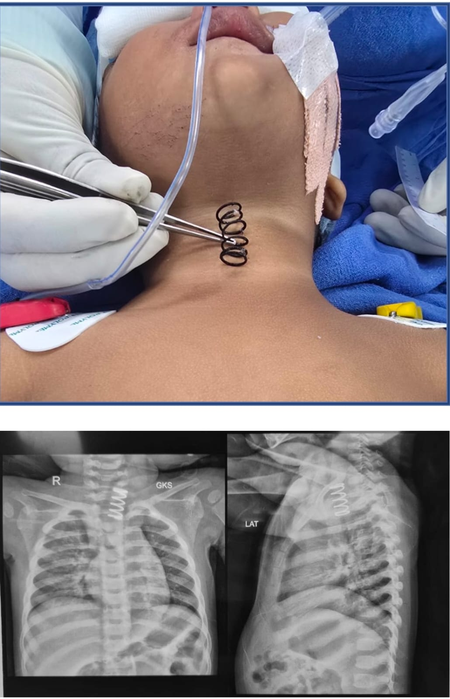
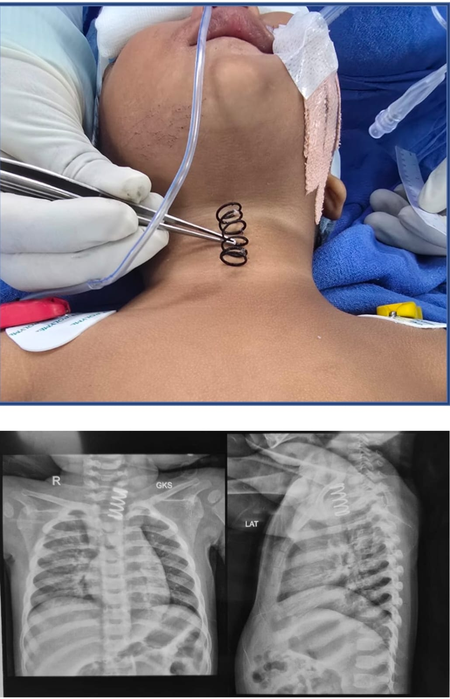
New Delhi, Feb 5 (IANS) Doctors at AII India Institute of Medical Sciences successfully performed a complex medical procedure to save the life of a 14-month-old girl who had swallowed a 2-inch-long metal spring, it said on Thursday.

The metal spring stuck in the oesophagus, also known as the food pipe, was successfully removed after an endoscopic surgery, AIIMS said in an official statement.

he child, a resident of Yamunanagar, was brought to the hospital after suffering from continuous vomiting for about a week and not eating for two days.

“During the examination, an X-ray revealed a large metal spring lodged in the upper part of the child’s oesophagus,” AIIMS said, “with ulcerations extending along the mucosa”.

“The spring was stuck on the upper part of the food pipe. And the thickness of the spring was much more than the normal spring, which we see in our pens. It was approximately half an inch wide and at least 1.5 to 2 inches long,” Professor Dr. Vishesh Jain, from the Paediatric Surgery Department, told IANS.

He noted that an attempt was made to remove it endoscopically at a private hospital in Dehradun, but due to swelling and lesions in the oesophagus, the procedure was deemed risky, and the child was immediately referred to AIIMS.

Jain and his team used advanced endoscopic techniques in the operating room. The spring was carefully rotated and removed, preventing any perforation, the statement said.

“After the surgery, the child’s condition improved rapidly, and she was started on oral feeding the next day,” AIIMS said.

Jain advised parents to keep items such as springs, batteries, coins, and small toy parts out of reach of young children, as swallowing them can be fatal. He also said that if parents see a baby swallow something, they should take the baby to a doctor immediately so the doctor can assess the size of the object and decide on the proper treatment.

–IANS

rvt/

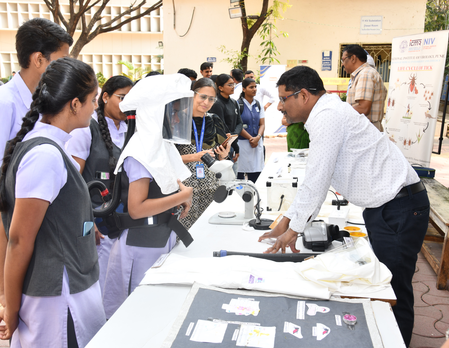
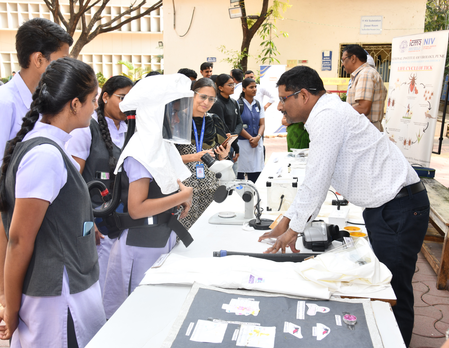
ICMR-NIV celebrates 74 years of scientific excellence with school students in Pune

Pune, Feb 5 (IANS) The ICMR-National Institute of Virology (NIV) celebrated its 74th Foundation Day with a science outreach programme with school students to nurture scientific curiosity, it said on Thursday.

On February 4, scientists from the ICMR-NIV led a two-phase outreach programme in coordination with Vijnana Bharati (VIBHA) and engaged with 1,180 school students from classes 6-12.

The experts engaged with 1,130 students through visits to three schools across Pune and welcomed another 50 students along with their teachers for an interactive campus experience at ICMR–NIV, Pune.

“Students were introduced to key concepts of virology, including different types of viruses, insect and bird specimens, and diagnostic kits. Interactive videos, posters, and presentations showcased ICMR-NIV’s contributions to public health while guided laboratory tours and demonstrations of diagnostic tools and PPE (Personal Protective Equipment) kits sparked scientific curiosity among young learners,” said an official statement.

Dr. Naveen Kumar, Director, ICMR-NIV, highlighted the institute’s remarkable achievements, upcoming research projects, and future research vision.

The Director emphasised NIV’s mandate to focus on basic virology, the development of medical countermeasures, and pandemic preparedness.

He also noted that the upcoming zonal NIVs will concentrate on outbreak investigations within their respective zones.

Dr. Rajiv Bahl, Secretary, Department of Health Research, and Director General, Indian Council of Medical Research, in his keynote address, spoke about “the development of vaccines and new medical countermeasures against the diseases while underscoring the importance of institutional and industry collaborations in advancing India’s vision of Viksit Bharat”.

Appreciating ICMR-NIV’s contributions to eliminating viral diseases, Prof. Shekar C. Mande, President, Indian National Science Academy (INSA), emphasised the need for collective action for building a healthier and sustainable world for the next generation.

In August last year, the Institute organised an Open School Day at two of its campuses in Pune to inspire the next generation of scientists and innovators.

A total of 369 school students, studying in standards IX to XII, from 26 different schools in Pune, attended the session. They were accompanied by 36 teachers coming from the participating schools.

Key research themes showcased included vector-borne diseases, respiratory infections, and zoonotic threats.

–IANS

rvt/

Integrative medicine model in public health to boost Universal Health Coverage: Anupriya Patel

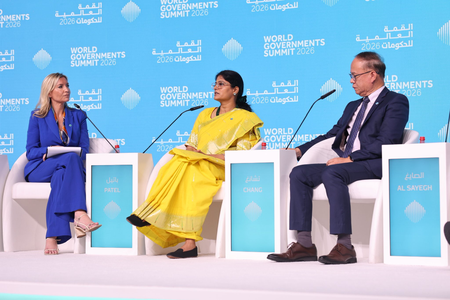
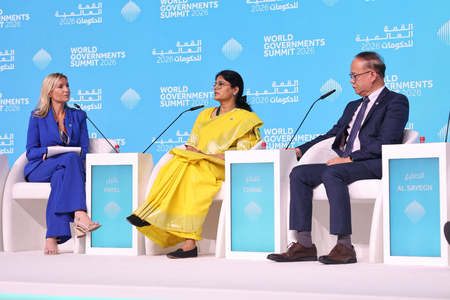
New Delhi, Feb 5 (IANS) Integrating Ayush with modern medicine in public health can help boost Universal Health Coverage, said Anupriya Patel, Minister of State for Health & Family Welfare, on Thursday.

Speaking at the third day of the World Governments Summit, held in Dubai, UAE, she highlighted the need to shift health systems towards prevention and long-term wellbeing.

Addressing the session “From Policy to Practice: Investing in the Future of Integrative Medicine”, Patel noted that the rising burden of non-communicable diseases, mental health challenges, and lifestyle disorders driven by urbanisation, unhealthy diets, physical inactivity, and chronic stress requires moving beyond episodic, curative care.

“The convergence of AYUSH systems with modern medicine and public health frameworks as a strategic pathway to building a resilient, preventive, and people-centric health ecosystem. This approach aligns closely with the goals of Universal Health Coverage,” the Minister said.

Patel also outlined India’s policy-led and systems-driven approach to integrative healthcare.

She highlighted how India has pioneered the structured integration of its rich traditional medical systems with modern scientific medicine, translating ancient knowledge into scalable, evidence-based public health models with relevance for health systems worldwide.

According to the World Health Organisation, 88 per cent of member states have traditional systems of medicine that are culturally accepted.

Earlier, speaking in a media interview, Patel shared that integrative healthcare has been institutionalised in India.

The National Health Policy (NHP) 2017 provides a powerful mandate for integrative healthcare in India. Patel stated that the integrative healthcare model has been operationalised across primary, secondary, and tertiary healthcare systems in the country.

At the primary level, Ayushman Arogya Mandirs across the country now deliver traditional medicine services, including Ayush practices such as yoga and wellness.

Ayush blocks function at secondary healthcare facilities, and national tertiary institutions are establishing dedicated integrative healthcare units, the Minister said, adding the inclusion of traditional medicine in medical education systems.

–IANS

rvt/

GST cuts on cancer drugs, higher tobacco tax boosting public health: AIIMS study

New Delhi, Feb 5 (IANS) The Goods and Services Tax (GST) exemption of lifesaving cancer drugs and higher taxation on tobacco products are the steps aimed at strengthening public health in the country, according to a new study led by oncologists from the All India Institute of Medical Sciences.

The GST council, in its 56th meeting in September last year, recommended the total exemption of 33 lifesaving drugs, including those used in cancer care, from GST altogether (from 12 per cent to zero, and three critical drugs for rare diseases and cancer from 5 per cent to zero).

The study noted that the measures are making healthcare more affordable and accessible, reducing out-of-pocket expenses for patients.

Earlier this week, Union Finance Minister Nirmala Sitharaman slashed the basic custom duty on 17 cancer drugs in her Budget presentation.

“India’s recent GST reforms mark a significant step toward making cancer care more affordable and accessible. By exempting 33 life-saving cancer and rare-disease drugs from GST and reducing taxes on medical equipment, the government has directly eased the financial burden on patients and families,” Dr Abhishek Shankar, from the Department of Radiation Oncology at AIIMS, told IANS.

In another significant step, the GST council also increased the tax slab for tobacco products to 40 per cent, which is the highest for any class of goods in the country.

The benefits of such taxation, which became effective from February 1 this year, can lead to gains in life years, averting treatment costs and premature mortality as well as avoiding catastrophic expenditure on health and poverty, the study said.

Tobacco is also known as the leading preventable cause of cancer globally. A report by the World Health Organization (WHO) and its International Agency for Research on Cancer (IARC) on World Cancer Day stated that tobacco is responsible for 15 per cent of all new cancer cases.

“A higher taxation on tobacco products reinforces prevention by discouraging consumption and generating revenue that can be redirected toward public health,” Shankar said.

The study noted that the economic structural policy changes can also serve as guidance for other countries in the region with similar socio-economic and disease burden characteristics, which might benefit from adopting or adapting these measures in terms of policy layout, tax structure, and outcome monitoring.

“While timely pass-through of benefits to patients remains crucial, these reforms signal a balanced policy approach, one that supports treatment, promotes healthier behaviour, and strengthens India’s commitment to equitable cancer care,” Shankar said.

–IANS

rvt/