All future interactions with India will be on equal terms: PCB chief

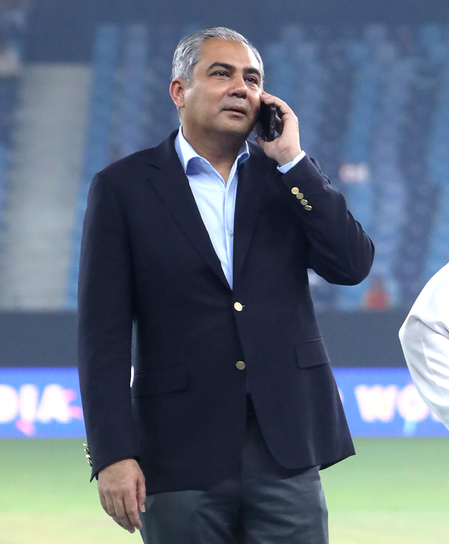
Islamabad, Dec 29 (IANS) Pakistan Cricket Board (PCB) chief Mohsin Naqvi has reiterated that if India wants the T20 Asia Cup 2005 trophy, then they will have to accept it from him in Dubai.

“There is a status quo on trophy handing. If India wants the trophy, they must send their captain to Dubai and receive it from me,” Naqvi told Telecom Asia Sport (www.telecomasia.net).

The trophy is still lying in the Asian Cricket Council (ACC) office in Dubai ever since India captain Suryakumar Yadav refused to receive it from Naqvi during the presentation ceremony following their victory over Pakistan in the Asia Cup final.

Naqvi claimed he was entitled to hand over the trophy as president of the Asian Cricket Council (ACC).

Pakistan, Naqvi said, will write to the International Cricket Council (ICC) over the rude behaviour of Indian Under-19 players in the Junior Asia Cup. “We will be writing a letter to the ICC to complain about the behaviour of Indian Junior players during the final of the Junior Asia Cup which was not acceptable.”

Naqvi also said that there will be no compromise with India, and if they do not want to shake hands with our players, everything will be on equal terms.

“If India does not allow their players to shake hands with our players then it will be dealt with on equal terms and there will be no compromise,” Naqvi said in response to a question from Telecom Asia Sport (www.telecomasia.net). “We have no interest in shaking hands with them.”

The controversy over Indian T20 captain Yadav not shaking hands with Pakistani counterpart Salman Agha at the toss, followed by the same action after all three matches marred the Asia Cup in September in Dubai, as a handshake between rivals is the norm in international matches.

The trend was also followed by the Indian teams at the Women’s World Cup in Sri Lanka in November, the Rising Star Asia Cup in Doha in the same month, and the Under-19 Asia Cup in Dubai this month.

The tension was sparked after India and Pakistan engaged in a four-day military conflict in May following a deadly militant attack on tourists in Pahalgam in J&K. New Delhi blamed Pakistan for the massacre, a charge denied by Islamabad.

Pakistan team’s mentor, Sarfaraz Ahmed, had complained about the behaviour of Indian Junior players and termed it “Uneducated and unacceptable.”

Pakistan won the heated final by a significant 191-run margin last Sunday.

Naqvi announced that former legendary paceman Wasim Akram would be the brand ambassador of the Pakistan Super League.

“We have appointed Wasim Akram as the brand ambassador of the PSL and that we will handle the Multan Sultans franchise on our own the next year before a new owner is found,” said Naqvi.

Multan’s owner, Ali Tareen, fell out with the PCB and left the franchise.

bsk/vi
India poised to become 3rd-largest economy with GDP of $7.3 trillion by 2030

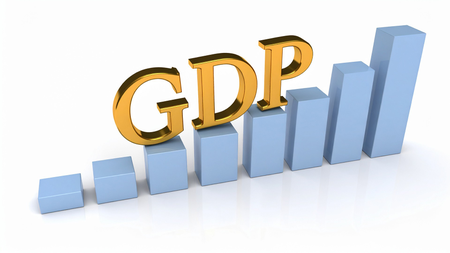
New Delhi, Dec 29 (IANS) With GDP valued at $4.18 trillion, India has surpassed Japan to become the world’s fourth-largest economy and is poised to displace Germany from the third rank in the next 2.5 to 3 years with projected GDP of $7.3 trillion by 2030, an official statement said on Monday.

The growth momentum further surprised on the upside, with GDP expanding to a six-quarter high in Q2 of 2025-26, reflecting India’s resilience amid persistent global trade uncertainties.

Domestic drivers-led by robust private consumption-played a central role in supporting this expansion, according to the statement.

India’s real GDP grew 8.2 per cent in Q2 FY2025-26, up from 7.8 per cent in the previous quarter and 7.4 per cent in Q4 of 2024-25, led by resilient domestic demand amidst global trade and policy uncertainties. Real gross value added (GVA) expanded by 8.1 per cent, catalysed by buoyant industrial and services sectors.

High-frequency indicators point to sustained economic activity: inflation remains below the lower tolerance threshold, unemployment is on a declining trajectory, and export performance continues to improve. Furthermore, financial conditions have stayed benign, with strong credit flows to the commercial sector, while demand conditions remain firm, supported by a further strengthening of urban consumption.

“India is among the world’s fastest-growing major economies and is well-positioned to sustain this momentum. With the ambition of attaining high middle-income status by 2047 — the centenary year of its independence — the country is building on strong foundations of economic growth, structural reforms, and social progress,” according to the statement.

The RBI revised India’s GDP growth forecast for FY 2025-26 upwards to 7.3 per cent from the earlier estimate of 6.8 per cent.

India’s domestic growth is on an upward trajectory owing to multiple factors such as- robust domestic demand, income tax and goods and services tax (GST) rationalisation, softer crude oil prices, front-loading of Government capital expenditure (CAPEX), along with facilitative monetary and financial conditions, supported by benign inflation.

Looking ahead, domestic drivers like favourable agricultural prospects, the sustained effects of GST rationalisation, benign inflation, and the strong balance sheets of corporates and financial institutions — coupled with supportive monetary and financial conditions — are expected to continue bolstering the economic activity.

External factors such as services exports are projected to remain robust, while the swift conclusion of current trade and investment negotiations offers additional upside potential. Ongoing reforms are likely to further enable growth prospects. Present macro-economic situation presents a rare “goldilocks period” of high growth and low inflation, said the statement.

—IANS

na/

Congress will lose relevance if Rahul continues: JD(U)’s Rajeev Ranjan backs HM Shah’s criticism

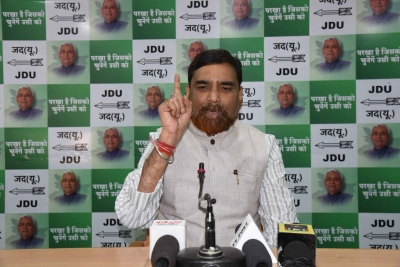
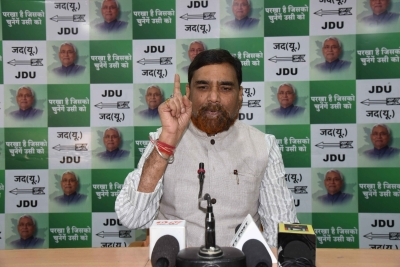
New Delhi, Dec 29 (IANS) Reacting to Union Home Minister Amit Shah’s sharp remarks targeting the Congress and its leadership, JD(U) National Spokesperson Rajeev Ranjan Prasad on Monday said the party was heading towards “political irrelevance” if Rahul Gandhi continued to lead it in the same manner.

Prasad said growing dissatisfaction within the Congress was evident and warned that the party could face serious challenges in the near future unless it undertook deep introspection.

“If Rahul Gandhi continues to lead the Congress in the same manner, the day is not far when Congress could lose its relevance in India. Dissatisfaction within the party is growing steadily. Therefore, the party is likely to face difficulties in the near future, and it is crucial for them to carefully introspect and take corrective measures,” Rajeev Ranjan Prasad said.

Echoing similar sentiments, Uttar Pradesh Minister Om Prakash Rajbhar also backed Amit Shah’s statement and launched a scathing attack on Rahul Gandhi. “What Amit Shah is saying is correct. The work he has done has been in the interest of the country. Rahul Gandhi has always spoken against the nation, whether he is abroad or in India,” Rajbhar said.

Their remarks came a day after Union Home Minister Amit Shah took a jibe at Rahul Gandhi and the Congress while addressing a gathering in a village near Ahmedabad city.

Shah said a political party cannot expect electoral success if it opposes everything that resonates with the people, adding that it was beyond his capacity to make Rahul Gandhi understand this “simple logic”.

“During a recent debate in the Lok Sabha, Rahul Gandhi asked me a strange question: ‘Why does only my party lose elections every time?’ Instead of asking people, he asked me. Rahul baba, you will get the answer if you understand these two initiatives that I have launched here,” Shah said.

The BJP leader further remarked that Rahul Gandhi should not be surprised by repeated electoral defeats, asserting that the Congress would also lose the upcoming Assembly elections in Tamil Nadu and West Bengal. “Gandhi should not get tired of losing because the Congress will definitely lose the upcoming Assembly polls in Tamil Nadu and West Bengal,” Shah said.

Highlighting what he described as the BJP’s ideological connect with the people, Shah said the party’s success stemmed from aligning with public sentiment. “The reason behind our success is that people are connected with our principles. The Congress opposed the Ram Mandir, the surgical strike on terrorists, the removal of Article 370, the Uniform Civil Code, the Act against triple talaq and our campaign to drive out illegal Bangladeshi infiltrators,” he noted.

Sharpening his attack further, Shah added, “Now tell me. If you oppose what people like, how will you get votes? But it is beyond my capacity to make Rahul baba understand such simple logic because even people from the Congress have failed to do so.”

–IANS

rs/mr

Can ChatGPT help reduce mental health stigma?

New Delhi, Dec 29 (IANS) Artificial Intelligence (AI) may not replace professional care, chatbots like ChatGPT may help reduce mental health stigma, particularly for people hesitant to seek traditional face-to-face support, according to a study.

The team from Edith Cowan University (ECU) in Australia surveyed 73 people who had used ChatGPT for personal mental health support, investigating ChatGPT use and its perceived effectiveness related to stigma.

“The findings suggest that believing the tool is effective and plays an important role in reducing concerns about external judgment,” said Scott Hannah, a student of the Master of Clinical Psychology at ECU.

Stigma is a major barrier to seeking mental health help. It can worsen symptoms and discourage people from accessing support.

The study focused on anticipated stigma — fear of being judged or discriminated against; and self-stigma — internalising negative stereotypes, which reduces confidence and help-seeking.

People who felt ChatGPT was effective were more likely to use it and more likely to report reduced anticipated stigma, meaning less fear of being judged.

As AI tools become more common, people are using chatbots for private, anonymous conversations about their mental health concerns.

“These results suggest that, despite not being designed for these purposes, AI tools such as ChatGPT are becoming more widely used for mental health purposes,” he added.

While it may be easier to open up to AI, one should be wary, as anonymous digital tools carry important ethical considerations, the team said.

“ChatGPT was not designed for therapeutic purposes, and recent research has shown that its responses can sometimes be inappropriate or inaccurate. Therefore, we encourage users to engage with AI-based mental health tools critically and responsibly,” Hannah said.

The team stressed the need for more research to understand how AI can safely complement mental health services.

–IANS

rvt/

Trump asserts Zelensky ‘doesn’t have anything until I approve it’: Media

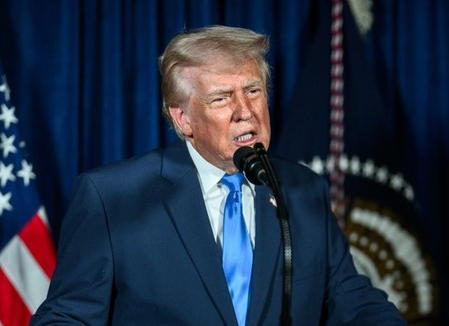
Washington, Dec 27 (IANS) Ukrainian President Volodymyr Zelensky “doesn’t have anything until I approve it,” US President Donald Trump said in an exclusive interview with Politico, two days ahead of his meeting with Zelensky in Florida over a peace plan to end the Russia-Ukraine conflict lasting nearly four years.

The two leaders are expected to discuss the framework of a new 20-point peace plan including a proposed demilitarized zone, the management of the Zaporizhzhia nuclear power plant, territorial control of Donbas, and US security guarantees after the conflict comes to an end, Xinhua news agency reported.

Meanwhile, Ukrainian President said on Friday that he plans to discuss security guarantees for Ukraine during his upcoming meeting with US President Donald Trump.

Zelensky told reporters that the meeting is scheduled to take place in the US state of Florida on Sunday, according to the Interfax-Ukraine news agency.

He added that Ukraine intends to raise the questions of territorial issues and control over the Zaporizhzhia nuclear power plant during the talks.

According to Zelensky, the 20-point peace plan is 90 per cent ready and several documents outlining security guarantees have been drafted.

Zelensky said there are four sides to the peace plan, namely, Ukraine, the United States, Russia and Europe, adding that the document can not be signed without Russia and Europe.

“We have agreed on a meeting at the highest level — with President Trump in the near future,” Zelensky wrote earlier on Telegram after a conversation with Rustem Umerov, head of the Ukrainian delegation to the peace talks with the US.

Zelensky said “a lot” could be decided before the New Year.

The remarks came after the United States, Ukraine and European representatives held three-day talks on the Ukraine crisis last week in Miami, Florida.

–IANS

int/rs

Northeast Frontier Railway sets new record in mechanised track renewal

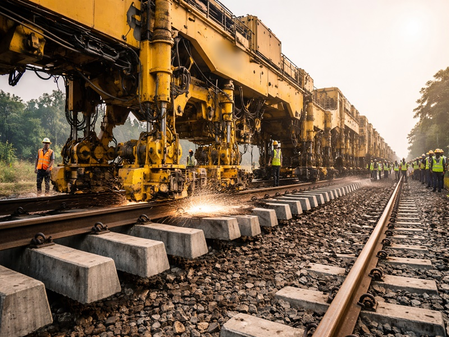
Guwahati, Dec 26 (IANS) The Alipurduar Division of the Northeast Frontier Railway (NFR) has achieved a major milestone in mechanised track renewal by recording its highest-ever single-day output of 1,033 track metres using the Plasser’s Quick Relaying System (PQRS), officials said on Friday.

NFR’s Chief Public Relations Officer (CPRO) Kapinjal Kishore Sharma this track renewal achievement on December 23 reflects effective deployment of high-output mechanized track laying technology, optimized traffic blocks and coordinated execution by engineering and operating departments.

He said that during the current track renewal programme, Northeast Frontier Railway has undertaken a total of 290.8 km of track renewal across its jurisdiction.

Division-wise progress includes 51.33 km in Katihar Division, 29.77 km in Alipurduar Division in West Bengal, 75.19 km in Rangiya Division, 44.98 km in Lumding Division and 69.96 km in Tinsukia Division, demonstrating a focused and systematic approach towards infrastructure upgradation across the zone.

PQRS (Plasser’s Quick Relaying System) consists of self-propelled cranes and is compact in size, which significantly reduces maintenance cost.

The system is extensively used for new track construction as well as modernization of existing track infrastructure. With the deployment of PQRS, rail panels are replaced in considerably less time, enabling replacement of longer track lengths within shorter traffic blocks, Sharma said.

The CPRO said that the system facilitates complete retrieval of old rail panels directly from the work site to the base, eliminating the need for additional freight carriage arrangements.

The successful execution of high-output track renewal operations highlights Northeast Frontier Railway’s continued emphasis on modern track renewal practices, asset reliability and maintenance efficiency, the official said.

The Northeast Frontier Railway (NFR), headquartered at Maligaon in Guwahati, operates across the Northeastern states as well as in seven districts of West Bengal and five districts of north Bihar.

–IANS

sc/pgh

CBI moves Supreme Court against Delhi HC’s order suspending Kuldeep Singh Sengar’s sentence

New Delhi, Dec 26 (IANS) The Central Bureau of Investigation (CBI) has moved the Supreme Court against the Delhi High Court’s order suspending the life sentence and granting bail to expelled Bharatiya Janata Party leader Kuldeep Singh Sengar in the 2017 Unnao rape case.

The Special Leave Petition (SLP), filed under Article 136 of the Constitution, challenges the December 23 order passed by the Delhi High Court allowing Sengar’s application for suspension of sentence during the pendency of his appeal.

It was learnt earlier that the CBI and the victim’s family indicated their intention to challenge the Delhi High Court’s order before the apex court.

Before the Delhi High Court, the CBI strongly opposed Sengar’s plea, highlighting the seriousness of the offence and the potential risks involved.

In an order passed on Tuesday, a Division Bench of Justices Subramonium Prasad and Harish Vaidyanathan Shankar of the Delhi High Court had suspended Sengar’s life sentence and granted him conditional bail during the pendency of his appeal, subject to strict conditions.

Despite the grant of bail in the rape case, Sengar was unlikely to be released immediately as he is serving a separate sentence in cases linked to the death of the survivor’s father.

The Unnao rape case had triggered nationwide outrage.

In December 2019, the trial court convicted Sengar of kidnapping and raping the minor girl and sentenced him to imprisonment for the remainder of his natural life, along with a fine of Rs 25 lakh.

The Supreme Court had earlier transferred all cases related to the incident from Uttar Pradesh to Delhi and directed that the trial be conducted on a day-to-day basis.

Meanwhile, the family members of the Unnao rape survivor, along with women’s rights activists, on Friday, held a protest outside the Delhi High Court against the suspension of Kuldeep Sengar’s life sentence.

Raising slogans and holding placards, the protesters said the bail order had “shaken public faith” and sent a wrong message on crimes against women.

–IANS

pds/khz

Rajasthan students to learn story of Guru Gobind Singh’s Sahibzadas; CM announces curriculum inclusion

Jaipur, Dec 26 (IANS) Children in Rajasthan will soon study the inspiring story of Guru Gobind Singh’s Sahibzadas as part of their school education.

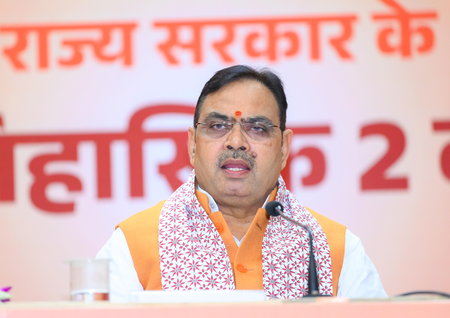
On the occasion of Veer Bal Diwas, Chief Minister Bhajan Lal Sharma announced that the martyrdom and bravery of the four Sahibzadas will be included in the primary education curriculum to instil values of patriotism, courage and moral strength among students.

Speaking at a programme in Jaipur, the Chief Minister said the sacrifices of Sahibzada Ajit Singh, Sahibzada Jujhar Singh, Sahibzada Zorawar Singh and Sahibzada Fateh Singh stand as immortal examples of patriotism, protection of faith and human values.

Recalling the supreme sacrifice of the younger Sahibzadas, Zorawar Singh and Fateh Singh, he said that despite their tender age, they refused to bow before tyranny and chose martyrdom over injustice.

CM Sharma said teaching the story of the Sahibzadas to children would help the younger generation understand the true meaning of bravery, faith and sacrifice, and draw inspiration from India’s rich spiritual and historical heritage.

“The courage of the Sahibzadas is not just a chapter of Sikh history, but a proud legacy of the entire nation,” he said.

On the occasion of Veer Bal Diwas, an exhibition highlighting the life, bravery and sacrifices of Guru Gobind Singh Ji’s Sahibzadas was organised at the Bharatiya Janata Party (BJP) state office in Jaipur.

The exhibition was jointly inaugurated by Chief Minister Bhajan Lal Sharma and BJP State President Madan Rathore.

Formally announcing the decision, the Chief Minister said the glorious saga of the Sahibzadas’ sacrifice would be incorporated into school textbooks so that future generations remain connected to history and imbibe the values of selflessness, nationalism and righteousness from an early age.

Emphasising Hindu-Sikh unity, BJP State President Madan Rathore said the values and spirit of patriotism in both religions are the same. He added that dividing society on the basis of religion or faith weakens the nation.

Rathore said Sikh traditions and symbols, including the turban and kada, are an integral part of India’s shared cultural fabric.

The initiative is being seen as a significant step towards promoting value-based education rooted in India’s historical and spiritual legacy.

–IANS

arc/pgh

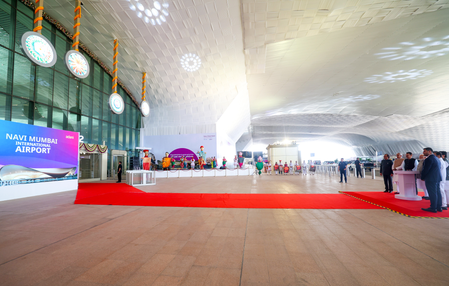
Air India Express flight takes off as Navi Mumbai International Airport begins operations

Mumbai, Dec 25 (IANS) Air India Express on Thursday said it inaugurated services from Navi Mumbai International Airport (NMIA) on Christmas Day, with direct flights to Bengaluru and Delhi.

The first Air India Express flight from Navi Mumbai International Airport operated to Bengaluru, marks the commencement of the airline’s services from the new airport.

“Following the inaugural Bengaluru service, the airline’s inaugural Delhi flight was scheduled to depart from Navi Mumbai at 14:05 hours and arrive in the national capital at 16:20 hours,” the airline said in a statement.

The airline is among the first carriers to commence commercial services from NMIA on the very day the airport opened for operations.

“The start of flights from Navi Mumbai is a milestone for the city and the region. We are happy to be part of this effort, in enhancing capacity for Mumbai and the wider Mumbai Metropolitan Region. Navi Mumbai is a key pillar of our dual-airport strategy, complementing our services from CSMIA, where we operate direct flights to 11 domestic and three international destinations,” said Aloke Singh, Managing Director, Air India Express.

He said that Air India Express will scale up its operations going forward, offering guests reliable, value-driven connectivity delivered with the warmth of Indian hospitality, supported by a modern fleet.

NMIA is India’s newest Greenfield airport. In the first month, NMIA will operate for 12 hours — between 08:00 hours and 20:00 hours — handling 23 scheduled daily departures.

During this period, the airport will manage up to 10 flight movements per hour. During the initial launch period, passengers will benefit from services operated by IndiGo, Air India Express, and Akasa Air, connecting Mumbai to 16 major domestic destinations, according to the airport.

Starting February 2026, the airport will transition to round-the-clock operations, expanding to 34 daily departures to meet the increasing needs of the MMR.

NMIA is a public private partnership (PPP) between Mumbai International Airport Limited (MIAL), a subsidiary of Adani Airports Holdings Limited (AAHL), which holds the majority stake of 74 per cent, while the City and Industrial Development Corporation of Maharashtra Limited (CIDCO) holds the remaining 26 per cent.

—IANS

na/

India forges new trade ties in 2025 to hedge against global uncertainties

New Delhi, Dec 25 (IANS) India stepped up its efforts to forge new economic and trade partnerships this year, amid growing economic uncertainties in global markets, triggered by the US tariff turmoil.

Three major free trade agreements signed by India with the UK, New Zealand and Oman — and the ongoing talks with the European Union (EU) — will not only enhance trade but also increase competitiveness, attract quality foreign investment, and provide greater access to high-end technologies and markets.

India has been able to secure fair and equitable deals in these free trade agreements which provide greater access for India’s manufactured goods and skilled professionals in these markets. At the same time, the government has succeeded in protecting India’s agricultural sector from foreign competition to ensure that the livelihood of the country’s farmers is not adversely impacted.

The country concluded a Comprehensive Economic and Trade Agreement (CETA) with the United Kingdom in July this year which provides an unprecedented duty-free access to 99 per cent of India’s exports to the UK, covering nearly 100 per cent of the trade value, benefiting labour-intensive sectors such as textiles, leather, marine products, gems, engineering goods, chemicals, and auto components.

Notably, the agreement goes beyond goods and addresses services, a core strength of India’s economy. India exported over US$ 19.8 billion in services to the UK in 2023, and CETA promises to expand this further.

Additionally, in a first by the UK, mobility for professionals across IT, healthcare, finance, and education is being eased with CETA. This offers streamlined entry for contractual service suppliers, business visitors, intra-corporate transferees, independent professionals.

India’s trade and economic partnership agreement with the EFTA countries- Switzerland, Norway, Iceland, and Liechtenstein, which was signed in 2024, was operationalized in October this year. The agreement improves market access for over 99 per cent of India’s exports to the region including pharmaceuticals, engineering goods, and services. The four countries have also agreed to invest USD 100 billion in India, which will result in the creation one million jobs.

The India and New Zealand free trade agreement (FTA) signed this month will ensure Zero duty on 100 per cent of India’s exports and will benefit farmers, MSMEs, workers, artisans, women-led enterprises, and youth, while providing immense opportunities for labour-intensive sectors such as textiles, apparel, leather, and footwear.

Sectors like engineering and manufacturing, automobiles, electronics, machinery, plastics, pharmaceuticals & chemicals will also stand to benefit.

The agreement also provides a significant boost to investments, with New Zealand committing to facilitating $20 billion in FDI into India over 15 years, targeting manufacturing, infrastructure, services, innovation and job creation.

The FTA creates new opportunities for India’s services sector, spanning IT & ITeS, finance, education, tourism, construction, and other areas. New Zealand’s first-ever annexes on health, traditional medicine, student mobility, and post-study work, open up unprecedented avenues for Indian professionals and students.

India and Oman also signed the Comprehensive Economic Partnership Agreement (CEPA) in December during the second day of Prime Minister Narendra Modi’s visit to Muscat which opens up new economic opportunities in the Gulf region.

The CEPA secures unprecedented tariff concessions for India from Oman. Oman has offered zero-duty access on 98.08 per cent of its tariff lines, covering 99.38 per cent of India’s exports to Oman. All major labour-intensive sectors including Gems & Jewellery, Textiles, leather, footwear, sports goods, plastics, furniture, agricultural products, engineering products, pharmaceuticals, medical devices, and Automobiles receive full tariff elimination.

The Services sector, a strong driver of India’s economy, will also see wide-ranging benefits. Oman’s substantial global services imports amounting to USD 12.52 billion, with the share of India’s exports in Oman’s global imports basket as 5.31 per cent, indicating significant untapped potential for Indian service providers.

The agreement features a comprehensive and forward-looking services package, with Oman extending substantial commitments across a broad spectrum of sectors including computer related services, business and professional services, audio-visual services, Research and Development, education and health services.

“More and more countries want to deepen relations with a resurgent, strong, and aspirational India as the country’s growing consumer demand, fast economic growth, and focus on sustainable development are creating major trade opportunities,” according to Commerce and Trade Minister Piyush Goyal.

–IANS

sps/na