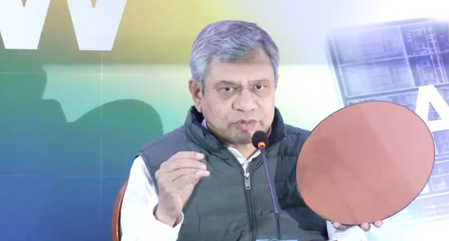
Ashwini Vaishnaw releases 2-nm Qualcomm chip, calls it major development for country

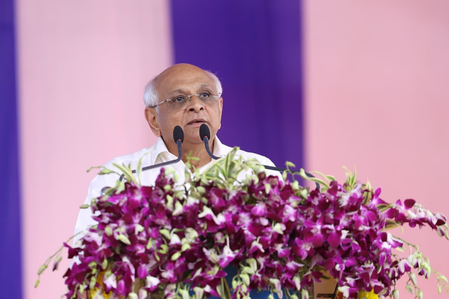
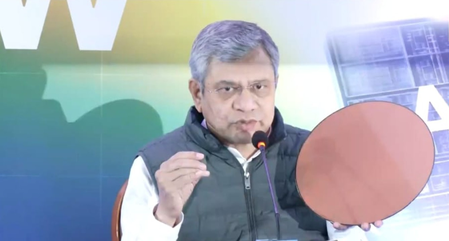
Bengaluru, Feb 7 (IANS) Union Minister for Railways, Electronics and Information Technology Ashwini Vaishnaw, on Saturday, released the new two-nanometre Qualcomm chip and said that it is a major development for the country.

Speaking in Bengaluru, Union Minister Vaishnaw made the statement while inaugurating Texas Instruments’ new product research and development facility in Bengaluru.

The Union Minister said, “I am very happy to share with you that today we unveiled the 2 nanometer wafer and 2 nanometre chip at Qualcomm. It’s a series of developments companies are now designing end to end products in India.”

“Gone are those days when most of back office development was done here, and now from the entire customer product definition to design, the final silicon, getting it taped out and getting it validated, that entire thing is being done in India,” he added.

“This is a major development for our country, our industry. I would like to thank to all those pioneers here in Qualcomm, who have taken the challenge few years ago, I requested them to go ahead in the most advanced designs in India and I thank them for taking up that challenge and doing it in India,” Union Minister Vaishnaw said.

Congratulations to the entire team for doing this in India, he added.

Talking about the wafer, Union Minister said, “This is the wafer in which each die contains nearly 20 to 30 billion transistors. One die, the small square you see here, has about 20 billion transistors. To put it in perspective, 20 billion equals 2,000 crore or 20 lakh crore.”

Exhibiting the tiny silicon chip, he said that this is basically having GPU and the CPU within this small chip.

“The end product which comes out of this is a module which will be AI computer on the desktop of any person on the edge, meaning on the camera, within the wifi router, or within any device on the machine or any moving car or automobile or train. That kind of development is happening,” the Union Minister added.

“This breakthrough has firmly placed India among countries working on cutting-edge chip design, alongside companies such as AMD that have already demonstrated such capabilities.”

Union Minister Vaishnaw also said, “India is making significant progress in semiconductor manufacturing and chip design.”

Though the semiconductor sector is relatively new in the country, the Union Minister said the entire semiconductor ecosystem is rapidly taking shape and preparing for large-scale growth.

The development also established India from being a software provider and a back-office to an end-to-end semiconductor product design and development hub, he added.

–IANS

mka/khz
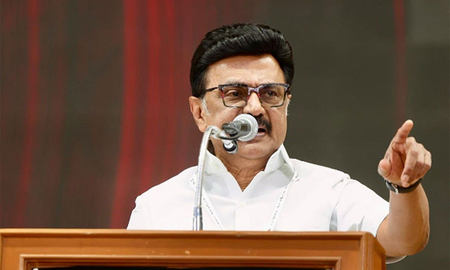
Stalin warns against Hindi imposition and NEET

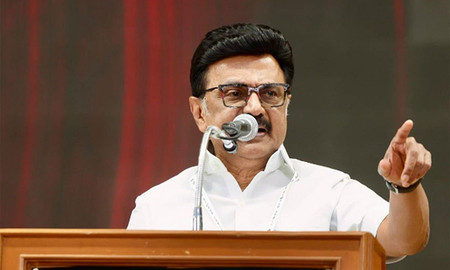
Chennai, Feb 7 (IANS) The Dravida Munnetra Kazhagam (DMK) held its South Zone Youth Wing Conference in Virudhunagar district on Saturday, drawing large participation from party cadres and youth volunteers from across southern Tamil Nadu.

Tamil Nadu Chief Minister and DMK president M.K. Stalin, along with Deputy Chief Minister and Youth Wing secretary Udhayanidhi Stalin, attended the event and addressed the gathering, outlining the party’s ideological stand on language, social justice and education.

Speaking at the conference, Chief Minister Stalin reiterated the party’s long-standing commitment to protecting Tamil identity and opposing any attempt to impose Hindi through national policies.

He said the Tamil language had faced several threats over the decades and credited the Dravidian movement for safeguarding it through sustained struggles. “Whenever our mother tongue, Tamil, was in danger, we fought relentlessly to protect it,” Stalin said.

“Even today, under the guise of the three-language policy, attempts are being made to impose Hindi. They believe that if they destroy our language, they can erase our identity. We will never allow that to happen.”

The Chief Minister also criticised what he described as attempts to undermine social justice through centralised education policies.

Referring to the National Eligibility cum Entrance Test (NEET), he alleged that such examinations disproportionately affect students from rural and economically weaker backgrounds. He said that historically, education and employment opportunities were denied to large sections of society.

“There was a time when education was restricted, and jobs were out of reach for many communities. Reservation policies helped us correct that injustice. But now, through exams like NEET, they are trying to recreate the old system and shut the doors again,” he added.

Deputy Chief Minister Udhayanidhi Stalin, addressing the youth volunteers, urged them to strengthen the party at the grassroots level and take the message of social justice, state rights and linguistic pride to every household.

The conference is part of the DMK’s wider mobilisation efforts ahead of the upcoming Assembly elections, with the party organising zonal meets across Tamil Nadu to energise cadres and consolidate support.

Party leaders said the youth wing would play a crucial role in carrying forward the Dravidian ideology and countering policies they view as detrimental to Tamil Nadu’s interests.

The event concluded with resolutions reaffirming the DMK’s commitment to federalism, social equity and the protection of the Tamil language and culture.

–IANS

aal/uk

Bengal SIR issue: Suvendu Adhikari accuses CM Mamata of protecting illegal B’deshi infiltrators

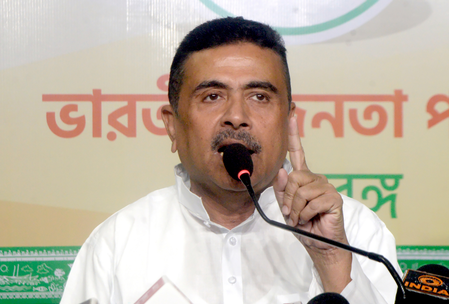
Patna, Feb 7 (IANS) Senior BJP leader and Leader of the Opposition in the West Bengal Assembly Suvendu Adhikari on Saturday launched a sharp attack on Chief Minister Mamata Banerjee, alleging that her opposition to the Special Intensive Revision (SIR) of electoral rolls is aimed at protecting illegal Bangladeshi infiltrators.

Speaking to media persons at Patna airport, Adhikari claimed that the Trinamool Congress (TMC) government was shielding infiltrators for political gains.

“She is objecting to the SIR only to protect Bangladeshi infiltrators. Illegal infiltrators, especially Muslims, are being protected by her,” Adhikari alleged.

Referring to statements made by the Prime Minister in Parliament, Adhikari said that such issues had already been highlighted at the national level.

“The Prime Minister has spoken in Parliament about how courts are being approached to protect infiltrators. The SIR is not new in this country. It has been conducted eight times earlier, and this is the ninth time it is being carried out in West Bengal. It is a continuous process, but Mamata Banerjee’s protest is only to protect illegal infiltrators,” he said.

Looking ahead to the 2026 West Bengal Assembly elections, Adhikari expressed confidence about the BJP’s prospects and invoked a historical and political narrative.

“We have won Kalinga (Odisha) in 2024 and Ang Pradesh (Bihar) in 2025. Now we have to win Bang (West Bengal) in 2026 to complete the circle of Ang, Bang and Kalinga. These regions were once part of a single state,” he said.

He further asserted that West Bengal would see a change in governance.

“In 2026, there will be a Sanatani and nationalist government in West Bengal,” Adhikari claimed.

Explaining his surprise visit to Patna, the BJP leader said he would meet senior party leaders to discuss election strategy for West Bengal.

“Bihar Health Minister Mangal Pandey is a central observer. He was also in charge of the BJP in West Bengal and has worked there for four years. I will meet him and other BJP leaders,” he said.

With the West Bengal Assembly elections drawing closer, political exchanges between the BJP and the ruling TMC have intensified, setting the stage for a high-voltage campaign in the State.

–IANS

ajk/pgh

Gujarat records first Gyr calf born through IVF in Amreli

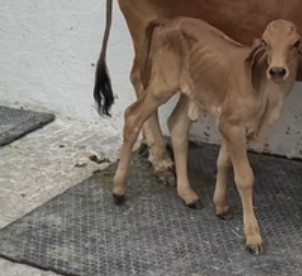
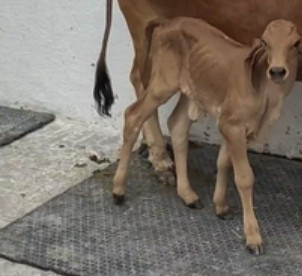
Amreli, Feb 7 (IANS) A Gyr calf has been born through In-Vitro Fertilisation (IVF) at the Gujarat Livestock Development Board’s (GLDB) Embryo Transfer Laboratory in Gujarat’s Amreli, marking a first for the state.

The achievement demonstrates the potential of advanced reproductive technology to improve cattle breeding and milk production.

The laboratory, located in Varudi in Amreli district, is equipped with modern facilities to support livestock development in the Gyr cow breeding tract.

The initiative aims to provide farmers with access to high-quality reproductive technology and enhance the genetic traits of the state’s cattle.

Jitu Vaghani, Gujarat’s Animal Husbandry Minister, said the IVF programme began last year with technical support from the National Dairy Development Board (NDDB).

“During the initial phase, embryo transfer operations were carried out on 13 recipient animals. The latest success involved a recipient cow carrying a Kankrej lineage, which has now given birth to a pure Gyr calf. The embryo used came from a Gyr cow with superior genetic traits, ensuring the calf inherits the same high-quality characteristics as the donor,” he added.

Officials said the programme will expand in the coming months, with more than 30 recipient animals at the Amreli laboratory scheduled for embryo transfer.

They added that these efforts will support the conservation and proliferation of Gyr cows in the state.

IVF and embryo transfer allow cows with high genetic potential to produce more calves than through natural reproduction, where a cow typically gives birth to seven or eight calves in a lifetime.

Eggs from superior donor cows are fertilised in the laboratory, and the resulting embryos are implanted into surrogate cows.

Calves born through this method inherit the donor’s genetic traits, potentially producing more than 100 high-quality offspring from a single cow during its lifetime.

Minister Vaghani said the technology is expected to increase the number of genetically superior cows in Gujarat and boost milk production, directly benefiting livestock farmers.

The milestone positions Gujarat at the forefront of advanced livestock reproduction technology in India.

–IANS

mys/khz

Shallot surplus crashes prices to Rs 10/kg in TN’s Perambalur, farmers seek govt intervention

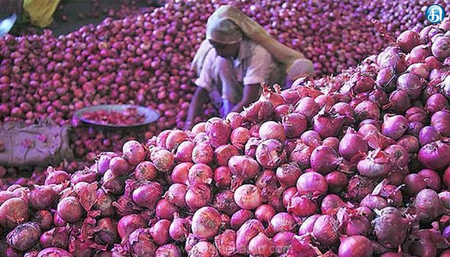
Chennai, Feb 2 (IANS) A surplus harvest this season has triggered a sharp fall in shallot prices in Perambalur district, pushing many farmers into distress as procurement rates have dropped to as low as Rs 10 per kg, compared to Rs 30- Rs 40 during the same period last year.

Growers said the mismatch between supply and demand has left them with little choice but to sell their produce at “throwaway” prices or store it in the hope of a price recovery.

Farmers have urged the district administration to intervene immediately by facilitating direct procurement and market support measures. Many point out that the Chettikulam small onion, cultivated in parts of the district, received a Geographical Indication (GI) tag only last year, raising hopes of better price realisation and institutional backing that have so far failed to materialise.

Shallot cultivation in Perambalur is typically undertaken in three cycles annually. In the current cycle, which began in September last year, farmers raised the crop on nearly 5,000 hectares. With the harvest now at its peak, growers report yields of around 100 sacks per acre, each weighing about 50 kg. This is significantly higher than last year’s average yield of around 60 sacks per acre from cultivation spread over about 4,500 hectares.

While the improved yield would normally be seen as a positive outcome, farmers say it has instead led to a glut in the market.

As a result, traders are quoting procurement prices ranging between Rs 10 and Rs 28 per kg, depending on quality. Last year, farmers recall receiving Rs 30 to Rs 40 per kg for the same produce.

“Prices change every season, but there is no proper marketing system to protect us,” said R. Karthik, a farmer from Karaiyur. “For years, we have struggled to even recover our production costs. This year, the yield on my land was good, but the price offered is painfully low. Traders buy from us cheaply and sell the same shallots in the market for Rs 50 to Rs 60 per kg. We believed the GI tag would improve our livelihood, but those hopes have been shattered.”

Another farmer, M. Senthil from Siruvachur, said he spent between Rs 60,000 and Rs 70,000 per acre on cultivation. “At the current prices, selling now will only result in losses. I will not even recover my input costs. I am forced to store the shallots for up to three months, hoping prices will improve. Without timely intervention, many farmers may abandon shallot cultivation altogether,” he said.

Farmers have demanded direct government procurement, the removal of middlemen, the induction of traders from other districts, and the establishment of storage and processing facilities.

Responding to the concerns, District Collector N. Mirunalini said the administration is planning to convene a meeting with officials from the agriculture and marketing departments to explore steps to ensure better prices for shallot growers.

–IANS

aal/dpb

Delhi-NCR wakes up to dense fog with AQI in moderate to poor categories

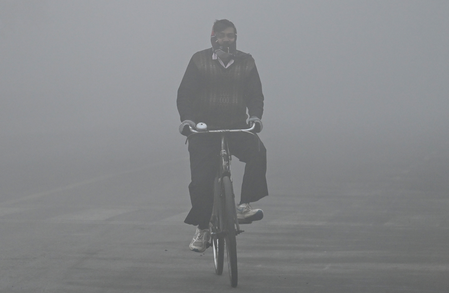
New Delhi, Feb 2 (IANS) Several parts of the Delhi-National Capital Region woke up to dense fog on Monday morning, with the Air Quality Index (AQI) remaining in the moderate to poor categories, according to data released by the Central Pollution Control Board (CPCB).

As per CPCB data, AQI levels were recorded at 242 in Anand Vihar, 222 in Bawana, 157 at Burari Crossing, 217 in Chandni Chowk, 158 at DTU, 240 in Dwarka Sector-8, 132 at IGI Airport (T3), 141 at IIT Delhi, 194 at Jawaharlal Nehru Stadium, 116 at Lodhi Road, 232 at R.K. Puram, 207 in Patparganj, and 208 in Sonia Vihar.

The Delhi-adjacent areas witnessed misty conditions in the early morning hours. Air quality in Ghaziabad remained in the ‘poor’ category, with an AQI of 259 recorded in the morning, according to CPCB data.

In several parts of Delhi and NCR, visibility dropped to below 50 metres, severely affecting vehicular movement on major roads and highways. Officials stated that visibility conditions were likely to deteriorate further in the coming hours due to persistent fog.

Major transit hubs, including the Indira Gandhi International Airport and several railway stations, reported delays as shallow to moderate fog continued well past sunrise. Commuters travelling on the DND Flyway and the Delhi-Gurgaon Expressway were advised to drive cautiously, use fog lights, and maintain low speeds amid hazardous conditions.

Delhi’s weather is expected to change in the coming days. From February 3, skies are likely to gradually clear. However, another western disturbance is expected to affect north-west India from the night of February 5, potentially bringing cloud cover and drizzle towards the end of the week.

Morning fog is expected to persist for the next six days. During the first week of February, maximum temperatures may gradually rise to around 24-25 degrees Celsius, bringing a mild sense of warmth during daytime hours.

North India, including Punjab, Haryana, Rajasthan, and Uttar Pradesh, is also expected to witness notable weather changes as two western disturbances move across the region in quick succession, possibly leading to light rainfall in parts of north-west India later this week.

–IANS

jk/dpb

Gujarat govt to convene International Wetland Seminar in Porbandar ​

Gandhinagar, Jan 31 (IANS) Porbandar will host the eighth International Wetland Seminar-cum-Workshop on February 1 and 2, reflecting Gujarat’s ongoing commitment to wetland conservation and recognition of traditional ecological knowledge.​

Organised by the Gujarat Ecological Education and Research (GEER) Foundation, the two-day event will bring together scientists, policymakers, forest officials, and community stakeholders from India and abroad.​

The seminar will be inaugurated on February 1 by Forest and Environment Minister Arjunbhai Modhwadia, with Minister of State Pravin Mali also attending.​

The event coincides with World Wetlands Day on February 2 and aligns with the 2026 global theme, “Wetlands and Traditional Knowledge: Celebrating Cultural Heritage,” which highlights the connection between wetlands, local wisdom, and cultural practices.​

Officials stated that the seminar aims to enhance understanding of how traditional and indigenous knowledge supports sustainable wetland conservation and management.​

The seminar will also serve as a capacity-building platform for forest department officers, researchers, universities, and citizens engaged with wetland ecosystems.​

Technical workshops on both days will feature experts sharing scientific research and field experiences related to wetland protection.​

Gujarat’s role in India’s wetland landscape will be a key discussion point. According to the National Wetland Atlas 2021 by SAC–ISRO, Gujarat’s wetlands cover an estimated 3.49 lakh hectares.​

This represents 21.9 percent of India’s total wetland area and about 17.8 percent of Gujarat’s geographical area, making it one of the leading states in wetland coverage.​

Recent policy developments will also feature prominently.​

At the third meeting of the Gujarat State Wetland Authority, chaired by Modhwadia and attended by Mali, the state government proposed three new Ramsar sites to the Centre: Gosabara–Mokar Sagar in Porbandar, Chhari Dhandh in Kutch, and Flamingo City Wetland.​

Chhari Dhandh received Ramsar status on Saturday. The meeting also assigned the foundation to conduct ground-truthing and demarcation of wetlands, with renewed focus on identifying urban wetlands and integrating them into urban planning.​

Porbandar was selected as the venue due to its ecological significance. The district, home to the Porbandar Bird Sanctuary and the Gosabara–Mokar Sagar wetland complex, supports large populations of resident and migratory birds.​

Its coastal and estuarine ecosystems also support marine turtles, marine mammals, and diverse bird species.​

GEER Foundation, the nodal agency for wetlands in Gujarat, has organised seven international seminar-cum-workshops since 2016–17, focusing on wetland inventory, monitoring, training, policy support, and public awareness through print and digital media.

–IANS

mys/dan

Mamata Banerjee writes to CEC over role of SROs, micro-observers

Kolkata, Jan 31 (IANS) West Bengal Chief Minister Mamata Banerjee on Saturday sent a letter to Chief Election Commissioner (CEC) Gyanesh Kumar, questioning the authority of special roll observers (SROs) and micro-observers.

According to the Chief Minister, these officials had been appointed only in West Bengal to review the ongoing special intensive revision (SIR) in the state.​

According to the letter, the Chief Minister’s main contention is that the roles of SROs and micro-observers were not limited to overseeing the SIR process. They had also been designated as approving authorities.​

In her letter to the CEC, Mamata Banerjee claimed that giving this authority to the micro-observers had left the electoral registration officers (EROs) and assistant electoral registration officers (AEROs) “helpless, isolated and reduced to mere spectators”.​

“It is also deeply disturbing that an exercise governed by a uniform Act and rules applicable across the country is being implemented differently across states, instead of ensuring consistency in process, procedure, and methodology,” the letter from the Chief Minister to the CEC read.​

She further claimed that in the ongoing SIR, the way hearings and logical discrepancy cases are handled, along with the deployment of micro-observers and SROs for back-end verification in West Bengal, is completely different from the practice in other states where similar revision exercises are underway.​

“For West Bengal, it appears that an entirely different set of rules is being applied, contrary to statutory provisions, and for reasons that remain inexplicable. This is wholly against our democratic ethos, federalism, and fundamental rights. It reflects a dangerous design that must be stopped immediately,” the Chief Minister added in her letter.​

She had specifically objected to the appointment of four Indian Administrative Service (I.A.S) officers from the Tripura cadre as SROs, in addition to five other observers from the Centre and 12 from West Bengal.​

“It is reported that some observers are functioning from the office of the Chief Electoral Officer, West Bengal, and have taken control of the ECI portal without any legal authority. They are allegedly manipulating data to subvert the roll revision process with ulterior motives. It is further alleged that this is being done as a backdoor mechanism for the exclusion and disenfranchisement of a large number of eligible electors,” the Chief Minister claimed.

​–IANS​

src/dan

Bengal: 3 killed, 10 injured in Haldia road accident

Kolkata, Jan 31 (IANS) A horrific bus accident occurred in the Haldia industrial area of West Bengal on Saturday, killing three persons and injuring 10 others, an official said.

The official informed that the injured people have been admitted to the hospital.

He added that the tragic accident took place on Saturday at Ghosh’s More area under Sutahata police station in Haldia of East Midnapore district.

SDPO Arindam Adhikari said that the bus collided head-on with a motorcycle on the Balughata-Kukrahati road.

“Three members of the same family, who were on the motorcycle, died in the accident. Ten passengers in the bus were also seriously injured,” he said.

SDPO Arindam Adhikari said that the condition of five of them is reported to be critical, adding that they have been sent to Tamluk for treatment, while the remaining five are receiving treatment at Haldia Sub-Divisional Hospital.

“An investigation into the entire incident has been launched,” he said.

Locals of the area said the passenger bus was heading towards Kukrahati, adding that the driver suddenly lost control and the steering failed.

“The bus then hit a motorcycle head-on. The bus didn’t stop there; it dragged the motorcycle and crushed it against a concrete pillar of a water pipeline on the side of the road,” they said.

They added that as a result, there was no chance of rescuing the motorcycle riders.

“All three died on the spot. The bus passengers were also not spared,” the local added.

Due to the forceful collision with the wall, the front part of the bus was completely mangled.

Local residents rushed to the scene upon hearing the loud crash. They were the first to begin rescue efforts. Many of the injured were quickly taken to the hospital in auto-rickshaws.

The incident also caused a major traffic snarl in the area, forcing vehicles to move at a snail’s pace.

–IANS

sch/dan