Farmers’ sincere efforts behind Mizoram being named ‘Ginger Capital of India’: CM Lalduhoma

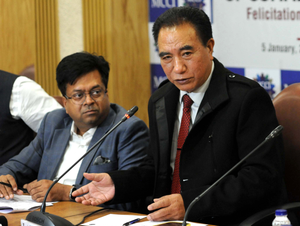
Aizawl, Jan 14 (IANS) After the NITI Aayog formally declared Mizoram as the ‘Ginger Capital of India’, Chief Minister Lalduhoma said that the recognition was a testament to the sustained hard work, dedication, and innovation of the state’s farmers, who have transformed ginger cultivation into a major agricultural success story.

Inaugurating the Ginger Processing Unit established at the Sairang Horticulture Centre, around 21 km from Aizawl, the Chief Minister noted that although Mizoram has been a Union Territory/State for about 54 years and is predominantly an agrarian state, no particular crop had earlier brought significant recognition.

“Mizoram has begun to be known as the ‘Ginger Capital of India’. This growing recognition is a result of the hard work of farmers,” he said.

He further stated that passion fruit also has strong potential, and efforts will be made to promote it on a larger scale.

The Chief Minister said that ginger cultivation has enabled many families to earn better incomes; increased purchasing power among the people has benefited businesses. With free distribution now stopped, moral reformation is taking place, and earning through one’s own hard work is truly valuable, he stated.

The Chief Minister announced that ginger procurement will resume from February 2. Various locally-produced machines for slicing and drying ginger are proposed to be placed at collection centres for use by farmers, which he said would greatly support ginger processing.

The Chief Minister highlighted that organic farming provides Mizoram a competitive advantage over other states, and therefore, the government will place increased emphasis on organic practices.

He referred to irregularities noticed during ginger procurement last year, which prompted thorough enquiries.

The government, he asserted, will not tolerate such irregularities and will ensure transparency and fairness in all processes.

Farmers were urged not to sell ginger independently but to make proper use of collection centres, so that procurement can be carried out systematically. He also stressed that all officials entrusted with responsibilities related to ginger procurement and marketing must treat these duties with utmost seriousness.

The NITI Aayog recently formally declared Mizoram as the ‘Ginger Capital of India’, recognising the state’s reputation for producing high-quality ginger and its rapid growth in ginger production in recent years.

As per the annual report of the Mizoram Agricultural Marketing Board (MAMB), over 3.38 crore kg of ginger was procured in 2025, and the entire support price amounting to Rs 137.72 crore has been fully disbursed to farmers.

–IANS

sc/rad
Lalu Prasad attends ‘dahi-chura’ feast at Tej Pratap’s residence

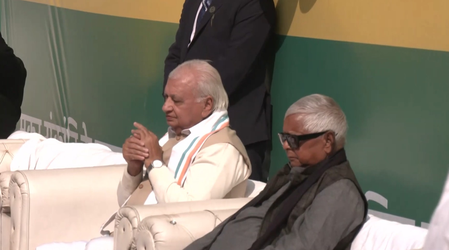
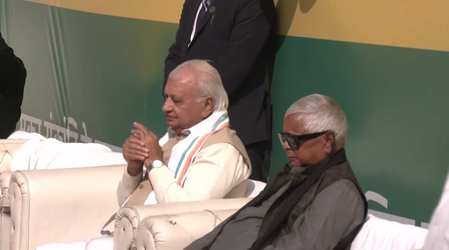
Patna, Jan 14 (IANS) RJD national president Lalu Prasad Yadav on Wednesday attended the ‘dahi-chura’ (flattened rice and curd) feast on Makar Sankranti organised by his elder son and Janshakti Janata Dal chief Tej Pratap Yadav in Patna, a move seen as a strong signal of family unity amid recent political speculation.

Lalu not only participated in the traditional feast but also encouraged and blessed Tej Pratap for a bright political future.

The RJD leader told the media that he was not angry with his son and advised him to keep in touch with the family.

When asked about speculation surrounding Tej Pratap potentially joining the BJP, Lalu said that his son would always have his blessings, without directly responding to the political question.

A day earlier, Tej Pratap personally visited his mother Rabri Devi’s residence to invite her, his father, and younger brother Tejashwi Yadav for the Makar Sankranti celebration.

Accepting the invitation, Lalu was among the first senior leaders to arrive at Tej Pratap’s residence on Wednesday.

Governor Arif Mohammad Khan was also present at the event. Lalu Prasad and the Governor were seen sharing a warm exchange.

Tej Pratap’s maternal uncles, Prabhu Nath Yadav and Sadhu Yadav, and JD(U) MLA Chetan Anand attended the feast.

Several leaders from different political parties were present, giving the event a broader political significance.

Notably, Tej Pratap had extended invitations to several senior BJP leaders.

On Tuesday, he himself attended a ‘dahi-chura’ feast hosted by Deputy Chief Minister Vijay Kumar Sinha, further fueling political speculation.

Political observers believe that Tej Pratap may be preparing for a significant political move, and the large-scale organisation of the event is being seen as an effort to strengthen his independent political standing.

However, the leader of the Opposition in the state Assembly, Tejashwi, was not seen at the venue.

Reacting to the event, Tej Pratap said, “I got the blessings of my father.”

When asked about Tejashwi, the former MP said, “He is my younger brother, and he woke up late, so he may come late.”

The two brothers had met a day earlier in a visibly cordial atmosphere, during which Tej Pratap was seen holding his niece, a moment that was widely interpreted as a sign of reconciliation within the family.

–IANS

ajk/svn

Unidentified attackers blow up bridge in Pakistan’s KP, vital link to region disrupted

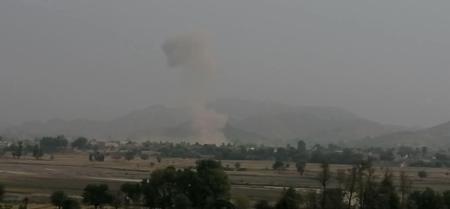
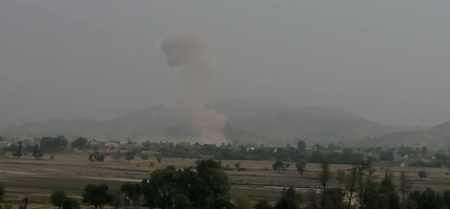
Islamabad, Jan 14 (IANS) A key bridge over the Kurram River in Pakistan’s Khyber Pakhtunkhwa province was blown up with explosives by unidentified attackers on Wednesday, local media reported.

The incident occurred in Shewa tehsil of North Waziristan district of the province, sparking renewed concerns over the law and order situation in the troubled district.

The bridge was destroyed, cutting off land routes between the area and several adjoining regions across the province, including Miranshah and Bannu.

Citing local sources, Pakistan’s leading daily Dawn reported that unknown assailants planted a large amount of explosives beneath the bridge early in the morning.

The powerful blast was reportedly heard from many miles away, triggering fear and panic among the locals.

Pakistani police and security forces reached the spot and cordoned off the area following the attack, while an investigation was initiated.

Reports suggest that the damaged bridge, which serves as a critical communication link in the region, is expected to create major difficulties for the people, as it was a key route for the daily movement of civilians, patients, students, traders and government employees.

Its destruction has also hindered access to healthcare facilities, delivery of essential goods and everyday commercial activities, forcing people to rely on lengthy and challenging alternative routes.

While Balochistan province has long witnessed frequent attacks on infrastructure, similar incidents have been reportedly increasing in Khyber Pakhtunkhwa in recent months.

On December 7, last year, unidentified attackers used explosives to blow up a link bridge in the Mamandkhel area of the Bannu district, disrupting public movement.

Also, last month, within a week, in two such incidents, attackers blew up two government schools in North Waziristan’s Mir Ali tehsil at night.

Recently, the Human Rights Commission of Pakistan (HRCP) expressed its deep concerns over the security and law and order situation in Khyber Pakhtunkhwa throughout 2025.

Citing Islamabad-based Pakistan Institute for Conflict and Security Studies, the HRCP in its latest report titled ‘Caught in the Crossfire: Civilians, Security and the Crisis of Justice in Khyber Pakhtunkhwa’s Merged Districts’ stated that at least 82 militant attacks had occurred nationwide in July 2025 alone, with Khyber Pakhtunkhwa, including its former tribal districts, accounting for nearly two thirds of this number.

Additionally, 45 militant attacks were recorded in the province in September 2025, killing 54 people and injuring 49.

IANS

scor/sd/

Thackeray cousins, BJP engage in social media war over Marathi identity, Hindutva

Mumbai, Jan 14 (IANS) With only hours remaining before the voting for the high-stakes Brihanmumbai Municipal Corporation (BMC) elections commences, the political atmosphere in Mumbai has reached a fever pitch.

Polling for the 227 electoral wards is set to begin at 7.30 a.m. on Thursday, after a campaign defined by a dramatic realignment of the Thackeray family and brazen moves to create sentiments around the Marathi identity and Hindutva.

Shiv Sena(UBT) MP Sanjay Raut amplified Thackeray brothers’ unity on social media, issuing a passionate appeal to Mumbaikars. His post, which quickly went viral, featured the slogan: “All Marathi people have decided… If we are together, we are safe! And Thackeray is the best.” Raut urged voters to stand firmly behind the combined strength of the Thackeray cousins to protect the city’s regional interests and Marathi identity.

Responding to the Thackeray camp’s focus on regional pride, the Bharatiya Janata Party (BJP) intensified its pitch for Hindutva. BJP Minister Nitesh Rane took to social media to strike a contrasting chord, posting: “Hindus have decided, I Love Mahadev…” Minister Rane’s message is seen as a strategic move to consolidate the Hindu vote bank, framing the election as a choice for the city’s ideological future.

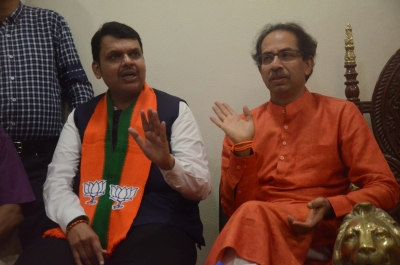
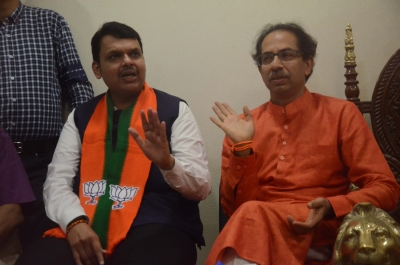
In a related development, the Thackeray cousins — Uddhav Thackeray (Shiv SenaUBT) and Raj Thackeray (MNS) — showed a rare front of unity today. Both leaders, accompanied by their families, met at Raj Thackeray’s residence, ‘Shivtirth,’ in Dadar. Following the meeting, the duo visited the iconic Mumbadevi Temple to seek blessings before the commencement of the polls.

Meanwhile, the State Election Commission has introduced a significant change in the counting process for 2026.

Unlike the 2017 elections, where all 227 wards were counted simultaneously, this year’s results will be processed in stages.

The counting process will begin on Friday morning, January 16. Mumbai has 23 designated Counting Officers, each responsible for approximately 10 wards. Only two wards per officer will be counted at any given time, meaning a maximum of 46 wards will be tallied simultaneously across the city.

This phased approach has sparked some concern among candidates regarding the delay of early trends and final results. Over one crore eligible voters are expected to cast their ballots. The outcome of this election is seen as a litmus test for the “Thackeray Alliance” and the ruling Mahayuti’s influence over India’s wealthiest civic body.

–IANS

sj/dpb

Gujarat CM inaugurates Gandhinagar Kite festival 2026; takes part in kite-flying 

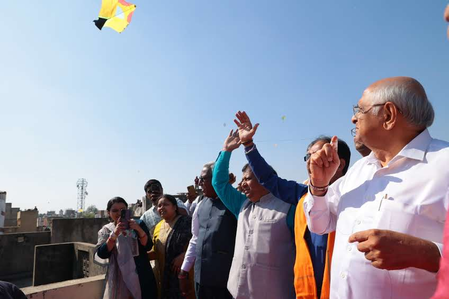
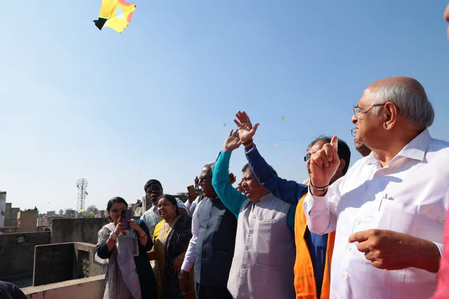
Gandhinagar, Jan 14 (IANS) Gujarat Chief Minister Bhupendra Patel inaugurated the Gandhinagar kite festival on Wednesday, marking the commencement of ‘Patang Utsav 2026’ in the city.

The Chief Minister extended greetings and warm wishes to the people on ‘Uttarayan’, an auspicious period in Hindu calendar symbolising the onset of longer days.

On the joyous and festive occasion of Uttarayan 2026, the Chief Minister also joined the citizens in kite-flying and other festivities.

The Chief Minister tried his hands at kite flying and distributed ‘laddoos and chikki’ to the local residents.

Extending his Uttarayan greetings, CM Bhupendra Patel said that as people fly kites high in the sky during the festival, this should also become a festival of enthusiasm that helps everyone reach new heights of happiness, peace, prosperity, and progress in their lives.

The Chief Minister also took to his social media handle on X to share pictures of ‘Uttarayan’ celebrations, organised by the Sahay Foundation at Central Vista in Gandhinagar.

CM Bhupendra Patel inaugurated the kite festival celebrations by releasing balloons into the sky. The event saw participation of government officers including Gandhinagar Mayor and District Collector, the BJP’s top office-bearers as well as international kite flyers and a large number of local residents.

Earlier, the Gujarat CM’s Office (CMO) also urged the residents, in a social media post, to join the festive celebrations with joy and enthusiasm.

The international kite festival remains a major attraction in Gujarat which sees hundreds of trained and professional kite flyers from India and abroad, converging in Ahmedabad to fly giant and myriad kites.

During this period, the skies get filled with colourful and vibrant kites, of various shapes and sizes, fluttering in the breeze, creating a spectacle at the Sabarmati riverfront. Over the years, the festival has also spread to other cities including Surat, Rajkot and Dholavira where kite-flyers mesmerize the people by filling the skies with their brilliantly coloured jumbo kites.

–IANS

mr/rad

Iran to execute 26-year-old protester; family given just 10 minutes for final goodbye

New Delhi, Jan 14 (IANS) A 26-year-old Iranian protester detained during nationwide anti-Khamenei demonstrations is scheduled to be executed on Wednesday, in a case that has sparked international alarm and renewed concerns over Iran’s use of capital punishment to suppress dissent.

Erfan Soltani, arrested on January 8 for participating in protests against Supreme Leader Ayatollah Ali Khamenei, is set to be hanged after being charged with “Moharebeh”, or enmity against God, according to media reports.

If carried out, Soltani’s execution would mark the first hanging directly linked to the current wave of anti-Khamenei unrest.

For days following his arrest, Soltani’s family had no information about his whereabouts. When they were finally contacted by Iran’s security apparatus, they were not informed of formal charges or a court hearing.

Instead, they were told that Soltani had already been sentenced to death. Authorities allowed the family a single meeting with him — limited to just 10 minutes — to say their final goodbyes.

Family members, described as frightened and traumatised, have reportedly been warned not to speak publicly about the case. Iranian authorities allegedly threatened that additional family members would be arrested if they shared information with the media or activists.

Soltani’s execution order, issued within a week of his arrest, has drawn sharp criticism from international legal experts and human rights groups.

They warn that Iran may be resorting to what they describe as “field executions”, summary killings carried out without due process, as a tool to intimidate protesters and stifle opposition. Soltani’s case is being cited as a chilling example of the regime’s increasingly harsh response to dissent.

The protests, now in their 20th day, initially erupted over record inflation and the sharp devaluation of Iran’s currency, but have since escalated into widespread demonstrations questioning the authority of the Supreme Leader. Unrest has been reported in more than 280 locations across the country.

According to activist groups, the regime’s crackdown has been severe. At least 2,000 people have reportedly been killed, while approximately 20,000 have been arrested. Internet services have been shut down for over five days, severely restricting communication with the outside world.

Activists say some Iranians attempted to use Starlink satellite internet to bypass restrictions, but authorities allegedly jammed the signals using military-grade equipment and deployed militias to raid rooftops, seize terminals, and punish users.

–IANS

rs/sd/

UNFPA’s call to rethink Pakistan’s population trends timely; sustained policy action a challenge

Islamabad/New Delhi, Jan 14 (IANS) The United Nations Population Fund’s (UNFPA) recent statement to Pakistan to rethink its population dynamics is timely as well as constructive, but a sustained policy action towards it is going to be the real challenge, according to a media report.

An editorial published in Pakistan’s financial daily, Business Recorder, stated that the UNFPA urges the country to make a purposeful and evidence-based plan and not count the rising population as an “inevitable burden”.

The UN body urged Pakistan — having the world’s fifth largest population with the number exceeding 225 million — to mark the growth “as a strategic driver of sustainable and inclusive development”.

The editorial urged the need to integrate population dynamics into broader development and climate strategies, as Pakistan’s high population growth and fertility rates are linked to persistent gender inequality and limited access to quality health services.

“UNFPA’s recommendation to reform how population is reflected in national planning and financing — particularly through the National Finance Commission (NFC) formula — is therefore significant,” it said.

The report stressed developing a “reimagined, forward-looking NFC framework — one that incentivises progress in gender equality, climate resilience, balanced population outcomes, and service quality.”

“Such reform could encourage provinces to invest more seriously in human development while strengthening accountability and public service delivery,” it added.

As per the UNFPA, high maternal mortality, unmet need for family planning, early marriages, gender-based violence, and unequal access to reproductive health services are major challenges to sustainable development. These are further compounded by deep-rooted social norms, governance failures, and stark inequities between urban centres and remote regions.

The report called for “sustained political commitment and a comprehensive policy overhaul” to address these concerns.

It urged to make people-centred approaches and reform population policy at both the federal and provincial levels. It also stressed the need to focus on gender equality and broader human development to turn the population dynamics into a “source of strength rather than strain for the national economy”.

–IANS

rvt/

MP ‘honour killing’: Man kills daughter for eloping with relative

Bhind, Jan 14 (IANS) In a suspected case of honour killing, a 21-year-old woman named Nidhi Dhanuk was allegedly shot dead by her father, Munnesh Dhanuk, in Khiriya Thapak village in Madhya Pradesh’s Bhind district.

Speaking to IANS, Mehgaon SDOP Sanjay Kocha confirmed the arrest of Munnesh and stated that the body has been sent for post-mortem examination.

“A man has shot and killed his married daughter. The accused is in custody, and we are investigating to ascertain the exact motive,” the officer said.

The police have registered a case under relevant sections of Bharatiya Nyay Samhita for murder and are probing further details, including the procurement of the illegal firearm.

The incident occurred on Tuesday evening when Munnesh asked Nidhi to come to a mustard field and shot her with a country-made pistol, commonly known as a “katta.”

Police recovered her body the following morning after her mother, Pooja Dhanuk, alerted authorities.

“He might have committed the crime between 12 p.m. to 2 p.m. on Tuesday,” the police said, but after committing the heinous crime, the accused did not try to escape.

According to police reports, Nidhi had been married to Devu Dhanuk from Gudagudi Ka Naka in Gwalior on December 11, 2025. However, just 17 days later, on December 28, she eloped with a young man from her village, who was reportedly related to her.

The elopement occurred after a shopping trip in Gwalior’s Maharaj Bada, where Nidhi spent around Rs 5,000 before disappearing while her husband fetched water.

She later appeared at the Gwalior Kotwali police station, declaring herself an adult and stating she had left willingly to marry her lover.

Munnesh, upon learning of the elopement, reportedly felt defamed and dishonoured by his daughter’s actions.

In his statement to the police, he confessed, “There was dishonour, so I killed her,” citing social stigma as the motive.

Villagers echoed this sentiment, believing the murder stemmed from fears of familial and societal backlash in a conservative rural setting where inter-family relationships and elopements are often taboo.

–IANS

sktr/svn

India’s tunnel infra solving connectivity challenges, supporting economic growth

New Delhi, Jan 14 (IANS) The government on Wednesday said India’s tunnel infrastructure reflects a clear shift toward smarter and more resilient development, solving long-standing connectivity challenges while supporting economic growth and national priorities.

With landmark projects like the Atal Tunnel, India is rapidly expanding its tunnel infrastructure. Tunnels in India represent more than infrastructure development; they reflect the nation’s determination to overcome geographical challenges.

By cutting through mountains and terrain that once limited connectivity, tunnels have enabled year-round transportation. They have also improved access to remote regions and strengthened links between communities, according to an official statement.

India’s tunnelling boom is being propelled by national highway expansion, alongside strategic border infrastructure, metro rail growth, bullet-train corridors, and all-weather connectivity initiatives in remote regions.

As infrastructure scales up, tunnelling has become one of the fastest-growing construction domains.

Tucked beneath the snow-laden peaks of the Pir Panjal ranges, the Atal Tunnel stretches 9.02 km, providing a high-altitude passage that bypasses Rohtang Pass.

“It is officially recognised as the World’s Longest Highway Tunnel above 10,000 feet in 2022 by the World Book of Records UK. The tunnel has cut the Manali–Sarchu distance by 46 km and reduced travel time by four to five hours,” the statement added.

Another example is the Sonamarg Tunnel, a 12-km engineering feat carved through mountains at an altitude of over 8,650 feet above sea level, is set to transform travel in Jammu and Kashmir.

Built at a cost of Rs 2,700 crore, it includes a 6.4-km main tunnel, an egress tunnel, and modern approach roads creating an all-weather lifeline between Srinagar and the golden meadows of Sonamarg, and further towards Ladakh.

Once paired with the upcoming Zojila Tunnel (2028), the journey will shrink from 49 km to 43 km, with speeds rising from 30 km per hour to 70 km per hour, boosting defense logistics, winter tourism, adventure sports, and the livelihoods of the people who call these mountains home.

Moreover, the Zojila Tunnel is emerging as a monumental achievement in India’s infrastructure landscape, cutting through some of the most formidable Himalayan rock formations to establish a dependable, all-weather link between Ladakh and the rest of the country.

With nearly 12 kms already completed, the project integrates advanced safety measures and a semi-transverse ventilation system designed to maintain steady airflow deep within the mountains, said the government.

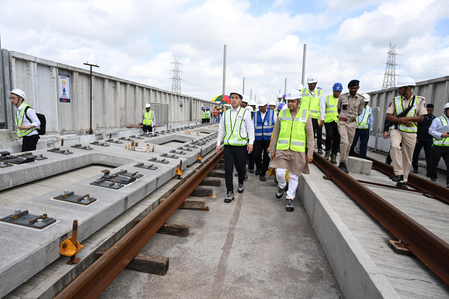
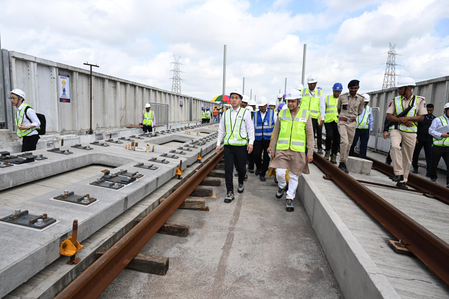
India’s Mumbai–Ahmedabad High-Speed Rail corridor has marked a futuristic leap with the breakthrough on its 4.8-km undersea tunnel section.

–IANS

na/

ED attaches properties worth Rs 35 crore of Suumaya Group under PMLA

Mumbai, Jan 14 (IANS) The Directorate of Enforcement’s (ED) Mumbai Zonal Office has provisionally attached movable and immovable assets worth approximately Rs 35.22 crore under the provisions of the Prevention of Money Laundering Act (PMLA) in a case involving M/s Suumaya Group and others, an official statement said on Wednesday.

The attached assets include bank balances, demat holdings, mutual fund investments, and two immovable properties, the ED said.

The financial probe agency initiated its investigation based on an FIR registered by Worli Police Station against several individuals and entities, including M/s Suumaya Industries Ltd and its promoters, under various sections of the Indian Penal Code.

According to the ED, the accused conspired to embezzle funds amounting to Rs 137 crore by luring investors with promises of future benefits under a purported ‘Need to Feed’ programme.

The investigation revealed that the Suumaya Group and its associates fabricated a bogus Haryana government contract under the guise of the “Need to Feed” programme to raise funds and secure trade financing.

The group projected non-existent business operations as legitimate turnover, ED alleged.

ED findings further indicate that funds received by Suumaya Group entities were diverted by promoter Ushik Gala to dummy agro-trader entities based in Delhi and Haryana through intermediaries to falsely depict genuine procurement activities. No actual agro purchases took place. Instead, the diverted funds were routed back to Gala through cash and RTGS transactions using shell entities.

The agency also stated that Suumaya Group created fake invoices and lorry receipts to simulate large-scale trade, resulting in circular transactions worth nearly Rs 5,000 crore, of which only about 10 per cent were genuine. These circular transactions artificially inflated the turnover of the group entities.

As a result, Suumaya’s reported turnover surged from Rs 210 crore to Rs 6,700 crore within two years, leading to a sharp and misleading rise in the company’s share price and misrepresentation to investors in its listed group entities, the ED said.

Earlier, the ED conducted search operations at 19 locations across Mumbai, Delhi, and Gurugram, during which it seized movable assets worth Rs 3.9 crore, along with substantial financial and digital records and documents allegedly evidencing money laundering and fund diversion.

During the course of the investigation, the ED arrested Gala under Section 19 of the PMLA on November 17, 2025.

–IANS

skp/vd