Raman leads in LA; Shah declares Arizona victory

Washington, Nov 5, (IANS) Indian American council member Nithya Raman widened her lead in the race to become Los Angeles Mayor, while physician Amish Shah declared victory in a Republican-held congressional seat in Arizona as counting continued after the US midterm elections.

Raman led incumbent Mayor Karen Bass by 26,124 votes in the latest Los Angeles County returns available, putting her ahead in the contest to lead America’s second-largest city.

Shah, a Democrat and former Arizona state legislator, declared victory over Republican Jay Feely in the state’s 1st Congressional District, The Arizona Republic reported. Election tracker Decision Desk HQ separately projected Shah as the winner on Wednesday evening, according to Arizona broadcaster KTAR.

The two contests offered Indian Americans prospects of greater representation in city government and Congress. Neither a candidate’s victory declaration nor a media projection constitutes official certification of an election result.

In Los Angeles, county figures updated Wednesday afternoon showed Raman with 405,193 votes, or 51.67 per cent, against Bass’s 379,069 votes, or 48.33 per cent.

The Los Angeles Times reported Raman’s lead, while local outlets LAist and ABC7 also tracked her widening advantage. ABC7’s Wednesday update said the contest remained too close to call.

Raman moved ahead after Bass held a narrow advantage in the initial returns on election night. The subsequent count increased the challenger’s margin, but ballots remained outstanding.

The mayoral contest is separate from the congressional elections and determines who will head the city government. Raman is challenging a sitting mayor, while Shah sought an open seat in the US House of Representatives.

In Arizona, Shah said in a statement to supporters that he had spoken with Feely and commended him on a hard-fought campaign, The Arizona Republic reported.

The newspaper’s report did not establish that Feely had conceded. It said the Republican had acknowledged on election night that the contest might not go his way.

KTAR reported Shah ahead with 52.5 per cent of the vote against Feely’s 45.4 per cent on Wednesday evening, a margin of 22,494 votes.

The district includes Scottsdale and parts of the Phoenix area. Republican Representative David Schweikert vacated the seat to run for governor, making it an opportunity for Democrats to gain a constituency previously held by their opponents.

Feely, a former National Football League kicker and broadcaster, had President Donald Trump’s endorsement. Shah is an emergency-room physician who previously served in the Arizona legislature.

The Congressional Asian Pacific American Caucus said in a Wednesday statement issued before the reported projection that a Shah victory would make him the first Indian American elected to represent Arizona’s 1st District.

The caucus said his election would bring its anticipated Asian American and Pacific Islander membership to 23 in the next Congress, up from the minimum of 22 it had identified earlier.

It also welcomed Pia Dandiya’s election in Florida’s 22nd Congressional District, describing her as the first Indian American woman elected to represent that constituency.

The November 3 elections included contests for Congress, state governments and local offices. Members elected to the US House serve two-year terms, and the next Congress begins in January 2027.

–IANS

lkj/ksk/as
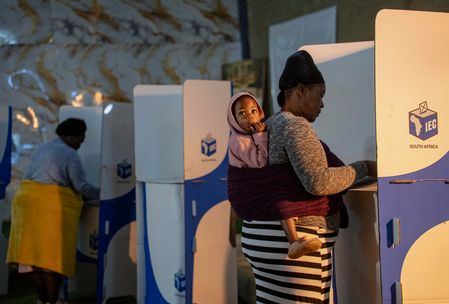
South Africa’s IEC urges calm as vote counting continues

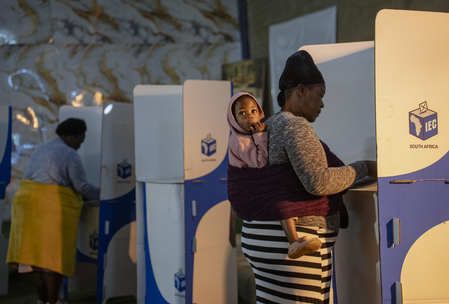
Johannesburg, Nov 5 (IANS) The Electoral Commission of South Africa (IEC) on Thursday called for calm and patience as vote counting and verification continued following Wednesday’s local government elections, which were conducted largely peacefully despite some localised disruptions.

Sy Mamabolo, chief electoral officer of the IEC, briefed the media on Thursday morning on the progress of the vote-counting and results-processing operations.

He said that ballots were being counted at voting stations, while election results were being captured, transmitted and verified as part of the process to ensure the accuracy and integrity of the results, Xinhua News Agency reported.

“The counting, tallying and verification process continued throughout the night in the presence of political party agents, independent candidate agents and accredited observers, reinforcing the transparency, integrity and accountability of the electoral process,” Mamabolo said.

“The Commission appeals to political parties, independent candidates and their supporters to exercise patience and allow the counting and results-capturing processes to unfold,” he added.

Mamabolo also urged political candidates and other stakeholders to refrain from circulating unverified information or disinformation about the election results, warning that such actions could create unnecessary tensions, incite violence and potentially lead to property damage and injuries.

Early results released by the IEC on Thursday showed the ruling African National Congress (ANC) narrowly ahead of its main opposition rival, the Democratic Alliance (DA), in the national proportional representation vote.

With about 33 per cent of the votes counted, the ANC had secured around 32 per cent of the vote, compared with approximately 28 per cent for the DA, according to preliminary figures reported on Thursday. The results remain provisional and could change significantly as more voting districts complete the counting and verification process.

The early results also indicated strong regional performances by several parties. The ANC maintained leads in a number of provinces, while the DA was ahead in Gauteng and the Western Cape. The uMkhonto weSizwe (MK) Party was leading in KwaZulu-Natal.

As these are local government elections, the composition of individual municipal councils, rather than the national vote share alone, will determine which parties govern at the local level. Where no party wins an outright majority, coalition negotiations are likely to play a decisive role in forming municipal administrations.

The 2026 local government elections represent a significant political test for the ANC amid years of declining electoral support. In the 2021 municipal elections, the party received 45.59 per cent of the national vote, falling below the 50-per cent threshold for the first time since the end of apartheid in 1994.

The ANC subsequently lost its parliamentary majority in the 2024 national and provincial elections, securing approximately 40 per cent of the national vote and prompting the formation of a government of national unity.

The IEC is expected to complete the counting, verification and auditing processes before announcing the final results and the allocation of seats in municipal councils.

–IANS

ksk/as

France workers hold protest to demand higher wages

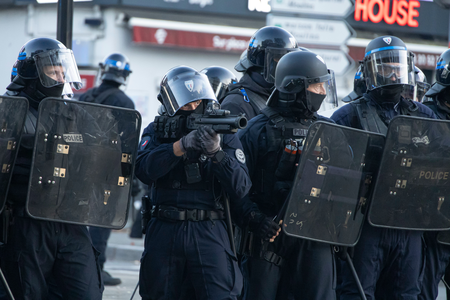
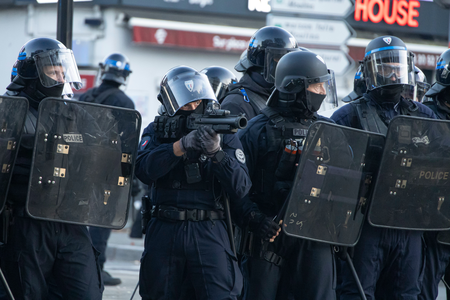
Paris, Nov 5 (IANS) Hundreds of workers took part in the major protests in France on Thursday, as the nation braces for a strike involving the yellow vest movement, trade unions, students and workers from various sectors.

Trade unions took part in the protests in France on Thursday to demand higher wages and in support of the high school protest movement, France 24 reported. The protests on Thursday come after French lawmakers rejected the first part of the 2027 budget bill. The French government’s original budget proposal will now be presented before the Senate, with a vote set to be held on December 9, Euro News reported.

A parliamentary committee will then try to broker a compromise before the legislation is again presented in the National Assembly.

France has witnessed protests for several weeks, triggered by student demonstrations which began in September against overcrowded classrooms, teacher shortages and problems they face in getting admission to universities.

The protests have since intensified as trade unions have expressed support for demands raised by the students and held marches against the cost of living crisis and increasing prices of fuel.

French Interior Minister Laurent Nunez said that over 70,000 law enforcement personnel will be deployed on Thursday. He said that the “primary mission” of security forces was to ensure that protests took place “peacefully” and without any incidents, Euro News reported.

Nunez mentioned that intelligence services had found “considerable interest” from the far-left movement and violent protest groups with “several possible aims: taking part in them to provoke unrest; organising unauthorised marches; and carrying out looting and vandalism targeting businesses or public buildings.”

French authorities imposed restrictions on the trade unions’ proposed protest route in Paris and gave permission to hold protest on an alternative route. French authorities’ decision comes amid security measures taken by the government after violent incidents occurred on October 17-18, where violence and looting took place during peaceful protests, according to the report.

Trade unions and rights groups have criticised what they termed excessive policing and authoritarian measures imposed to restrict protests. French police have also faced allegations of using excessive force against protesters.

–IANS

akl/as

‘Unjust and cruel’: Rights groups condemn 10-year prison sentence for Hong Kong activist

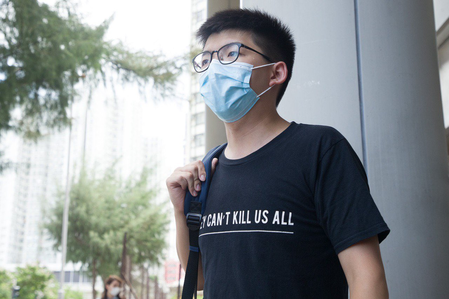
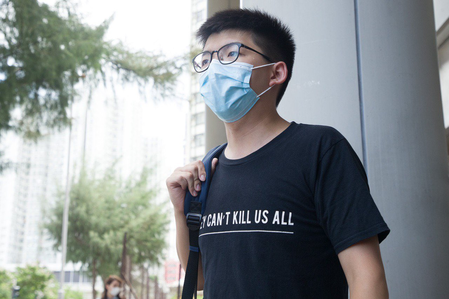
Hong Kong, Nov 5 (IANS) Leading human rights organisations on Thursday condemned the 10-year sentence handed to Hong Kong activist Joshua Wong, terming it as a grim reminder of how Hong Kong’s National Security Law has become a tool to punish dissent rather than to genuinely protect national security.

“The Hong Kong authorities’ persecution of Joshua Wong continues with this latest national security conviction, which cruelly – and perhaps deliberately – comes mere months before he would have been eligible for release under his previous conviction. Joshua Wong’s bravery in speaking truth to power should be commended, but instead in Hong Kong it makes him a criminal. Today’s sentence is another grim reminder of how Hong Kong’s National Security Law has become a tool to punish dissent rather than to genuinely protect national security,” said Amnesty International’s Deputy Regional Director Sarah Brooks.

She urged the international community not to accept the continued criminalisation of legitimate activism as the new normal in Hong Kong and urged governments across the world to press for the protection of human rights and the release of those imprisoned solely for exercising their rights.

Brooks urged the Hong Kong authorities to overturn Wong’s national security convictions and to repeal all legislation that violates Hong Kong’s international human rights obligations.

Meanwhile, US-based advocacy group Human Rights Watch (HRW) also on Thursday urged the Hong Kong government to immediately and unconditionally release Wong, terming the sentence handed down to him by the Hong Kong High Court as “cruel and unjust.”

It urged the international community to denounce the sentences against him and other wrongfully detained pro-democracy activists and impose targeted sanctions on officials responsible for Hong Kong’s growing repression.

Asia Director at Human Rights Watch, Elaine Pearson, said: “The harsh sentence on baseless charges against Joshua Wong is cruel and unjust.” She stated, “Young people promoting social change are an asset for any vibrant society, but the Hong Kong government puts them behind bars.”

The statement of human rights groups come after the Hong Kong High Court on Thursday sentenced Joshua Wong, a well-known democracy activist, to 10 years in prison after pleading guilty to conspiring to collude with foreign forces under Hong Kong’s China-imposed National Security Law (NSL).

Under his second national security conviction, Wong was accused of conspiring with self-exiled activist Nathan Law and “other persons unknown” between July 2020 and November 2020 to request foreign countries or organisations to impose sanctions, blockades or engage in other hostile activities against Hong Kong or China, according to an Amnesty International statement.

Wong was sentenced to four years and eight months in 2024 for “conspiracy to commit subversion. He was one of 45 opposition figures kept in prison for participation in unofficial ‘primaries’ in 2020, on charges which UN experts considered to relate to activities protected under international human rights law. His previous sentence is scheduled to end in January next year.

–IANS

akl/as

FS Misri calls on Nepal PM Balendra Shah ahead of his India visit

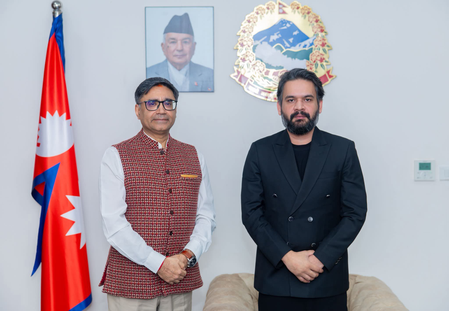
Kathmandu, Nov 5 (IANS) Foreign Secretary Vikram Misri on Thursday called on Nepal’s Prime Minister Balendra Shah in Kathmandu ahead of Shah’s forthcoming visit to India, and also conveyed greetings from Prime Minister Narendra Modi, the Indian Embassy in Nepal said.

“Foreign Secretary Vikram Misri called on the Rt. Hon’ble Prime Minister of Nepal, Mr. Balendra Shah, in Kathmandu today and conveyed to him greetings from Prime Minister Shri Narendra Modi,” the Embassy posted on X.

The visit is expected to lay the groundwork for Nepali Prime Minister Balendra Shah’s upcoming trip to India.

“The discussion focused on the implementation of various bilateral initiatives, and possibilities for further enhancement of India-Nepal cooperation across domains, especially in the context of forthcoming high level visit,” the Embassy said.

Misri, who arrived in Kathmandu on Wednesday morning for a two-day official visit, began his high-level engagements by meeting Foreign Minister Shishir Khanal, Finance Minister Swarnim Wagle and Minister for Energy, Water Resources and Irrigation Biraj Bhakta Shrestha. He also held delegation-level talks with a Nepali team led by his counterpart, Foreign Secretary Amrit Bahadur Rai.

During the meeting between the two Foreign Secretaries, the sides discussed a range of issues of mutual interest in preparation for the forthcoming visit of the Nepali Prime Minister, Balendra Shah, to India, the Indian Embassy in Nepal said in a social media post.

Nepal’s Ministry of Foreign Affairs said the talks covered the entire gamut of Nepal-India relations, including high-level exchanges, connectivity, trade, development cooperation, energy and people-to-people relations.

Nepali officials said the two sides also discussed several initiatives they want to advance during the Prime Minister’s upcoming visit. Misri’s visit is expected to lay the groundwork for Prime Minister Shah’s proposed visit to India later this month.

Nepali officials said the visit would help prepare the agenda for Shah’s proposed trip to New Delhi. Kathmandu wants to advance discussions on several outstanding issues, including the border dispute, revision of the trade treaty and additional air-entry points for international flights through India.

–IANS

ksk/as

INS Tarkash concludes port call at Mauritius’ Port Louis

Port Louis, Nov 5 (IANS) Indian Naval Ship (INS) Tarkash concluded its port call at Mauritius’ Port Louis on Thursday.

Cross-border engagements, leadership interactions, community outreach activities and a cultural exchange commemorating Aapravasi Diwas 2026 were held during the harbour phase. After its departure, INS Tarkash undertook joint Exclusive Economic Zone (EEZ) surveillance with the Mauritius Coast Guard Dornier aircraft and a PASSEX with CGS Valiant.

In a post on X, an Indian Navy spokesperson stated, “Orevwar, Moris! Until we meet again, Mauritius! INS Tarkash concluded a memorable port call at Port Louis, Mauritius. The harbour phase featured cross-training engagements, leadership interactions, community outreach activities and a cultural exchange commemorating Aapravasi Diwas 2026.”

“On departure, the ship undertook joint EEZ surveillance with the Mauritius Coast Guard Dornier aircraft and a PASSEX with CGS Valiant,” the statement added.

INS Tarkash arrived at Port Louis on October 30 during her operational deployment to the southern Indian Ocean Region.

In August, Chief of Naval Staff Admiral Krishna Swaminathan was on an official visit to Mauritius, where he called on Prime Minister Navinchandra Ramgoolam, with discussions held on ways to deepen maritime security cooperation between the two friendly countries.

Admiral Swaminathan assured PM Ramgoolam of full support, assistance, cooperation and collaboration of the Indian Navy in the capability enhancement and capacity building endeavours of the Mauritius Police Force and National Coast Guard.

“Discussions during the meeting were centred on strengthening maritime security cooperation, training exchanges, information exchange mechanisms, capacity building efforts and operational linkages between the Indian Navy and the Mauritius National Coast Guard,” the Indian Navy posted on X.

During his visit, Admiral Swaminathan held a series of talks with senior officials of the Mauritian government, exploring new avenues for collaboration between the two countries.

The officials included Rampersad Sooroojebally, Commissioner of Police, Mauritius Police Force and Kan Oye Fong Weng-Poorun, Secretary for Home and Defence Affairs, Government of Mauritius.

He also met the Indian High Commissioner and discussed important facets of the ongoing maritime security cooperation between the two countries.

Sharing details of the meeting, the Indian Navy took to X and posted: “Discussions were centred on strengthening maritime security cooperation, capacity building of the Mauritius National Coast Guard, joint EEZ surveillance and expanding operational linkages between the two maritime forces.”

“India and Mauritius share an enduring maritime partnership, anchored in mutual trust and a shared commitment to ensuring a secure and stable Indian Ocean Region – in line with the vision of MAHASAGAR,” it added.

–IANS

akl/as

Ruling BNP outreach to major 2024 protest parties timed before Hasina’s return?

New Delhi, Nov 5 (IANS) Dhaka’s ruling Bangladesh Nationalist Party (BNP) is planning talks with political parties that joined the 2024 protests against the then Muhammad Yunus-led interim government to “preserve unity” among anti-Awami League forces, a media report said on Thursday, where the time appears to coincide with that stated as probable return of deposed Prime Minister Sheikh Hasina from exile.

More than 40 parties that participated in the stir resulting in the fall of the Awami League government may be invited for talks “amid growing differences over various political issues”, according to Bangladesh’s ‘The Business Standard’.

The talks may take place in late November or December, the report said, adding, “Differences over various issues, particularly before and after the national election, have widened the distance.”

It also pointed out that the Prime Minister Tarique Rahman-led BNP will not invite parties affiliated with the Jamaat-e-Islami-led alliance.

The Jamaat, which has registered its best performance in the recent general elections, leads an Opposition alliance in the Bangladesh Parliament.

Consultations are expected to focus on the BNP’s 31-point reform agenda, constitutional changes, implementation of the July Charter, local government election plans, and broader cooperation.

Meanwhile, the Awami League, which previously dominated Bangladeshi politics, was barred from participating in the elections following the ousting of Sheikh Hasina in the 2024 demonstrations.

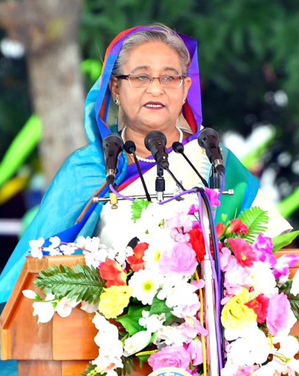
Hasina, the former Prime Minister, has announced a possible return home in December despite facing a death sentence and multiple legal cases following her ouster from power and subsequent exile in India.

On several occasions, she told the media from an unknown location, speaking virtually, that she intends to return alongside other senior Awami League leaders and surrender before a court, adding that the charges against her are “politically motivated”.

Observers note that her proposed return could become a major turning point in Bangladesh’s politics, potentially reigniting debates over the future of the banned Awami League, the government’s accountability campaign, and the country’s broader political stability.

Against this backdrop, BNP’s proposed initiative to “resolve misunderstandings through discussions with partners” is being seen as its leaders viewing the talks as necessary to prevent fragmentation within the anti-Awami League camp.

The ruling party thinks the Awami League is continuing conspiracies and alleged that Jamaat, too, is involved in it.

Interestingly, the Jamaat has shared power at different times with either party but has of late chosen to carve a separate path.

Against this backdrop, the issue of Sheikh Hasina’s potential return has emerged as a major political variable.

An earlier article in bdnews24.com mentioned the various schools of thought in Bangladesh over Sheikh Hasina’s proposed return.

While Awami League leaders have no doubt about it, the BNP government doubts her voluntary return, the article opined, adding that according to the government spokesman, extradition followed by hanging is the only path open to Hasina.

“For observers watching from the sidelines, there is plenty of room for doubt. For some, Hasina may well return but certain conditions would have to be met first, such as negotiations with the government to ensure security and right of appeal,” it said.

While for others, the threat of immediate hanging without a right of appeal sounds less like a credible legal path, and more like a ploy to deter Hasina from attempting to return, it added.

Though no official roadmap for handling her arrival has yet been publicly disclosed, repeated extradition requests, ongoing legal proceedings, and heightened political debate indicate that state institutions are preparing for the possibility that Hasina could attempt to re-enter the country.

The coming weeks could therefore prove decisive for Bangladesh, where the BNP is seeking to reinforce unity among its allies, Jamaat is building its own political network, and Sheikh Hasina continues to insist that she will return despite the legal and political risks.

–IANS

jb/khz

Jaipur roots of Indian-American Congresswoman-elect from Florida in focus

Jaipur, Nov 5 (IANS) After her victory in the recent US midterm elections, Pia Dandiya, whose family traces its roots to Jaipur, has emerged as a prominent new face in American politics.

A former White House Fellow, Apple employee and educationist, Dandiya has built her career around public service and expanding educational opportunities for underprivileged children.

Dandiya contested the US House of Representatives election from Florida’s 22nd Congressional District as a Democratic Party candidate.

She secured 51.89 per cent of the votes, defeating Republican candidate Casey Askar, who received 48.11 per cent.

Her election has also brought attention to her family’s connection with Rajasthan’s capital, where several of her relatives continue to reside.

Dandiya’s parents moved from Jaipur to the United States in 1980.

She was born and raised in America, but her connection with her ancestral city remained strong.

Her father Rohit Dandiya is a physician and an MBBS graduate of Sawai Man Singh (SMS) Medical College in Jaipur.

During her childhood, Dandiya frequently visited Jaipur during school holidays to meet relatives. These visits continued until her college years, keeping her connected with her family’s hometown.

Her mother is associated with the education sector and established a Montessori school in Jupiter, Florida.

She received her early education at the institution founded by her mother.

Education has been a major part of Dandiya’s professional journey.

At the age of 28, she established a high school in Harlem in New York, aimed at providing quality education to children from low-income families.

She became the school’s founding principal and worked to create better academic opportunities for students from disadvantaged backgrounds.

Graduates from the institution have subsequently secured admission to prestigious colleges.

Her experience in education and working with underserved communities helped shape her interest in public service and policymaking.

Apart from her work in education, Dandiya has also served as a White House Fellow, an experience that gave her exposure to the functioning of the US administration and policymaking.

She has also worked at Apple, adding experience in the corporate and technology sectors to her professional profile.

Her journey from education to public service and politics eventually brought her into the Democratic Party, where she went on to contest the Congressional election.

With her election to the US House of Representatives, Dandiya now begins a new chapter in public life.

Her victory has attracted particular interest in Jaipur, where her family’s roots and her father’s medical education remain an important part of her background.

–IANS

arc/khz

Report flags Pakistan and Turkey’s growing ambitions beyond Kashmir

New Delhi, Nov 5 (IANS) Pakistan and Turkey have come under scrutiny over their religious policies, with American expert Michael Rubin questioning their remarks on India’s domestic affairs despite allegations of religious discrimination and intolerance within their own borders, a report has stated.

In his latest article in The Sunday Guardian, Rubin also highlighted mounting discrimination against Hindus and Christians in Pakistan, incidents of communal violence and the reported misuse of blasphemy laws. He argued that countries facing criticism over religious tolerance within their own borders should also be scrutinised when commenting on the religious and social affairs of other nations.

Drawing attention to the rhetoric emerging from Turkey’s state media, which he described as even more virulent, Rubin cited a series of articles targeting India. He referred to an April 2025 article by Ibrahim Karagul, editor of Yeni Safak, described as Turkish President Recep Tayyip Erdogan’s preferred newspaper and the unofficial mouthpiece of his regime. Karagul wrote, “If China and Turkey stand with Pakistan… India will be torn to pieces,” adding, “The Mughal Empire, the Seljuks, the Ottomans, all will join this war!”

Rubin further cited a May 8 editorial in the same newspaper by Pakistani columnist Furqan Hamid, head of Turkish state television’s Urdu service, which claimed that India “has become unlivable for minorities.” The next day, Sabah columnist Hilal Kaplan alleged that “An unnamed genocide of Muslims has been under way in India for some time….”

“The irony, of course, is that Muslims enjoy far greater rights in India and Israel than in countries ruled by fellow Muslims. In Freedom House’s latest annual rankings, Israel scores three points above Senegal and Albania, the high-ranking Muslim majority states. Freedom House analysts have historically been unfairly antagonistic to India, but even Freedom House acknowledges that India is far more tolerant and democratic than Indonesia, any Arab country, let alone Pakistan and Turkey, which score alongside Algeria and Iraq,” said Rubin, Director of Policy Analysis at the Middle East Forum in Washington.

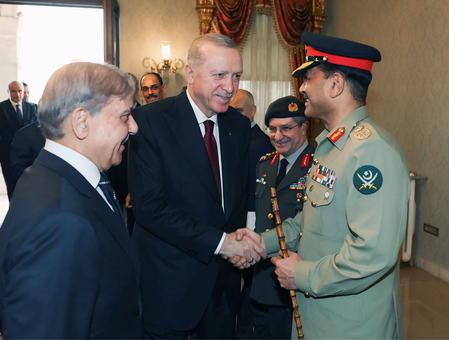
Rubin recalled that on April 16, 2025, Pakistan’s Army Chief Asim Munir had declared, “Our forefathers thought that we are different from Hindus in every possible aspect of life… We are two nations, we are not one nation.”

The expert said that Pakistan’s earlier rhetoric largely revolved around the Indian Union Territory of Jammu & Kashmir, but its recent alignment with Turkey, which has increasingly adopted an Islamist-oriented foreign policy, points to ambitions extending beyond the region, with both countries signalling broader sectarian objectives.

Referring to provocative remarks made by Munir and Erdogan against India, Rubin said that both Pakistan and Turkey are the antithesis of tolerance.

“When Pakistan gained independence, it had large Christian and Hindu minorities and even considered major Christian and Hindu festivals and national holidays. Today, many Christians and Hindus have fled, as state-incited pogroms and maliciously applied blasphemy laws take their toll. And, while Pakistan supports the Khalistan movement in India, it fails to mention its eradication of Sikh communities in Pakistani Punjab,” he mentioned.

–IANS

scor/as

Bangladesh to probe failures in procurement and distribution of measles vaccine under Yunus govt

Dhaka, Nov 5 (IANS) Bangladesh government has established a three-member inquiry commission to identify the irregularities and failures regarding procurement and distribution of measles vaccines during the rule of interim government led by Muhammad Yunus, local media reported.

The commission, led by Bangladesh former High Court justice Mamun Rahman, comprises the president of the Bangladesh College of Physicians and Surgeons (BCPS), Mawdud Hossain Alamgir and Additional Secretary to the Health Services Division, ABM Moinul Islam, Bangladesh-based daily ‘The Daily Star’ reported.

The commission will find the liability of those who held responsibility from August 8, 2024 to February 17, 2026, and present its report to the government within 60 working days. As part of the investigation, the commission can inspect any place in Bangladesh and question any individual.

The commission will find the causes and liabilities for delays, irregularities and administrative failures in measles vaccine procurement and distribution. It will suggest measures to stop such untoward occurrences in the future. The Health Services Division will give secretarial assistance to the inquiry commission, The Daily Star reported.

In August, a leading international advocacy group described the 2026 outbreak as one of the country’s worst public health crises in recent history, highlighting the concern that measles is preventable through vaccination.

In its latest report titled ‘Preventable Tragedy: Bangladesh’s 2026 Measles Outbreak’, Canada-based Global Centre for Democratic Governance (GCDG) said that although the measles outbreak appeared sudden to the public, it was not an unexpected event from an “epidemiological perspective”.

The report noted that the crisis resulted from a combination of disruptions to vaccine supply and health programs in 2024- 2025 during the period of the former interim government led by Muhammad Yunus, along with missed routine vaccinations, cancellations of scheduled supplementary immunisation programs, administrative delays in vaccine procurement, and a failure to promptly identify at-risk populations.

According to GCDG, Bangladesh had long procured WHO-approved vaccines through the United Nations Children’s Fund (UNICEF)’s international supply chain; however, the interim government replaced this system with an open tender procurement process. Citing UNICEF, the report said the agency repeatedly warned the interim government of a potential vaccine shortage through five to six formal letters and around 10 meetings held between 2024 and 2026.

“Bangladesh’s routine immunisation program requires about 70 million doses of various vaccines annually, but only 17.8 million doses of vaccines were procured with UNICEF’s advance funding between August and November 2025. UNICEF said that despite the allocation of funds, it was not possible to procure vaccines on time due to indecision over the procurement method and the lengthy open tender process,” the GCDG findings highlighted.

Referring to Expanded Program on Immunisation (EPI) data reported by Bangladeshi daily Samakal, the GCDG noted that measles vaccination coverage fell to 56.2 per cent in 2025, the lowest level recorded between 2017 and 2025.

It added that WHO later identified the nationwide stock-out of the measles-rubella (MR) vaccine in Bangladesh during 2024-2025 and the lack of regular vaccination as the main contributors to the decline in immunity among children and the 2026 outbreak

“Overall, the nationwide spread of measles resulted from a combination of administrative and health-system failures, including the programmatic vacuum created under the interim government; disruptions in vaccine procurement, transportation, and supply; vaccine stock-outs and cancelled EPI sessions; declining MR1 and MR2 coverage; an increasing number of children missing scheduled vaccinations; the absence of supplementary immunisation programs; and the current government’s inadequate and inefficient medical response,” the GCDG stated.

The organisation further said that the current Bangladesh Nationalist Party (BNP) government failed to respond swiftly to “known and measurable risks” after coming to power earlier this year.

–IANS

akl/as