Spain fully deploys sea barrier as death toll of Ceuta migrant crisis rises

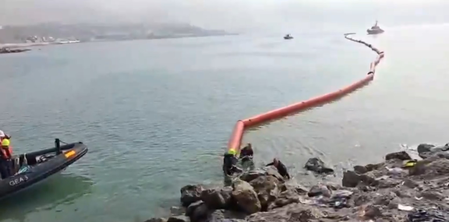
Madrid, Aug 2 (IANS) Spain fully deployed a floating sea barrier on Sunday along the maritime border of its North African enclave of Ceuta as the authorities continue to tighten border controls following the recent mass migrant influx from Morocco.

The floating barrier, installed off Ceuta’s Tarajal beach, is now fully operational. The measure is designed to prevent irregular sea crossings after tens of thousands of migrants entered the enclave in recent days, many by swimming, Xinhua news agency reported.

Spanish authorities also said on Sunday that the official death toll linked to the crisis has risen to 72.

Meanwhile, the regional government of Ceuta said 88 bodies are currently being held in the city’s morgue. Local authorities said some of the bodies were recovered from the sea more than two weeks after the migrant surge. The process of identification is still underway.

Although the large-scale arrivals have subsided, Ceuta has yet to return to normal.

Police and military personnel continued security operations across the city on Sunday, detaining migrants found on the streets. Those apprehended were taken to police stations for identification before deportation procedures were initiated.

The migrant surge has become one of the most serious border crises in Spain’s recent history, prompting emergency measures by the Spanish government and renewed debate across Europe over migration management and the protection of the European Union’s external borders.

A meeting of European Union (EU) Interior Ministers on the emergency migrant crisis going on in Spain’s Ceuta enclave has been convened for August 4.

The meeting was requested in a letter signed by 22 European countries, led by Italy and Denmark, but without France and Portugal, the two countries bordering Spain, Italian news agency Adnkronos reported.

EU Commission President Ursula von der Leyen received the letter from the 22 countries and from Spanish Prime Minister Pedro Sanchez, accepting the request for an emergency videoconference to assess the crisis.

She reiterated that combating illegal migration requires solidarity and a united European response.

–IANS

ksk/khz
Bodies of three Afghans killed by Pakistani nationals in Italy return to Afghanistan after two months

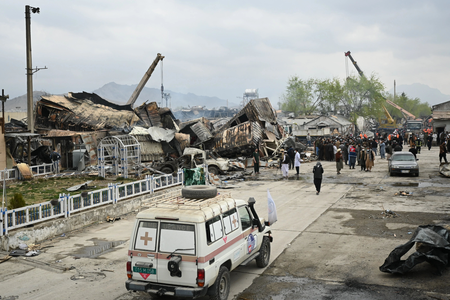
Kabul, Aug 2 (IANS) The bodies of three Afghan nationals killed by Pakistani men in Italy have been returned to Afghanistan, local media reported.

According to the Taliban Ministry of Refugees and Repatriation, the remains arrived in Kabul on July 27 and 28 and were later delivered to the families of the victims in Balkh, Kabul and Parwan provinces, Khamaa Press reported.

In June, two Pakistani nationals were arrested on suspicion of the murder of four migrants — three of them confirmed as Afghans — who were burnt alive in Amendolara town of Italy’s Calabria region.

A survivor from the fire incident told a local journalist that Pakistani men threw gasoline and fire into their car when they refused to pay.

“I saw the horror; I’m alive by a miracle,” the survivor said, who was tracked down by TGR Calabria and interviewed exclusively. The young farm labourer, the sole survivor of Monday’s massacre of farm labourers in Amendolara, is an Afghan citizen who lived with the victims in Villapiana, Italian news agency Adnkronos reported.

“I thought I was going to die,” the man who escaped the incident in which four men were burnt alive told journalist Francesco Salvatore. He claimed that three of the victims were Afghans and that the two arrested, accused of voluntary manslaughter, were the ones who demanded transportation money, which the victims refused to give.

At that point, he said, the two first threw gasoline into the car and then a lighter, burning the four migrants alive. He managed to escape by breaking a window.

The man also said that Pakistanis threatened him and others with knives and guns to get him to work and that they didn’t pay them: “They didn’t give us money, food yes, a house yes, but money no,” he said, adding that there is a “large mafia in Pakistan”.

According to La Milano news, in Amendolara of Cosenza province, four charred bodies were found inside a minivan parked near a gas station along the Ionian State Road 106.

“Following the incident, Taliban’s Foreign Ministry condemned the killings and called for a transparent and fair investigation. Italian Prime Minister Giorgia Meloni also expressed condolences to the families of the victims and said those responsible would face justice,” Khamaa Press reported.

–IANS

ksk/khz

Drone attacks in Pakistan destroyed regime’s myth of military domination guaranteeing security: Report

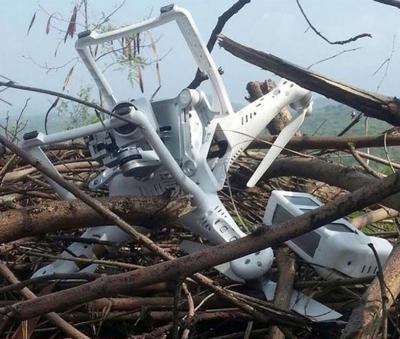
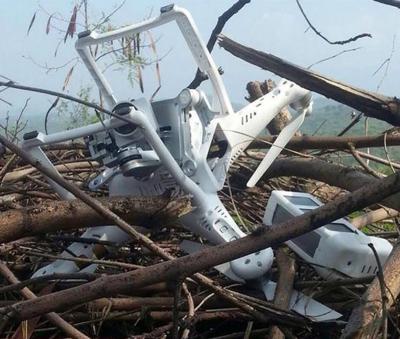
Islamabad, Aug 2 (IANS) The increasing number of drone attacks in several provinces of Pakistan is destroying the favourite myth of its regime, about military domination guaranteeing security, a report said, detailing the evolving situation in Khyber Pakhtunkhwa and Balochistan.

“During the first twelve days of July 2026 alone, at least ten quadcopter attacks were reported, leaving nine people dead and fifty-one injured. Since the beginning of the year, Pakistan’s tribal regions have recorded at least sixty such incidents, with thirty-six fatalities and more than 178 wounded,” a report by Stringer Asia said.

Because of its cost effectiveness and accessibility, the technology has spread quickly and been adopted by Pakistan’s fragmented war zones. These consumer drones can carry small explosives, conduct recon on troop movements and attack checkpoints.

“This pattern is now familiar. Civilians are killed. Local communities accuse the state. The state denies involvement. No independent investigation follows. No chain of command is examined. No officer is prosecuted. No family receives an explanation. Pakistan’s military has perfected the politics of unverifiable violence. The same institution that controls access to conflict zones, intimidates journalists and criminalises dissent then points to the absence of independently collected evidence as proof of its innocence,” the report emphasised.

According to it, the environment in which this technology now thrives was manufactured by Pakistan’s security establishment through decades.

“It armed militant organisations, divided them into useful and hostile categories, tolerated sanctuaries when they served foreign-policy objectives and unleashed military operations when yesterday’s proxies became inconvenient. The quadcopter is merely the latest instrument in a conflict created by the same institution now presenting itself as its victim,” the report noted.

Quadcopters are being deployed against police and security installations by militants because the state has failed to control the weapons, networks and territory through which the insurgency operates.

“Khyber Pakhtunkhwa’s police chief Zulfiqar Hameed acknowledged in March 2025 that militants possessed modern equipment, including American weapons and drones, while the police lacked adequate counter-quadcopter technology. The admission was extraordinary. After decades of counterterrorism funding, military operations and international assistance, Pakistan’s provincial police were confronting inexpensive commercial drones without the equipment needed to stop them,” the report said.

These flying grenades were bought online, modified in a workshop and sent over villages, resulting in an undeclared drone war where militants attack police stations and security forces bomb suspected hideouts while civilians bury their children and the state denies responsibility.

“The quadcopter war is therefore not simply a tactical evolution. It is the perfect symbol of the Pakistani regime: inexpensive violence descending from above, ambiguous chains of responsibility, civilians trapped between militants and the Army, and a state that demands unlimited authority while refusing to account for its failures,” stressed the report from Stringer Asia.

–IANS

ksk/khz

Taiwan reiterates its claim over islands in South China Sea

Taipei, Aug 2 (IANS) The Taiwan government on Sunday reaffirmed its sovereignty claim over islands in the South China Sea after the Philippines shared an official nautical chart of Scarborough Shoal with the United Nations, local media reported.

Taiwan’s Ministry of Foreign Affairs (MoFA) said any disputes in the South China Sea should be resolved peacefully as per international law and the law of the sea, and called for Taipei’s inclusion in the multilateral dispute settlement mechanisms, Taiwan’s Central News Agency (CNA) reported.

Taiwan’s MoFA statement comes after the Philippines shared an official nautical chart of Scarborough Shoal with the UN last week to reiterate its claim over the atoll claimed by Manila, Taipei, and Beijing.

In a statement issued on Friday, the Philippine Department of Foreign Affairs said: “The deposit was made pursuant to Article 16 of the 1982 United Nations Convention on the Law of the Sea (UNCLOS).” It stated that the Law of the Sea requires coastal states to give publicity to official charts depicting the baselines from which the breadth of the territorial sea is measured, the CNA reported.

Scarborough Shoal is called Bajo de Masinloc in the Philippines, Democracy Reef in Taiwan, and Huangyan Dao in China, and is claimed by all three nations.

On July 31, the Chinese Ministry of Foreign Affairs criticised the Philippines over delimitation of the so-called “baselines of the territorial sea” of Huangyan Dao, terming it “illegal, null, and void”. It stated that the Philippines’ move was “a grave infringement” upon China’s territorial sovereignty and a serious violation of international law, including the United Nations Charter and the United Nations Convention on the Law of the Sea (UNCLOS).

“China firmly rejects and will never accept it. Huangyan Dao is China’s inherent territory. China has indisputable sovereignty over it and its adjacent waters, and has sovereign rights and jurisdiction over the relevant waters. China has continuously, peacefully and effectively exercised sovereignty and jurisdiction over Huangyan Dao,” it said in a statement.

“The territory of the Philippines has been defined by a series of international treaties, and Huangyan Dao has never been a part of it. The Philippines’ illegal territorial claim over China’s Huangyan Dao is completely baseless under international law,” it added.

The Chinese Ministry of Foreign Affairs said that the Philippines’ unilateral initiation of the “South China Sea arbitration” violates the fundamental principles of international law, including pacta sunt servanda and estoppel, and international law, including UNCLOS, the bilateral agreement between China and the Philippines and the Declaration on the Conduct of Parties in the South China Sea (DOC).

–IANS

akl/vd

Seven killed, 18 injured in suicide attack at police station in Pakistan’s Swat

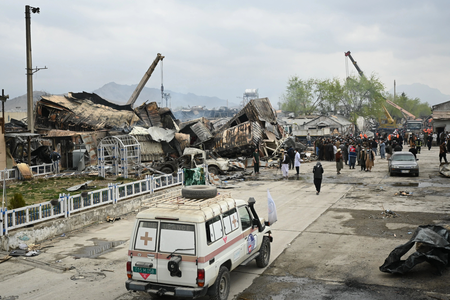
Islamabad, Aug 2 (IANS) At least seven people were killed and 18 others injured in a suicide attack at Kabal police station in Swat district of Pakistan’s Khyber-Pakhtunkhwa province on Sunday, local media reported.

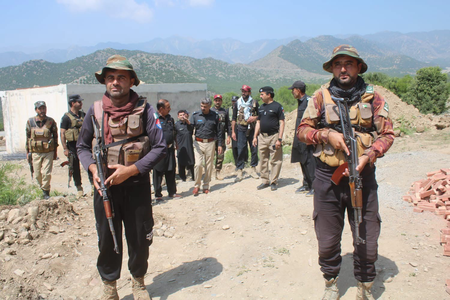
“According to initial information, seven people were killed, and 18 others were injured. Our police are on high alert and fully prepared to respond to any untoward situation. Security forces have cordoned off the area, and an investigation is underway to collect further evidence,” Swat District Police Officer (DPO) Umar Gandapur said, the daily Dawn reported.

According to Deputy Inspector General (DIG), Malakand, Syed Fida Hussain, police lines facility and other sensitive government buildings were located near the police station.

“Preliminary reports indicated that four police officers were seriously injured in the blast, while two civilians were also wounded,” Hussain said, as per The Express Tribune.

The incident happened while hundreds of people were participating in a public demonstration at Kabal Chowk close to the police station.

The injured were shifted to nearby Saidu Sharif Teaching Hospital for treatment, while security personnel sealed off the area and launched a search operation.

At least nine police personnel were killed, and 28 others injured after armed assailants targeted Khazina Banda checkpost in Hangu district of Khyber Pakhtunkhwa earlier this week, local media reported.

Fitna al Khawarij, a term used by the state for terrorists belonging to the banned Tehreek-e-Taliban (TTP) Pakistan, were behind the attack, according to the statement released by Khyber Pakhtunkhwa Inspector General (IG) Zulfiqar Hameed, the Dawn reported.

Hameed said that police personnel responded to the attack and additional forces were sent to the site. He said that nine police personnel, including a Deputy Superintendent of Police (DSP), were killed while 28 others were injured during the exchange of fire between police and armed assailants.

The incidents occurred amid a rise in attacks targeting law enforcement personnel in Pakistan, especially in the border provinces of Balochistan and Khyber Pakhtunkhwa.

–IANS

ksk/vd

Two firefighting helicopters collide while battling wildfire in Greece

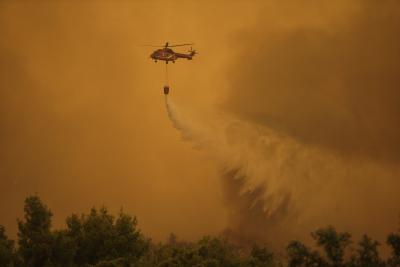
Athens, Aug 2 (IANS) Two firefighting helicopters collided in midair on Sunday afternoon while battling a massive wildfire in Greece’s western Attica, according to Greek national broadcaster ERT.

The helicopters crashed near the coastal area of Psatha shortly after the collision, prompting a large-scale rescue operation.

The pilot of one helicopter managed to contact the Fire Service’s operations centre and reported that the co-pilot had been injured. Rescue operations were underway, the ERT reported.

There was no immediate information on the crew of the second helicopter, Xinhua News Agency reported.

Meanwhile, Spanish Prime Minister Pedro Sanchez announced on Thursday the end of the national emergency declared over wildfires in the province of Avila and the Madrid region, as fires in the two areas have largely stabilised, while blazes remain active elsewhere amid a new heatwave and strong winds.

At an emergency command centre in Navaluenga, Avila, Sanchez said the decision followed consultations with regional authorities and technical teams. Management of the emergency will now return to regional governments under a lower, Level 2 operational status.

The Burgohondo fire in Avila has burned more than 50,000 hectares and is considered the largest wildfire ever recorded in Spain. The blaze has been technically stabilised, and residents who had been evacuated have been allowed to return home.

Since the start of the year, nearly 130,000 hectares have burned across Spain, according to the European Forest Fire Information System.

Thousands of firefighters, soldiers, police officers and civil protection personnel have been deployed across the affected areas. The Military Emergency Unit continues to play a central role in protecting communities and critical infrastructure while supporting regional firefighting teams.

Spain has also activated the European Union Civil Protection Mechanism, under which Greece and Italy each offered two Canadair firefighting aircraft, together with an additional support aircraft.

–IANS

ksk/vd

PoK: People hold sit-in protest in Rawalakot, prepare to march to Muzaffarabad

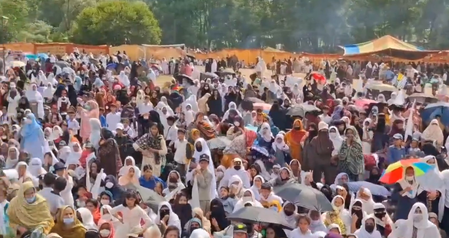
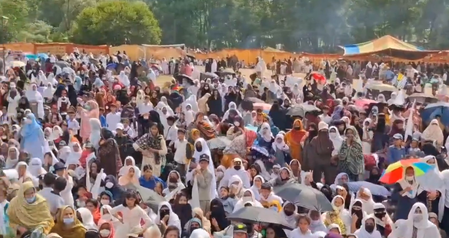
Islamabad, Aug 2 (IANS) A large number of people held a sit-in protest at D-Chowk in Rawalkot of Pakistan-occupied Kashmir (PoK) on Sunday and prepared to start a peaceful long march towards Muzaffarabad.

According to a statement released by the Joint Awami Action Committee (JAAC), security forces have been carrying out intermittent heavy firing. The JAAC said that women and children were holding a protest sit-in at Dreak, and it will continue until the demands of the movement are acted upon. The protesters shouted slogans like “Aawaz do hum ek hai, Kashmir ke pahadon mein hum ek hai.”

While sharing visuals from the protest site on X, the JAAC said: “Rawalakot: At D-Chowk, the public is staging a temporary sit-in protest, and a peaceful long march toward Muzaffarabad could commence at any time—security forces are carrying out intermittent heavy firing. However, no martyrdoms have been reported in Rawalakot.”

“At Dreak, where a protest sit-in was held for 50 days, women and children are now maintaining the sit-in, and it will continue until the movement’s recognised demands are acted upon. The Kashmiri people, united as one nation, have resolved that under no circumstances will they betray the blood of their martyrs,” it added.

On Saturday, JAAC member Sardar Umar Nazir Kashmiri said that more than 50 people have been killed and hundreds injured over the past four days in a brutal crackdown by Pakistani forces in PoK.

In a post on X, he said: “In the past 4 days, the forces have killed more than 50 of our people through brutal terrorism, and hundreds are injured…”

In another post on X, the JAAC said that late-night protests continued across the Muzaffarabad region in PoK, with people remaining on the streets, while demanding the protection of their fundamental rights and the implementation of commitments made by the local authorities.

In recent days, several videos posted on various social media handles, including that of the JAAC, have shown the brutality of Pakistani forces in PoK. Videos shared on social media also showed women protesters running desperately to save their lives as local police unleashed terror and opened fire on a peaceful protest rally in PoK’s Kotli.

Meanwhile, a delegation of United Kashmir People’s National Party (UKPNP) led by its Chairman Sardar Shaukat Ali Kashmiri held a series of meetings at the United Nations Headquarters in New York to brief the UN officials about the brutalities committed by Pakistani forces in PoK.

During these meetings, the delegation expressed grave concern over the deteriorating human rights situation in PoK. It urged the UN, the international community, governments, human rights organisations, and democratic institutions “to take prompt and effective action to prevent further loss of life and protect fundamental human rights” in the region.

The delegation called on Pakistani authorities to exercise maximum restraint and immediately cease all excessive, direct, or lethal force against peaceful protesters in PoK, placing the protection of civilian lives above all other considerations.

It further urged the authorities to unconditionally hand over the bodies of all civilians killed during the unrest to their families, disclose the whereabouts of all individuals subjected to enforced disappearance or unacknowledged detention and release those “unlawfully” detained by Pakistani forces.

–IANS

akl/vd

‘India’s approach towards China is managed competition, limited cooperation, and not reconciliation’

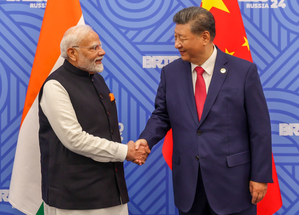
Beijing, Aug 2 (IANS) India’s approach towards its ties with China is one of managed competition, limited cooperation, and not reconciliation, even as the trajectory of ties between the two nations since 2024 has been frequently portrayed as a process of diplomatic thaw, as per a report.

This framing, following the October 2024 disengagement understandings along the Line of Control and meetings between Prime Minister Narendra Modi and Chinese President Xi Jinping, draws closer analytical examination instead of uncritical acceptance as a substantive realignment of bilateral dynamics, according to the Politeia Research Foundation (PRF) report.

PM Modi and President Xi held a meeting on the sidelines of the Shanghai Cooperation Organisation (SCO) in China’s Tianjin in 2025. Previously, the two leaders held a meeting on the sidelines of the BRICS Summit in Russia’s Kazan in 2024. The breakthrough in bilateral talks was made possible after India and China reached an agreement on patrolling along the nearly 3,500-km LAC to end the four-year-long border confrontation.

After India and China started engaging with each other since 2024, flights have restarted, visas have been eased, the resumption of Kailash Mansarovar Yatra and border trade points are being prepared for reopening. Foreign Secretary Vikram Misri’s visit to China in July fits this pattern of calibrated outreach.

“Yet to describe these steps as a genuine reset risks overstating their depth. The underlying structural problems- unresolved boundary claims, persistent military deployments, a lopsided trade relationship, and Chinese assertiveness in India’s neighbourhood remain intact. India’s approach is one of managed competition and limited cooperation, not reconciliation,” the report maintained.

“Misri’s two-day visit to Beijing on 27-28 July 2026 was a deliberate, low-key effort to operationalise the guidance from the leaders’ meetings in Kazan, in 2024, and in Tianjin, in 2025,” it added.

During his visit, Misri met China’s Vice Minister of Foreign Affairs Hua Chunying and reviewed the entire gamut of bilateral ties. The two sides acknowledged the importance of maintaining peace and tranquillity in the India-China border areas.

“Foreign Secretary Shri Vikram Misri met H.E. Ms Hua Chunying, Vice Minister of Foreign Affairs of China. They reviewed the entire gamut of bilateral relations. They discussed means of advancing the vision of the two leaders that India and China are partners and development opportunities for each other, including through mutually beneficial outcomes across trade and economic ties, culture, and people-to-people exchanges. Both sides acknowledged the importance of maintaining peace and tranquillity in the India-China border areas,” the Embassy of India in China stated on X.

The Foreign Secretary discussed ways to enhance bilateral exchanges between India and China at the political and people-to-people levels during his meeting with Hong Liang, Deputy Secretary General of the 14th National Committee of the Chinese People’s Political Consultative Conference (CPPCC), in Beijing.

He also met Sun Haiyan, Vice Minister of the International Department of the CPC’s Central Committee, and discussed ways to deepen implementation of the guidance of Prime Minister Modi and President Xi for bilateral ties.

–IANS

akl/vd

China became principal enabler of military capabilities of Israel’s adversaries: Report

Jerusalem, Aug 2 (IANS) The conflict involving Iran exposed the reality of China being one of the principal enablers of Pakistan and Iran, two of Israel’s most consequential adversaries, a report said.

“Unlike the United States or Russia, China has built its influence without alliances or expeditionary deployments, relying instead on arms transfers, dual-use technology, industrial cooperation, economic investment and diplomatic cover. The effect has been the steady strengthening of states that often share an interest in limiting Israeli and American reach across the region and actively empowering terrorists against Israel,” said Sergio Restelli in a report on the Times of Israel.

It said the pattern is clearly illustrated with Pakistan, as for more than three decades, China has turned Islamabad into its closest military partner.

“The Pakistan Air Force now relies heavily on Chinese-built aircraft, including the JF-17 and the J-10CE, while its Navy is acquiring Chinese submarines and frigates and its missile and air defence systems have benefited from extensive Chinese cooperation,” the report highlighted.

China remains one of Iran’s principal strategic partners even with international sanctions limiting conventional arms transfers for years, making it no less significant.

“Chinese firms have supplied dual-use technologies, industrial equipment and components tied to sectors that support Iran’s military industry. The 25-year strategic cooperation agreement signed in 2021 deepened this relationship further, expanding cooperation in energy, infrastructure, technology and security,” the report noted.

For their part, Iran and Pakistan also steadily expanded security cooperation along their shared border, which faces insurgent threats. The two countries built mechanisms for military coordination after repeated border crises, and intelligence exchanges on opposition groups became routine.

“China sits at the centre of this triangle, maintaining deep military ties with Pakistan while cultivating a broad strategic partnership with Iran. There is little public evidence of a formal trilateral intelligence arrangement aimed at Israel, but China is well positioned to benefit from information generated through its ties to both countries, since military exercises, defence dialogues, technology cooperation and security consultations all create channels for information flow that would not otherwise exist,” Restelli emphasised in the Times of Israel report.

The report noted that with Iran’s proxy network extending across Lebanon, Syria, Iraq and Yemen, and Pakistan having the largest armed forces in the Islamic world and remaining a nuclear power, this is not an abstract concern for Israel.

“While there is no concrete evidence, it is assumed and possibly a reality that a lot of Iran’s nuclear technology comes from Pakistan with tacit support from China,” the report noted.

“China rarely appears on the battlefield, but its influence is visible in the weapons systems, industrial capacity and strategic resilience of states whose interests often run counter to Israel’s own, and it deserves more attention than it has so far received,” Restelli highlighted.

–IANS

ksk/khz

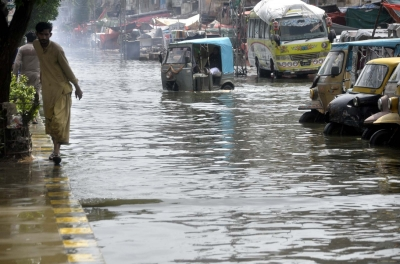
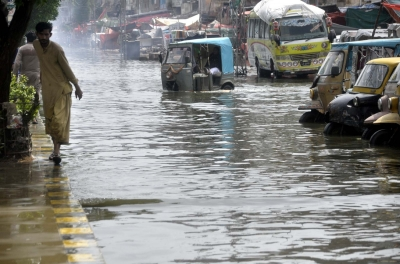
Monsoon death toll in Pakistan rises to 126, over 400 injured

Islamabad, Aug 2 (IANS) The death toll in Pakistan during this year’s monsoon season from June 26 to August 1 rose to 196, while the number of injured people climbed to 404, local media reported on Sunday, citing the National Disaster Management Authority (NDMA).

The primary cause for fatalities in Pakistan during monsoon season was electrocution, followed by flash floods, drowning, lightning and other rain-related incidents like house collapse and falling of trees.

In the report on Saturday, the NDMA said that four people were killed in rain-related incidents, including drowning and lightning, during the past 24 hours. Furthermore, 16 people were injured during the past 24 hours, with the maximum number of casualties reported in Punjab, Pakistan’s The Express Tribune reported.

According to the report, 47 people died while 295 people were injured in Punjab from June 26 to August 1. A total of 55 people died, and 82 others were injured in Khyber Pakhtunkhwa between June 26 and August 1. As many as five people died, and seven others were injured in Sindh, while Balochistan saw eight deaths and 15 injuries.

In the statement, the NDMA mentioned that nine people were rescued in Punjab, five people in Sindh and two people in Khyber Pakhtunkhwa during the rescue operations conducted during the past 24 hours, The Express Tribune reported.

Earlier in July, road access to several parts of Pakistan-occupied Gilgit-Baltistan (PoGB) remained cut off as flash floods and glacial lake outburst floods (Glofs) continue to damage highways and hamper restoration efforts.

Thousands of residents and tourists remained stranded as road closures severed access to several valleys. Flood-hit communities also continued to face shortages of drinking water, electricity and communication services,” the daily Dawn reported.

According to residents of Hisper Valley in Nagar district, patients and students were facing severe hardships. People were facing a shortage of food, medicine and other essential supplies, Dawn reported.

People from Diamer, Astore, Ghizer and other affected districts of PoGB also complained of facing electricity and water supply disruption along with shortage of essential commodities.

–IANS

akl/vd