Chandigarh, Dec 26 (IANS) The AAP-ruled Punjab government has been providing free 600 units of electricity to every household per billing cycle since 2022, enabling 90 per cent of them to avail the facility, besides releasing Rs 968 crore for crop loss in monsoon floods, reducing the cost of doorsteps delivery of services from Rs 120 to just Rs 50, clearing dues of six lakh employees and geared up to start an insurance cover of Rs 10 lakh for 65 lakh families.
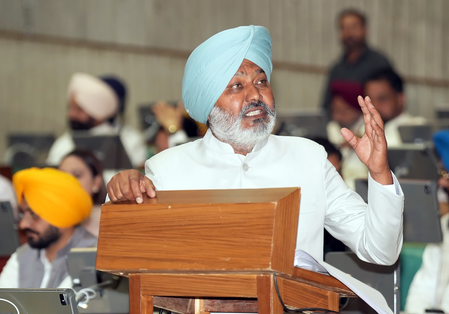
In his year-end report, Punjab’s Finance Minister Harpal Singh Cheema showcased a year of robust fiscal management, infrastructure investment, and landmark digital reforms.
Saying the Finance Department is no longer a “distributor of funds” but a “driver of innovation”, he remarked that the priority of the government remains ensuring the state exchequer, which serves the common man directly. “Whether it is the Rs 968 crore released for crop loss compensation to our farmers who faced severe floods this year or loan waiver for 4,650 beneficiaries under the Punjab Scheduled Castes Land Development and Finance Corporation (PSCFC), we are committed to providing a safety net for every Punjabi,” he said.
“We have even reduced the cost of doorstep delivery of government services from Rs 120 to just Rs 50, with the government absorbing the remaining cost to ease the burden on citizens,” he explained.
Talking about the provision of free 600 units of power to domestic consumers for every two-month bill cycle that started in July 2022, Finance Minister Cheema said the government “is not only providing free power to more than 90 per cent households but has also cleared all payments related to power subsidy up to September 2025, including pending dues”.
He said the Sixth Punjab Pay Commission was implemented on July 1, 2021, and the government is committed to clearing the outstanding dues of Rs 14,191 crore left unpaid by the previous government. The government has already started releasing arrears as per the structured liquidation plan in 2025-26, benefiting six lakh employees and pensioners, Cheema said.
To bolster grassroots development, the Finance Minister said the government has released Rs 292 crore under the Rangla Punjab Vikas Scheme, ensuring every constituency receives Rs 2.5 crore to address immediate local needs.
He said this year marked a massive surge in connectivity and sports infrastructure. “A mammoth project to construct 2,832 km of Plan Roads and 7,767 km of Link Roads is underway for Rs 5,338 crore. The Mandi Board is executing the construction of 12,361 km of new rural link roads with an investment of Rs 4,275 crore, and Rs 500 crore has been earmarked for developing world-class playgrounds to foster a culture of fitness and sports,” he said.
Stressing the government’s focus on education and health, the Finance Minister said in a significant move for the education sector, the government concluded negotiations for the World Bank-supported POISE programme (Punjab Outcomes-Acceleration In School Education Operation).
He said with a total outlay of Rs 2,520 crore (70:30 cost-sharing with the state), this five-year initiative aims to revolutionise learning outcomes and governance in school education. He said the state would soon provide an insurance cover of Rs 10 lakh to approximately 65 lakh families under Mukh Mantri Sehat Bima Yojana, with an estimated outlay of Rs 600 crore in this fiscal.
The Finance Minister said his department has undergone a digital metamorphosis through the Integrated Financial Management System (IFMS), introducing several good practices that enhance transparency and efficiency.
He said Punjab became a pioneer in implementing the SNA-SPARSH fund flow mechanism. He said the state has earned an incentive of Rs 450 crore in 2024-25 and is eyeing another Rs 350 crore this fiscal year by optimising cash liquidity and reducing unutilized funds.
“A dedicated Pensioner Sewa Portal (PSP) now allows pensioners to track their cases, submit life certificates, and lodge grievances online, ensuring ease of living for senior citizens.
Moving away from slow manual processes, the new audit management system portal allows real-time tracking of audit memos and reports, ensuring accountability at the highest administrative levels. “By shifting to electronic vouchers for all bills across Punjab, the government has significantly reduced stationary and logistical costs while streamlining the accounting process with the Accountant General (AG),” he said, adding for the first time the Punjab Treasury Rules (PTR) have been completely overhauled to incorporate modern FinTech and IT applications, with the new rules set to be published shortly.
Concluding the year-ender, the Finance Minister said that under the leadership of Chief Minister Bhagwant Mann, the state has successfully balanced grassroots development with cutting-edge financial technology.
–IANS
vg/skp