
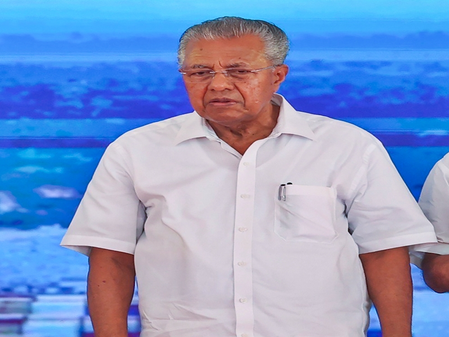
Thiruvananthapuram, Feb 13 (IANS) In a landmark decision, the state Cabinet led by Chief Minister Pinarayi Vijayan, on Friday, approved Kerala’s Urban Policy, making the state the first in the country to formulate a comprehensive urban framework aimed at guiding development over the next 25 years.
The draft policy, prepared by the Local Self-Government Department, received Cabinet clearance on Friday after nearly two years of sustained consultations and expert inputs.
The initiative was first announced in the 2023–24 State Budget.
In December 2023, the state government constituted the Kerala Urban Policy Commission, comprising national and international experts.
The Commission submitted the ‘Nava Kerala Urban Policy Report’ to the Chief Minister in March 2025.
A global conference was subsequently held in Kochi in September to deliberate on the recommendations.
Ministers, Mayors, elected representatives and urban experts from India and abroad participated in detailed discussions on the future trajectory of urbanisation in the state.
The final policy incorporates fresh suggestions that emerged from these consultations.
According to Commission estimates, Kerala is projected to become 80 per cent urbanised by 2050.
Urban expansion is expected to spread in a decentralised manner across densely populated belts between the highlands and coastal regions.
With climate change posing additional challenges, the policy seeks to provide a scientific framework to manage urban growth, including in environmentally fragile areas.
The document envisions a network of climate-smart cities and towns by 2050, rooted in Kerala’s legacy of decentralised governance and participatory planning.
It aims to leverage urbanisation as a driver of economic growth while ensuring inclusivity and equitable access to urban amenities.
Alongside building high-quality infrastructure, the policy seeks to reduce social and spatial inequalities and strengthen social support systems.
Key focus areas include legal and institutional reforms, capacity building, governance strengthening, citizen-centric services, infrastructure development, and spatial and strategic planning positioning Kerala’s urban transformation on a structured and sustainable footing.
–IANS
sg/khz


