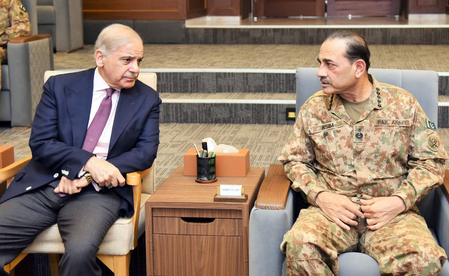
Islamabad, April 6 (IANS) Pakistan’s chronic dependence on external debt reflects decades of fiscal mismanagement, entrenched elite capture and failure to broaden the tax base or restructure loss-making state-owned corporations, a report said on Monday.
According to a report in the ‘Khalsa Vox’, Pakistan has announced to repay $3.5 billion in debt to the United Arab Emirates (UAE) by the end of April 2026, projecting the decision as an “act of sovereign pride”.
It added that Abu Dhabi had sought the immediate repayment of funds originally extended in 2019 to help stabilise Pakistan’s balance of payments.
The report argued that Islamabad’s narrative of “dignity” rings hollow when confronted with the facts.
“Pakistan had actively sought a two-year rollover and a reduction in interest rates from 6.5 per cent to around 3 per cent, citing improved credit ratings and lower global borrowing costs. The UAE refused. What Islamabad presents as a principled stand is, in reality, acquiescence to a creditor’s demand amid regional turbulence—the UAE’s own liquidity needs heightened by Middle East tensions following the US-Israel-Iran conflict,” the report detailed.
“For decades, Gulf deposits have functioned as de facto lifelines; their abrupt withdrawal reveals how fragile that dependence remains. This episode underscores a deeper contradiction in Pakistan’s foreign policy: a persistent desperation to project global standing while its economic reality tells a different story,” it added.
Asserting that Pakistan’s rhetoric of dignity is a cover for its “beggar’s bowl” image, the report said that the rush to repay is aimed at resetting the creditor-debtor dynamic and impressing the International Monetary Fund (IMF) and global markets.
Rather the move by Pakistani authorities, it warned, risks signalling weakness — “a country so cash-strapped it must liquidate reserves to avoid the optics of prolonged begging.”
“The setback is multidimensional. Reserves are not abstract numbers; they underpin import financing for fuel, food and machinery in an economy already grappling with inflation, low growth and structural deficits. A sharp drawdown could force tighter monetary policy or fresh borrowing on harsher terms, undermining the very stability the repayment ostensibly protects. It also strains relations with other Gulf partners who may now question Pakistan’s reliability as a steward of deposits,” the report emphasised.
“Far from enhancing global standing, this move advertises vulnerability. Pakistan’s leaders appear more concerned with performative sovereignty than sustainable sovereignty,” it further stated.
The report stressed that if the narrative of “national dignity” is to hold any significance, Pakistan must begin building an economy that does not swing from one rollover to repayment crisis.
“Pakistan’s decision to return the UAE funds may salve short-term pride, but it delivers a long-term economic blow. The world sees not a confident power but a nation still trapped in the cycle it claims to have broken. Until Islamabad confronts this reality—rather than dressing it in the language of dignity—such setbacks will recur,” it noted.
–IANS
scor/as