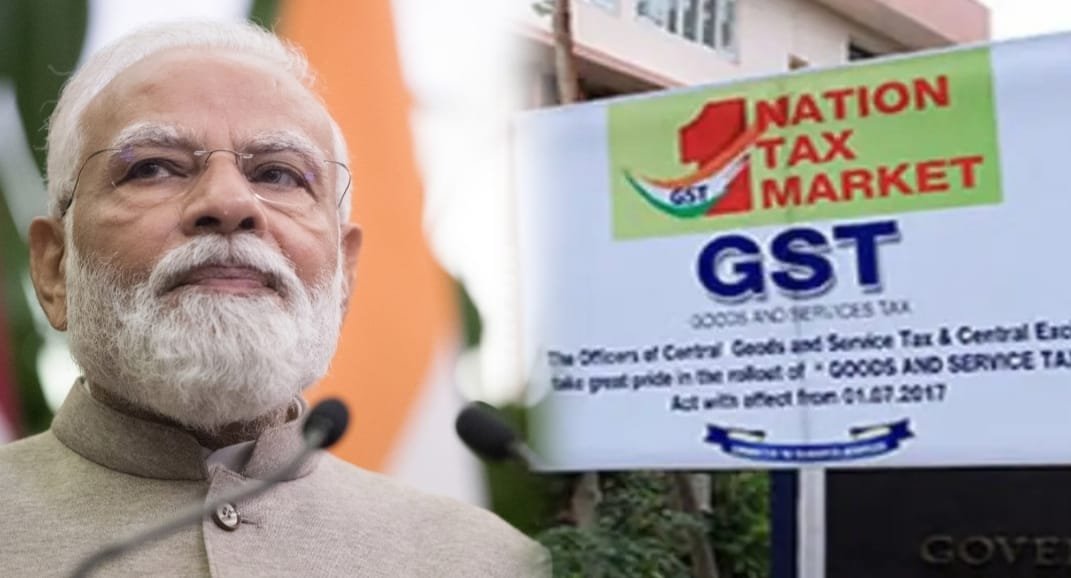
New Delhi: In a landmark economic reform, the Narendra Modi government has overhauled the Goods and Services Tax (GST) regime, replacing the earlier multi-slab structure with just two simplified rates — 5% and 18%.
The move aims to make the taxation system more transparent, business-friendly, and people-centric. It is expected to reduce compliance burden and bring direct relief to both small traders and industrialists across the country.
Simplified GST brings relief across sectors
Officials said that the previous complex slab system had become cumbersome for small businesses, leading to confusion and higher costs. The new streamlined structure, they said, “will make doing business easier and strengthen India’s MSME ecosystem.”
Karnataka: Traditional industries to thrive
In Karnataka, the reform is expected to give a strong push to small-scale industries. Mysore silk, Ilkal and Molakalmuru silks now attract only 5% GST. The world-renowned Channapatna and Kinnal toys have seen their tax rate slashed from 12% to 5%, while popular sweets like Mysore Pak and Dharwad peda will become cheaper.
Farmers and planters will also gain as GST on cardamom, black pepper, coffee, oranges, pomegranates, and Nanjangudu rasabale bananas has been reduced to 5%. Traditional crafts such as Bidriware, Mysore rosewood inlay, and Ganjifa cards will also benefit.
Nationwide impact: Local industries get a boost
In Jammu & Kashmir, the horticulture, walnut, cherry, and saffron sectors have welcomed the reform, which allows farmers to fetch better prices. Himachal Pradesh will see relief for Kangra tea, Kullu shawls, and Kangra paintings — all taxed at 5%.
In Uttarakhand, local produce such as bay leaves, Munsyari rajma, and Nainital lychee will now attract a 5% GST, helping farmers and handicraft artisans. Jharkhand’s tribal economy — with Sohrai-Khovar paintings, Dokra art, and Tassar silk — will also benefit from the reduced rate.
South India: Textile and handicraft sectors to gain
In Tamil Nadu, the textile sector and GI-tagged products such as Virupakshi hill bananas, Erode turmeric, and Thanjavur paintings are now in the 5% bracket. Chhattisgarh’s Bastar iron craft, Dokra art, and Champa silk sarees have also been moved to 5%, providing relief to artisans.
Kerala’s cardamom, Malabar pepper, Wayanad coffee, and coir products have been brought under the 5% slab, while Andhra Pradesh’s Guntur Sannam chili, Tirupati laddoo, and Kondapalli and Etikoppaka toys will also become cheaper.
In Puducherry, terracotta and papier-mâché crafts will be taxed at 5%, while Goa’s cashew and khaje products will also see price reductions.
Other states: Traditional crafts, agriculture benefit
In Maharashtra, Kolhapuri chappals, Paithani sarees, Warli paintings, Nagpur oranges, and Alphonso mangoes are now in the lower slab, potentially boosting exports and local jobs.
Punjab and Haryana have seen reduced taxes on Phulkari, dairy, and agricultural machinery, while Odisha’s famous silver filigree and Dokra crafts will become more affordable.
In Bihar, lower taxes on textiles and dairy will help women’s groups and youth-run enterprises. Uttar Pradesh’s handloom, leather, and sports goods sectors will gain a competitive edge internationally.
Gujarat’s textile and diamond sectors are also big winners — lower production costs are expected to boost exports and create jobs. The automobile and food processing industries in Maharashtra, and IT and electronics in Tamil Nadu and Andhra Pradesh, are also expected to see faster growth.
‘A reform for all’
Officials described the reform as one of the most significant steps in India’s indirect tax history. “This is not merely a tax change — it is a people-centric economic reform that promotes Make in India and empowers farmers, artisans, and entrepreneurs,” a senior Finance Ministry official said.
The simplified GST structure, they said, embodies the government’s motto of “Sabka Saath, Sabka Vikas, Sabka Vishwas, Sabka Prayas.”