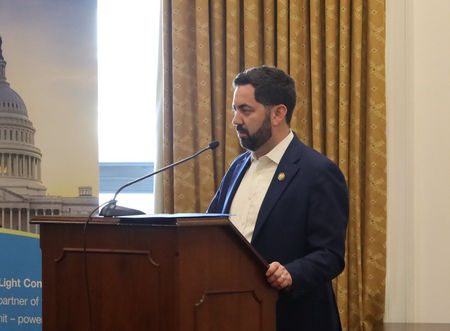
Washington, April 3 (IANS) A bipartisan group of US lawmakers announced to introduce a legislation to protect Taiwan’s undersea cables and critical infrastructure, citing growing threats from China and warning of risks to global communications and economic stability.
The proposed Critical Undersea Infrastructure Resilience Initiative Act aims to strengthen monitoring, response, and international coordination to safeguard vital networks linking Taiwan to the world.
The bill was introduced in the House by Representatives Mike Lawler, Dave Min, and Greg Stanton, with companion legislation in the Senate from Senators John Curtis and Jacky Rosen. The Senate version has already cleared a key Foreign Relations Committee markup.
Lawmakers said the legislation focuses on deploying advanced monitoring systems to detect disruptions or sabotage in real time, alongside improving early warning through global intelligence-sharing networks. It also outlines rapid response protocols to repair damaged infrastructure and reduce downtime.
“Undersea infrastructure is the backbone of global communications and economic stability. As threats from the PRC continue to grow, the United States must lead in ensuring these systems are protected, resilient, and secure,” Lawler said. He added that the bill would help “deter sabotage, respond quickly to disruptions, and stand firmly with Taiwan and our allies in the Indo-Pacific”.
The measure, among other things, calls for enhanced maritime domain awareness around Taiwan, including joint patrols and surveillance efforts with the US Coast Guard in the Taiwan Strait and nearby waters. It seeks to deepen coordination with allies to strengthen regional resilience.
A key provision establishes a Cross-Strait Contingency Planning Group, which would conduct scenario-based exercises, identify vulnerabilities in supply chains and infrastructure, and develop coordinated contingency plans with partners.
Lawmakers framed the legislation as a response to what they described as “gray zone” tactics by China.
“China’s repeated sabotage of Taiwan’s undersea cables is not accidental—it is part of a deliberate campaign to isolate a democratic partner,” Min said. He warned that Taiwan’s communication systems are critical not only for its own security but also for “global commerce and regional stability”.
Stanton said the infrastructure was vital to US economic interests as well. “The PRC has been deliberately targeting this infrastructure as part of a gray zone campaign to isolate Taiwan without firing a shot,” he said, adding the bill would impose “real consequences on those responsible for sabotage”.
The legislation also mandates sanctions against individuals found responsible for damaging undersea systems affecting Taiwan and US allies. It calls for increased diplomatic pressure on China to adhere to international norms, alongside expanded public diplomacy to raise awareness of such threats.
“We can’t stand idle as China ramps up its tactics to isolate Taiwan,” Curtis said, adding the bill would improve monitoring and resilience while signalling US support for Taiwan and its partners.
Rosen said the targeting of undersea cables “doesn’t just threaten Taiwan’s national security, but connectivity and communication around the world,” and stressed the need for closer collaboration to protect the infrastructure.
–IANS
lkj/rs