
‘Youth betrayed’: Vijay targets DMK govt over sudden TNPSC exam cancellation


New Delhi, Feb 2 (IANS) In a significant development, a dreaded gangster, Joginder Gyong, was deported from Philippines on Sunday and arrested at Delhi’s IGI airport by the Special Cell of Delhi Police over his role in multiple criminal cases.
The criminal is wanted by Haryana and other states over criminal conspiracy and murder charges besides other heinous crimes.
The gangster was arrested in Philippines and brought back Delhi via Bangkok, where his custody was taken by the Special Cell of Delhi Police.
Joginder Gyong has been guilty of engaging in criminal activities along with his brother Surinder Geong. He has multiple cases against him, with murder charges lodged against him at Panipat police station in 2017.
The fugitive gangster was involved in multiple criminal cases with cases lodged against him in Delhi also, over offences of robbery, murder, attempt to murder, putting person in fear of death or of grievous hurt in order to commit extortion and kidnapping for ransom.
His gangster brother had died in exchange of fire with the Haryana Police. Following this, he also planned and carried out a murder to avenge the death of his brother.
The CBI got a red notice issued against him from Interpol, following which he was nabbed and sent back to India.
“The Central Bureau of Investigation (CBI) had got a Red Notice issued against Joginder Gyong from the Interpol on October 25, 2024, which was circulated to law enforcement agencies globally for tracking him down,” said on official statement.
Delhi Police said Gyong was apprehended by the Philippines Bureau of Immigration (PBI) from Bacolod City, acting on India’s request for his extradition.
His extradition marks a significant victory for the investigative agency as the criminal was arrested by Philippines authorities and sent back to India.
As per official estimates, more than 100 wanted criminals have been returned to India through coordination via Interpol channels, since 2021.
–IANS
mr/pgh


New Delhi, Sept 26 (IANS) India’s approach to adopting AI in financial services aligns with the broader goal of leveraging technology for inclusive economic development, and the country’s unique digital public infrastructure lays a foundation for AI integration, aiming to democratise financial access at an unprecedented scale, according to the Finance Ministry’s monthly review released on Friday.
The RBI’s FREE-AI Framework is designed to foster innovation while ensuring robust risk management, highlighting that these two elements are complementary forces that should be pursued together. The framework also supports the India AI Mission, enhancing national AI capabilities, and aligns with the Digital Personal Data Protection Act, ensuring consistency in data governance, the review states.
Based on detailed surveys, the RBI found that AI adoption in Indian finance is still in its early stages, with only 21 per cent of surveyed banks and financial institutions implementing or developing AI solutions.
Adoption is concentrated among larger banks, while smaller urban cooperative banks and many NBFCs face resource constraints, including inadequate data infrastructure, limited skilled talent, and insufficient IT budgets, which hinder AI deployment. Additionally, even among early adopters, the use of AI applications remains basic, often focused on improving process efficiency, customer interactions (like simple chatbots), lead generation, and internal decision support rather than engaging in complex autonomous decision-making.
Guided by these principles, the RBI’s FREE AI outlines six strategic pillars for implementing its vision effectively. Under the Innovation Enablement Framework, the focus is on infrastructure, policy, and capacity building. This includes developing shared data and technology infrastructure to democratise AI access (for example, data lakes or plug-and-play ‘landing zones’ platforms that smaller firms can leverage), crafting agile policies and establishing regulatory sandboxes for safe and controlled experimentation, along with addressing the AI skill gap.
The Risk Mitigation Framework focuses on governance, protection, and assurance to create transparent governance structures (like board oversight and ethics committees), implement robust protective measures for privacy and security, and mandate ongoing monitoring and validation of AI systems to ensure reliability, the review added.
–IANS
sps/vd

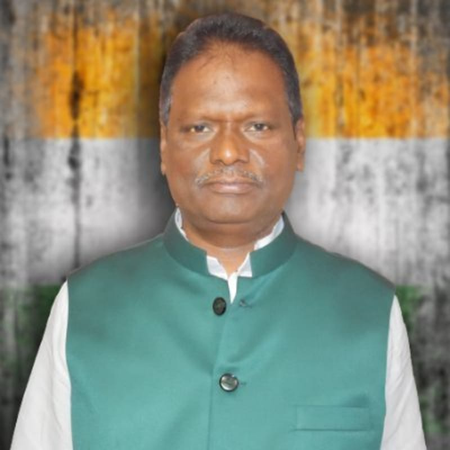
Patna, Oct 14 (IANS) In a major political development ahead of the Bihar Assembly elections, Janata Dal (United) MP from Bhagalpur, Ajay Kumar Mandal, has written a letter to Chief Minister and party president Nitish Kumar, expressing his desire to resign from the Lok Sabha.
In his letter, Mandal cited discontent over the party’s internal functioning and ticket distribution process, alleging that the opinions of local leaders and district presidents were being ignored.
“With your blessings and guidance, I have been serving the people of Bhagalpur as an MLA and MP for the last 20–25 years. In this long political journey, I have worked to strengthen the Janata Dal (U) as my own family,” Mandal wrote.
He said that in recent months, decisions within the organisation have been taken without consulting local representatives, which, according to him, was not a good sign for the party’s future.
“Despite being the local MP, I am not being consulted in the process of distributing tickets for the Assembly elections. People who have never worked for the organisation are being considered for tickets, while the opinion of the district president and local leadership is being completely ignored,” the MP said.
Highlighting his loyalty to the party, Mandal reminded Nitish Kumar that during the 2019 bypolls, his was the only seat in Bihar that JD(U) won under his leadership, a testament, he said, to the public’s trust and his dedication to the organisation.
The Bhagalpur MP expressed disappointment over being “denied access” to meet the Chief Minister, saying, “I am not being allowed to meet you, nor is my opinion being heard. In such a situation, it is difficult for me to understand the justification for remaining an MP.”
Mandal emphasised that his letter was not an act of rebellion, but a plea to safeguard the party’s future. “My purpose is not to show displeasure but to save the party and your leadership from any future harm. If external or inactive people continue to get priority, the roots of the party will weaken, and it will directly affect your leadership,” he stated.
Concluding his letter, Mandal urged Nitish Kumar to accept his resignation as a matter of self-respect and commitment to party values. “Therefore, with true loyalty to the organisation, I humbly request you to grant me permission to resign from my post as an MP,” he wrote.
Party sources said Mandal’s move reflects growing unease among sections of the JD(U) leadership over the centralised ticket distribution process and reduced consultation with grassroots leaders.
–IANS
ajk/svn