Congress has submitted 89 lakh complaints to ECI: Pawan Khera on Bihar SIR exercise

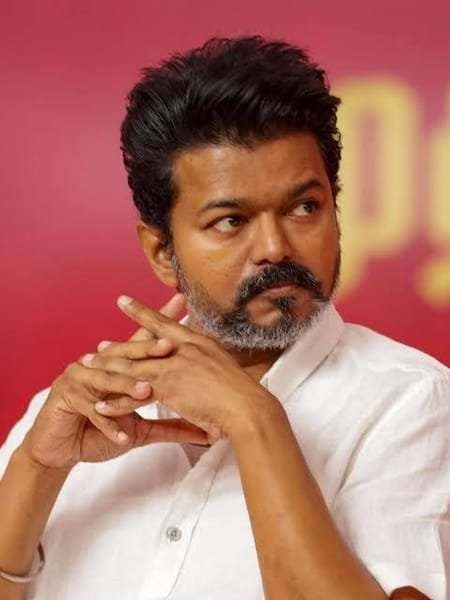
Chennai, June 22 (IANS) Tamil superstar and Tamilaga Vettri Kazhagam (TVK) president Vijay turned 51 on Sunday, and the occasion witnessed a blend of cinematic fervour, political overtures, and grassroots outreach across Tamil Nadu.
Among the prominent voices extending greetings was BJP leader and former Telangana Governor Dr. Tamilisai Soundararajan, who issued a creatively worded message laced with references to Vijay’s films.
More than just a birthday wish, her note carried a veiled political appeal, inviting the actor to join the National Democratic Alliance (NDA) and fight against “evil forces” in the forthcoming Assembly elections.
“I extend my heartfelt birthday wishes to the ‘Tamizhan–Jananayakan’ brother Vijay who began with Naalaiya Theerpu, won hearts as the Azhagiya Tamil Magan, embodied sisterly love in Thirupachchi, a mother’s bond in Sivakasi, fought terrorism in Thuppakki, and stood for patriotism. He challenged dynastic politics in Varisu, swam through adversity like Sura, and emerged victorious like Ghilli,” she wrote.
“I hope he continues to walk the path of Pudhiya Geethai—upholding good and resisting evil.” Joining the celebrations, actress Nayanthara—one of Vijay’s popular co-stars—shared her wishes on social media platform X.
“Happiest Birthday dearest #Thalapathy @actorvijay. Have a great year ahead. Best wishes for #JanaNayagan,” she posted. The duo has starred together in films like Sivakasi and Villu, forming a well-loved on-screen pair.
Marking the milestone, KVN Productions unveiled the teaser of Vijay’s much-awaited film Jana Nayagan at midnight.
Titled The First Roar, the teaser showcases Vijay in a commanding silhouette, setting off a wave of excitement among fans.
With Vijay expected to shift full-time into politics, Jana Nayagan is widely seen as his cinematic swansong. “A lion is always a lion, and his first roar is incoming,” read the film’s promotional message, which quickly began trending online.
Born Joseph Vijay Chandrasekhar on June 22, 1974, in Chennai, Vijay is the son of filmmaker S.A. Chandrasekhar and playback singer Shobha Chandrasekhar. He made his acting debut at age 18 in Naalaiya Theerpu and has since grown into one of Tamil cinema’s biggest stars—earning the moniker “Thalapathy” (commander) for his massive popularity and mass appeal.
Beyond the film world, Vijay’s political party, TVK, marked his birthday with a series of welfare programmes.
In Ambattur, party general secretary N. Anand oversaw a distribution drive that included sewing machines, three-wheelers for differently-abled individuals, cooking essentials, computers, and household kits.
The initiative aimed to reinforce TVK’s grassroots connect and pro-people image. However, the celebrations weren’t without controversy. In Kattusellur near Ulundurpet, TVK alleged that its members were attacked during a birthday function.
In a press statement, the party accused local DMK functionaries, including chairman Rajavelu and his son Prabhakaran, of vandalising banners and assaulting TVK cadres and Vijay fans.
“The state government and local police have turned a blind eye. This silence is disturbing,” TVK said, demanding swift legal action and calling attention to growing political intolerance.
Despite the incident, Vijay’s birthday was celebrated with enthusiasm across the state, blending fanfare with social service.
The day reaffirmed his strong connect with the public and signaled his increasing political relevance ahead of the 2026 Assembly elections.
As anticipation builds around both his on-screen finale and political debut, Vijay appears poised to transform his cinematic mass appeal into electoral influence—potentially emerging as a disruptive force in Tamil Nadu’s political landscape.
–IANS
aal/pgh
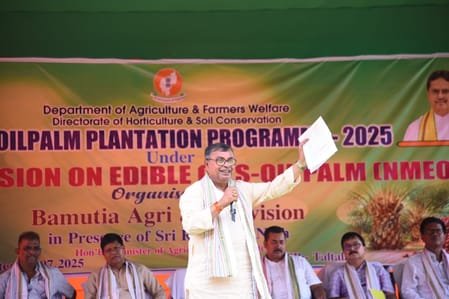
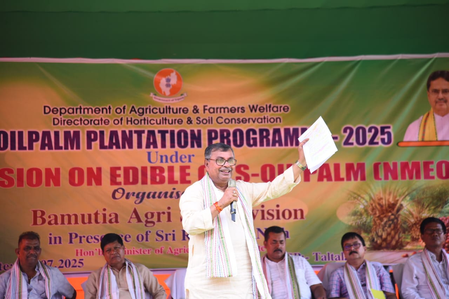
Agartala, July 21 (IANS) Tripura has already covered almost 4,000 hectares of land under oil palm cultivation out of the 7,000 hectares targeted in the 2025–26 financial year, Agriculture and Farmers Welfare Minister Ratan Lal Nath said on Monday.
Inaugurating the Mega Oil Palm Plantation Drive at Taltala in West Tripura, the Minister said that India is not self-sufficient in edible oil, although it is self-sufficient in fish, rice and many other crops. Nath said that Prime Minister Narendra Modi also wants the country to be self-sufficient in edible oil, or else a huge amount of money goes out to foreign countries.
“That’s why the government has stressed cultivation of oil palm in South India and North East India, as the lands are suitable for palm oil. The rate of palm oil would never decrease; it would only increase. The market is very good, and farmers don’t need to worry about selling their products,” said the Minister.
He said that in rubber plantations, farmers can’t cultivate anything in between the rubber trees, but in palm oil cultivation, farmers can grow many other crops in between, and the government would also help. “From clearing bushes to providing saplings, all support would be provided by the government. Our target by 2025-26 is to cover 7,000 hectares in Tripura, and so far, we have already covered around 4,000 hectares,” said the Minister.
He further informed that palm oil is used to make two types of oil — palm oil, which is used for cooking, and palm kernel oil is used in industry. Palm oil is also used in cosmetics, pharmaceuticals, bio-fuels, and bio-lubricants.
Nath said that potential areas for oil palm cultivation in Tripura have been identified and a new area expansion program has been launched by the Government of India. Initially, in 2012, the DAC Committee of the Government of India identified 7,000 hectares in Tripura for oil palm cultivation. Later, in 2020, the ICAR-IIOPR Re-evaluation Committee identified 1,46,364 hectares of potential areas for oil palm expansion in the state through digital mapping.
“The Union Ministry of Agriculture and Farmers Welfare has set a target of bringing 7,000 hectares of land under this crop in Tripura in the current financial year (2025-26). The Horticulture and Land Conservation Rights of the State Agriculture and Farmers Welfare Department are committed to achieving this target,” he said.
–IANS
sc/uk
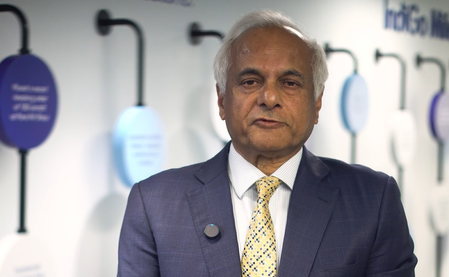
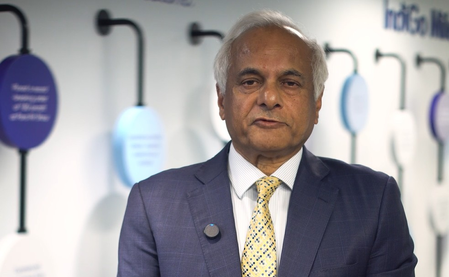
New Delhi, Dec 11 (IANS) IndiGo Chairman Vikram Singh Mehta on Thursday said that the airline’s Board will bring in external technical experts to work with the management and identify the root causes behind last week’s massive flight disruptions.
In a detailed statement, Mehta said the experts will help ensure that such large-scale operational failures never happen again.
Mehta began his message by apologising to passengers affected by the disruptions that occurred between December 3 and 5.
He said thousands of travellers were stranded, with many missing important personal events, business meetings, medical appointments and international connections. Baggage delays further added to the chaos.
“We are truly, truly sorry,” he said, acknowledging that the airline failed to meet customer expectations.
He explained that the Board had initially chosen not to make an early statement because it wanted the management, led by CEO Pieter Elbers, to focus on restoring operations.
“IndiGo is now operating more than 1,900 flights a day, connecting all 138 destinations, with on-time performance back to normal levels,” he stated.
Mehta said the airline has faced both fair and unfair criticism. He admitted that the fair criticism was that the airline let passengers down.
He assured that IndiGo will carefully examine what went wrong and will provide answers to customers, the government, shareholders and employees.
“As part of this process, the Board has decided to involve independent technical experts to support the investigation and corrective actions,” Mehta added.
He also countered several allegations, including claims that IndiGo engineered the crisis, tried to influence government rules or compromised safety.
“The airline fully followed the updated pilot fatigue rules and did not attempt to bypass them at any point,” Mehta mentioned.
“The disruptions were caused by a combination of internal issues and unexpected external factors such as minor technical glitches, winter schedule adjustments, bad weather, congestion in the aviation system and the implementation of new crew rostering rules,” he added.
Mehta emphasised that the Board had been closely involved throughout, saying it held an emergency meeting on the first day of disruptions and set up a Crisis Management Group that has been meeting daily.
“Refunds worth several hundred crores have already been processed, help has been provided for accommodation and travel, and remaining delayed baggage is being delivered,” Mehta noted.
–IANS
pk