New Delhi, Nov 3 (IANS) Amid the raging controversy over a regime change ‘plot’, resulting in a Centre-Opposition showdown, and the latter supporting street protests as a “rightful” means to topple the government, a sting operation by a leading TV channel has led to ‘startling disclosures’.
The sting operation by Times Now Navbharat, in which it enquired people who are under the scanner for backing ‘regime change operations’ via anarchic means, revealed a dangerous plan to replicate the violent protests to achieve the objective, purportedly along the lines of Bangladesh and Nepal.
Maulana Siraj Khan, Mumbai chief of Jamiat-Ulema-e-Hind, was captured on camera stating that the Muslim anger, if it breaks out, won’t be contained.
“The day the ‘Momin’ (believer) stands up, no one will be able to contain him,” the channel quoted him as saying.
Maulana Siraj, a known radical face, was captured on camera, openly supporting violent means for bringing about regime change and also signaling that non-Muslims were ready to hit the streets to achieve the purpose, much like what was seen in France.
Notably, Maulana Siraj Khan has a history of making inflammatory statements. In the recent past, he stirred up a row with an incendiary statement on Bhojshala, asserting that it was a mosque and its character couldn’t be changed. He also called Waqf board reforms an interference in the matters of the Muslim community and criticised the RSS chief’s comments on regime change.
The TV channel’s undercover reporter, when posed questions to Safwan, the president of the Muslim Students Federation (MSF) at Delhi University, latter echoed similar views, signalling that Nepal and Bangladesh style movements are imminent here too.
When asked about the possibility of a situation similar to those seen in Nepal or Bangladesh unfolding in India, Safwan stated, “Something will certainly happen; nothing can remain secure forever.”
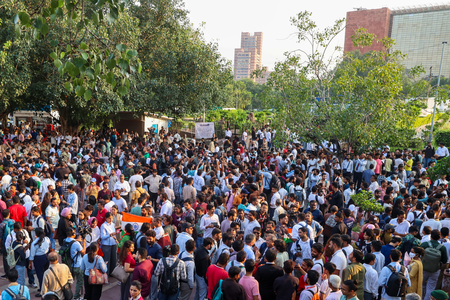
He also said that if a day like July 20 (Sansad Chalo March led by Cockroach Janata Party) happens again, the situation could “end up as it did in Nepal”.
The student leader and staunch supporter of the idea of bringing about change via street movements also shed light on the alleged plot to pose women as the “front” while the youth and students intensify agitation for achieving the objective.
When asked if there was any specific tactic to scale up agitation, he stated that putting women at the front was very much under consideration as “they stand like a fortress wall”, restraining the police from taking any action.
“If a man confronts the police, they can easily subdue him. But if a woman confronts male police officers, it creates a negative image for the Delhi Police. And that is exactly what is happening,” he told the TV scribes.
The channel’s sting operation also covered other student outfits and individuals, eliciting their views on ‘filling the streets’ for bringing about change.
Bhim, the convener of Krantikari Yuva Sangathan (Revolutionary Youth Organization), gave an insight into the July 20 rally and also told the channel how the resources and funds were arranged for propping up the stir, which snowballed into a national issue, resulting in the Union Minister’s resignation.
Bhim disclosed that the daily expenditure of the demonstration stood at about Rs 5 lakh.
Without taking the name of CJP founder Abhijeet Dipke, he said most of the protesters were either AAP supporters or had connections with AAP.
Mudita, spokesperson of ‘Krantikari Yuva Sangathan’ (Revolutionary Youth Organization), also backed the idea that replicating Bangladesh and Nepal-style operations was very much possible here.
–IANS
mr/skp