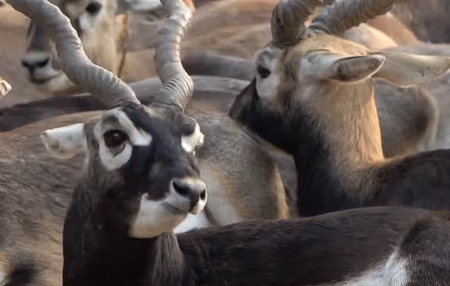
Raipur, April 26 (IANS) In a significant triumph for wildlife restoration in Central India, the blackbuck, locally known as the black deer, has successfully returned to the open plains of Chhattisgarh. Prime Minister Narendra Modi highlighted this in his ‘Mann Ki Baat’ address on Sunday.
Following years of local extinction and sustained conservation measures, these graceful antelopes are once again running freely across the state’s natural landscapes, marking the revival of a vanishing biological heritage.
The comeback of the blackbuck is largely attributed to a dedicated five-year revival programme centred in the Barnawapara Wildlife Sanctuary. After being declared locally extinct in 2017, the state forest department initiated a strategic reintroduction plan that involved translocating individuals from the National Zoological Park in New Delhi and the Kanan Pendari Zoological Garden in Bilaspur.
Today, a growing, self-sustaining population serves as a testament to the success of specialised grassland management and veterinary surveillance.
Beyond the plains of Chhattisgarh, PM Modi, in his ‘Mann Ki Baat’ address, highlighted that similar conservation successes are emerging across the country.
He pointed specifically to the Great Indian Bustard, a critically endangered species that is seeing renewed hope through advanced breeding programs.
Recent milestones include the successful hatching of chicks in Gujarat through a pioneering interstate jumpstart initiative, where fertile eggs were transported from Rajasthan to revive local populations. The Prime Minister also lauded the evolving relationship between humans and wildlife in the region.
In Chhattisgarh, a community-driven model is proving effective in mitigating human-elephant conflicts. Local villagers of Uttar Pradesh have organised themselves into dedicated teams, known as “Hathi Mitra Dals”, to monitor elephant movements.
Using tools like drones and WhatsApp alerts, these volunteers provide timely warnings to their communities, ensuring that both crops and lives are protected. This shift towards proactive coexistence has led to a noticeable decline in conflict and a significant increase in public trust.
By involving local citizens as the primary guardians of their environment, the state is fostering a culture of conservation that balances developmental needs with the protection of India’s diverse fauna.
As these initiatives take root, the return of the blackbuck and the stabilisation of elephant corridors stand as symbols of the nation’s collective willpower to safeguard its natural future.
–IANS
sktr/dpb