TN advances govt school admissions, aims to enrol over 4 lakh students

Chennai, March 2 (IANS ) Government schools across Tamil Nadu will kick-start their enrolment drive for the 2026-27 academic year on Monday, with the School Education Department setting an ambitious target of admitting more than four lakh students this year.

The initiative, which was advanced in the previous academic year to stay competitive with private institutions that typically open admissions early, will continue in the same format this year.

Officials believe the early start will help attract more parents to consider government schools before they finalise private school admissions.

School heads and teachers have been directed to focus particularly on children who have completed five years of age in anganwadis. Instructions have been issued to ensure that all such children are enrolled in neighbourhood schools or institutions located close to their place of residence.

Education department officials have also been asked to conduct awareness campaigns among parents, highlighting the improvements made in government schools in recent years.

Authorities plan to showcase facilities such as smart classrooms, hi-tech laboratories, upgraded infrastructure, and digital learning tools introduced under various state initiatives.

The department hopes that these features, along with trained teachers and welfare schemes, will strengthen public confidence in government schooling.

To encourage proactive participation from schools, the department has announced that institutions enrolling at least 50 additional students compared to last year will receive certificates of appreciation.

Officials say this recognition is aimed at motivating school administrators and teachers to intensify outreach efforts in their respective localities.

A senior education official noted that approximately 4.3 lakh students were enrolled in government schools during the previous academic year. “On average, nearly half of school-going children join government and government-aided institutions, while the other half opt for private schools. As per official data, there are over eight lakh children in the five-year age group eligible for fresh enrolment this year, and this data will guide our outreach drive,” the official said.

The primary objective, officials stressed, is to ensure that every eligible child is enrolled in school while also increasing the overall share of students in government institutions.

School Education Minister Anbil Mahesh Poyyamozhi is scheduled to formally inaugurate the state-level enrolment drive on Monday.

–IANS

aal/dpb

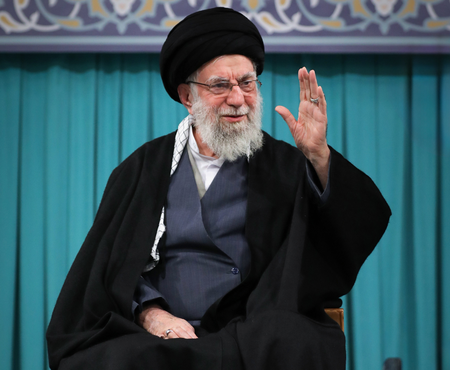
Khamenei was fiercely self-respecting leader, stood firm against global superpowers: Shiv Sena(UBT) in Saamana

Mumbai, March 2 (IANS) The Shiv Sena Uddhav Balasaheb Thackeray (UBT) on Monday stated that a true leader does not “surrender”; instead, they stand firm during times of war, in reference to the death of Ayatollah Khamenei, who was killed in strikes by the US and Israel on Iran.

Uddhav Thackeray’s party said Khamenei bid farewell to the world without kneeling before any power to save his life.

The Thackeray camp, in an editorial in the party’s mouthpiece ‘Saamana’, highlighted that Khamenei did not flee the country, hide in a bunker, or seek foreign aid during recent escalations. “Standing firm amidst a struggle against global superpowers, he attained martyrdom for Iran. Khamenei was a fiercely self-respecting leader remembered not for his position, but for his patriotism”.

“In a poignant exchange once shared with a young boy who wished to sacrifice himself for the country, Khamenei had advised, ‘Son, first study. Become a scientist. Live your life. Do not be in such a hurry to die. If the need arises, we are all here to embrace death for the country’. He fulfilled this promise, remaining steadfast even when surrounded by American and Israeli strikes,” said the editorial.

The editorial pointed out a campaign of “collective bullying” by Israel and the United States, which it deems dangerous to humanity. It alleged that these powers intervene in sovereign nations — often under the guise of democracy or neutralising nuclear threats — primarily to seize oil and mineral wealth.

The editorial has listed some specific instances, including attacks that continued despite Iran’s reported willingness to scrap its nuclear programme. “An Israeli strike on a girls’ school reportedly killed over a hundred children. There has been a massive loss of life and destruction of the Palestinian population. The deaths of Libya’s Gaddafi and Iraq’s Saddam Hussein were framed as results of this same global interference,” it said.

The Uddhav Thackeray-led Shiv Sena has raised sharp questions regarding India’s current leadership. While Iran historically supported India on the Kashmir issue and provided oil at discounted rates, India has remained largely silent during this crisis, it said.

“This silence stems from a ‘surrender’ to the influence of President Trump and Prime Minister Netanyahu. The ruling party in India has stayed silent because of technological and strategic “mantras” provided by Israel, including Pegasus spyware and electoral ‘science’, it claimed.

According to the editorial, as Iran enters 40 days of mourning, the international community remains divided. While traditional allies like Russia and China have remained neutral or issued “hollow threats”, the 86-year-old Khamenei’s death during the month of Ramzan is being viewed by his supporters as a lesson in fighting for one’s nation.

“Whether Prime Minister Modi will observe even an hour of mourning for a ‘true friend’, or if fear of the reactions from Trump and Netanyahu will ensure his continued silence,” asked the editorial.

–IANS

sj/dpb

Protest in AMU, market shut in Old Lucknow area over Khamenei’s death

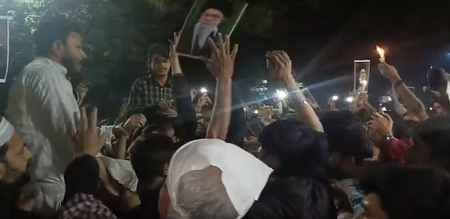
Aligarh/Lucknow, March 2 (IANS) A protest was held at the Aligarh Muslim University (AMU) campus over the death of Iran’s Supreme Leader, Ayatollah Ali Khamenei, as students gathered to express their grief and anger.

Locals also joined the students’ protest inside the university campus.

One of the protesters, speaking to IANS, said, “I have been in Iran for nine years. Following the death of Iran’s Supreme Leader Ayatollah Ali Khamenei, we staged protests in the afternoon and again at night. We will continue to protest for such victims. Wherever there is martyrdom, we will raise our voices.”

Expressing strong views, the protester added, “The way Ali Khamenei has been martyred, I want to tell Israel and the US that their cowardly attack on Iran does not mean the country will vanish. Iran will stand firm and respond strongly. Khamenei has shown that he would never bow down.”

Another protester said, “We are protesting here over the death of Khamenei. He was a leader of humanity.”

Meanwhile, in Lucknow, especially in the Old City area, widespread mourning was observed. Locals had announced that the markets in Purana Lucknow will remain closed for three days. The historic Bada Imambara was also closed during this period, and the area witnessed silence as residents paid their respects.

Members of the Shia community expressed deep resentment and grief. Posters of Khamenei were put up at the Bada Imambara and Chota Imambara. Black flags were hoisted as a mark of mourning, and several businesses remained shut.

Israeli and American flags were placed on the ground at the main gate of Chota Imambara as a sign of protest, while Old Lucknow remained immersed in silence.

On Sunday, a large number of people across the Kashmir Valley, especially in Srinagar city, carried out peaceful protests against the killing of the Iranian Supreme Leader, as local political and religious leaders condemned the killing while appealing for peace in Jammu and Kashmir.

Protesters came out in processions shouting slogans against the US and Israel as the security forces maintained vigil to ensure that anti-national and anti-social elements were prevented from creating a law and order situation.

The demonstrations erupted spontaneously in different parts of Srinagar city, Budgam district and other parts of the valley.

J&K Chief Minister Omar Abdullah reacted to the development by saying, “I’m deeply concerned about the unfolding developments in Iran, including the killing of Iran’s Supreme Leader, Ayatollah Ali Khamenei.”

He appealed to all communities to remain calm, “uphold peace, and avoid any actions that could lead to tension or unrest”.

“We must also ensure that those who are mourning in Jammu and Kashmir are allowed to grieve peacefully. The police and administration should exercise utmost restraint and refrain from using force or restrictive measures. The Government of Jammu & Kashmir is in close coordination with the Ministry of External Affairs, Government of India, to ensure the safety and well-being of J&K residents, including students, currently in Iran,” he added.

Meanwhile, authorities on Monday imposed restrictions across the Kashmir Valley to maintain law and order as all educational institutions were ordered to remain closed for two days.

These restrictions have been imposed to ensure that miscreants and anti-national elements are prevented from exploiting the sentiments of the people in the aftermath of US-Israeli strikes on Iran, officials said.

With a sizeable population of Shia Muslims in many areas of Srinagar city, authorities are enforcing restrictions more strictly in the old city and uptown areas of the city.

All schools, colleges and universities have been closed for two days. All exams scheduled for Monday and Tuesday have been postponed by the Kashmir University.

–IANS

jk/sd/

Delisted TN parties find place in DMK, AIADMK alliances amid legal battle with ECI

Chennai, March 2 (IANS) Even as they wage a legal battle against the Election Commission of India (ECI) over their recent delisting, five political parties in Tamil Nadu have managed to secure space within the state’s two major electoral fronts ahead of the forthcoming Assembly election.

The ECI recently removed 42 unrecognised registered parties from its rolls for non-compliance with statutory norms, including failure to submit audited financial statements and not contesting elections under their registered names and symbols.

Tamil Nadu accounted for a significant share of these delisted outfits following the ECI orders issued in August and September 2025. Among the prominent parties affected are the Kongunadu Makkal Desiya Katchi (KMDK), Manithaneya Makkal Katchi (MMK), Manithaneya Jananayaga Katchi (MJK), Tamilaga Makkal Munnetra Kazhagam led by John Pandian, and NR Dhanapalan’s Perunthalaivar Makkal Katchi.

Despite losing their official registration status, leaders and cadres of these parties remain eligible to contest elections either as Independents or under the symbol of recognised political parties. This provision has enabled them to negotiate seats within the DMK-led alliance and the AIADMK-BJP-led National Democratic Alliance (NDA).

The MMK has already secured two seats in the DMK front. Its president, M.H. Jawahirullah, asserted that the ECI’s decision would not prevent individuals from contesting elections. He confirmed that the party plans to move the Supreme Court, challenging the High Court’s verdict of upholding the Commission’s action.

Similarly, MJK and KMDK leaders are exploring legal remedies while continuing alliance discussions.

KMDK general secretary E.R. Eswaran said the party has appealed directly to the ECI seeking restoration of its status.

Sources indicated that candidates from MMK, MJK and KMDK are likely to contest under the DMK’s ‘Rising Sun’ symbol.

On the other hand, leaders such as John Pandian and N.R. Dhanapalan are expected to align with the AIADMK-led NDA and contest under an approved alliance symbol.

Meanwhile, smaller outfits are attempting to regain recognition. M.V. Sekar, founder of Gokula Makkal Katchi, said his party, which supported the DMK in the previous Assembly election, is now working to restore its registration.

The developments underline how electoral alliances in Tamil Nadu continue to accommodate smaller players, even amid regulatory scrutiny and legal uncertainty.

–IANS

aal/dpb

TN BJP targets CM Stalin for not receiving PM Modi during his visit

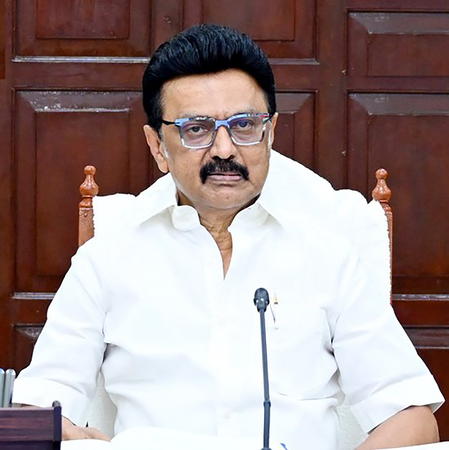
Chennai, March 2 (IANS) Tamil Nadu BJP has criticised Chief Minister M.K. Stalin for not receiving Prime Minister Narendra Modi during his visit to Tamil Nadu, terming it a departure from the state’s long-standing political traditions.

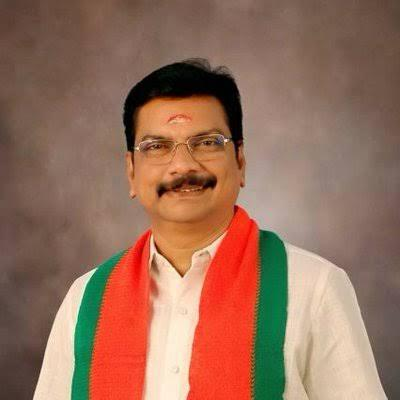
In a statement, TN BJP spokesperson A.N.S. Prasad said the Prime Minister unveiled development projects worth Rs 4,400 crore in Madurai.

Prasad said that extending courtesy to visiting Prime Ministers has been part of Tamil Nadu’s political culture, irrespective of party differences.

He alleged that the Chief Minister’s absence at the airport reflected a “lack of respect for constitutional offices” and said such gestures should rise above partisan considerations.

“Political differences are natural in a democracy, but respecting the Prime Minister’s office is part of our federal structure and political civility,” Prasad said.

He further claimed that past Chief Ministers, cutting across party lines, had upheld this convention when national leaders visited the state.

The DMK has not issued an official response to Prasad’s remarks. However, the ruling party has previously maintained that scheduling and administrative considerations often determine the Chief Minister’s engagements during official visits.

Meanwhile, Prime Minister Modi inaugurated and laid the foundation stone for multiple infrastructure projects aimed at boosting connectivity and urban development across Tamil Nadu.

The initiatives include the four-laning of the Paramakudi-Ramanathapuram road to improve access to Rameswaram, and road upgrades expected to reduce travel time between Marakkanam and Puducherry.

In the railway sector, eight stations — including Srivilliputhur, Pollachi and Karaikudi — will be redeveloped under the Amrit Bharat scheme.

The Prime Minister also announced a fourth railway line between Chennai Beach and Egmore to ease congestion on the suburban rail network. Additionally, 24/7 FM transmitters will be launched in Kumbakonam, Yercaud and Vellore to strengthen public broadcasting services.

BJP leaders highlighted that substantial funds have been allocated to Tamil Nadu over the past decade for infrastructure and welfare programmes, asserting that a stronger Centre and the state could further accelerate growth.

With Assembly elections drawing closer, exchanges over protocol, governance and development are expected to intensify in Tamil Nadu’s evolving political landscape.

–IANS

aal/dpb

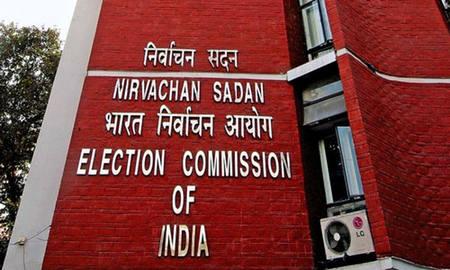
ECI meets for two days to review Bengal post-SIR scenario, poll preparations

Kolkata, March 2 (IANS) Amid the publication of the final voters’ list in West Bengal minus those whose names have been referred for judicial adjudication as per the direction of the Supreme Court, the Election Commission of India (ECI) will be conducting crucial meetings on Monday and Tuesday to review the post-Special Intensive Revision (SIR) scenario in the state as part of its preparations for the forthcoming Assembly election.

The meetings will be conducted in two phases, starting from 11 a.m. on Monday, where its top officials will hold a virtual meeting with the West Bengal Chief Electoral Officer (CEO), Manoj Kumar Agarwal, Additional CEOs, Joint CEOs, Deputy CEOs, District Magistrates, who are also the district electoral officers, and the district police superintendents.

On Tuesday, there will be the second phase of the meetings, which will be attended virtually by the ECI’s top brass in New Delhi, the CEO, the state nodal police officer (SNPO), and coordinating officers of the different central security and investigating agencies for the polls in the state.

“In the meeting on Monday, the ECI’s top officials are likely to review the current deployment of 240 companies of the Central Armed Police Forces (CAPF), who had already been deployed in the state from Sunday.

The ECI officials are likely to seek information on how these 240 companies of CAPF deployed are being utilised for area domination and getting acclimatised with the geographies of the areas they are deployed,” said an insider from the CEO’s office.

At the same time, he added, the issue of deploying 240 additional companies in the second phase on March 10 might also be discussed in the meeting on Monday. “At the same time, the Commission is also expected to take a review on the progress of the judicial adjudication of the 60 lakh odd voters’ documents by the ECI-appointed judicial officers,” the CEO’s office insider said.

In the meeting on Tuesday, the main agenda will be to discuss ways for reaching better coordination between the state and Central agencies for the most effective utilisation of CAPF, better coordination between different state and Central intelligence-cum-enforcement agencies to prevent the use of money, liquor, and drugs, and ensuring safety in areas close to both the international and inter-state borders.

However, uncertainties remain regarding the announcement of the polling dates and the enforcement of the model code of conduct. Initially, it was decided that the polling dates would be announced in the first week of March, immediately after the Holi festival on March 4.

However, due to the continuing judicial adjudication of the voters’ documents, it now seems that the polling date will be announced in the second week of March.

–IANS

src/dpb

Middle East conflict, security of stranded Indians reviewed in CCS meet

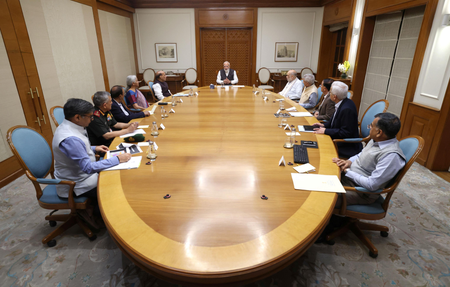
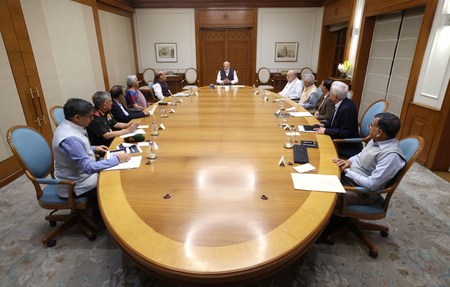
New Delhi, March 2 (IANS) The Cabinet Committee on Security (CCS) was briefed on the air strikes in Iran on February 28 and the subsequent escalation in the Middle East, as well as the security of the Indian citizens in the region.

Convened under the leadership of Prime Minister Narendra Modi on Sunday, the CCS reviewed the evolving situation in West Asia.

The meeting of the Cabinet committee, the apex decision-making body on security and strategic matters of India, came against the backdrop of a rapidly deteriorating geopolitical situation in the Middle East following coordinated US-Israeli airstrikes on Iran, which have intensified regional conflict and raised global security concerns.

Defence Minister Rajnath Singh, Home Minister Amit Shah, External Affairs Minister S. Jaishankar, Finance Minister Nirmala Sitharaman, NSA Ajit Doval and Foreign Secretary Vikram Misri were present in the meeting.

According to the official statement, the Committee was briefed on the air strikes in Iran on February 28 and the subsequent escalation, including attacks in several Gulf countries.

“It expressed serious concern over the safety and security of the large Indian expatriate community in the region,” the statement added.

The CCS also assessed the challenges faced by Indian travellers transiting the region and students taking scheduled examinations, along with the broader implications for regional security, economic, and commercial activities.

“The CCS directed all concerned departments to take necessary and feasible measures to assist Indian nationals affected by the developments. It underscored the importance of an early cessation of hostilities and a return to dialogue and diplomacy,” the official statement added.

India has maintained a balanced stance in the Middle East crisis, advocating de-escalation while protecting its citizens and economic ties.

This is the latest in a series of high-stakes security reviews as global tensions mount.

–IANS

sd/

‘Justice for my father’: Jay Pawar seeks arrest of VSR Ventures owner over viral ‘sleeping’ video

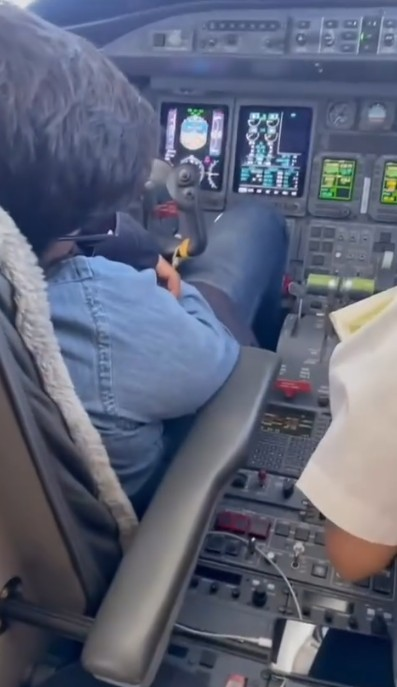
Mumbai, March 2 (IANS) Jay Ajit Pawar has strongly criticised the Aircraft Accident Investigation Bureau’s (AAIB) preliminary report on the plane crash in which his father, former Deputy Chief Minister and NCP President Ajit Pawar, died, calling the probe “incomplete and superficial”. He demanded a wider investigation and the immediate arrest of the airline’s owner. The appeal follows the release of a viral video allegedly showing Rohit Singh, the owner of VSR Ventures, asleep in the cockpit’s primary pilot seat during a flight.

Jay Pawar, in his post on social media (Instagram), expressed profound grief and frustration over the current state of the investigation.

“I have read the preliminary report investigated by the AAIB. It causes me immense pain and sorrow to see that this report has not been prepared thoroughly or in-depth. The people of Maharashtra, and all the families who lost their loved ones in this accident, deserve transparent answers and the truth — not just formal information.”

His outcry centres on a video circulating on social media, which appears to show the company’s owner engaging in life-threatening negligence.

“In the video, VSR owner Rohit Singh is seen sleeping in the main pilot’s seat during flight,” he said.

He further added, “Such negligence cannot exist while in the sky. This is extremely serious and shocking. I have lost my father… this pain will stay with me for a lifetime.” He has demanded that the Directorate General of Civil Aviation (DGCA) take immediate intervention, demanding that all VSR Ventures aircraft be grounded until a full investigation is completed.

He further demanded the immediate arrest of Rohit Singh, stringent legal action against him and a transparent probe to ensure the safety of all passengers. “This is a son’s desperate plea,” he noted. “For my father, and for the safety of every passenger,” he concluded in his post.

Earlier, the AAIB in its preliminary report released on Saturday on the crash of a Learjet 45 (VT-SSK) that killed Maharashtra Deputy CM Ajit Pawar said that the aircraft attempted to land in visibility of 3,000 meters, which is well below the 5,000-metre minimum required for Visual Flight Rules (VFR) at that airfield. The Baramati airfield lacked critical navigational aids. The AAIB noted that runway markings were faded (last recarpeted in 2016) and essential windsocks were missing on the landing side (Runway 11).

According to AAIB, the ATC tower was being manned by a ground instructor from a local flight school rather than a certified controller. CCTV footage showed the aircraft banking right and hitting trees before impacting the ground at a lower elevation than the runway.

–IANS

sj/dpb

Crude oil prices surge over 7 pc as Israel-Iran war escalates

New Delhi, March 2 (IANS) Global crude oil prices went up more than 7 per cent on Monday as war in West Asia escalated, following US and Israeli military strikes on Iran.

Brent crude futures prices surged to $82.37, the highest since January 2025. Brent crude oil price rallied 7.60 per cent to $78.41 a barrel, while the US West Texas Intermediate (WTI) crude futures rallied 7.19 per cent to $71.86.

Iran has closed navigation through the crucial Strait of Hormuz, prompting governments and refiners to assess oil stockpiles, according to reports.

Meanwhile, OPEC has agreed to resume oil production increases next month amid US-Israeli strikes on Iran. Key members led by Saudi Arabia and Russia will add 206,000 barrels a day.

Analysts said the US–Israel strikes on Iran represent a significant geopolitical shock, raising the global oil risk premium and boosting demand for safe haven assets like gold and silver.

“For India, with close to 90 per cent dependence on imported crude, any sustained rise in Brent prices quickly feeds into higher fuel costs, broader inflation, and a wider current account deficit. This complicates the RBI’s disinflation path and could delay rate cuts,” said Rajeev Sharan, Head – Criteria, Model Development and Research, Brickwork Ratings.

Indian equities have already turned risk off, with expectations of more volatility, foreign investor outflows, and pressure on autos, financials, and energy intensive sectors.

Precious metals are likely to stay supported as long as escalation risks remain.

The conflict premium will ease only when there is clarity on leadership in Tehran, credible channels for de escalation, and assurance that vital oil routes such as the Strait of Hormuz remain open, said Sharan.

Brent crude could climb above $90 per barrel with Strait of Hormuz disruption or exceed $100 per barrel in a broader regional conflict, according to reports.

JM Financial Institutional Securities said in a note that every $1 rise in crude increases India’s annual import bill by about $2 billion, putting pressure on the trade balance.

Around 20 per cent of global oil flows transit the Strait of Hormuz, with over 40 per cent of India’s crude imports using the route. Markets are likely to move from earnings-driven to oil-driven trading in the near term, it said.

Prolonged tensions may increase logistics and marine insurance costs, disrupt Gulf shipping routes and pressure the trade balance.

—IANS

na/

Nur Khan base among key Pak military infrastructure attacked by Afghanistan; 32 soldiers killed

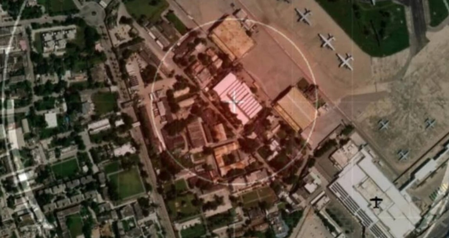
Kabul, March 2 (IANS) Afghanistan’s Ministry of Defence announced on Monday that its Air Force had conducted what it described as precise and coordinated aerial operations against multiple Pakistani military installations, signalling a sharp escalation in the already worsening security situation between the two neighbouring countries.

In a statement posted on X, the Afghan defence ministry said the strikes were aimed at major Pakistani military facilities, including the Nur Khan Airbase in Rawalpindi, the 12th Division headquarters in Quetta, Balochistan, and the Khwazai Camp in the Mohmand Agency of Khyber Pakhtunkhwa.

It further claimed that several other strategic command centres across Pakistan were also targeted during the operation.

“Based on preliminary assessments, the strikes successfully caused significant damage to the intended targets. These operations were carried out in response to the recent aerial incursions by the Pakistani military, which struck Kabul, Bagram,” the statement said.

The ministry stressed that any further breach of Afghan airspace or “acts of aggression” by Pakistan would invite “a swift, decisive, and proportionate response”.

The developments come less than a week after Islamabad declared what it termed “open war” on the Afghan Taliban administration following renewed cross-border clashes between Afghan and Pakistani forces. Pakistan carried out airstrikes in Kabul and Kandahar on Friday, hours after Afghan forces reportedly attacked Pakistani border troops in retaliation for earlier strikes conducted this week.

The Afghan statement reiterated its warning, asserting that any additional violations of Afghan airspace or “acts of aggression” by Pakistan would be answered with “a swift, decisive, and proportionate response”.

The Nur Khan Airbase, a critical Pakistan Air Force installation near Rawalpindi, had previously been targeted during India’s Operation Sindoor in May 2025.

That earlier strike had damaged select infrastructure at the base, after which repair and restoration activities were reported at the facility.

In a further escalation, the Taliban claimed that 32 Pakistani soldiers were killed in what it described as retaliatory attacks carried out by its forces overnight, reports Afghanistan-based TOLO news.

According to the ministry, the operations were conducted by the 203 Mansouri, 201 Silab, and 205 Al-Badr Corps, resulting not only in fatalities but also in injuries to 10 Pakistani soldiers and the destruction of four military outposts.

The deputy spokesperson for the ministry stated that the forces of Afghanistan also shot down two drones belonging to Pakistan’s military regime.

Sediqullah Nasrat, deputy spokesperson for the Ministry of Defence, said, “The country’s defence forces last night launched offensive operations using laser weapons and advanced equipment against the enemy in the provinces of Nangarhar, Paktia, Khost, and Kandahar, led by the 203 Mansouri, 201 Khalid bin Walid, and 205 Al-Badr Corps.”

–IANS

sd/