RG Kar case: Special CBI team from Delhi in Kolkata to expedite fresh probe

Kolkata, Aug 3 (IANS) A special four-member team of the Central Bureau of Investigation (CBI) from its New Delhi headquarters arrived in Kolkata on Monday to accelerate the agency’s fresh investigation into the ghastly rape and murder of a junior doctor at the state-run RG Kar Medical College and Hospital in August 2024.

The fresh investigation is being conducted following an order of the Calcutta High Court earlier this year, directing the CBI to revisit the case from the beginning. The team’s arrival comes just five days before the second anniversary of the victim’s death on August 8.

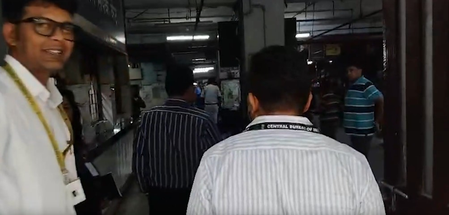
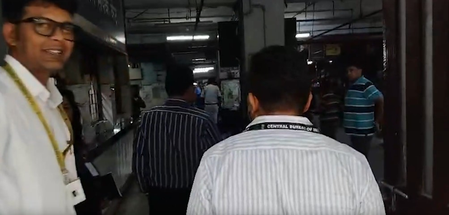
After reaching Kolkata, the special four-member team held an extensive review meeting with officers of the CBI’s Kolkata unit to assess the progress of the investigation. Subsequently, the officers visited RG Kar Medical College and Hospital and inspected the suspected crime scene, a seminar room within the hospital premises.

The development follows recent changes in the probe team. Acting on concerns raised by the victim’s parents over the pace of the investigation, the CBI replaced its earlier investigating officer, Seema Pahuja, with Sandipani Garg. The victim’s family had alleged lapses in the earlier probe.

Last week, the CBI submitted its 11th status report on the progress of the fresh investigation before a court in Sealdah, Kolkata.

The body of the young doctor was discovered inside a seminar hall on the hospital campus on August 9, 2024. Investigators concluded that she had been raped and murdered the previous night while on duty. The incident triggered widespread protests across West Bengal and other parts of the country, sparking national outrage and demands for justice.

The Kolkata police initially investigated the case before it was transferred to the CBI following court intervention. Sanjay Roy, a former civic volunteer attached to Kolkata Police, remains the sole convict in the case and is currently serving a life sentence.

The Calcutta High Court’s directive for a fresh investigation and the induction of a new probe team have once again brought national attention to one of the most high-profile crimes involving a medical professional in recent years.

–IANS

src/skp
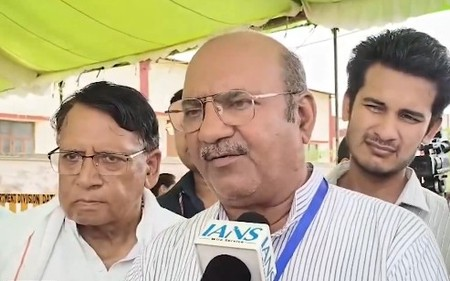
Congress retains Datia bypoll seat as Ghanshyam Singh defeats BJP’s Ashutosh Tiwari by 6,016 votes

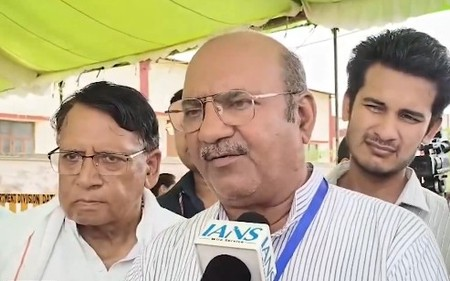
Datia (MP), Aug 3 (IANS) The Congress retained the Datia Assembly seat in Madhya Pradesh on Monday as its candidate, Ghanshyam Singh, defeated the BJP’s Ashutosh Tiwari by 6,016 votes in the bypoll, according to the Election Commission of India.

Ghanshyam Singh polled 66,757 votes (42.39 per cent), while Tiwari secured 60,741 votes (38.57 per cent). Azad Samaj Party’s candidate Damodar Yadav finished a distant third with 22,527 votes (14.30 per cent).

The Congress maintained its lead through most of the counting process. By the ninth round, Singh had opened a lead of 9,519 votes. Although the BJP narrowed the gap in the later rounds, the Congress candidate maintained his advantage to seal the victory.

Reacting to the verdict, Ghanshyam Singh described it as a mandate in favour of the Congress and expressed confidence that it would pave the way for the party’s return to power in the state.

“This is a victory of the people, a victory of trust and a victory of the Congress party. It reflects the people’s desire for change in Madhya Pradesh. The process has begun today, and the Congress will form the government in 2028,” Singh told reporters after the results were declared.

After the defeat, BJP candidate Ashutosh Tiwari said the party would review the outcome and identify the reasons behind the result.

“We will analyse the reasons for the defeat. Those who call the BJP their ‘mother’ have betrayed the party,” Tiwari told reporters at the counting centre, in an apparent reference to internal dissidence during the campaign.

The bye-election witnessed political developments in both the BJP and the Congress. While the BJP fielded Tiwari in place of senior leader Narottam Mishra, the Congress suspended former MLA Rajendra Bharti from the party’s primary membership a day before counting over alleged anti-party activities.

Congress Media Department Chairman, Mukesh Nayak, credited the victory to the leadership of state Congress President Jitu Patwari and the party’s organisational campaign.

“Under the leadership of Jitu Patwari, the Congress won this election. The party selected the right candidate, and Patwari united workers at every level. He visited nearly 250 polling booths, worked tirelessly, met people and mobilised party workers throughout the campaign,” Nayak said talking to IANS in Bhopal.

The victory enabled the Congress to retain the Datia seat despite the political turbulence surrounding the bye-election, while the BJP failed to reclaim a constituency it had lost in the 2023 Assembly polls.

The bypoll was necessitated after the Datia Assembly seat fell vacant following the disqualification of Congress MLA Rajendra Bharti after his conviction in a cooperative rural development bank fraud case. Bharti had defeated then Home Minister Narottam Mishra by 7,742 votes in the 2023 Assembly elections, giving the Congress the seat after a gap.

–IANS

pd/rad

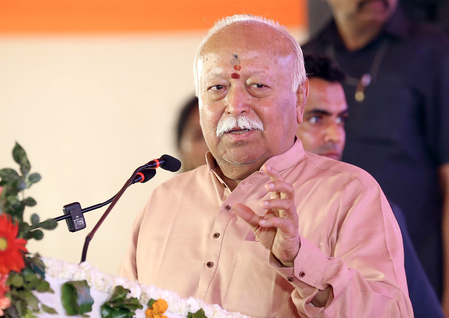
RSS Chief Mohan Bhagwat to interact with Gen Z in Mumbai on Aug 6

Mumbai, Aug 3 (IANS) Rashtriya Swayamsevak Sangh (RSS) Sarsanghchalak Mohan Bhagwat is scheduled to interact with representatives of Generation Z and Generation Alpha on August 6 in Mumbai.

The interactive session will serve as the inaugural ceremony for the 15th Annual Championship Conference of India’s International Movement to Unite Nations (I.I.M.U.N.).

The event will assemble more than 2,000 high school students aged 15 to 19, hailing from over 100 cities across India. Centred on the theme “The Role of Youth in Uniting the World, the Indian Way,” the conference provides a platform for young leaders to deliberate on pressing local, national, and international affairs, said a press release.

Bhagwat’s address marks the formal commencement of the Annual Championship Conference, kicking off multi-day student-led debates and policy discussions. I.I.M.U.N.

Founder Rishabh Shah stressed the importance of mutual engagement, stating that the leadership is not only about guiding the next generation, but also listening to it.

“At this critical juncture in India’s journey, we need this dialogue more than ever before,” he said.

RSS chief’s interaction is proposed against the backdrop of the recent nationwide protests by the Cockroach Janata Party against the NEET paper leaks while demanding reforms in the education sector.

The agitation concluded following government assurances, the passage of the Public Examinations (Prevention of Unfair Means) Amendment Bill, 2026, and the resignation of the Education Minister Dharmendra Pradhan.

In his recent address, Bhagwat described Gen Z as inherently good, adaptable, and emotional, but noted they often react without thinking with a “calm mind.”

He emphasised that young people are easily drawn to causes or trends that appear “visibly authentic”, which strongly shapes their participation in social and political movements.

He highlighted the need for open family dialogue over top-down authority, noting that the “era of obedience” is over.

He advised families to engage in discussion rather than giving dictations, building consensus through real conversation. He expressed serious concern over screen addiction while making a strong case for mobile discipline.

RSS chief suggested that parents should model this behaviour first by reducing their own social media use rather than relying solely on laws or government regulations to manage digital lifestyle habits.

Bhagwat’s interaction with Gen Z is also important when Prime Minister Narendra Modi released a video message addressing the “abusive remarks” directed at him and his late mother by young protesters during the recent NEET paper leak agitation at Delhi’s Jantar Mantar.

Calling for guidance over retribution, the Prime Minister appealed to the public to move past anger and guide the misguided youth rather than pursue legal battles or social ostracisation.

PM Modi explicitly stated, “I want to forgive those who abused me. I request society to accept my decision.”

He acknowledged that while the crude language was a “cultural shock” to society, young people make mistakes and deserve a chance to learn from them.

–IANS

sj/dan

Delhi CM inaugurates old clothes donation centre at Punjabi Bagh Metro Station

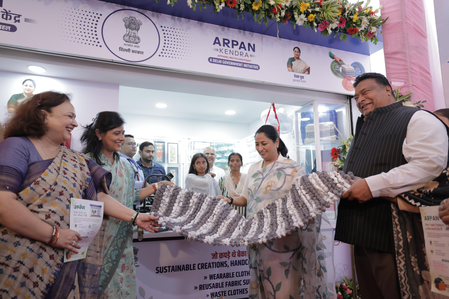
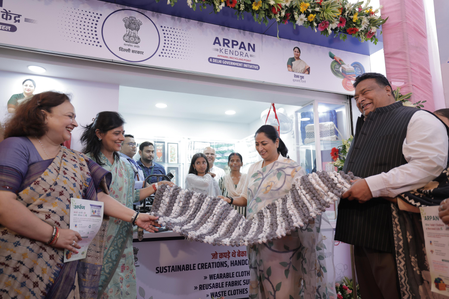
New Delhi, Aug 3 (IANS) Delhi Chief Minister Rekha Gupta on Monday inaugurated the ‘Arpan Kendra ’, an old clothes donation centre, at Punjabi Bagh West Metro Station, an official said on Monday.

The initiative has been launched in collaboration with the Delhi Metro Rail Corporation (DMRC) and the Delhi Metro Ladies Welfare Organisation to promote the collection of usable old garments, along with their reuse, recycling and upcycling.

During the programme, the Chief Minister also observed the QR code-based digital system for the clothing donation process.

Addressing the gathering, the Chief Minister said that building a Viksit Delhi is not just about constructing roads, bridges and Metro lines, but also about responsible citizens, respect for resources and a collective commitment to protecting the environment.

She said a truly developed society is built when waste is transformed into a resource and development goes hand in hand with nature conservation.

The event was attended by Madipur MLA Kailash Gangwal, DMRC Managing Director Vikas Kumar, Delhi Metro Ladies Welfare Organisation president Shalini Singh, senior officials and other dignitaries, said an official statement.

The Chief Minister said that recycling old clothes is not merely a way to reduce waste but also an effective means of conserving water, energy and natural resources.

Every garment donated by a citizen, she said, can contribute to environmental protection while also bringing a positive change in the life of someone in need.

The concept for the initiative was introduced on May 3, under which Arpan Kendras are being established at 10 major Delhi Metro stations.

As part of the first phase, Arpan Kendras were launched on Monday at five major stations: Shalimar Bagh, Punjabi Bagh West, Mayur Vihar Phase-1, Shahdara and Rohini West.

A formal Memorandum of Understanding (MoU) has already been signed between the concerned organisations, said the statement.

Textile collection-cum-sale kiosks are being set up at all the selected Metro stations, where citizens can donate their usable old clothes. To make the process convenient, the entire donation system has been made digital and transparent, said the statement.

Donors will be able to contribute their garments through a QR code-based system and will receive a digital receipt, helping ensure wider public participation.

The Chief Minister said one of the most significant aspects of the initiative is the active involvement of women’s self-help groups. Women will participate in the operation of the centres as well as the collection, segregation, recycling and upcycling of garments, creating new opportunities for dignified livelihoods and self-employment.

She said this integrated model of environmental conservation and women’s empowerment marks an important step towards Delhi’s sustainable development.

–IANS

rch/uk

Japan PM visits earthquake-affected region to assess situation

Tokyo, Aug 3 (IANS) Japanese Prime Minister Sanae Takaichi on Monday visited Kumamoto Prefecture in southwestern Japan following a powerful earthquake that struck the region last week, causing widespread destruction, local media reported.

“The government will do everything that it can do,” Takaichi told the residents affected by the 7.1-magnitude earthquake on July 28, Kyodo News Agency reported.

Takaichi visited an evacuation shelter in the town of Hikawa, wearing a disaster response uniform.

She also observed the Aeon shopping mall in the town of Kashima from a helicopter where an explosion occurred after the quake, killing seven people. She also saw the paper plant in Yatsushiro where nine people died.

Aerial footage filmed by public broadcaster NHK helicopter on July 28 showed severe damage to the structure. Sections of the building’s exterior wall had peeled away, exposing steel framework, while part of the roof appeared to have collapsed. A large hole was also visible on the rooftop.

“Takaichi’s government has been eager to promote secondary evacuations to lodging facilities and to strengthen support for people sleeping in cars or remaining in their homes following the quake, government officials said. It is also considering tapping the fiscal 2026 budget’s reserve funds, which total about 1 trillion yen ($6.4 billion),” stated Kyodo News.

She also discussed growing concerns about heatstroke and disaster-related deaths at evacuation sites with local authorities as temperatures reached 40 C in parts of the prefecture.

According to the country’s Meteorological Agency, the earthquake struck Kumamoto Prefecture at a depth of 10 kilometres at 4:27 pm (local time).

A tsunami warning of one metre was also issued for the Ariake Sea and Yatsushiro Sea in southwestern Japan.

The cities of Uki and Hikawa were the hardest hit areas, which registered the maximum level of 7 on Japan’s seismic intensity scale. The Meteorological Agency says that at a seismic intensity of 7, people cannot remain standing or move without crawling and may be thrown through the air.

–IANS

ksk/as

Adani’s ANDPL to rejuvenate 40,000 trees within Dharavi, build 3.3-km Mithi River riverfront

Mumbai, Aug 3 (IANS) In a bid to give residents better access to green public spaces, the Dharavi Redevelopment Project (DRP) will place the rejuvenation of the Mithi River at the centre of a new green-blue network — designed to improve the environment and create healthier spaces across one of Mumbai’s most densely-populated neighbourhoods, it was announced on Monday.

As part of this vision, around 40,000 trees will be rejuvenated in phases within Dharavi. In addition, nearly two lakh compensatory trees will be planted across the Mumbai Metropolitan Region (MMR).

A key feature of Dharavi’s redevelopment is the creation of a 3.3-km public promenade along the rejuvenated Mithi River, stretching from the Matunga culvert to the Mithi riverfront.

The promenade will be open to all Mumbaikars and will include viewing decks, cafes and cultural spaces while protecting and enhancing the river’s ecological character.

“The riverfront will be lined with native trees and pollution-absorbing vegetation. Permeable paving and bioswales have also been planned to improve stormwater management, increase groundwater recharge and support the long-term health of the river ecosystem,” said an Adani Navbharat Developers Private Limited (ANDPL) official.

ANDPL is a Special Purpose Vehicle (SPV) established for the implementation of the Dharavi Redevelopment Project (DRP), with the Government of Maharashtra and the Adani Group as shareholders.

The riverfront will connect seamlessly with the project’s wider network of green spaces, including the 15-metre-wide Green Spine for pedestrians and cyclists, a large Central Park and several neighbourhood parks spread across Dharavi.

“These green spaces have been planned as one connected network. Together with the rejuvenated Mithi River, they will improve air circulation, reduce the urban heat island effect and create cleaner, healthier and more accessible public spaces for residents,” the official added.

Environmental consultancy Terracon has been appointed to carry out the plantation and maintain the trees for five years. The agency will oversee scientific planting, irrigation, protection, and maintenance to improve survival rates.

It will also submit mandatory survival reports every six months under the afforestation programme. The entire cost of plantation and maintenance will be borne by ANDPL.

“We have already planted 30,000 trees at Chahade village in Palghar as sufficient land was not available within BMC limits,” the official said. The project aims to plant nearly 75,000 trees during this monsoon.

–IANS

na/

Delhi Laxmi Yojana: 1.54 lakh women register; 10,723 applications submitted

New Delhi, Aug 3 (IANS) The newly launched Delhi Laxmi Yojana continued to receive a good response from city women, with 1.54 lakh registering on the official portal and 10,723 submitting their final applications till 7.48 am on Monday, an official said.

Delhi Chief Minister Rekha Gupta on Saturday officially launched the Delhi Lakshmi Yojana. She also inaugurated the scheme’s online registration portal, www.dly.delhi.gov.in.

Within 12 hours of the portal going live, 33,730-plus registrations were done by city women. During this period, 1,940 final applications were submitted, said an official.

Under the scheme, eligible women will receive financial assistance of Rs 2,500 every month. Going beyond direct financial support, the scheme aims to connect women with savings, digital financial inclusion, social security and long-term financial stability, making it an innovative model in the country, said the Chief Minister.

Addressing the gathering at the launch event, the Chief Minister said the Delhi government has fulfilled the commitment it made during the Assembly elections to strengthen the economic empowerment of women.

She said the Delhi Cabinet had originally approved the scheme as the Mahila Samriddhi Yojana, but it was later renamed Delhi Laxmi Yojana to better reflect the broader vision of women’s dignity, prosperity and economic empowerment.

Chief Minister Rekha Gupta said the scheme will initially be implemented for a period of three years and is expected to benefit nearly 17 lakh women.

She said the scheme has been designed differently from conventional cash assistance programmes. Beneficiaries will be able to choose between two financial options based on their individual needs. Under the first option, Rs 1,000 every month will be credited to a Central Bank Digital Currency (CBDC) wallet for meeting day-to-day expenses, while the remaining Rs 1,500 will be deposited in an RD/FD account.

Under the second option, the entire Rs 2,500 will be deposited in an RD/FD every month, allowing beneficiaries to build substantial savings over time along with interest. In this way, the scheme seeks to provide immediate financial assistance as well as long-term financial security, she said.

The Chief Minister said a digital negative list will be implemented for the CBDC wallet to ensure that government assistance is used only for essential household needs. The amount credited to the wallet cannot be spent on alcohol, tobacco, narcotic substances, lottery tickets, gambling, betting or any other goods and services prohibited by the government from time to time. This will ensure that the financial assistance is utilised for the welfare of families.

Chief Minister Rekha Gupta said the Delhi Laxmi Yojana will operate entirely through a technology-driven and digital platform. The newly-launched DLY portal will integrate the entire process, including applications, document verification, eligibility assessment, approvals, PFMS integration, banking services, CBDC transfers and SMS services. This will make the process faster, more transparent and accountable.

Every application will go through a four-stage verification and approval process before sanction. The District Programme Management Unit will first scrutinise the application, followed by verification by the District Women and Child Development Officer. The application will then be reviewed and approved by the District-Level Approval, Monitoring and Grievance Redressal Committee.

The Chief Minister said detailed verification will be carried out to ensure that only genuine beneficiaries receive assistance. This will include Aadhaar authentication, Delhi voter registration, annual family income, family details, electricity consumption, vehicle ownership, pension status, government service records and other prescribed eligibility criteria.

Any false information or fraudulent claim will invite recovery of the assistance amount along with appropriate legal and administrative action, she said.

The Chief Minister said the eldest eligible woman in the family will be allowed to apply under the scheme. The applicant must be between 21 and 60 years of age, the family’s annual income should not exceed Rs 2.5 lakh, the applicant or her parents/husband must have been residents of Delhi for at least 10 years, and the beneficiary must be a registered voter in Delhi.

–IANS

rch/dan

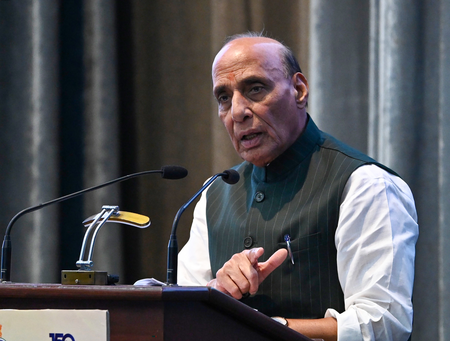
Military-civil integration key to robust defence ecosystem: Rajnath Singh

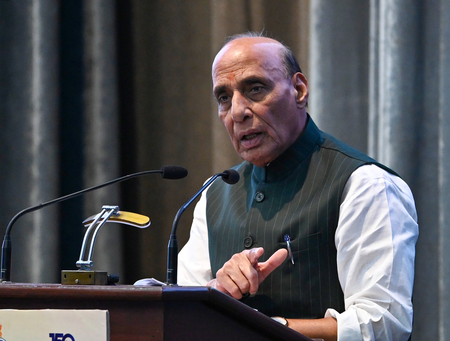
New Delhi, Aug 3 (IANS) Union Minister Rajnath Singh on Monday underlined the need to deepen integration between the military and civil components of the Ministry to foster greater synergy within the defence ecosystem.

Addressing the 85th Armed Forces Headquarters (AFHQ) Civilian Services Day celebrations in Delhi, Defence Minister Rajnath Singh emphasised that both the uniformed and civil services share the same commitment of ‘Nation First’.

He said that when the objective of both the military and civil components of the Ministry is singular, every element of the system transforms into national strength.

He said deeper integration between the military and civil components of the Ministry of Defence will help to tackle evolving security and technological challenges, while ensuring institutional memory, stability, and the effective application of rules and regulations.

He said that military and administrative integration cannot proceed along separate paths as there will be a need for continuity and expertise across all areas – policy, administration, human resource management, financial processes, logistics, and institutional knowledge.

Rajnath Singh highlighted the importance of further enhancing structured cross-exposure between civilian and military officers, suggesting joint training programmes and developmental assignments for both sides to learn from each other’s experiences.

“Military officers bring operational experience, a command perspective, and an understanding of warfare, while civilian officers contribute through administrative continuity, policy experience, an understanding of government processes, and institutional memory. When these strengths combine, decision-making becomes more informed, balanced, and effective,” stated Rajnath Singh.

Explaining with the example of ‘cyber warfare’, the Defence Minister stated that if officers of the AFHQ Civilian Services develop defence-specific common cyber tools leveraging their expertise, it could prove beneficial to the Defence Forces.

Rajnath Singh called upon the AFHQ Civilian Services to evolve into the “strategic brain” of India’s defence management architecture by developing a comprehensive understanding of the defence sector.

The Defence Minister also launched several digital initiatives of the office of Joint Secretary and Chief Administrative Officer (JS & CAO) and its Revised Vision & Mission Statement.

He also released the 34th issue of the ‘Samvad’ magazine that contains travelogues, essays, articles, and poems written by employees of various ranks posted in Service Headquarters and Inter-Service Organisations.

Rajnath Singh also presented awards to AFHQ personnel for their achievements in various fields, such as sports, and to some of the employees’ children who excelled in academics.

–IANS

rch/dan

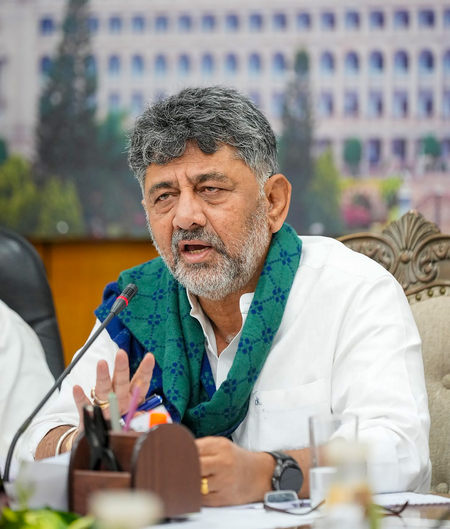
K’taka: Cabinet expansion triggers fresh dissent in Congress, Shivakumar appeals for patience

Bengaluru, Aug 3 (IANS) Karnataka Chief Minister D.K. Shivakumar on Monday appealed to disgruntled Congress leaders to remain patient after the long-awaited Cabinet expansion triggered protests, resignation threats and widespread disappointment among legislators who failed to secure ministerial berths.

Reacting to the growing dissent, Shivakumar said many deserving and senior legislators could not be accommodated in the ministry and urged them not to lose hope.

“I am now heading to Lok Bhavan after sending the final list there. There are many deserving and senior leaders. I do not deny that. However, the party has to take decisions based on various considerations,” the Chief Minister told reporters.

Shivakumar said he too had been overlooked for ministerial positions in the past.

“I was not inducted into the Cabinet in 2004. Even during former Chief Minister Siddaramaiah’s tenure, I remained out of the Cabinet for a long time. I remained patient, and it is because of that patience that I am in this position today,” he said.

Appealing to disappointed legislators to exercise restraint, Shivakumar said the party would create opportunities for everyone in due course.

“I request everyone to remain patient. We will create opportunities for everyone in one way or another. I sincerely appeal to all our leaders to have patience,” he said.

Despite the Chief Minister’s appeal, discontent continued to surface from several parts of the state.

Six-time MLA Tanveer Sait, who was overlooked for a Cabinet berth, said he was deeply moved by the support extended by his party workers.

“Ever since I was attacked, my party workers have stood firmly behind me. They have been offering prayers for me. They are my strength. I will decide after consulting my supporters,” Sait said.

Five-time MLA Hampanagouda Badarli expressed disappointment over the lack of representation to Raichur district in the expanded ministry, saying the district had once again been ignored despite senior leaders from the region.

In Bengaluru, supporters of Govindarajanagar MLA Priya Krishna staged protests after he failed to secure a Cabinet berth. Priya Krishna and his father, senior Congress MLA M. Krishnappa, were both in the race for a ministerial berth, with the expectation that at least one of them would be accommodated. However, neither found a place in the expanded Cabinet.

The Cabinet expansion has also sparked resentment among legislators from Kolar and Chikkaballapur districts, who are scheduled to meet on Tuesday to discuss the issue of inadequate regional representation in the ministry.

Similarly, Congress legislators from Gadag and Vijayanagar districts have also expressed dissatisfaction over the Cabinet formation, alleging that their districts were overlooked despite repeated demands for representation.

Bringing an end to months of speculation and prolonged political suspense, the Congress government on Monday finally decided to expand the Karnataka Cabinet, with the party high command approving the induction of 20 legislators as ministers.

The Congress party is believed to balance experience and fresh faces in the expanded Karnataka Cabinet. However, the inclusion of senior Congress leader and MLA B. Nagendra has emerged as one of the most surprising decisions of the leadership, with the Opposition expected to target the government over the alleged Karnataka Maharshi Valmiki Scheduled Tribes Development Corporation scam.

The Congress leadership’s last-minute changes to the Karnataka Cabinet expansion list sparked widespread resentment within the party on Monday, with several disappointed legislators threatening to resign from their Assembly memberships, supporters staging protests and one party worker allegedly consuming poison in protest.

In a dramatic development ahead of the swearing-in ceremony, the Congress high command reportedly dropped Mankal S. Vaidya from the final list of ministers and instead inducted former minister S.S. Mallikarjun.

–IANS

mka/dan

Pakistan needs to learn from 1971 to address its fractured present

New Delhi, Aug 3 (IANS) Amidst Pakistan’s internal challenges, including political polarisation and economic crisis that are weakening institutions, and unrest in its provinces exposing the failures of centralisation, the shadow of 1971 looms large. Ignoring regional voices, analysts warn, could lead to another irreversible loss.

The choice before its rulers today is clear: either repeat history’s mistakes or chart a new course of dialogue, inclusion and reform. The stakes are nothing less than the survival of the nation itself.

Pakistan’s political-military establishment, historically prone to heavy-handed responses, risks repeating mistakes that broke the nation in 1971, when East Pakistan seceded to form Bangladesh. The echoes of that tragedy are unmistakable.

The most visible crisis today stems from political polarisation. Pakistan’s political canvas has become a battlefield where parties weaponise institutions against each other. The judiciary, Parliament and even the Election Commission are accused of bias, eroding trust in governance and propping the military as the ultimate arbiter – a role it has historically embraced but which has often deepened divisions.

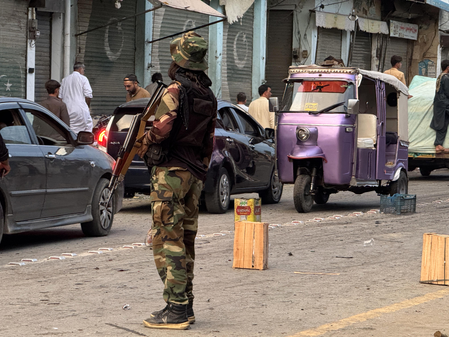
Decisions are made through a security lens, whether deploying troops in Balochistan or curbing dissent in urban centres, alienating provinces that see the military as both an occupying force and an economic competitor. Military interference in economic and diplomatic ventures is creating more trouble than solutions, widening the disconnect between urban and rural constituencies, elites and marginalised groups, and provinces and the centre.

Unrest in Balochistan and Khyber Pakhtunkhwa has intensified. Balochistan, Pakistan’s largest province by area but least developed, has long complained of exploitation. Its natural resources enrich federal coffers, yet its people remain impoverished. Complaints are often met with military operations, alienating civilians and fuelling resentment.

In Khyber Pakhtunkhwa, the legacy of militancy and counterinsurgency has left scars. Renaming the North-West Frontier Province has not changed realities for the Pashtun community. Integration into mainstream politics remains incomplete, and the perception of being a buffer zone persists.

Meanwhile, Pakistan-occupied Jammu and Kashmir (PoJK) remains gripped by protests, boycotts and allegations of rigged polls, exposing the hollowness of Islamabad’s so-called democratic exercise. Authorities are using force, leading to several deaths in recent days. The ongoing three-phase elections have been widely dismissed as a fig leaf to mask Pakistan’s illegal occupation and systematic repression.

As cries for development rise, a lack of political will and economic squeeze limit the government’s ability to invest in projects that could ease provincial grievances. This reflects economic disparities that fuelled East Pakistan’s resentment. Balochistan, Khyber Pakhtunkhwa and PoJK’s calls for greater control over resources echo East Pakistan’s earlier pleas for recognition.

At that time, political-military decisions in Islamabad dismissed the electoral mandate of the Awami League, which had won a majority. Instead of compromise, the state chose coercion. Military action against Bengali civilians and political leaders inflamed grievances, leading to civil war and eventual independence.

–IANS

jb/dan