Despite ban, large-scale cockfights in Andhra on first day of Sankranti

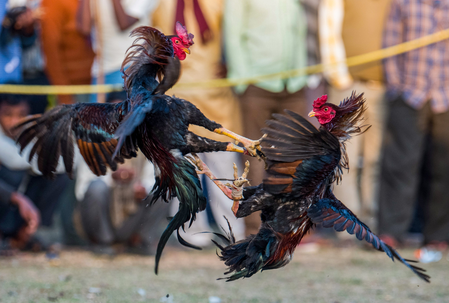
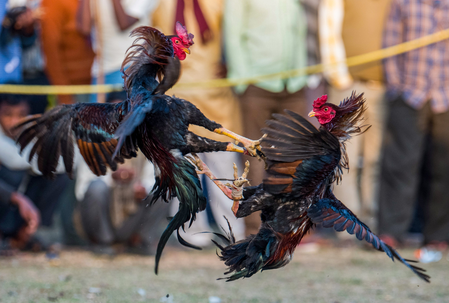
Amaravati, Jan 14 (IANS) Despite the ban and the warnings by authorities, cockfights were organised on a large scale in parts of Andhra Pradesh on Wednesday, the first day of the three-day Sankranti festival.

Currency notes changed hands as people bet on the cockfights organised in parts of coastal Andhra Pradesh.

Organisers backed by politicians set up special arenas for cockfights and other activities in East Godavari, West Godavari, Dr B. R. Ambedkar Konaseema, Eluru, Polavaram and Krishna districts.

The warnings by police and district authorities against organising cockfights and gambling activities had no impact, with public representatives coming out in support of the organisers by personally attending the events.

Prominent personalities from various parts of Andhra Pradesh, Telangana, and neighbouring states were among hundreds of spectators and punters. They included politicians of all hues, businessmen and celebrities.

Hundreds of people participated in the betting at the competitions, which are likely to continue for three days.

Well-trained cocks with small knives attached to their legs fought amid cheers from the spectators. The fight often ends with the death of one of the two birds.

The organisers arranged generators and floodlights to organise the cockfights throughout the night. Special galleries were arranged for women and VVIPs.

Organisers at a few places justified their action, claiming that the cockfights did not involve betting. They said that cockfights are part of Sankranti traditions.

They also pointed out that courts have banned only those cockfights where roosters are tied with knives.

Deputy Speaker K. Raghurama Krishna Raju, MLA Ganta Srinivasa Rao, former Hyderabad Mayor T. Krishna Reddy and others watched cockfights at Pedamiram in Kalla mandal of West Godavari district.

Following the Andhra Pradesh High Court’s directions to strictly prohibit cockfighting, police and district authorities had stepped up surveillance, including the use of drone cameras, and warned of stringent action against organisers and participants.

Kakinada in-charge district collector Apoorva Bharat said a district-level control room has been set up at the Collectorate to receive information and complaints related to cockfights and gambling.

The Superintendents of Police of West Godavari, Eluru and Kakinada had issued a joint warning that police would not tolerate any antisocial activity under the guise of festival celebrations. They made it clear that cockfights, card games, dice games and all forms of gambling are strictly prohibited.

Like in the past, the organisers built sprawling arenas in towns and villages. Some even installed digital screens to beam the fight between roosters live. They also deployed bouncers and installed CCTV cameras to deal with anyone creating problems.

The arenas built for cockfights and other games as part of Sankranti festivities resembled huge cinema settings or cricket fields. Elaborate arrangements were made for the parking of cars and other vehicles of the participants. The organisers also provided passes to the spectators, tokens to those betting on cockfights and wristbands for the participants.

Ahead of Sankranti, animal rights groups had urged citizens not to participate in cockfighting.

They had appealed to the people to report any instances of cockfighting to local police authorities.

As per the Prevention of Cruelty to Animals Act, 1960, under Section 11(1)(m)(ii), it is illegal to incite animal fights.

The act of organising, managing, or even offering a space for such fights is also a cognisable offence under Section 11(1)(n).

–IANS

ms/svn
Aditya Sahu appointed BJP’s new Jharkhand President, 21 members for National Council also named

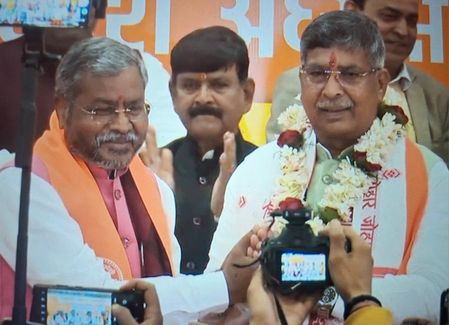
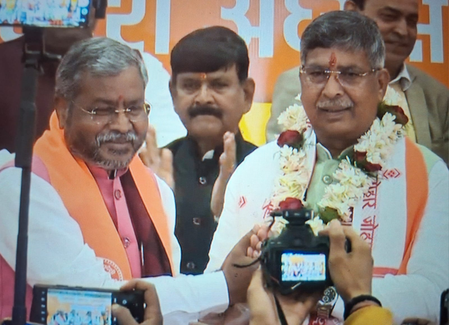
Ranchi, Jan 14 (IANS) Aditya Sahu will be the new President of the BJP’s Jharkhand unit, party’s central election officer and Union Minister Jual Oram announced on Wednesday.

Sahu filed his nomination at the state BJP office in Ranchi on Tuesday before Jual Oram and was elected unopposed, as no other candidate submitted nomination papers for the post.

A Rajya Sabha member from Jharkhand, Sahu was serving as the Working President of the state BJP prior to his elevation as state party chief. He brings more than two decades of organisational experience within the party, having earlier held key positions including state Vice President and General Secretary.

Sahu, 61, also has an academic background and was associated with the field of education for several years. He served as a lecturer at Ram Tahal Choudhary College until 2019 and was elected to the Rajya Sabha in July 2022.

His appointment is seen as significant in the context of the state’s social and political dynamics. Sahu belongs to the Vaishya community, a social group that has traditionally been a strong support base of the BJP.

Several senior BJP leaders and party workers were present at the time of announcement, including Leader of Opposition Babulal Marandi, Rajya Sabha member Dr Pradeep Verma, former Union Minister Arjun Munda, former CM Madhu Koda, and MP B.D. Ram.

Oram also announced the election of 21 leaders from Jharkhand to the BJP’s National Council.

The newly elected members are Kariya Munda, Arjun Munda, Samir Oraon, Yadunath Pandey, Champai Soren, Sanjay Seth, Raghubar Das, Dineshananda Goswami, Madhu Koda, Pashupati Nath Singh, Ravindra Kumar Ray, Amar Kumar Bauri, Neelkanth Singh Munda, Bhanu Pratap Shahi, Jitu Charan Ram, Abhaykant Prasad, Pradeep Verma, Anant Ojha, Deepak Prakash, Annapurna Devi, and Geeta Koda.

The BJP had appointed Union Minister Oram as the central election officer for the election of the Jharkhand state President.

–IANS

snc/skp/vd

‘Cong puts high command over K’taka’: BJP slams CM Siddaramaiah for skipping German Chancellor’s events

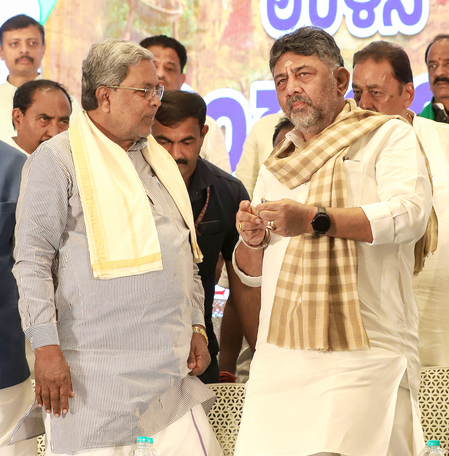
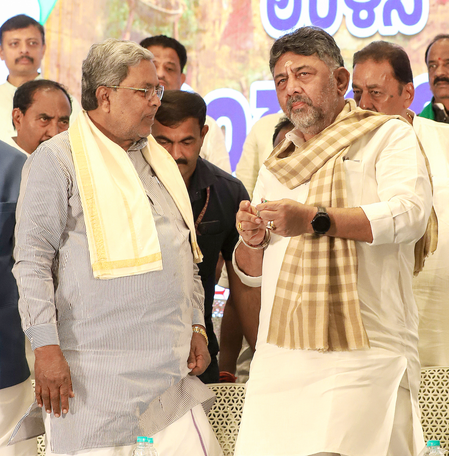
New Delhi, Jan 14 (IANS) The Bharatiya Janata Party (BJP) on Wednesday criticised Karnataka Chief Minister Siddaramaiah and Deputy CM D.K. Shivakumar, accusing them of “prioritising” the reception of Lok Sabha Leader of Opposition Rahul Gandhi over formally welcoming and seeing off German Chancellor Friedrich Merz during his visit to the state.

German Chancellor Merz, along with his delegation, arrived in Bengaluru on Tuesday, visited several institutions across the city and later departed from Kempegowda International Airport. Minister for Large and Medium Industries and Infrastructure Development M.B. Patil, represented the Karnataka government and bid a warm farewell to the Chancellor and his delegation at the airport.

However, the BJP alleged that the Chief Minister and Deputy CM failed to extend due respect to the visiting foreign dignitary and instead chose to give precedence to the party’s high command and a particular family over the interests of the state and its people.

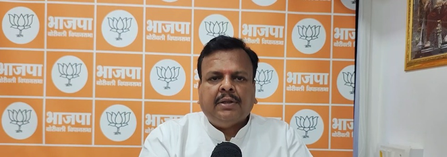
BJP National Spokesperson Shehzad Poonawalla, speaking to IANS, said, “Once again, the Congress party has shown that, for the party and its Chief Minister Siddaramaiah and Deputy Chief Minister Shivakumar, power and family are more important than the people and the state.”

He further alleged that a significant opportunity had been missed.

“Therefore, when the German Chancellor visited Karnataka, Germany being a very strong economy with thousands of crores of investments in the state, their priority was not to receive him and secure more investments, but to go and receive Rahul Gandhi instead, who was still in transit. It shows that Congress gives more importance to the high command than to the state and its people,” Poonawalla said.

BJP spokesperson Pratul Shah Deo also criticised the Congress leadership and told IANS, “Leadership in the Congress remains confined to a single family, which does not function democratically and instead behaves like a royal household. Even if a child from that family arrives, Congress leaders roll out the red carpet.”

He alleged that the visit of the German Chancellor did not receive the attention it deserved.

“Their mindset is evident from the fact that even the German Chancellor, a guest of the country, did not receive due respect because Rahul Gandhi was on a Karnataka visit at the time. This reflects how distorted their thinking has become,” Shah Deo said.

He further pointed out that Bengaluru’s global stature should have been leveraged during the visit.

“Bengaluru is an IT hub, and this was the right time when they could have held talks about the German investments; however, they lost this opportunity,” he added.

–IANS

sd/dpb

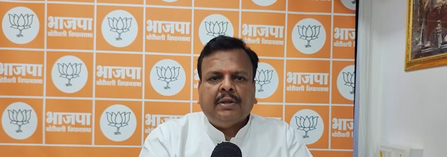
Mumbai’s mayor will be from Mahayuti: Maha BJP MLA

Mumbai, Jan 14 (IANS) As Maharashtra heads to elections on Thursday for 29 municipal corporations, BJP MLA Sanjay Upadhyay has expressed confidence that the next mayor of Mumbai will be from the BJP-led Mahayuti alliance.

Speaking to IANS on Wednesday, Upadhyay said the alliance has made its stand clear regarding leadership in the Brihanmumbai Municipal Corporation (BMC).

“Our leaders, Maharashtra Chief Minister Devendra Fadnavis and Deputy Chief Minister Eknath Shinde, have announced at Shiv Tirth that Mumbai’s mayor will be from the Mahayuti alliance. The mayor will be a Hindu and a Marathi. Our position is clear about who will lead Mumbai, and we have officially informed the people of the city about this,” he said.

Upadhyay further claimed that the opposition would fail to secure even a municipal president’s post in the state.

Referring to past political assertions by opposition parties, he said, “During the Maharashtra elections, the opposition claimed that they would form the government and even projected several leaders as Chief Ministerial candidates. In the Lok Sabha elections, almost every opposition leader was even dreaming of becoming the Prime Minister. However, none of those ambitions materialised. They could not form either the state government or the central government, and now they will not even get a municipal president in Maharashtra.”

He added that the results of the ongoing civic polls would soon clarify the political picture in Mumbai.

“There are only 24 hours left for voting. After polling ends on January 16 and the counting is completed, it will become clear who will be Mumbai’s mayor,” he said.

Meanwhile, campaigning for elections to 29 municipal corporations across Maharashtra concluded on Tuesday, setting the stage for an intense political contest, particularly in Mumbai. The BJP-led Mahayuti alliance is making a strong push for control of the Brihanmumbai Municipal Corporation, which is facing a tough challenge from a united Thackeray front.

Voting will take place across 893 wards on January 15 to elect representatives for 2,869 seats. More than 3.48 crore eligible voters are expected to decide the fate of 15,931 candidates. Counting of votes is scheduled for January 16. Chief Minister Devendra Fadnavis led the Mahayuti campaign, touring large parts of the state along with Deputy CMs Eknath Shinde and Ajit Pawar.

The election holds added significance as it is the first BMC poll since the 2022 split in the Shiv Sena, which had ruled the civic body for 25 years before the division. The campaign also witnessed a notable political development, with Uddhav Thackeray and Raj Thackeray reuniting after two decades in a bid to consolidate the Marathi vote.

–IANS

jk/dpb

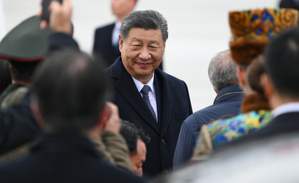
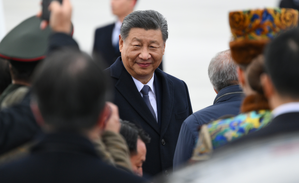
‘Xiplomacy’ strengthens China-US ties amid broader geopolitical tensions: Report

New Delhi, Jan 14 (IANS) Amid United States President Donald Trump’s tariff pressures and rising military tensions over Taiwan, reports from Beijing suggest ‘Xiplomacy’ evolving as a quiet and effective diplomatic tool through youth exchanges and cultural diplomacy.

According to China’s state-controlled People’s Daily Online, since President Xi Jinping proposed the ‘50,000 in Five Years’ initiative during his late-2023 visit to San Francisco, more than 40,000 American youths have participated in the programme.

The initiative aims to bring 50,000 young Americans to China for exchange and study programs over a five-year period.

The efficacy of ‘Xiplomacy’ is reflected in the thoughts shared by members of the youth delegation as quoted by the news website on Wednesday.

After visiting Chinese cities in October last year, it said, “Members of the delegation wrote to President Xi to express their gratitude, saying the trip has helped them gain a better understanding of China”.

In a letter to Xi, the delegation members reflected on their visit, during which they experienced the country’s blend of culture, education, technological innovation and warm personal interactions, reported People’s Daily.

Taking the outreach a step ahead, the President replied to the letter by the US youth education exchange delegation, encouraging “more young Americans to serve as a new generation of envoys in the China-US friendship”.

His answer, highlighted under the banner of ‘Xiplomacy’ in the reportage, follows the delegation’s October 2025 visit, where students and teachers engaged with Chinese culture, education, and innovation.

Delegation members, as well as long-time American participants in bilateral people-to-people exchanges, have said that fostering friendly exchanges and cooperation is the shared aspiration of the people of both China and the US, the report observed.

Xi’s response emphasised that the hope of Beijing-Washington relations lies in the people, and its future relies on the youth.

Visiting team-members described their experiences as transformative, citing activities such as practicing Tai Chi and building a traditional Luban bridge with Chinese students – symbolising friendship and cooperation.

Educators like Milinda Sylvain, principal of Diamond Minds Transformational Leadership Academy in Florida, said Xi’s letter conveyed that youth exchange matters and that their voices were heard at the highest level.

“My first reaction was one of deep surprise, gratitude, and honour. While we wrote with sincerity and respect, we did not expect to receive a personal reply,” the report quoted Sylvain.

The academy was one of several US institutions represented in the youth education exchange delegation to China.

“From our October trip, we learned that China is far more dynamic, welcoming and diverse than many of our students had imagined,” said the principal, which complements the underlying aim of ‘Xiplomacy’.

It is part of China’s broader narrative of “major country diplomacy with Chinese characteristics”, which seeks to project ‘The Dragon’ as a responsible global power while countering narratives of rivalry and mistrust.

Observers note that Xi’s personal engagement in people-to-people diplomacy, being termed as ‘Xiplomacy’ – has become a hallmark of China’s outreach strategy, using cultural and educational bridges to strengthen bilateral ties amid broader geopolitical tensions.

–IANS

jb/rad

Rajasthan CM Sharma inaugurates Makar Sankranti festival in Jaipur by flying kites

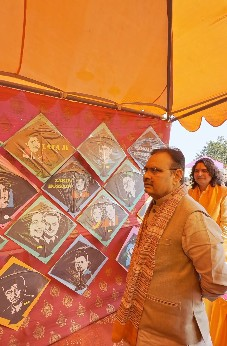
Jaipur, Jan 14 (IANS) On the occasion of Makar Sankranti, Rajasthan Chief Minister Bhajanlal Sharma inaugurated the kite festival at the Jal Mahal embankment on Wednesday by flying a kite, thereby commemorating the traditional celebration of the festival.

The Chief Minister also viewed a kite exhibition organised on the theme of Operation Sindoor. He interacted with folk artists and encouraged them for their contributions to preserving Rajasthan’s cultural heritage.

Extending his greetings to the people of the state on Makar Sankranti, CM Sharma said that the festival is a symbol of Rajasthan’s rich culture and traditions. He added that events like the Kite Festival strengthen folk culture, promote creativity and social awareness, and play an important role in boosting tourism.

The CM posted related pictures on his X handle and extended greetings. “On the sacred occasion of Makar Sankranti, the kite festival organised on the embankment of Jal Mahal in Jaipur was inaugurated by flying a kite. This festival of kites is a symbol of our rich culture and eternal traditions, which have kept us connected from generation to generation.”

On the instructions of the Chief Minister, the kite festival is being organised this year at all seven divisional headquarters of the state, as well as in Jaisalmer and Mount Abu.

A vibrant confluence of colourful kites, traditional festivities, and domestic and international tourists was witnessed at the Jal Mahal embankment.

Deputy Chief Minister Diya Kumari, MLA Shri Balmukundacharya, Additional Chief Secretary (Tourism) Praveen Gupta, Tourism Commissioner Rukmani Riyad, other senior officers, domestic and foreign tourists, and members of the general public were present on the occasion.

Minister Diya Kumari also posted on X, “Today, on the sacred occasion of Makar Sankranti, the Jaipur Kite Festival was inaugurated from the embankment of the world-famous Jal Mahal by the Honourable Chief Minister Shri @BhajanlalBjpJi.”

Earlier in the day, Chief Minister Sharma also celebrated Makar Sankranti by flying a kite at the Chief Minister’s residence.

He conveyed a message of respect for folk traditions and emphasised the need to preserve them. He wished the people of the state happiness and prosperity, stating that the festival, celebrated with the sun’s transition into the northern hemisphere, symbolises cultural heritage and infuses positive energy into life.

–IANS

arc/dpb

Rich-poor gap in Pakistan soars to alarming level

New Delhi, Jan 14 (IANS) The ‘World Inequality Report 2026’ has listed Pakistan as a country in which inequality in income and wealth among its citizens is at alarming levels.

“In Pakistan, inequality remains high and shows limited progress over the past decade. The top 10 per cent of earners capture 42 per cent of total income, whereas the bottom 50 per cent receive only 19 per cent. Wealth inequality is even more concentrated, with the richest 10 per cent holding 59 per cent of total wealth and the top 1 per cent accounting for 24 per cent. Overall, income and wealth are highly concentrated in Pakistan, with persistent gender disparities and only minor shifts in inequality trends,” the report observed.

Interestingly, while Pakistan has been surviving on IMF bailouts, the media in the country is also blaming the IMF for the increase in income inequality.

An article in Pakistan Today cites the book “A Thousand Cuts: Social Protection in the Age of Austerity” to criticise the IMF. It highlights that the book has pointed out that IMF programme conditionalities have a positive correlation with income inequality.

However, what it overlooks is the large-scale corruption in Pakistan, the feudal agricultural sector of the economy, and the control of Pakistan’s military over the businesses in the country that are behind this inequality.

As pointed out in the book, this is broadly in line with a similar message that a number of previous studies reached in line with labour income and inequality. “Within this small but fast-growing body of literature on the global determinants of income inequalities, debates surrounding the impact of IMF programmes have persisted over time,” the article cites the book as highlighting.

The article observes that Pakistan has been in around two dozen International Monetary Fund (IMF) programmes, and given the income inequality-enhancing impact of IMF programmes, it is important for both the IMF and Pakistan’s authorities – the Ministry of Finance, and the State Bank of Pakistan (SBP) – to move away from neoliberal and austerity-based IMF programme conditionalities. Instead, there is a case for allowing a greater role of the public sector in running the affairs of the economy, and supporting appropriate levels of social spending, like on health, and education, for instance, unlike the current practice of IMF conditionalities to (unjustifiably) favour over-board practice of austerity policies.

–IANS

sps/vd

China’s Communist Party calls for reinforced anti-corruption efforts

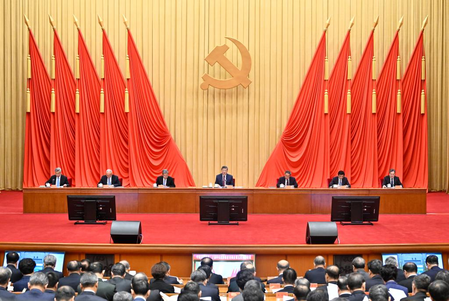
Beijing, Jan 14 (IANS) The disciplinary body of the Communist Party of China (CPC) has called for reinforced anti-corruption efforts during the 15th Five-Year Plan period (2026-2030). The call was made in a communique adopted at the fifth plenary session of the 20th CPC Central Commission for Discipline Inspection, held from Monday to Wednesday in Beijing.

Country’s President Xi Jinping, also the General Secretary of the CPC Central Committee and chairman of the Central Military Commission, attended the session and delivered the speech, Xinhua news agency reported.

On Tuesday, party mouthpiece People’s Daily highlighted that while economic growth and technological breakthroughs are important targets, one of the foremost priorities of the Communist Party of China is ensuring unblemished Party conduct.

“President Xi Jinping has always held that there is no place for corruption in China. He sees corruption as a cancer that threatens the vitality of the world’s largest Marxist governing party. Under his leadership, China has taken more remarkable steps in the fight against corruption since 2012. The ongoing anti-corruption drive is meant to ensure that the CPC works for the people of China and the largest interests of the nation rather than advancing its own interests,” the People’s Daily mentioned.

Highlighting the CPC’s multilayered anti-corruption mechanism to eliminate corrupt practices, it stated that corruption does not always involve money and involves malpractices, wastage of resources, delay in meeting deadlines and slackness at work.

Citing Chinese media, Sri Lanka’s leading media outlet Daily Mirror reported that Xi Jinping’s anti-corruption drive will intensify after a record 65 senior officials were detained in 2025, the highest number since the campaign began more than a decade ago.

“The figure, released by the Central Commission for Discipline Inspection (CCDI), represents a 12 per cent rise – 58 senior officials – over 2024 Starting from a low of 18 in 2020, the figure climbed to 25 in 2021 and 32 in 2022, before reaching 45 in 2023 that underscores the widening scope of the crackdown into China’s political, financial and military systems,” the daily reported.

It added that the Chinese military has also seen sweeping purges with record numbers of military leaders, including former Central Military Commission Vice Chairman He Weidong, having been expelled, reflecting Beijing’s concern about corruption within the armed forces amid accelerating military modernisation.

“The recent surge in cases highlights both widening exposure of entrenched graft and Beijing’s determination to tighten control amid slowing economic growth, mounting policy challenges and geopolitical strain. Those caught span provincial leaderships, central ministries, state-owned enterprises, elite universities, and, notably, the financial sector. The fall of former securities regulator Yi Huiman sent shock waves through markets already unsettled by weak investor confidence,” the newspaper mentioned ahead of the January 12-14 plenary session.

–IANS

/as

Ahead of Assembly polls, Pongal festivities in Tamil Nadu take political turn

Chennai, Jan 14 (IANS) Union Home Minister Amit Shah and Congress leader Rahul Gandhi have infused traditional Pongal celebrations in Tamil Nadu with intense political messaging, transforming the harvest festival into a high-profile campaign platform ahead of the state Assembly elections scheduled later this year.

The presence of national leaders during the festive season underlines Tamil Nadu’s growing significance in the national political landscape.

HM Shah, who participated in a “Modi Pongal” event in Tiruchirappalli last week, has reportedly conveyed a strong message to Bharatiya Janata Party (BJP) cadres, urging them to gear up for victory in the upcoming polls.

The BJP is currently in an alliance with the All India Anna Dravida Munnetra Kazhagam (AIADMK) led by former Chief Minister Edappadi K Palaniswamy.

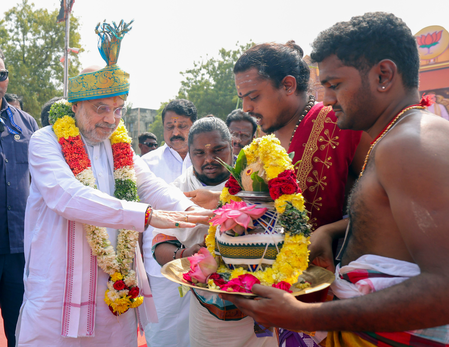
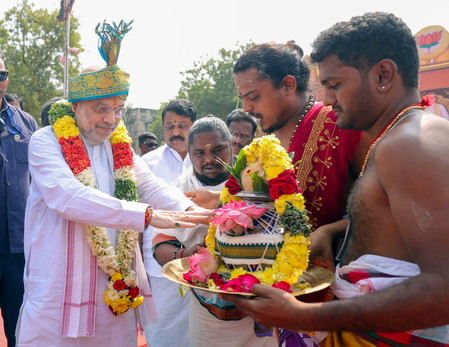
HM Shah on January 5 took part in Pongal celebrations at Mannarpuram, where rituals were performed using 1,008 earthen pots.

The event, held under the slogan ‘Namma Ooru Modi Pongal Vizha’, was aimed at associating Prime Minister Narendra Modi with Tamil culture and traditions, as part of the BJP’s broader cultural outreach in the Dravidian heartland.

During his visit, the Union Home Minister also offered prayers at the Jambukeswarar Temple and the Ranganathaswamy Temple, one of South India’s most revered Vaishnavite shrines.

He was accompanied by Union Ministers Piyush Goyal, Arjun Ram Meghwal, Murlidhar Mohol, and L. Murugan, along with senior BJP leaders from Tamil Nadu.

Chief Minister M.K. Stalin countered the Opposition’s campaign by highlighting state-led welfare initiatives.

The Dravida Munnetra Kazhagam (DMK) government rolled out a massive distribution drive, providing Rs 3,000 in cash along with a Pongal gift hamper containing raw rice, sugar, and sugarcane to over 2.22 crore ration cardholders.

Officials said the government allocated approximately Rs 6,936 crore for the cash component alone, with the aim of offering direct festive relief to families across the state.

Meanwhile, Congress leader Rahul Gandhi arrived in Tamil Nadu on Tuesday and participated in Pongal celebrations at a school in Udhagamandalam.

Congress workers displayed posters portraying him as ‘Thalaiva’ (Leader), a title traditionally reserved for influential figures in Tamil politics.

The visit is widely seen as an attempt to strengthen the Congress’ standing within the ruling DMK-led alliance. However, tensions have begun to surface within the coalition, with Congress leaders increasingly demanding a “share in power” in the event of a victory.

Senior DMK leaders, including Minister I. Periyasamy, have firmly rejected these demands, reiterating the state’s preference for single-party governance.

“Seeking a share in power is a right of any ally, but our Chief Minister (M.K. Stalin) is firm that there will be no coalition government in the state,” Periyasamy had said.

The simultaneous presence of HM Shah and Rahul Gandhi during Tamil Nadu’s most significant cultural festival reflects a noticeable shift in campaign strategies.

While the BJP is attempting to overcome its junior partner status through direct cultural engagement, the Congress appears to be leveraging the ‘Thalaiva’ imagery to negotiate greater political influence. Together, these developments point to an intensifying three-cornered contest involving the ruling DMK, an assertive BJP, and a Congress party seeking a more prominent role in the state’s governance.

Actor-turned-politician Vijay and his Tamilaga Vettri Kazhagam (TVK) are at a crucial juncture as they seek to challenge the entrenched Dravidian political dominance in Tamil Nadu.

Vijay is currently facing a CBI probe into the stampede at the TVK’s Karur rally, in which 41 people lost their lives in September last year.

Compounding his challenges, the release of his swansong film ‘Jana Nayagan’, originally scheduled for Pongal, has been delayed following allegations of objectionable content. The producers of the movie have appealed to the Supreme Court for its release.

–IANS

snj/svn

As Bengal logs Nipah cases, doctors advise people not to panic, exercise caution

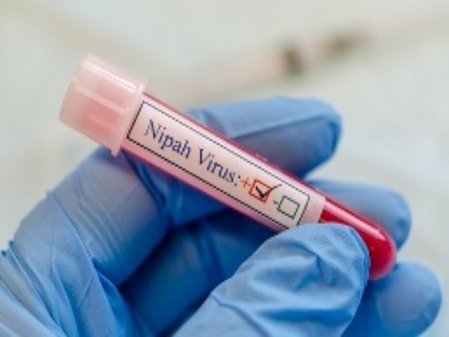
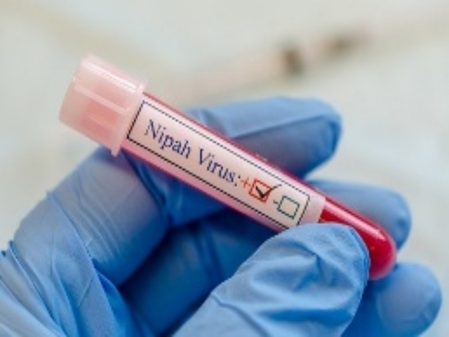
Kolkata, Jan 14 (IANS) The detection of two suspected Nipah virus cases in West Bengal has put health authorities on alert, prompting the Centre to deploy a National Joint Outbreak Response Team to support containment and public health measures.

Doctors said that the Nipah virus is rare, unpredictable and can be deadly.

On Wednesday, they said that awareness and early action are crucial to prevent its spread.

Dr Rakesh Pandit said Nipah virus is a zoonotic disease, meaning it can spread from animals to humans.

“Fruit bats are the natural carriers of the virus. People can get infected by consuming contaminated food or through close physical contact with infected individuals,” he said.

He said, “Past outbreaks have shown that the virus can also spread from human to human, particularly in healthcare and household settings. From fever and respiratory symptoms to neurological complications, the illness can take many different forms. Patients may experience encephalitis, a potentially fatal brain inflammation, in more advanced cases.”

Doctors pointed out that while Nipah does not spread as fast as airborne infections like Covid-19 or influenza, it is highly contagious in situations involving close and prolonged contact.

Dr Sushrut Ganpule, Consultant Pulmonologist, Pune, said, “Medical personnel and caregivers are particularly at a higher risk in the absence of stringent infection control procedures. Because of this, preventing secondary transmission requires early detection and isolation. Previous infections with the virus have resulted in up to 75 per cent of deaths, making it deadlier than the majority of viral infections. The illness is life-threatening, and survivors may experience long-term neurological problems like seizures and personality changes.”

Experts stressed that early diagnosis plays a key role in controlling Nipah outbreaks and saving lives.

Dr Aakaar Kapoor said, “With Nipah, time is everything. The symptoms can initially look like a routine viral fever, but neurological signs or breathing difficulty are red flags. Early lab confirmation allows doctors to isolate patients quickly and protect contacts.”

He added that testing for Nipah requires special handling and coordination.

“Samples must be handled with extreme caution. RT-PCR testing and close coordination with reference labs are essential to confirm cases without delay. Imaging and lab diagnostics together help doctors assess how severely the organs are affected. Early detection of lung or brain involvement can change the course of treatment and improve outcomes,” Dr Kapoor said.

Doctors say Nipah is not limited to just one part of the body. In severe cases, it can affect multiple organs.

Dr Vineet Malhotra, Urologist, explained, “On severe or advanced cases, we also see kidney involvement, which can worsen prognosis. This multi-organ impact is why patients require intensive monitoring and supportive care.”

At present, there is no approved vaccine or antiviral treatment for the Nipah virus. Treatment mainly focuses on managing symptoms and preventing complications.

Dr Pranjit Bhowmik said, “Currently, there is no approved antiviral medication or vaccine to treat or prevent the disease. Treatment remains largely supportive, focusing on symptom management and preventing complications.

The Centre’s decision to closely monitor the situation reflects the virus’s history of sudden outbreaks and high mortality.

“Vigilance, early diagnosis, strict isolation, and public awareness remain the strongest tools to prevent a limited outbreak from escalating into a larger health crisis,” it said.

–IANS

sch/svn