PoK: People hold sit-in protest in Rawalakot, prepare to march to Muzaffarabad

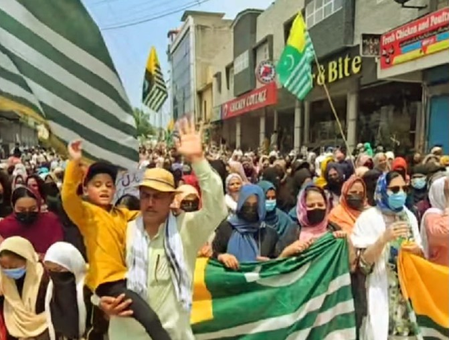
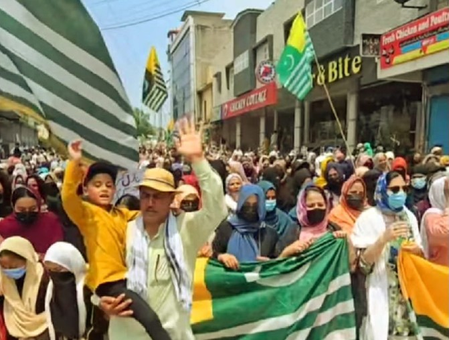
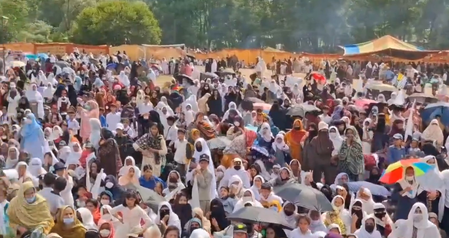
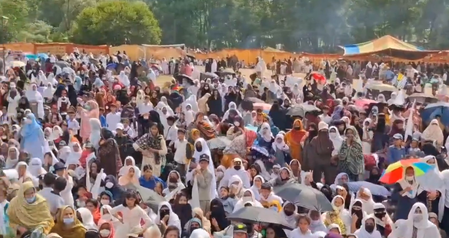
Islamabad, Aug 2 (IANS) A large number of people held a sit-in protest at D-Chowk in Rawalkot of Pakistan-occupied Kashmir (PoK) on Sunday and prepared to start a peaceful long march towards Muzaffarabad.

According to a statement released by the Joint Awami Action Committee (JAAC), security forces have been carrying out intermittent heavy firing. The JAAC said that women and children were holding a protest sit-in at Dreak, and it will continue until the demands of the movement are acted upon. The protesters shouted slogans like “Aawaz do hum ek hai, Kashmir ke pahadon mein hum ek hai.”

While sharing visuals from the protest site on X, the JAAC said: “Rawalakot: At D-Chowk, the public is staging a temporary sit-in protest, and a peaceful long march toward Muzaffarabad could commence at any time—security forces are carrying out intermittent heavy firing. However, no martyrdoms have been reported in Rawalakot.”

“At Dreak, where a protest sit-in was held for 50 days, women and children are now maintaining the sit-in, and it will continue until the movement’s recognised demands are acted upon. The Kashmiri people, united as one nation, have resolved that under no circumstances will they betray the blood of their martyrs,” it added.

On Saturday, JAAC member Sardar Umar Nazir Kashmiri said that more than 50 people have been killed and hundreds injured over the past four days in a brutal crackdown by Pakistani forces in PoK.

In a post on X, he said: “In the past 4 days, the forces have killed more than 50 of our people through brutal terrorism, and hundreds are injured…”

In another post on X, the JAAC said that late-night protests continued across the Muzaffarabad region in PoK, with people remaining on the streets, while demanding the protection of their fundamental rights and the implementation of commitments made by the local authorities.

In recent days, several videos posted on various social media handles, including that of the JAAC, have shown the brutality of Pakistani forces in PoK. Videos shared on social media also showed women protesters running desperately to save their lives as local police unleashed terror and opened fire on a peaceful protest rally in PoK’s Kotli.

Meanwhile, a delegation of United Kashmir People’s National Party (UKPNP) led by its Chairman Sardar Shaukat Ali Kashmiri held a series of meetings at the United Nations Headquarters in New York to brief the UN officials about the brutalities committed by Pakistani forces in PoK.

During these meetings, the delegation expressed grave concern over the deteriorating human rights situation in PoK. It urged the UN, the international community, governments, human rights organisations, and democratic institutions “to take prompt and effective action to prevent further loss of life and protect fundamental human rights” in the region.

The delegation called on Pakistani authorities to exercise maximum restraint and immediately cease all excessive, direct, or lethal force against peaceful protesters in PoK, placing the protection of civilian lives above all other considerations.

It further urged the authorities to unconditionally hand over the bodies of all civilians killed during the unrest to their families, disclose the whereabouts of all individuals subjected to enforced disappearance or unacknowledged detention and release those “unlawfully” detained by Pakistani forces.

–IANS

akl/vd
‘India’s approach towards China is managed competition, limited cooperation, and not reconciliation’

Beijing, Aug 2 (IANS) India’s approach towards its ties with China is one of managed competition, limited cooperation, and not reconciliation, even as the trajectory of ties between the two nations since 2024 has been frequently portrayed as a process of diplomatic thaw, as per a report.

This framing, following the October 2024 disengagement understandings along the Line of Control and meetings between Prime Minister Narendra Modi and Chinese President Xi Jinping, draws closer analytical examination instead of uncritical acceptance as a substantive realignment of bilateral dynamics, according to the Politeia Research Foundation (PRF) report.

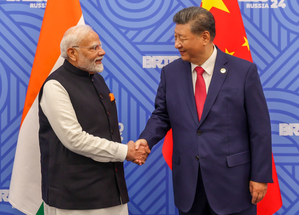
PM Modi and President Xi held a meeting on the sidelines of the Shanghai Cooperation Organisation (SCO) in China’s Tianjin in 2025. Previously, the two leaders held a meeting on the sidelines of the BRICS Summit in Russia’s Kazan in 2024. The breakthrough in bilateral talks was made possible after India and China reached an agreement on patrolling along the nearly 3,500-km LAC to end the four-year-long border confrontation.

After India and China started engaging with each other since 2024, flights have restarted, visas have been eased, the resumption of Kailash Mansarovar Yatra and border trade points are being prepared for reopening. Foreign Secretary Vikram Misri’s visit to China in July fits this pattern of calibrated outreach.

“Yet to describe these steps as a genuine reset risks overstating their depth. The underlying structural problems- unresolved boundary claims, persistent military deployments, a lopsided trade relationship, and Chinese assertiveness in India’s neighbourhood remain intact. India’s approach is one of managed competition and limited cooperation, not reconciliation,” the report maintained.

“Misri’s two-day visit to Beijing on 27-28 July 2026 was a deliberate, low-key effort to operationalise the guidance from the leaders’ meetings in Kazan, in 2024, and in Tianjin, in 2025,” it added.

During his visit, Misri met China’s Vice Minister of Foreign Affairs Hua Chunying and reviewed the entire gamut of bilateral ties. The two sides acknowledged the importance of maintaining peace and tranquillity in the India-China border areas.

“Foreign Secretary Shri Vikram Misri met H.E. Ms Hua Chunying, Vice Minister of Foreign Affairs of China. They reviewed the entire gamut of bilateral relations. They discussed means of advancing the vision of the two leaders that India and China are partners and development opportunities for each other, including through mutually beneficial outcomes across trade and economic ties, culture, and people-to-people exchanges. Both sides acknowledged the importance of maintaining peace and tranquillity in the India-China border areas,” the Embassy of India in China stated on X.

The Foreign Secretary discussed ways to enhance bilateral exchanges between India and China at the political and people-to-people levels during his meeting with Hong Liang, Deputy Secretary General of the 14th National Committee of the Chinese People’s Political Consultative Conference (CPPCC), in Beijing.

He also met Sun Haiyan, Vice Minister of the International Department of the CPC’s Central Committee, and discussed ways to deepen implementation of the guidance of Prime Minister Modi and President Xi for bilateral ties.

–IANS

akl/vd

China became principal enabler of military capabilities of Israel’s adversaries: Report

Jerusalem, Aug 2 (IANS) The conflict involving Iran exposed the reality of China being one of the principal enablers of Pakistan and Iran, two of Israel’s most consequential adversaries, a report said.

“Unlike the United States or Russia, China has built its influence without alliances or expeditionary deployments, relying instead on arms transfers, dual-use technology, industrial cooperation, economic investment and diplomatic cover. The effect has been the steady strengthening of states that often share an interest in limiting Israeli and American reach across the region and actively empowering terrorists against Israel,” said Sergio Restelli in a report on the Times of Israel.

It said the pattern is clearly illustrated with Pakistan, as for more than three decades, China has turned Islamabad into its closest military partner.

“The Pakistan Air Force now relies heavily on Chinese-built aircraft, including the JF-17 and the J-10CE, while its Navy is acquiring Chinese submarines and frigates and its missile and air defence systems have benefited from extensive Chinese cooperation,” the report highlighted.

China remains one of Iran’s principal strategic partners even with international sanctions limiting conventional arms transfers for years, making it no less significant.

“Chinese firms have supplied dual-use technologies, industrial equipment and components tied to sectors that support Iran’s military industry. The 25-year strategic cooperation agreement signed in 2021 deepened this relationship further, expanding cooperation in energy, infrastructure, technology and security,” the report noted.

For their part, Iran and Pakistan also steadily expanded security cooperation along their shared border, which faces insurgent threats. The two countries built mechanisms for military coordination after repeated border crises, and intelligence exchanges on opposition groups became routine.

“China sits at the centre of this triangle, maintaining deep military ties with Pakistan while cultivating a broad strategic partnership with Iran. There is little public evidence of a formal trilateral intelligence arrangement aimed at Israel, but China is well positioned to benefit from information generated through its ties to both countries, since military exercises, defence dialogues, technology cooperation and security consultations all create channels for information flow that would not otherwise exist,” Restelli emphasised in the Times of Israel report.

The report noted that with Iran’s proxy network extending across Lebanon, Syria, Iraq and Yemen, and Pakistan having the largest armed forces in the Islamic world and remaining a nuclear power, this is not an abstract concern for Israel.

“While there is no concrete evidence, it is assumed and possibly a reality that a lot of Iran’s nuclear technology comes from Pakistan with tacit support from China,” the report noted.

“China rarely appears on the battlefield, but its influence is visible in the weapons systems, industrial capacity and strategic resilience of states whose interests often run counter to Israel’s own, and it deserves more attention than it has so far received,” Restelli highlighted.

–IANS

ksk/khz

Monsoon death toll in Pakistan rises to 126, over 400 injured

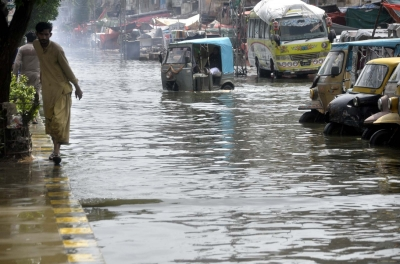
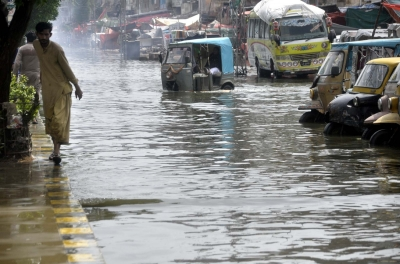
Islamabad, Aug 2 (IANS) The death toll in Pakistan during this year’s monsoon season from June 26 to August 1 rose to 196, while the number of injured people climbed to 404, local media reported on Sunday, citing the National Disaster Management Authority (NDMA).

The primary cause for fatalities in Pakistan during monsoon season was electrocution, followed by flash floods, drowning, lightning and other rain-related incidents like house collapse and falling of trees.

In the report on Saturday, the NDMA said that four people were killed in rain-related incidents, including drowning and lightning, during the past 24 hours. Furthermore, 16 people were injured during the past 24 hours, with the maximum number of casualties reported in Punjab, Pakistan’s The Express Tribune reported.

According to the report, 47 people died while 295 people were injured in Punjab from June 26 to August 1. A total of 55 people died, and 82 others were injured in Khyber Pakhtunkhwa between June 26 and August 1. As many as five people died, and seven others were injured in Sindh, while Balochistan saw eight deaths and 15 injuries.

In the statement, the NDMA mentioned that nine people were rescued in Punjab, five people in Sindh and two people in Khyber Pakhtunkhwa during the rescue operations conducted during the past 24 hours, The Express Tribune reported.

Earlier in July, road access to several parts of Pakistan-occupied Gilgit-Baltistan (PoGB) remained cut off as flash floods and glacial lake outburst floods (Glofs) continue to damage highways and hamper restoration efforts.

Thousands of residents and tourists remained stranded as road closures severed access to several valleys. Flood-hit communities also continued to face shortages of drinking water, electricity and communication services,” the daily Dawn reported.

According to residents of Hisper Valley in Nagar district, patients and students were facing severe hardships. People were facing a shortage of food, medicine and other essential supplies, Dawn reported.

People from Diamer, Astore, Ghizer and other affected districts of PoGB also complained of facing electricity and water supply disruption along with shortage of essential commodities.

–IANS

akl/vd

Qatar, Turkey, Pakistan threaten safety of all freedom-loving nations and individuals: Report

Jerusalem, Aug 2 (IANS) The governments of Qatar, Turkey and Pakistan enable Islamic terrorism on a global scale, which threatens the safety of all freedom-loving nations and individuals, a report stated.

“Qatar and Turkey are the main state financial sponsors of the Muslim Brotherhood, which operates globally. Pakistan is one of the world’s leading centres of Islamic terrorism. Together, this axis is a strategic concern for Israel, wider regional stability and even world peace,” said a report by Uzay Bulut in an American News Agency, Jerusalem News Syndicate (JNS).

The report said that Qatar works as a major financial patron and political hub for the Muslim Brotherhood.

“Doha has largely adopted the Muslim Brotherhood’s policy approach in the region, disseminating its ideas through the popular Al Jazeera network, made available as an international platform for renowned Brotherhood thinkers such as Youssef al-Qaradawi. This deal has allowed a relatively small country like Qatar to project its soft power beyond its limited geopolitical influence,” the report read, quoting postdoctoral researcher Claudia De Martino.

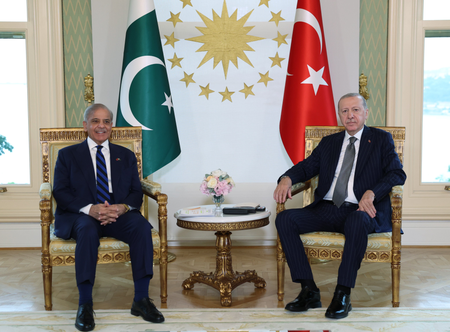
The report claimed that Turkey is a major supporter of the Brotherhood and a safe haven for Hamas, under the rule of President Recep Tayyip Erdogan.

“Hamas is the Muslim Brotherhood’s Palestinian branch and is a US-designated Foreign Terrorist Organisation. The Jerusalem Centre for Public Affairs issued a detailed report in 2021 documenting how Turkey contributes to Hamas’s military empowerment,” said the report.

“More recently, Turkey helped Al-Qaeda-affiliated forces conquer Syria. Turkey assisted the UN-designated terrorist group Hayat Tahrir al-Sham (HTS) in capturing Damascus in December 2024 through its long-term territorial occupation of northern Syria, tactical intelligence, advanced equipment, and complementary military manoeuvres by Turkish-backed proxy forces such as the Syrian National Army (SNA),” it added.

While remaining safe haven for terrorists for decades, Pakistan remains one of the leading centres of terrorism in the world.

“Pakistan historically leverages UN-designated terrorist outfits, such as Lashkar-e-Taiba (LeT) and its active splinter groups like The Resistance Front (TRF), to execute terrorist operations. Attacks engineered from across the border, such as the Pahalgam massacre in Jammu and Kashmir, deliberately target civilians based on religion,” emphasised Bulut in the report from JNS.

It highlighted that former diplomats and military strategists of Pakistan advocate for the use of nuclear capabilities against India in times of geopolitical standoffs. It noted that Abdul Basit, Pakistan’s former high commissioner to India, said that it should be Islamabad’s “default move” to strike Indian cities like New Delhi and Mumbai if it comes under attack from the US.

“The governments of Qatar, Turkey and Pakistan—through the ideologies they amplify and their actions that enable Islamic terrorism on a global scale—threaten the safety of all freedom-loving nations and individuals,” the report emphasised.

–IANS

ksk/uk

South Korean warship ROKS Daejeon gets ‘top gun’ honour at RIMPAC

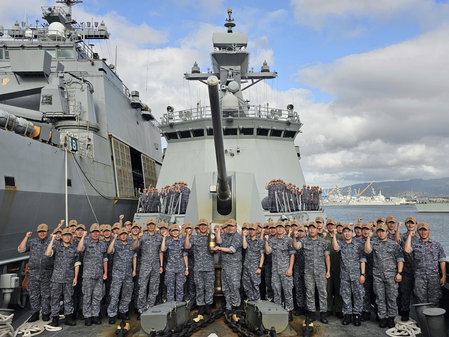
Seoul, Aug 2 (IANS) The South Korean Navy’s 3,100-ton frigate Daejeon has won the top honour at a live-fire gunnery competition held during this year’s Rim of the Pacific (RIMPAC) exercise, the service said on Sunday.

The ROKS Daejeon scored the highest points among 13 warships from 10 countries that took part in the Naval Surface Fire Support (NSFS) Rodeo competition held in Hawaii last month, according to the Navy.

It marked the first time in 16 years that a South Korean warship took the top prize since the Navy’s King Sejong the Great destroyer won the competition in 2010, Yonhap News Agency reported.

Launched in 1971, RIMPAC is a biennial exercise designed to enhance cooperation among participating countries in securing sea lines of communication and countering potential security challenges at sea.

South Korea served as the commander of the Combined Force Maritime Component during RIMPAC conducted in and around the Hawaiian Islands, making it the first Asian country and the fourth non-US participant to assume the commanding role.

The gunnery competition took place on July 12, but the results were announced during the closing ceremony of the exercise held on Friday.

On July 29, a senior US Navy official described South Korea’s role in leading combined maritime forces during a multinational exercise as a “historic leadership milestone,” as he pointed out a core theme of the exercise — shared responsibility.

Vice Adm. Jeffrey Jablon, deputy commander of the US Pacific Fleet, made the remarks in a virtual press briefing on the biennial Rim of the Pacific Exercise (RIMPAC) that started on June 24 and ran through Friday.

“RIMPAC showcased historic leadership milestones. The Republic of Korea commanded the Combined Force Maritime Component for the first time,” he said, also noting that Canada, Chile and Japan also assumed specific leadership positions in the exercise.

–IANS

ksk/uk

Iran says it perceives every ‘enemy’ threat as ‘noteworthy’, denies deal on reopening Hormuz

Tehran, Aug 2 (IANS) Iran’s Acting Defence Minister Seyed Majid Ebn Al-Reza said Sunday that Tehran perceives every “enemy” threat as “real and noteworthy,” rejecting any characterisation of them as mere psychological warfare.

“We will neither be surprised nor remain passive. We use threats as a basis to increase our preparedness, strengthen our deterrence, and develop our power,” Al-Reza wrote on X after US President Donald Trump said earlier that he had agreed to hold off fresh attacks against Iran, Xinhua News Agency reported.

In his post on Truth Social, Trump said the United States was “locked and loaded and ready to go against the Islamic Republic of Iran, at levels of Military Terror, Strength, and Power not seen since World War II”, but held off after being “asked by Iran, and other Middle Eastern Countries”, citing a forthcoming deal that would include the “Immediate, Complete, and Total OPENING OF THE HORMUZ STRAIT, and an end to Iran’s nuclear threat”.

Earlier US media reports had suggested US and Israeli strikes on Iranian energy infrastructure could begin over the weekend.

Israel’s Channel 12 news reported Sunday that Iranian Foreign Minister Seyed Abbas Araghchi has agreed to a Qatari-US-brokered compromise deal allowing ships to enter the Gulf through the Iranian-controlled side and exit via Omani waters.

However, Iran’s semi-official Fars news agency, citing a source close to the Iranian negotiating team, quickly rejected the claim.

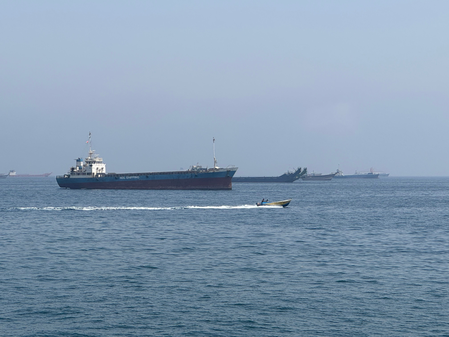
Fars also quoted a military source as saying that as long as the US “hostile and malicious acts” continue, the Strait of Hormuz will remain closed, with vessels permitted to transit only via Iran-designated routes and with the coordination and permission of the Navy of the Islamic Revolutionary Guard Corps (IRGC).

The source warned that other routes are unsafe, adding that Iran’s policies on the strategic waterway remain unchanged.

–IANS

ksk/vd

China’s Ethnic Unity Law represents constitutional expression of Xi Jinping’s political vision: Report

Beijing, Aug 2 (IANS) China’s Law on Promoting Ethnic Unity and Progress should not be seen as a legal legislative instrument, but as a constitutional expression of Chinese President Xi Jinping’s political vision, where national unity is preferred over a differentiated economy and where the state tries to pursue a single political identity that transcends ethnic distinctions, a report has detailed.

The Law on Promoting Ethnic Unity and Progress, which came into effect in China on July 1, has sparked criticism for its perceived assimilationist undertones, with significance extending beyond the debate over minority rights. The law demonstrates the legal codification of a profound shift in how the Chinese Communist Party (CCP) sees national identity, ethnicity and state-building under the Xi Jinping-led government, according to a report in Mekong News.

“Unlike previous legislation that centred on ethnic autonomy and differentiated governance, the new law repeatedly emphasises the need to forge a ‘strong sense of community for the Chinese nation’. This phrase, frequently invoked by Xi Jinping over the past decade, has become the organising principle of China’s contemporary ethnic policy,” the report in Mekong News mentioned.

“The law requires state institutions, schools, religious organisations, businesses and even social organisations to actively cultivate identification with the Chinese nation, Chinese culture, the Communist Party and socialism with Chinese characteristics,” it added.

Under the new law, government departments, neighbourhood committees, enterprises, religious institutions and the armed forces have the responsibility to promote ethnic unity. The law includes provisions that enable China to take legal action against foreign organisations or people who it considers undermine ethnic unity. Whether these provisions are implemented actively is yet to be seen; however, they demonstrate how questions regarding ethnic identity have connected with concerns about national security and ideological governance.

“Ultimately, China’s new Ethnic Unity Law should not be viewed simply as another legislative instrument. It is better understood as a constitutional expression of Xi Jinping’s broader political vision, one in which national unity increasingly takes precedence over differentiated autonomy, and where the state seeks to cultivate a single political identity that transcends ethnic distinctions. Whether this approach succeeds in strengthening cohesion or instead generates new tensions over identity will become evident only over time,” the report in Mekong News mentioned.

In July, over 50 Uyghur civil society organisations strongly condemned China’s Law on the Promotion of Ethnic Unity and Progress and urged the international community to take meaningful action to repeal the legislation.

According to a joint statement, the law is not a “technical administrative measure” but a “legislative instrument of forced assimilation”. It noted that the legislation explicitly conflates the Chinese nation with the Chinese Communist Party (CCP) and demands that ethnic groups abandon their distinct identities in favour of loyalty to the Party, the Han-defined “motherland,” and “Socialism with Chinese Characteristics.”

Under this framework, the organisations said, the Uyghur, Tibetan, Mongolian, and other non-Han identities are permitted to exist only insofar as they are absorbed into a single, CCP-defined Chinese nation.

“The law’s reach is sweeping. It entrenches Mandarin as the language of education, displacing Uyghur, Tibetan, and Southern Mongolian languages from the classroom and public life. It mandates the ‘sinicisation’ of religion, subordinating faith to Party ideology. It instructs parents and teachers to raise children in loyalty to the CCP rather than to their own culture, religion, or language,” read the statement.

“These are not incidental effects; they are the law’s stated purpose, and they build directly on policies that have already devastated our communities — mass internment, cultural and religious destruction, and the forced separation of children from their families,” it added.

The organisations called on the UN human rights experts and mechanisms — including the Special Rapporteurs on freedom of religion or belief, and the situation of human rights defenders, on minority issues, as well as Committee on the Elimination of Racial Discrimination (CERD) and other relevant treaty bodies — to formally monitor and report on the implementation and extraterritorial application of the Ethnic Unity Law, and press Beijing to repeal it.

–IANS

akl/uk

PoK joins growing list of security flashpoints in Pakistan: Report

Islamabad, Aug 2 (IANS) The unrest in Pakistan-occupied Kashmir (PoK) unfolds as Islamabad is experiencing persistent instability in Balochistan, Khyber Pakhtunkhwa, and Pakistan-occupied Gilgit-Baltistan (PoGB), making it part of a wider debate over governance, political representation, and human rights inside the country, a report stated.

“This convergence of multiple regional crises has intensified questions among analysts regarding Pakistan’s long-term internal stability,” the report on the Directus news website said.

The crisis in PoK centres on the Joint Awami Action Committee (JAAC), which called for greater political autonomy, institutional reforms and increased self-governance in PoK.

In 2025, JAAC and the government reached an agreement, but the protest leaders argue that the authorities failed to implement key commitments, leading to the current escalation.

“According to reports, Pakistan’s authorities gradually shifted their strategy from negotiation to enforcement. The situation deteriorated rapidly in early June. Among the movement’s principal demands was the abolition of 12 reserved parliamentary seats allocated to Kashmiri refugees residing elsewhere in Pakistan,” highlighted the report.

The Supreme Court of PoK has rejected the request, and the senior federal officials declared that the constitutional arrangement would remain unchanged.

“Only days later, regional authorities designated the JAAC a terrorist organisation, dramatically escalating tensions. The situation worsened further after security forces conducted an operation targeting senior JAAC figure Umar Nazir Kashmiri, who reportedly survived with injuries, while his associate Shahzaib Habib was killed during the incident, according to accounts cited by protest organisers,” the report added.

The report also noted that the protest leaders raised the possibility of looking towards India.

“One of the most politically sensitive developments has been statements attributed to JAAC leader Sardar Aman Khan, who warned that continued blockades and shortages of food and medicine could lead some residents to reconsider their political future,” it highlighted.

According to the report, the latest escalations suggest that PoK has evolved into a broader political and security challenge with regional-level consequences from a localised protest movement.

“As demonstrations continue, international scrutiny grows, and political tensions deepen, the crisis is no longer confined to the disputed territory itself. It now intersects with wider geopolitical rivalries involving India, Pakistan, China and Western governments, making Kashmir once again one of South Asia’s most volatile flashpoints,” added the report.

–IANS

ksk/vd

Nearly 140,000 Afghan refugees deported to Afghanistan from Pakistan’s Punjab: Report

Kabul, Aug 2 (IANS) Nearly 140,000 undocumented Afghan migrants have been deported to Afghanistan from Pakistan’s Punjab province as part of its campaign against foreign nationals who do not have legal residency documents, local media reported, citing provincial authorities.

Punjab’s Home Department said that 139,902 Afghan nationals had been arrested and deported to Afghanistan after legal formalities were completed. The department said 248 Afghan migrants were kept in 39 detention centres and are expected to be deported through the Torkham border crossing after completing formalities, Afghanistan-based news agency Khaama Press reported.

Afghans have been deported from Pakistan as part of its expulsion campaign against Afghan migrants. In recent weeks, the campaign has intensified, with Afghan migrants in Pakistan facing challenges in renewing visas and maintaining legal status, Khaama Press reported. Pakistan said it has deported around 2.66 million undocumented Afghan migrants to Afghanistan during the past three years.

In July, Pakistan Police detained 40 undocumented Afghan nationals during the ongoing crackdown on illegal foreign citizens in Charsadda city of Khyber Pakhtunkhwa.

Charsadda Deputy Commissioner Azmatullah Wazir said that detained Afghan nationals were shifted from the city police station to the Peshawar holding centre. He said the detained people would undergo legal and administrative formalities before being deported through the Torkham border crossing, Pakistan-based daily Dawn reported.

Wazir said the district administration in coordination with the police and other law enforcement agencies would continue action against foreign nationals who do not have legal documents in Charsadda district.

District Police Officer (DPO) Rifatullah Khan said that the total number of undocumented Afghan nationals who have been shifted from Charsadda to the holding centre in Peshawar had reached 133, Dawn reported. According to the officials, the action was taken as per the federal government’s policy about foreign nationals living in Pakistan without legal documents.

On June 28, Pakistan’s Ministry of Interior ordered the immediate arrest of any Afghan national found living in the country without a valid visa from July 10.

The deportation initiative launched by Pakistan in 2023 was renewed in April last year when the government rescinded hun­dreds of thousands of residence permits for Afghans and warned them of arrests if they did not leave willingly.

–IANS

akl/uk