Rights group slams Pakistan over military siege in Balochistan’s Noshki, calls for int’l community’s intervention

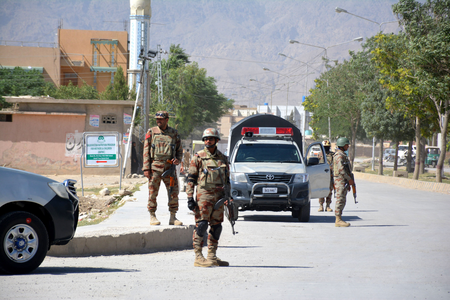
Quetta, Aug 2 (IANS) A leading human rights organisation has criticised Pakistani authorities for the military siege and curfew in Noshki district of Pakistan’s Balochistan, terming it a “continuation of the state’s policy of collectively punishing the Baloch people”. It urged the international community to take notice of the situation in Balochistan, especially Noshki, and play an effective role in ending the state’s unchecked power and grave human rights violations.

In a statement on Sunday, the Baloch Yakjehti Committee (BYC) stated that the military siege, curfew, house raids, and enforced disappearances in Noshki over the past six months “represent a systematic state policy of collective punishment against the Baloch people” to suppress political consciousness, social life, and national resistance.

“Even after six months have passed, the continuous extension of the curfew—instead of restoring normalcy—serves as clear evidence that the state of Pakistan seeks to maintain its authority through violence, brutality, and siege. Noshki has effectively been turned into an open prison, where labourers, daily wage earners, students, patients, women, and children have all become targets of state policies,” the BYC mentioned in a statement on X.

According to the statement, the sources of livelihood have been shut, movement has been restricted, access to healthcare and food has been disrupted, and people in Noshki have been forced to live in a state of fear and uncertainty. The BYC termed the deprivation of people’s basic necessities of life as the “most egregious form of collective punishment and a blatant violation of fundamental human rights.”

The BYC alleged that the large-scale raids, mass arrests and enforced disappearances conducted by Pakistani forces in Balochistan in recent days have further exacerbated the situation in Noshki. Several people have been arrested and taken to different places while a number of people have been forcibly disappeared during raids in houses, according to the statement. The BYC alleged that enforced disappearances, military sieges, curfews, and collective punishment are different facets of the same state policy.

In the statement, the BYC said, “In Balochistan, brutality and coercion have replaced the rule of law, the constitution, and judicial processes as the means of governance. These policies, in reality, reflect the state’s political failures, its deprivation of public support, and its helplessness in the face of growing public awareness. Today, Noshki stands as a living testament to the state-imposed coercion, collective punishment, and ongoing violations of human rights prevailing in Balochistan.”

The BYC urged the United Nations, global human rights organisations and the international community to take immediate notice of the military siege, enforced disappearances, and collective punishment policy currently underway in Balochistan, especially in Noshki, and play an effective role in ending the state’s unchecked power and grave human rights violations. It urged the international community to increase pressure on Pakistan to ensure the protection of Baloch people’s lives, property, freedoms, and fundamental human rights.

–IANS

akl/uk
EU Interior Minister to meet on Tuesday on Ceuta emergency

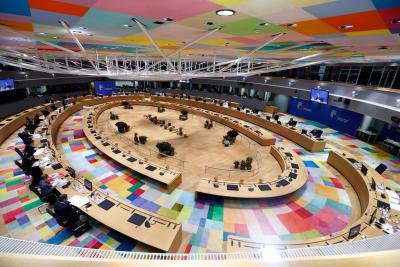
Rome, Aug 2 (IANS) A meeting of European Union (EU) Interior Ministers on the emergency migrant crisis going on in Spain’s Ceuta enclave has been convened for Tuesday.

The meeting was requested in a letter signed by 22 European countries, led by Italy and Denmark, but without France and Portugal, the two countries bordering Spain, Italian News Agency Adnkronos reported.

EU Commission President Ursula von der Leyen received the letter from the 22 countries and from Spanish Prime Minister Pedro Sanchez, accepting the request for an emergency videoconference to assess the crisis. She reiterated that combating illegal migration requires solidarity and a united European response.

She then spoke about the situation in Ceuta, confirming that no migrant who arrived in recent days managed to reach mainland Spain or other EU countries. The vast majority have already returned to Morocco. Von der Leyen emphasised the need to strengthen border control, maintain vigilance at every crossing, and ensure close coordination among authorities. The Commission has offered immediate support to Spain.

Prime Minister Sanchez sent a letter to the EU to criticise the positions of some countries on the Ceuta migration crisis, requesting an urgent summit of Interior Ministers. The move comes after Italy’s suspension of Schengen with Spain. He asks the Irish Presidency for an extraordinary meeting to reiterate that the security of external borders is a shared responsibility. Sanchez asserted that Madrid has re-established border control, assisted migrants, repatriated “practically all” irregular arrivals, and prevented movements to other countries with little European support. He also defended the Spanish migration policy, which has reduced irregular entries, making Spain the “second safest external border of the EU”.

Sanchez criticised the proposal to temporarily exclude Spain from Schengen as “selfish” and “illegitimate”, calling it the result of “prejudices or political interests”. He emphasised that Ceuta is not in the Schengen area and that the Spanish border is among the least porous in the EU.

–IANS

ksk/vd

‘Not afraid to engage the Quad’: ASEAN sends strong message to China, says report

New Delhi, Aug 2 (IANS) The Association of Southeast Asian Nations (ASEAN) has sent a strong message to China with the recent events at the 16th Foreign Ministers’ Meeting of the East Asia Summit (EAS), a forum for strategic, political, and economic dialogue comprising 19 countries in Manila, according to a report.

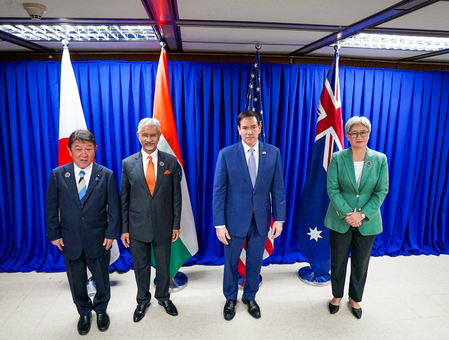
On the sidelines of the 16th Foreign Ministers’ Meeting, the Quad Foreign Ministers met and issued a dedicated joint statement on cooperation with ASEAN. They also reiterated their commitments unveiled at the 11th Quad Foreign Ministers’ Meeting in New Delhi.

According to the report by ‘The Diplomat’, this opened the door to a more substantive relationship with the Quad, and this achievement should not be underestimated, as ASEAN has spent much of the past year mulling questions about drift and division.

It said that the statement reflected the Quad’s willingness to overcome its appeasement of China. Despite being inherently a counterweight to China, the Quad avoided being seen as enraging Beijing, but the meeting in Manila seems to shed this longstanding hesitation.

Beijing is a full participant in the East Asia Summit and the ASEAN Regional Forum.

In the joint statement, the Quad countries called themselves “ASEAN Comprehensive Strategic Partners” and noted “the practical implementation of the ASEAN Outlook on the Indo-Pacific”, as part of their agenda.

“The fact that ASEAN accepted and enabled the Quad’s effort to insert itself as a stakeholder with a collective interest in the region is significant. Beijing has repeatedly described the Quad as an Asian NATO and has made its discomfort with the grouping known. Further, ASEAN has always sought to avoid becoming an arena for great power rivalry. Beijing is a full participant in the East Asia Summit and the ASEAN Regional Forum,” the report noted.

The report called this joint statement a response to critics who question the Quad’s lack of engagement with regional countries.

“The signal emerging from ASEAN is just as important, and arguably braver. The bloc communicated to Beijing that it is not afraid to engage the Quad, and that it might like to do more of that. The visible loosening of ASEAN’s reflex to keep the Quad at arm’s length will not be lost on Beijing,” the report added.

The report said that the Quad being “not an anti-China grouping” has been useful but also noted that ASEAN will face dilemmas regarding China and its actions.

It suggested that disaster response and maritime domain awareness are natural areas to begin the cooperation if the two sides want a proof of concept that sidesteps the more politically difficult questions.

It said that “the Quad and ASEAN could establish a regional rapid-response protocol covering coordination, logistics and emergency communications. A similar approach could be adopted in the maritime domain. Through the Indo-Pacific Partnership for Maritime Domain Awareness (IPMDA), launched in 2022, the Quad provides maritime tracking data to some ASEAN states. This could be expanded into a more formal arrangement for regular information-sharing across the bloc”.

–IANS

ksk/vd

Pakistan, Bangladesh face mounting economic risks as prolonged US-Iran conflict fuels oil price surge

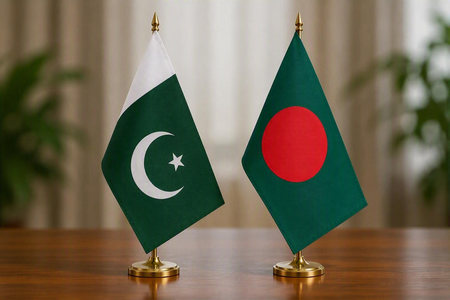
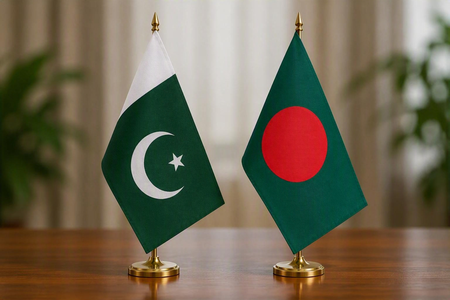
New Delhi, Aug 2 (IANS) Pakistan and Bangladesh are among the Asian economies most exposed to the fallout from the prolonged US-Iran conflict, as surging global oil prices threaten to push up inflation, strain public finances and intensify pressure on already fragile economies, according to economists and research firms.

Both countries depend heavily on imported fuel, making them particularly vulnerable to sustained increases in crude oil and diesel prices, according to a report by South China Morning Post.

Analysts warn that limited fuel inventories and weak economic buffers could allow higher global energy costs to feed quickly into domestic prices, raising the cost of transport, electricity and food for millions of households, the report said.

Jamus Lim, Associate Professor of Economics at ESSEC Business School Asia-Pacific cited by the report, said Pakistan and Bangladesh are likely to face significant inflationary pressures in the near term.

He noted that limited inventory buffers mean the impact of higher oil prices would be transmitted relatively quickly through their economies.

Oil markets have already reflected growing concerns over the conflict. Brent crude has climbed sharply over the past month, while US benchmark West Texas Intermediate (WTI) has recorded similar gains.

Diesel and other refined fuel products have also posted double-digit increases, adding to concerns over rising energy costs worldwide.

The risks have extended beyond the Gulf region after a drone strike targeted gas vessels at Egypt’s Mediterranean port of Damietta, heightening concerns over shipping routes linked to the Suez Canal, one of the key pathways for Saudi oil exports.

For Pakistan and Bangladesh, another energy-price shock could place renewed pressure on currencies, fiscal balances and government subsidy programmes.

Both countries are implementing International Monetary Fund (IMF)-supported economic reform programmes that emphasise fiscal discipline, limiting their ability to cushion consumers from higher fuel prices through subsidies.

The conflict, now in its fifth month, has added to uncertainty after US President Donald Trump weighed further military action following Iranian attacks on American military assets in Jordan, Kuwait and Bahrain.

Oxford Economics has warned that several emerging markets, including Pakistan, Egypt, Mozambique, Nigeria and Kenya, face a combination of geopolitical risks, political uncertainty and rising debt-servicing costs.

According to the research firm, countries such as Pakistan, Mozambique, Kenya, Ghana and Tunisia, which have relatively thin foreign exchange reserve buffers, could experience the sharpest deterioration if the conflict intensifies.

–IANS

pk

Five dead, 41 missing after vessel catches fire in Indonesia’s Java Sea

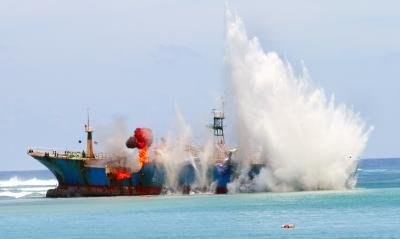
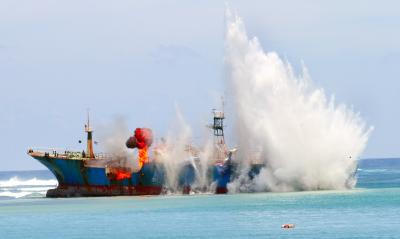
Jakarta, August 2 (IANS) Five people were killed, and 41 others remained missing after the Mutiara Santosa 2 caught fire in the Java Sea north of Madura Island in Indonesia’s East Java province, the National Search and Rescue Agency said Sunday.

A total of 225 people had been evacuated, the agency said.

The vessel, operating on the Surabaya-Makassar route, was carrying 271 people, including 232 passengers and 39 crew members.

The vessel departed from Surabaya, East Java, for Makassar on Sulawesi Island on Sunday morning, according to the Surabaya Search and Rescue Office.

Authorities said the vessel was about 19 nautical miles (35.2 km) offshore when it was almost completely engulfed in flames, with passengers gathering on the bridge and at the bow as they waited to be evacuated, Xinhua News Agency reported.

Several nearby vessels took part in the rescue operation, while a joint search and rescue team deployed additional vessels and personnel to evacuate survivors and search for the missing.

The search operation remains underway, and the cause of the fire is under investigation.

In June, Indonesian search and rescue authorities suspended an operation for 14 people still missing after the KM Nurul Salsa passenger boat sank off South Sulawesi province.

The National Search and Rescue Agency said the operation was temporarily closed after a 10-day search yielded no new leads, despite all designated search areas being thoroughly covered.

Of the 76 people confirmed to have been on board, 58 were rescued, four were found dead, and 14 remained unaccounted for, according to the agency.

The agency said evacuation efforts would be launched if new information emerged indicating that any of the missing victims had been located.

The vessel sank after suffering engine failure in waters off South Sulawesi on July 15 while travelling from Jampea Island to Benteng.

–IANS

ksk/vd

China’s Communist Party growing at slower pace and its members getting older: Report

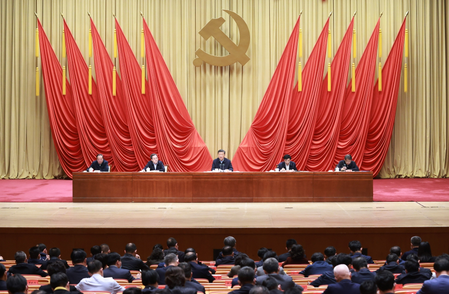
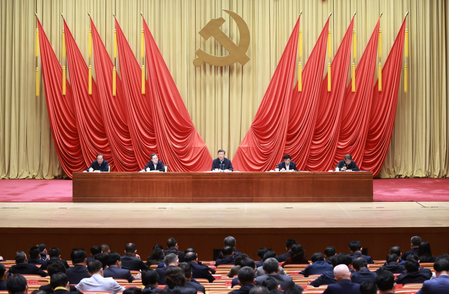
Beijing, Aug 2 (IANS) China’s ruling Communist Party has been growing at a slower pace, its members are ageing, and the demographic profile of its members demonstrates the structural challenges faced by Chinese society, as per a report.

According to the data released by the Communist Party’s Organisation Department, the total number of members in the party stood at 101 million at the end of 2025, showcasing an annual rise of only one per cent, the slowest pace of growth in at least five years.

The expansion of the Communist Party’s membership has decelerated since 2021, according to a report in PML Daily.

Furthermore, the party’s members are ageing, with nearly 30 per cent of Communist Party members aged 61 years or above, the highest proportion recorded in at least five years. Only 22 per cent of the party members are aged 35 years and below, a decline from nearly one quarter in 2021.

The pattern is noteworthy since it continues despite efforts made by the party to include younger members. Over 80 per cent of new members who joined the Communist Party in 2025 were below 35 years, showcasing that recruitment alone is not adequate to deal with the combined effects of an ageing membership base, rising life expectancy, and a decline in the number of young Chinese, according to the PML Daily report.

“The party’s changing profile reflects China’s wider demographic predicament. Years of declining birth rates, a rapidly ageing population and four consecutive years of overall population decline have reduced the relative size of younger generations entering the workforce. Consequently, Communist Party members now constitute 7.21 per cent of China’s population, up from 6.85 per cent in 2021, not because of rapid party expansion but because the national population itself is shrinking,” it said.

In July, the data released by China’s Ministry of Civil Affairs said that 323.38 million people in China were aged 60 years and above by the end of 2025, representing 23 per cent of the country’s total population. The number of people in the country aged 65 years and above rose to 223.65 million, accounting for 15.9 per cent of the total population, China-based Global Times reported.

According to the data, the old-age dependency rate for people in China aged 65 years and above stood at 23.1 per cent, while the average life expectancy in China stood at 79.25 years. China has now become an ageing society due to various factors, including the size of past birth cohorts and the continuous rise in life expectancy.

–IANS

akl/vd

Pakistan remains beneficiary of EU’s GSP+ scheme despite crackdown on protesters in PoK: Report

Islamabad, Aug 2 (IANS) Pakistan has remained a beneficiary of the European Union’s (EU) GSP+ scheme despite its security forces allegedly firing on peaceful protesters, imposing communication blackouts, conducting mass arrests and denying entry to journalists in Pakistan-occupied Kashmir (PoK), a report has detailed.

While Pakistan was taking all these actions in PoK, the European Union was congratulating itself on the renewal of a trade system supposedly based on human rights, democratic governance, and the rule of law, according to a report in Stringer Asia.

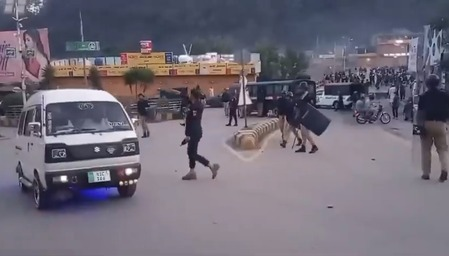
According to a Joint Awami Action Committee member, more than 50 people have been killed and hundreds injured in PoK in recent days after Pakistani forces opened fire on protesters demanding political rights and electoral reform.

The exact number of casualties that occurred in PoK is difficult to verify as the Pakistani authorities imposed an internet and mobile communications blackout, restricted media access, and reportedly took away bodies from hospitals. Despite all this, Pakistan continues to remain a beneficiary of the EU’s GSP+ scheme, the article said.

“This is not an incidental trade concession. GSP+ is formally described by the European Commission as a ‘special incentive arrangement for sustainable development and good governance’. In return for zero tariffs on a wide range of exports to the European market, beneficiary countries are required to implement international conventions covering human rights, labour rights, environmental protection, and good governance,” it noted.

Approved in 2026, the revised plan is believed to have increased monitoring. However, Pakistan remaining a beneficiary of GSP+ demonstrates the difference between what the EU’s policy instruments claim to be and what they actually are in reality, according to the report.

For years, Pakistan has portrayed itself as the protector of Kashmiri rights. However, when people in PoK raised demands for representative government, economic rights or an end to electoral manipulation, Pakistan, instead of engaging in dialogue, responds with arrests, information blackouts, anti-terrorism laws, accusations of foreign policy and firing on protesters.

“For the European Union, the importance of this reversal should be obvious. It is not encountering an isolated violation or a temporary emergency. It is confronting a system,” the report said.

In a post on social media platform X on Saturday, JAAC member Sardar Umar Nazir Kashmiri said, “In the past 4 days, the forces have killed more than 50 of our people through brutal terrorism, and hundreds are injured…”

In a separate post, the JAAC said that late-night protests continued across the Muzaffarabad region in PoK, with people remaining on the streets, while demanding the protection of their fundamental rights and the implementation of commitments made by the local authorities.

The same structure is also seen in Pakistan’s Balochistan, where incidents of enforced disappearances, extrajudicial killings, secret proceedings and collective punishment have become a part of governance. On June 8, several human rights organisations and activists marked the ‘Baloch Missing Persons Day’, remembering victims of enforced disappearances in Balochistan while slamming the Pakistani security forces for arbitrary detentions, torture, and extrajudicial killings.

The decision to declare June 8 as Missing Persons Day in Balochistan was taken during a central committee meeting of the Baloch Students Organisation(BSO)-Azad in 2017 to raise awareness regarding the Pakistani authorities’ brutal policy of enforced disappearances.

–IANS

akl/vd

Australia: Man charged after allegedly assaulting police officer in Brisbane

Sydney, Aug 2 (IANS) A 25-year-old man was charged after he allegedly assaulted a police officer in Yeronga, a suburb in the city of Brisbane in Australia, on Saturday night, according to a statement released by the Queensland Police Service (QPS) on Sunday.

QPS said officers were initially called to an address in the suburb at around 5:50 p.m. local time, and found a man armed with a piece of wood, which he allegedly used to threaten attending officers and threw at officers.

Then the man climbed onto a police vehicle. Police, including the dog squad, made multiple attempts to engage with him before he attempted to flee the scene on foot. He allegedly assaulted a senior constable while resisting arrest, Xinhua News Agency reported.

The senior constable was transported to hospital with injuries and has since been released.

The man was arrested and charged with one count each of serious assault on police officer causing bodily harm whilst armed with a weapon and serious assault on police officer causing bodily harm.

On July 25, two people were shot by police in Australia’s Queensland state, with authorities launching an investigation into the circumstances.

According to a statement released by the Queensland Police Service (QPS), officers were called to Benjamina Street in Mount Sheridan, a suburb of Cairns, at about 5:10 pm (local time) on July 25 following reports of an attempted armed robbery involving a man who fled the scene on foot.

Police said officers located the 28-year-old man at a roundabout upon arrival, and as officers attempted to engage with him, he was shot on Foster Road.

During the altercation, a civilian woman also sustained a gunshot wound, police said.

Officers immediately provided first aid to both the man and woman before both were transported to Cairns Base Hospital for treatment.

No police officers were injured in the incident, according to the QPS statement.

A crime scene had been established and police said there is no ongoing risk to public safety.

The QPS said its Ethical Standards Command is investigating the incident, with oversight from the Crime and Corruption Commission.

–IANS

akl/

Pakistan’s crackdown in PoK reflects structural political repression: Report

Washington, Aug 2 (IANS) The recent killings in Pakistan-occupied Kashmir (PoK) are not an isolated collapse of Pakistan’s authority but instead reflect the functioning of a political system that survives by denying people in the occupied region meaningful control over their political and economic future, said an international daily said in its analysis.

The report, published by the US-based Jacobin, argues that although the parts of Kashmir under Pakistan’s occupation are officially projected as politically autonomous and not formally integrated into the Pakistani state, the promised autonomy has “long been a sham”, as Islamabad responds to public demands for genuine democracy through repression and coercive measures.

“In practice, the ongoing dispute involves election manipulation, especially through so-called reserve seats. Islamabad rigs and manipulates elections to install a puppet government in PoK,” the report stated.

Pakistan-occupied Kashmir is currently witnessing the most extensive confrontation between the local population and the Pakistani state in decades. The protests reportedly began on June 5 and have continued to intensify.

An internet shutdown has remained in force across the occupied territory since June 5, with cellular communication services also suspended.

Protesters have alleged that as unrest spread across the occupied territory, Pakistani security forces launched a severe crackdown in which more than 50 people have been killed and hundreds injured over the past several weeks. They also claim that the actual death toll could be significantly higher than officially reported.

The report further states that while the immediate trigger for the protests was the worsening economic situation marked by rising electricity tariffs, soaring fuel prices, inflation and declining living standards, the unrest is rooted in deeper structural grievances.

According to the report, these economic hardships reflect a governance model in which residents of Pakistan-occupied Kashmir bear the consequences of decisions over which they exercise little or no democratic control.

According to the report, although the administration in the occupied territory appears local in structure, “it governs through institutions whose ultimate authority lies elsewhere” — Islamabad.

“Economic exploitation and political subordination, therefore, reinforce one another. The extraction of resources, the imposition of austerity, and the transfer of decision-making power to Islamabad are not separate processes but different expressions of the same structure of domination,” the report read.

“The Pakistani ruling class is not merely defending a particular government or protecting a single administrative institution. It is defending an entire structure of domination whose stability depends upon preventing the people of Jammu Kashmir from exercising effective control over their political and economic future,” it further argued.

Meanwhile, the failure of local authorities in PoK, operating under the direction of Pakistan’s federal government and military, to address the core demands of the Joint Awami Action Committee (JAAC) has fueled mounting public discontent.

The crackdown on civilians by Pakistani security forces in PoK has exposed the contradiction in Islamabad’s longstanding narrative of safeguarding the interests of Kashmiri Muslims.

Despite projecting itself as a champion of the Kashmiri cause, Pakistani forces have killed several civilians in the occupied territory amid escalating unrest in the region.

–IANS

sd/mr

Afghan forces thwart cross-border arms smuggling, seize 24 assault rifles

Kabul, Aug 2 (IANS) Afghan security forces have thwarted a firearms smuggling attempt and seized a cache of 24 assault rifles of various types in eastern Nangarhar province, the provincial government announced in a statement on Sunday.

The contraband weapons were being smuggled into Afghanistan from a neighbouring country when security personnel intercepted them at the Torkham border crossing, according to the statement.

The arms had been concealed inside a vehicle transporting Afghan returnees, Xinhua News Agency reported.

Officials provided no details on whether any individuals were detained in connection with the incident.

The operation forms part of the Afghan government’s wider campaign to collect unauthorised arms and ammunition from individuals outside official security forces and to curb weapons smuggling along border regions through the reinforced deployment of security personnel.

On July 29, police took into custody two persons over keeping weaponry illegally and seized arms and ammunition from their possession in Laghman province, east of Afghanistan, provincial police spokesman Mohammad Yunus Yusufzai said.

Both individuals were arrested in Dawlat Shah district and a quantity of weaponry, including five Kalashnikov assault rifles, three hand grenades and hundreds of bullets and projectiles, was discovered in their possession, the official added.

Police will not allow anyone to take the law into their own hands and create law and order problems by keeping or carrying unauthorised arms in the area, the official noted.

Earlier in June, Afghan security forces seized a cache of weapons and ammunition in eastern Paktia province, the provincial police office said.

According to the police statement, the weapons and ammunition were discovered during a security operation in the Nari Zhwara area of Dand Patan district, a border district adjoining Pakistan.

Among the seized items were eight Kalashnikov rifles, 12 pistols, 20 Kalashnikov barrels, three M4 rifle barrels, and a thousand rounds of pistol ammunition, the statement said.

Authorities said the weapons and ammunition were being smuggled into Afghanistan when security forces intercepted and confiscated the shipment.

–IANS

akl/