Pakistan: Five Baloch civilians forcibly disappeared as cycle of persecution continues

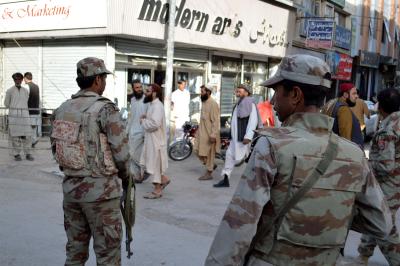
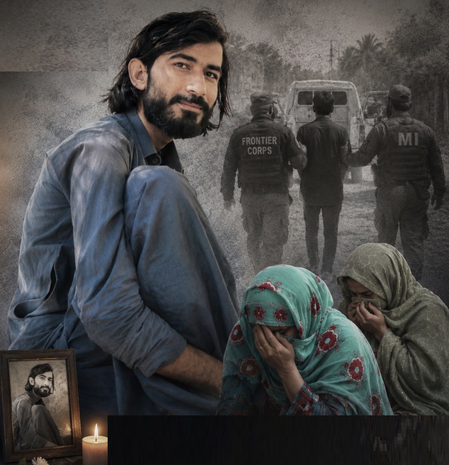
Quetta, Aug 1 (IANS) Amid mounting concerns over enforced disappearances of Baloch civilians across Pakistan, a leading human rights organisation on Saturday alleged that another five civilians were forcibly disappeared by Pakistani forces.

Paank, the Baloch National Movement’s Human Rights Department, revealed that 24-year-old farmer Younas Baloch was taken by personnel of the Counter Terrorism Department (CTD) on the night of July 29 from Tando Allahyar district in Sindh province.

In a separate incident on the same day, 35-year-old plumber Abdul Majid was forcibly disappeared by Pakistan Rangers from Karachi, while returning home from work.

The rights body mentioned that Sher Khan, a resident of Gwadar district in Balochistan, was abducted by Pakistani intelligence agencies and military personnel on the night of July 27. Since then, it said, his family has received no official information regarding his fate or whereabouts.

Additionally, 19-year-old student Nuneeb Baloch was forcibly disappeared during a raid on his home on July 12 by Pakistani security forces. Even his whereabouts remain unknown.

Citing reports, Paank mentioned that a 20-year-old shopkeeper, Kifayatullah Baloch, was forcibly disappeared last month by Pakistan’s Frontier Corps (FC) from Kalat district in Balochistan.

Paank called on the Pakistani authorities to immediately disclose the fate and whereabouts of the missing individuals, ensure their protection and access to legal counsel and their families, and conduct prompt, impartial, and transparent investigations to hold those responsible accountable.

“The continued practice of enforced disappearances violates Pakistan’s obligations under international human rights law and perpetuates suffering for victims’ families,” it noted.

These latest incidents come against the backdrop of a growing wave of extrajudicial killings and enforced disappearances across the province.

In its latest report, the Human Rights Council of Balochistan (HRCB) highlighted escalating abuses by Pakistani forces in Balochistan, documenting 77 killings and 63 cases of enforced disappearance during the month of June.

Among the 63 documented victims of enforced disappearance, the HRCB said that two were women and three were teenagers. It added that only 17 of those forcibly disappeared were released during the month, while the remaining victims continue to be held incommunicado.

The report identified the FC as the primary perpetrator in enforced disappearances, accounting for 36 cases, followed by Pakistani intelligence agencies with 16 cases, state-backed death squads with six cases and the CTD with five cases.

“House raids continued to be the primary method used to carry out enforced disappearances, accounting for 27 cases (42.86%). Detentions accounted for 20 cases (31.75%), while 10 victims (15.87%) were forcibly disappeared during military operations. Three victims disappeared after being summoned to an FC camp (4.76%), and another three were detained at a security checkpoint (4.76%),” the HRCB report mentioned.

–IANS

scor/as

Overcrowding and legal failures put minors at risk in Bangladesh’s child development centres

Dhaka, Aug 1 (IANS) Bangladesh’s Child Development Centres are grappling with a severe humanitarian crisis, operating at more than double their intended capacity. The crisis has been compounded by prolonged legal hurdles, delayed judicial proceedings and major infrastructure gaps, leaving the facilities struggling to provide a safe environment, a report has stated.

“Severe overcrowding, intense heat, and congested living conditions have left resident children enduring inhumane suffering. Even more concerning, due to loopholes in child laws and complexities surrounding age determination, these juvenile facilities are seeing a growing presence of adults and young adults- a factor that severely jeopardises the safety and psychological development of younger inmates,” according to a report in Pressenza International Press Agency.

A recent research report released by the Law Commission of Bangladesh, titled ‘Children Act, 2013: Doubts, Inconsistencies, and Confusion’, has highlighted these disturbing findings. Citing field inspections by Bangladesh’s Law Commission and recent findings, the report noted that the country’s two main facilities for boys – located in Gazipur and Jessore districts – are housing detainees far beyond their sanctioned capacity.

At Gazipur Child Development Centre, the report said that despite an official capacity of 300 inmates and an infrastructural capacity of just 200, the facility currently accommodates 578 children and young adults.

“Recent reports indicate that the total inmate population has spiked to around 780. Former inmates report that rooms designed to hold a maximum of 10 people are routinely crammed with 15 to 20 children,” it added.

The report found that the Jessore Child Development Centre houses 295 residents against a capacity of 300, while the official ages of 69 inmates are completely unrecorded.

Additionally, the Gazipur Child Development Centre (Girls), Bangladesh’s only facility for females with a capacity of 150, currently houses 92 residents, including 56 children in conflict with or in contact with the law.

“Living in such packed quarters during hot weather poses extreme health risks and forces these children into inhumane conditions, fundamentally undermining the primary objective of social and psychological rehabilitation,” the report noted.

Referring to data from the Law Commission, the report highlighted that at least 70 residents across these centres have already crossed the age of 18 — including 53 at Gazipur Boys, 16 at Jessore Boys and one at Gazipur Girls. It further noted that 91 inmates at the Gazipur Boys facility have no recorded age, while young adults aged 19 to 20 continue to be housed alongside minors.

“Human rights advocates emphasise that alongside expanding physical infrastructure, speeding up judicial trials for minors and establishing dedicated, separate units for detainees over the age of 18 remain crucial steps to resolving the ongoing crisis,” Pressenza mentioned.

–IANS

scor/as
West’s selective outrage on flawed elections in PoK comes under scrutiny

Tel Aviv, Aug 1 (IANS) The so-called legislative elections in Pakistan-occupied Kashmir (PoK) came with the familiar allegations of electoral malpractice with opposition parties accusing Pakistani authorities of manipulation, reports of voter intimidation and arrests of political workers. The significance lies not in any single allegation but in the repeated pattern, which has led many voters to be convinced that the outcomes are decided long before polling begins, a report has stated.

It noted that the contrast is difficult to ignore as Western governments have been quick to denounce flawed elections elsewhere in South Asia, while Pakistan has remained a notable exception for decades.

“What that buys is a strategic exemption from accountability. Strategic exemptions have a way of becoming habits. Cold War Pakistan ran on the same logic: military governments, repeated interventions, an ally of convenience. After September 11 it happened again. Pakistan was essential to the war on terror, and the demands of democratic accountability slipped down the list of priorities. The pattern is old enough that nobody in Islamabad needs to be told how it works,” Sergio Restelli, an Italian political advisor, author and geopolitical expert, wrote in the ‘Times of Israel’.

“Today’s Pakistan fits the template. Imran Khan is in prison. The courts have grown cautious of their own rulings, the press has thinned out since the last election cycle, and the political opposition operates under police pressure,” he added.

According to the expert, against the backdrop of worsening democratic space, a disputed election in PoK is not an anomaly but the system functioning exactly as designed.

He stressed that the erosion of political legitimacy in the occupied territory makes it increasingly difficult for Islamabad to argue internationally that its position in the wider dispute is grounded in democratic representation, underscoring the global cost of local electoral malpractice.

“The lesson for Western policymakers is one they already know. A partnership that requires turning a blind eye to rigged elections is weaker, not stronger, than one that doesn’t. Security cooperation and democratic accountability pull in the same direction when a partner is willing. They tear against each other when the partner isn’t,” Restelli mentioned.

“Quiet acceptance has a market price. Every muted response to a stolen election tells the next government in line that the rules only apply when they suit the great powers. That damages Western credibility in places already sceptical. It also tells would-be authoritarians who think they have strategic value that the value will keep them safe,” he highlighted.

–IANS

scor/as

India holds strategic edge as US and Israel deepen defence ties: Report

Tel Aviv, Aug 1 (IANS) As the United States reshapes its security partnership with Israel around advanced technologies rather than conventional arms sales, India finds itself in a uniquely advantageous position. New Delhi already occupies a strategic position at the intersection of US and Israeli defence innovation, giving it an edge that few nations can match, a report has stated.

“America’s latest defence legislation has attracted headlines suggesting that Washington and Jerusalem are ‘integrating’ their militaries. That makes for compelling political theatre, but it misses the far more consequential development. The legislation is not creating a unified military command or a NATO-style alliance. Instead, it lays the foundation for something arguably more significant: a deeply integrated defence innovation ecosystem. For India, that distinction matters enormously,” Saurav Dutt, an author and Global Affairs commentator, wrote in the ‘Times of Israel’.

Emphasising that India has quietly evolved into one of Israel’s closest defence partners, the report said, “Over the past two decades, New Delhi has purchased more than $10 billion in Israeli defence equipment, including airborne early warning aircraft, Barak missile systems, advanced radar networks, Heron drones, Harop loitering munitions, and sophisticated electronic warfare systems. Israel has consistently ranked among India’s largest defense suppliers,” he added.

According to the expert, increased American investment is expected to significantly accelerate Israeli technological innovation. He noted that larger research budgets, deeper industrial collaboration, and greater access to American laboratories are likely to enable Israel to develop more advanced defence technologies than it could on its own.

Dutt stressed that India, in turn, could eventually benefit from the access to these capabilities through its own expanding strategic partnerships.

The report argued that one of the most overlooked aspects of the development is that Washington has already begun building a remarkably similar framework with India.

“The Initiative on Critical and Emerging Technology (iCET), launched by Prime Minister Narendra Modi and President Joe Biden in 2023, established cooperation across artificial intelligence, semiconductors, quantum computing, telecommunications, space, and defence innovation. The INDUS-X initiative followed, connecting startups, investors, defence companies, and governments to encourage joint development and co-production,” it detailed.

“At the same time, India has expanded its own technology cooperation with Israel through the India-Israel Industrial R&D and Technological Innovation Fund (I4F), while launching additional collaboration on critical and emerging technologies under both countries’ National Security Advisors,” it noted.

Highlighting India’s unique position, the report said few nations have advanced technology partnerships with both Washington and Jerusalem, giving New Delhi a strategic advantage that few capitals can match.

–IANS

scor/as

Pakistan’s peace facade abroad, brutality at home stands exposed

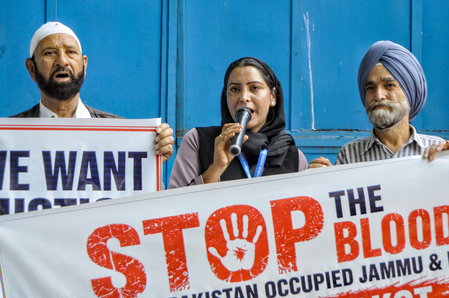
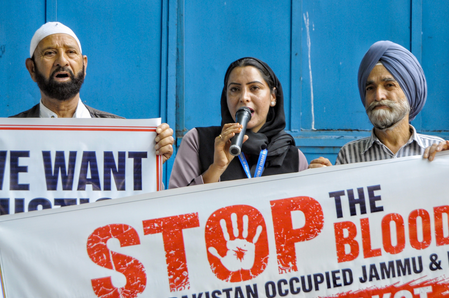
Islamabad, Aug 1 (IANS) Pakistan projecting itself abroad as a bridge between adversaries while branding traders and lawyers as “terrorists” and firing on peaceful civilians in Pakistan Occupied Jammu and Kashmir (PoJK) reflects not two different policies but a single policy crafted for two audiences.

The domestic audience simply does not matter in Pakistan where anyone who raises their voice or questions the “rigged” system continues to face violence at the hands of the military establishment under Pakistani Army Chief Asim Munir, a report has stated.

“Pakistan presents itself as an advocate of dialogue and peace on the global stage, while its actions at home are increasingly defined by violence. Field Marshal Syed Asim Munir has built his standing abroad on mediation between the United States and Iran. The same period at home has produced proscription orders, communications blackouts and violent targeting of civilians. Batons and bullets may clear a street, but they cannot extinguish public grievances in Pakistan,” a report in the ‘European Times’ highlighted.

“There are horrifying reports of the use of brute force against protesters in Pakistan Occupied Jammu and Kashmir (PoJK), eerily similar to violence and live bullet firing by security forces against Pakistan Tehreek-e-Insaf (PTI) protests in November 2024. This hypocrisy of being a peacemaker outside and brazen dictatorship at home won’t last long for the military establishment,” it stated.

According to the report, Pakistan’s “hypocrisy” was laid bare as its leaders sought to mediate between Washington and Tehran while rejecting dialogue with civilians in PoJK and instead resorting to violence.

Speaking to a television channel, Pakistani Defence Minister Khawaja Asif said that he puts the protesters in the “same category” as India and rejects the possibility of talks, describing them as “enemies of the state.”

His remarks came amid escalating unrest in PoK, where over 50 civilians have reportedly been killed and hundreds injured in a brutal crackdown by Pakistani forces over the past few days.

“The contrast with the external record is impossible to miss. Munir flew to Tehran at the most dangerous point of the crisis, presided over 21 hours of American and Iranian talks in April, and hosted a 14-point Islamabad memorandum in June 2026. President Donald Trump publicly praised his efforts to pull the two sides back from the brink. The military institution selling restraint abroad authorised live fire at home in the same quarter,” European Times report mentioned.

It further noted that the “sham elections” in PoJK hold no meaning for local residents, serving instead as a reminder of the brutality of the occupying forces. It argued that a vote conducted under a complete communications blackout, with the region’s largest civic movement and the Joint Awami Action Committee (JAAC) banned under anti-terrorism laws, cannot confer legitimacy.

“What Munir’s recent diplomatic efforts have actually purchased is protection for himself from international scrutiny,” it stated.

–IANS

scor/as

Report slams Western media’s underreporting on atrocities by Pakistani authorities in PoK

New Delhi, Aug 1 (IANS) Pakistan’s domestic repression has long been perceived as an acceptable “structural cost” of geopolitical interests. Western newsrooms have historically underreported state violence in Pakistan-occupied Kashmir (PoK) as well as in Pakistan’s provinces of Balochistan and Khyber Pakhtunkhwa, with their editorial focus frequently aligning with the foreign policies of their respective governments. As a result, Pakistan has been portrayed primarily as a nuclear-armed rival of India instead of a nation that acts as the “mothership of terrorism”, a report has stated.

From those killed in Rawalakot and Mirpur in PoK to the disappeared youth of Balochistan, the victims represent the price of a global consensus that has consistently placed the facade of “stability” in a garrison state above the rights and freedoms of its people.

The demonstrators in PoK have little international support; they are not only being killed by Pakistani forces, but their bodies are also being removed from hospitals by paramilitary personnel in an apparent attempt to conceal the “massacre”, a report in ‘Firstpost’ detailed.

“For the past few days, we have all been witness to the horrific images and video clips on social media emerging from places such as Rawalakot, Mirpur and Kotli in Pakistan-occupied Kashmir (PoK), where, in the run-up to the ‘elections’, a profound constitutional and humanitarian crisis is unfolding behind a wall of state-imposed censorship while the world offers a resigned shrug,” the report mentioned.

“The coverage in Western media of the state-sponsored killing under way in the Himalayan region has been so insipid, perfunctory and even devious that it is difficult to put it into words. Some of the world’s most notable newsrooms — which have so far been busy with breathless, wall-to-wall coverage of the NEET-related youth protests in India — have shown little concern for the dozens and dozens of civilians who have fallen to the bullets of Pakistani security forces,” it added.

According to the report, Pakistan’s designation as a major non-NATO ally has long suited the strategic calculus of the US — and its allies — which have preferred that the South Asian nation remain a “highly centralised garrison state” rather than a “fully functioning democracy”.

It noted that each time Pakistan’s security apparatus has used state violence to suppress domestic dissent — from Balochistan and Waziristan to Islamabad and PoK — Western media and policy-making circles have largely remained silent, prioritising the strategic utility of the military establishment over democratic principles.

The report noted that the more pressing concern is the role of the international community, especially the newsrooms and policy institutes in Washington, London, Paris, Berlin and Brussels, which have consistently turned a blind eye to the pattern of Islamabad’s internal coercion. It attributed this to Pakistan’s hedging strategy, its readiness to serve the highest bidder, and its longstanding utility to the Western geopolitical calculations.

“As a classic ‘rentier state’, Pakistan’s military and ruling elite derive institutional dominance and financial sustenance not from internal resources, taxation or industrial productivity, but from external rents generated by leasing its strategic geography and security apparatus to foreign patrons,” it stated.

–IANS

scor/as

Pakistan should bear greater costs for allowing terrorism to persist: Report

Washington, Aug 1 (IANS) The United States has consistently made the mistake of believing it could buy Pakistan, but in reality Islamabad is not for sale but available for rent, a report has stated.

It argued that the advantage for Washington, however, is that it rents Pakistan by choice, whereas China does so out of necessity.

“The US-Iran conflict illustrated this dynamic. Trusted by both Tehran and Washington, Islamabad helped broker the ceasefire that briefly reopened the Strait of Hormuz. Traditional treaty allies such as France, Germany and the United Kingdom could not have played that role. A hedging power could,” a report in American magazine ‘The National Interest’ highlighted.

Highlighting that Pakistan’s balancing strategy extends beyond diplomatic mediation, the report cited a June 2025 agreement with Azerbaijan worth up to $4.6 billion, under which Islamabad is set to supply 40 JF-17 fighter jets to Baku.

“The aircraft is built on a Chinese airframe, powered by a Russian engine and sold by an American ally to a country Washington is actively courting. The transaction monetises Pakistan’s relationship with China within a Western-facing market. Pakistan’s strategy is to maximise its strategic value to both Washington and Beijing,” The National Interest mentioned.

“More recently, after helping broker talks during the Iran conflict, Islamabad reportedly asked Washington to establish a $10 billion exchange-stabilisation facility to strengthen its foreign-exchange reserves. Pakistan was again converting geopolitical relevance into economic support without abandoning its relationship with China,” it added.

The report argued that the US has failed to recognise the strategic value of Pakistan’s hedging policy, describing it as the cheapest “strategic asset” Washington can afford. It recommended that the US use its remaining leverage to tilt Pakistan to advance American interests.

“Pakistan’s longstanding reliance on international financial institutions such as the IMF and World Bank is one area where American influence remains decisive. Beijing, with its higher-interest bilateral loans and reluctance to finance the Pakistani state itself, cannot readily substitute for that role,” it mentioned.

According to the report, demanding that Pakistan withdraw from the China-Pakistan Economic Corridor (CPEC) is a “non-starter”, as a country pursuing a hedging strategy is unlikely to accept demands that force it to choose sides. Instead, it said Washington should assess Pakistan not by whether it scales back ties with China, but by whether it prevents Beijing from gaining a monopoly over those ties.

“If Washington is generous with prestige, pragmatic on conditionality, and focused on military and economic cooperation, it can turn Pakistan’s hedging strategy into an American advantage,” it added.

Stressing that Pakistan should bear greater costs for allowing terrorism to persist, the report said, “Terrorism should become too costly — not because America threatens punishment, but because it would destroy opportunities Pakistan itself values. The goal is to create so much to lose that terrorism spoils it all.”

–IANS

scor/as

UNIFIL’s uncertain future worries residents in Southern Lebanon

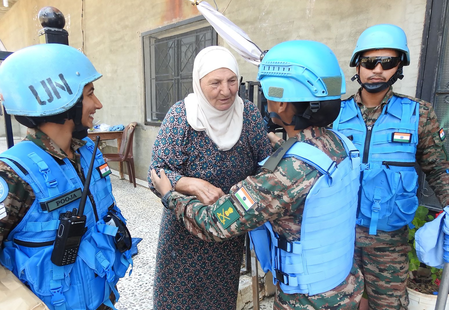
Beirut, Aug 1 (IANS) With the current mandate of the United Nations Interim Force in Lebanon (UNIFIL) set to expire at the end of 2026, residents in southern Lebanon’s border communities are increasingly concerned that any reduction or withdrawal of the peacekeeping mission could affect security, livelihoods and daily life.

Although the UN Security Council has extended UNIFIL’s mandate until December 31, 2026, debate over the mission’s future beyond that date has continued, prompting growing concern among residents in southern Lebanon, many of whom say the force has become an integral part of daily life.

Established in 1978 under UN Security Council Resolutions 425 and 426, and expanded after the 2006 Lebanon-Israel war under Resolution 1701, UNIFIL has around 10,500 peacekeepers from around 50 troop-contributing countries. Beyond monitoring the cessation of hostilities and maintaining stability along the UN-demarcated Blue Line, the force has undertaken demining operations, provided medical services, and supported environmental and development projects across southern Lebanon.

Residents said the mission also plays an important role in the local economy. Shops, restaurants, and service providers have benefited from the presence of thousands of peacekeepers, while the mission has created direct and indirect employment for many residents.

Decades of interaction have also fostered close social ties between peacekeepers and local communities, Xinhua news agency reported. Claudie Nahra, a translator with UNIFIL, said relations have evolved from formal cooperation into daily interaction. Some ties have developed further into family relationships. George Al-Qays, a resident of Marjeyoun, told Xinhua that around 34 marriages have taken place between UNIFIL personnel and residents, including 22 in Marjeyoun alone.

Beyond its economic and humanitarian contributions, many residents believe UNIFIL contributes to stability in southern Lebanon by monitoring the border and documenting violations.

Southern Lebanon experienced more than a year of cross-border hostilities beginning in 2023 before a ceasefire took effect on November 27, 2024. Residents say effective mechanisms remain necessary to prevent a return to conflict.

Lebanon has repeatedly expressed support for maintaining UNIFIL’s presence. According to the state-run National News Agency, President Joseph Aoun recently reaffirmed his country’s commitment to keeping the UN peacekeeping force in southern Lebanon for as long as necessary to fully implement UN Security Council Resolution 1701 and complete the deployment of the Lebanese army to the internationally recognized border.

UNIFIL said in January that more than 1,800 peacekeepers had left southern Lebanon since early November 2025 following UN budget reductions.

–IANS

/as

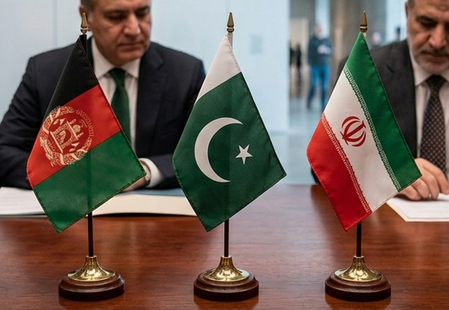
Iran reiterates offer to mediate Af-Pak conflict

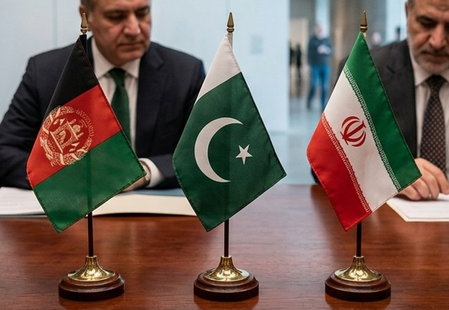
Tehran, Aug 1 (IANS) In an irony of sorts, Iran has reiterated an offer to mediate between Pakistan and Afghanistan to sit across the negotiating table and resolve the neighbours’ ongoing border clashes and occasional raids into each other’s territory.

Irony, because earlier Pakistan offered to help reconcile Iran and the United States; that effort began with considerable ambition, but the effective efforts later came from Qatar. The Islamabad Memorandum of Understanding, a provisional arrangement intended to end the war, served as an impressive diplomatic menu that failed to meet the diners’ taste.

Meanwhile, Pakistan itself has been slipping further into domestic chaos, its global ambitions marred by internal pressures. Economic distress, political dysfunction, military might dictating political and diplomatic processes, and running feuds with neighbours have all led to the slide.

For a long time, Islamabad has actively been trying to keep Washington happy, including its foray into recent peacemaking even as a war with Afghanistan was raging in its backyard. Similarly, it allied with the United States in launching a not‑so‑covert war in Afghanistan against Soviet invasion in the 1980s, which its own defence minister has since criticised.

Earlier, it joined the Washington‑led Baghdad Pact in the 1950s, which was intended to keep then-Soviet Russia from expanding. Later, Pakistan’s President Ayub Khan had claimed that Islamabad was losing faith in the pact due to its inability to help allies. The statement came after Pakistan’s Civil War within and its defeat by India in successive battles.

Islamabad has also tried to help the United States and China in diplomatic rapprochement. Through this, it is maintaining an “all-weather” relationship with Beijing even while pushing closer relations with the Islamic world.

This time, in its effort at mediation between Washington and Tehran, Pakistan’s army chief Asim Munir initially hogged the limelight, visiting Tehran at least twice, getting kind words from US President Donald Trump. Then the centre of diplomatic gravity visibly shifted toward Qatar. Doha dispatched negotiators to Tehran, hosted senior Iranian figures and maintained close coordination with US officials.

It possessed several advantages, including established channels with both capitals, deep experience mediating between adversaries, and the financial and political stamina required to keep discussions alive after everyone else had declared them impossible.

However, Washington said Tehran’s conduct made the arrangement unsustainable, while Iran maintained that it had honored its commitments and was entitled to respond to US attacks. Pakistan’s real failure was an inability to convert its access into durable leverage. Neither Iran nor the US depended enough on Islamabad for it to impose restraint. While Pakistan could carry messages, Qatar was better positioned to negotiate.

Islamabad consequently stepped back, maintaining diplomatic discretion. There was no official withdrawal, nor announcement that mediation had been paused.

Now comes the twist where Iran is reiterating its proposal to help Pakistan and Afghanistan negotiate peace. Thus, Pakistan, having struggled to reconcile adversaries from two continents, may now receive mediation from one of them in its own conflict.

The Pakistan‑Afghanistan dispute is serious enough to threaten the region. Islamabad accuses the Afghan Taliban of sheltering or supporting the Tehreek‑e‑Taliban Pakistan (TTP), which allegedly carries out deadly attacks inside Pakistan. Kabul denies hosting such elements, arguing that Pakistan must address its internal security failures, and strongly objects to cross‑border military action.

Border closures and clashes around crossings have disrupted trade and divided communities whose daily lives do not fit wholly behind the Durand Line. There is also the enduring argument over the border itself. Pakistan treats the Durand Line, drawn by then British occupiers, as the settled international frontier, while successive Afghan powers have refused to recognise it, claiming that vast lands of Pashtun‑inhabited territory still lie across it.

Meanwhile, Iran has reasons to volunteer – sharing its border with both countries, hosting a large Afghan refugee population, worries about extremist groups including Islamic State Khorasan Province, and dependence on regional stability for trade and border security. Tehran also has recurring disputes with both Pakistan and Afghanistan. Mediation would allow Iran to cast itself not merely as a friendly neighbour, but as a regional power capable of providing it.

–IANS

jb/dan

Pakistan’s military-led population initiative undermines state institutions: Report

Athens, Aug 1 (IANS) Pakistan’s repeated reliance on the security apparatus has “crowded out” civilian capacity building and created an expectation that uniformed leadership can resolve every challenge — from foreign policy and economic management to demographic issues, a report has stated.

It argued that Islamabad’s longstanding dependence on military-led structures to address domestic challenges has delivered temporary control but failed to bring lasting change, whether in counterterrorism, counterinsurgency or crisis management.

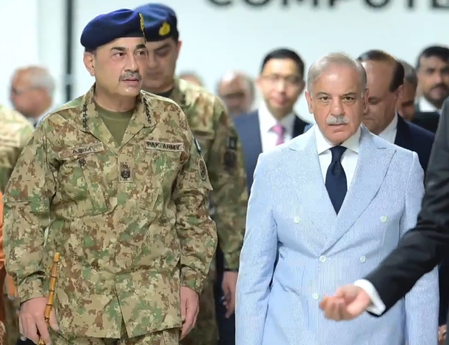
The current population management initiative involving Pakistani Army Chief Asim Munir risks repeating these failures across society on a wider scale, according to a report in Greek media outlet ‘News Bomb’.

Questioning the effectiveness of a military-led approach to demographic management, the report said, “A committee anchored around a Field Marshal may be able to push bureaucracies into compliance, compile metrics and enforce targets, yet it cannot manufacture community trust or shift deeply embedded norms about family size and reproductive health. Rather than empowering local governments, health workers, educators and women’s organisations, this model centralises authority at the federal and military level and depends on hierarchy instead of participation.”

“The more the military is seen to own demographic policy, the easier it becomes for sceptical groups to portray population control as an elite security project rather than a development necessity. In a context where civil-military relations are already contested and where many citizens view the security establishment as overbearing, this association may erode the social buy-in critical for any large-scale behavioural change,” it added.

According to the report, demographic challenges cannot be addressed like a border crisis; they require persuasion, incentives, rights-based policies, and reliable public service delivery.

“Another nuance is institutional crowding out when the government publicly advertises that it has failed to control population growth for three years and now turns to a Field Marshal; it implicitly signals that civilian ministries are inadequate and that ultimate problem-solving authority lies with the khaki leadership. This discourages investment in health governance planning capacity and local administration while reinforcing a dependence on military tutelage for non-military issues,” it detailed.

The report noted that these trends gradually erode the institutions essential for sustainable social policy, including long-term demographic management. It added that demographic pressures are closely intertwined with economic strain, climate vulnerability and rapid urbanisation—challenges that cannot be addressed through command channels alone.

“Given Pakistan’s record of securitising social issues and the complex drivers of fertility trends, the present approach is likely to generate more symbolic reassurance than substantive change. It allows the political leadership to claim decisive action by invoking the highest military authority, yet it does not answer how to reshape incentives for families, improve women’s access to education and employment or build a robust primary health system,” it mentioned.

–IANS

scor/as