Pakistan’s military-led population initiative undermines state institutions: Report

Athens, Aug 1 (IANS) Pakistan’s repeated reliance on the security apparatus has “crowded out” civilian capacity building and created an expectation that uniformed leadership can resolve every challenge — from foreign policy and economic management to demographic issues, a report has stated.

It argued that Islamabad’s longstanding dependence on military-led structures to address domestic challenges has delivered temporary control but failed to bring lasting change, whether in counterterrorism, counterinsurgency or crisis management.

The current population management initiative involving Pakistani Army Chief Asim Munir risks repeating these failures across society on a wider scale, according to a report in Greek media outlet ‘News Bomb’.

Questioning the effectiveness of a military-led approach to demographic management, the report said, “A committee anchored around a Field Marshal may be able to push bureaucracies into compliance, compile metrics and enforce targets, yet it cannot manufacture community trust or shift deeply embedded norms about family size and reproductive health. Rather than empowering local governments, health workers, educators and women’s organisations, this model centralises authority at the federal and military level and depends on hierarchy instead of participation.”

“The more the military is seen to own demographic policy, the easier it becomes for sceptical groups to portray population control as an elite security project rather than a development necessity. In a context where civil-military relations are already contested and where many citizens view the security establishment as overbearing, this association may erode the social buy-in critical for any large-scale behavioural change,” it added.

According to the report, demographic challenges cannot be addressed like a border crisis; they require persuasion, incentives, rights-based policies, and reliable public service delivery.

“Another nuance is institutional crowding out when the government publicly advertises that it has failed to control population growth for three years and now turns to a Field Marshal; it implicitly signals that civilian ministries are inadequate and that ultimate problem-solving authority lies with the khaki leadership. This discourages investment in health governance planning capacity and local administration while reinforcing a dependence on military tutelage for non-military issues,” it detailed.

The report noted that these trends gradually erode the institutions essential for sustainable social policy, including long-term demographic management. It added that demographic pressures are closely intertwined with economic strain, climate vulnerability and rapid urbanisation—challenges that cannot be addressed through command channels alone.

“Given Pakistan’s record of securitising social issues and the complex drivers of fertility trends, the present approach is likely to generate more symbolic reassurance than substantive change. It allows the political leadership to claim decisive action by invoking the highest military authority, yet it does not answer how to reshape incentives for families, improve women’s access to education and employment or build a robust primary health system,” it mentioned.

–IANS

scor/as

Famed climber Nirmal Purja dies chasing mountaineering record on Broad Peak  

Kathmandu, Aug 1 (IANS) It was not originally part of famous climber Nirmal Purja’s plan to climb Pakistan’s Broad Peak, the 8,051-metre mountain in the Karakoram range. But the opportunity to make history prompted the Nepal-born British citizen to attempt one of the world’s highest peaks — a decision that ended in tragedy when he was killed in an avalanche that struck Broad Peak on Thursday, the company he founded confirmed on Saturday.

“Today, it is with profound sadness and immense heartbreak that we confirm that Nirmal ‘Nimsdai’ Purja tragically lost his life following the avalanche on Broad Peak,” Elite Exped, the company founded by Purja, wrote on its Facebook page.

“We have also received confirmation that other members of the expedition sadly did not survive.”

The company said other members of the expedition, including Pur Bahadur Gurung (Yukta) and Nima Sherpa, also lost their lives.

“Our deepest thoughts, prayers and heartfelt condolences are with their families, friends and loved ones,” it said.

Nepal’s Prime Minister Balendra Shah also expressed deep condolences, confirming that all Nepali climbers attempting Broad Peak — Pur Bahadur Gurung (“Yukta”), Kili Pemba Sherpa (“Kilu”), Nima Sherpa, Nawang Thindu Sherpa and Gyalu Sherpa besides Nirmal Purja (“Nims Dai”) — had lost their lives.

“The tragic deaths of six Nepali climbers, including world record-holding mountaineer Nirmal Purja (Nims Dai), along with four foreign climbers on the 8,051-metre Broad Peak — the world’s 12th-highest mountain, located in Pakistan’s Karakoram Range — have left us deeply shocked and saddened,” Shah wrote on his Facebook page.

“Although the physical journey of Nirmal Purja and all the departed climbers has come to an end, their courage, dedication and contributions will continue to inspire generations and remain forever alive in history,” he added.

Shah said that while the mountains reward many with the glory of reaching their summits, they sometimes embrace climbers in their bosom forever.

“Yet, mountaineers remain immortal in history through their courage and dedication,” he wrote.

Purja was part of an expedition on Broad Peak when an avalanche struck the team on July 30.

Mingma Gyabu Sherpa, a member of Nepal’s House of Representatives and Purja’s business partner, had earlier said tracking data showed Purja’s position had shifted after the avalanche — first appearing to have been swept downhill before moving again to the point where the signal eventually stopped.

In 2019, Purja stunned the mountaineering world by climbing all 14 of the world’s 8,000-metre peaks in just over six months under his ‘Project Possible’, shattering the previous record of nearly eight years.

By summiting Broad Peak, he hoped to become the first person in history to climb all 14 eight-thousanders twice, a goal that motivated him to attempt the mountain.

Before the tragedy, Purja revealed in a Facebook post on July 27 that Broad Peak had not been part of his original plan, as he had intended to climb only Gasherbrum II (G2). However, an opportunity to summit Broad Peak arose, and he did not want to miss the chance to make history.

“This was never the plan. Initially, the plan was to climb just G2. But just before setting off for Pakistan, I ran the numbers on my 8,000m summits. That’s when it hit me: if I tick off Broad Peak whilst I’m here, only one remains — Cho Oyu. Then I become the FIRST person in history to climb all 14 eight-thousanders twice. Without oxygen,” he wrote.

But his dream of making history ended in tragedy.

Born in Nepal’s Dhaulagiri region and raised in Chitwan, Purja served for 16 years in the military, including six years with the British Gurkhas and a decade with the United Kingdom’s elite Special Boat Service (SBS), becoming the first Gurkha to join the special forces unit.

Purja took up mountaineering only in 2012 after trekking to Everest Base Camp while on military leave. In 2018, he set a world record by climbing Mount Everest, Lhotse and Makalu in just five days. The following year, he completed all 14 of the world’s 8,000-metre peaks in just over six months.

Known for his exceptional ability to acclimatise rapidly at extreme altitude, Purja also led numerous high-altitude rescue missions, earning global recognition not only for his climbing achievements but also for saving lives in the Himalayas.

Elite Exped said the world had lost one of mountaineering’s greatest climbers — a leader who inspired millions through his courage, humility and unwavering belief that human potential is far greater than people often imagine.

“More than his extraordinary achievements, he wanted to show the world what was possible when you dared to dream bigger, believed in yourself and refused to accept limitations. Through his actions, he inspired millions of people to believe that they, too, could achieve more than they ever thought possible,” the company said.

–IANS

/as

Scorching heat, prolonged power outages deepen hardships in Khartoum

Khartoum, Aug 1 (IANS) As Sudan’s capital Khartoum struggles to recover from the devastating effects of the war, prolonged power outages are compounding the hardships facing residents, disrupting food storage, healthcare services and businesses, while making daily life increasingly difficult.

In the courtyard of a home in a neighbourhood in southern Khartoum, a family sits beneath the evening shade, waving paper fans to ease the oppressive heat after electric fans and cooling devices inside the house stopped working due to a prolonged power outage.

Kawthar Ahmed, the homemaker of the family, said frequent power outages have changed her family’s daily routine, particularly amid soaring temperatures and prolonged electricity cuts.

“My brother is ill and needs a cool environment, but outages, which sometimes last for two days, only worsen his condition,” she said.

“We organise our day around the electricity schedule. We charge our phones, run the water pump and try to preserve food whenever power returns, but the supply lasts only a few hours and alternatives are limited,” she added.

For local resident Ruaa Omer, who has diabetes, the crisis also threatens the safe storage of essential medication. She said prolonged outages spoil refrigerated food and jeopardize the storage of insulin, adding that the loss of food or essential medication places an additional burden on already struggling families.

Abdul-Aleem Mohamed, a resident of southern Khartoum, said the situation has become increasingly difficult as temperatures rise, Xinhua news agency reported. “There is no cold water, you cannot keep food fresh for long, and everything in the house is affected whenever the electricity goes out,” he said.

At a grocery store in southern Khartoum, owner Mohamed Ahmed Bashir said southern parts of the capital are among the hardest-hit areas, with outages sometimes lasting up to 48 hours.

“Spoiled goods mean direct financial losses, while operating generators significantly increases business costs,” he said, adding that soaring fuel prices have made generators increasingly expensive while solar power remains unaffordable for many businesses.

At a dental clinic, dentist Ruaa Adil Mustafa said daily outages of up to 18 hours have severely disrupted operations because most clinic equipment depends on electricity.

“We are sometimes forced to suspend work or postpone certain cases until power returns, while running generators has sharply increased operating expenses because of high fuel prices,” she said.

The combination of prolonged power outages and soaring temperatures has also raised growing health concerns. Health expert Osama Awadallah warned of increased risks of skin rashes, dehydration, heat exhaustion and heatstroke.

Children, older adults and people with chronic illnesses are the most vulnerable, he said, urging residents to drink plenty of water, avoid direct exposure to the sun and remain in well-ventilated places whenever possible.

Energy expert Essam El-Din Al-Zein attributed the continued outages to declining electricity generation, the shutdown of power plants, weak transmission and distribution networks, and damage to electrical infrastructure, saying stable electricity supplies will require increased generation capacity, rehabilitation of power stations, and repairs to damaged transmission and distribution networks.

Meanwhile, Sudan’s Ministry of Energy and Petroleum attributed the continued outages to rising demand driven by high temperatures, the return of residents and increased agricultural and industrial consumption, as well as maintenance shutdowns, among others.

It added that more than 260 megawatts have been restored to the national grid through maintenance, with available generation capacity expected to exceed 600 megawatts after ongoing rehabilitation.

–IANS

/as

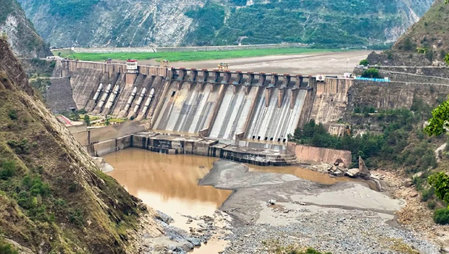
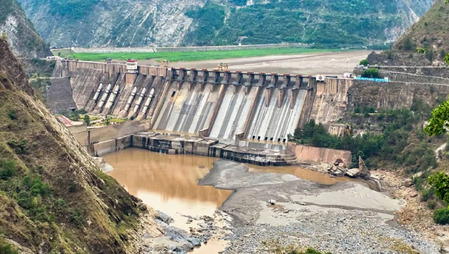
‘Regular flow of Indus water distant dream until Pakistan undergoes transformation’

Islamabad, Aug 1 (IANS) India’s decision to place the Indus Water Treaty (IWT) in abeyance following the heinous Pahalgam terror attack last year by Pakistan-backed terrorists that killed 26 innocent civilians is both “strategic and logical” given that international agreements cannot be disregarded to serve the interest of one party. The existing IWT framework, built on unconditional trust and placing the obligations solely on India without reciprocal gains, has proven ineffective and needs to be replaced, a report has stated.

According to a report by Media India Group, Pakistan has failed to demonstrate requisite commitment to peaceful engagement, constructive dialogue with India and the effective implementation of the treaty. It added that Islamabad has repeatedly resorted to hostile rhetoric and undiplomatic provocative statements, including threats of nuclear strike against India, while undermining the very spirit of the IWT through its continued support for cross-border terrorism.

“With India sticking to its stance on the suspension of the Indus Water Treaty, a pact signed in 1960 on sharing of waters of the five Himalayan rivers in the Indus Basin, Pakistan finds itself in a state of desperation. But it must realise and recognise that it needs to behave like a good neighbour with India, just as India has behaved with it since the partition in 1947. Threats, whether nuclear or of approaching international tribunals, will not get it anywhere,” the report detailed.

The report stated that India has consistently maintained that it will continue to adopt firm and resolute measures against cross-border terrorism. New Delhi underlined that meaningful dialogue with Pakistan can only be pursued in a climate free from terror and violence, backed by a commitment from Pakistan to prevent the use of its territory for terrorism targeting India.

The Indian government has articulated its official position in simple terms: “water and blood cannot flow together, and neither can terror and trade go hand in hand.”

“Pakistan has launched four conventional wars against India, and every one of these misadventures have ended in international embarrassment and diplomatic setback for the country. But more revealing than the defeats themselves is what has followed all these years. Instead of introspection, Pakistan’s military-political establishment redoubled its hostility, choosing denial over accountability, and ideological rigidity over course correction,” the report mentioned.

“Therefore, unless and until Pakistan undergoes a radical shift in its national consciousness, a transformation that dethrones the military’s ideological monopoly, embraces democratic accountability, and reimagines Pakistan not as a bulwark against India but as a viable State in its own right, the hopes for regular flow of Indus water and normal cross-border trade are likely to remain a distant dream. Without this metamorphosis and transformation, any dialogue with Pakistan will remain fragile, unsustainable and every overture is destined to be doomed,” it added.

–IANS

scor/as

US proposes final review on Lake Powell, Lake Mead reservoirs

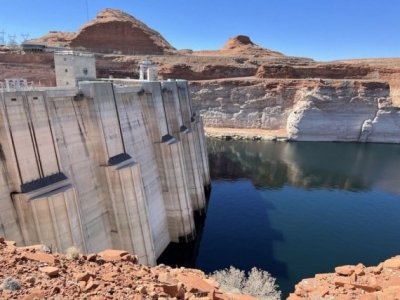
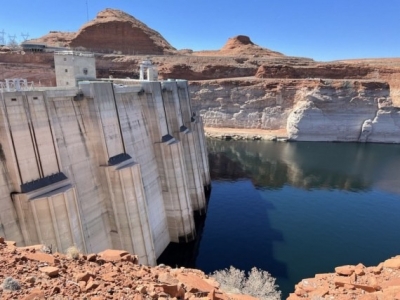
Los Angeles, Aug 1 (IANS) The US government has released a final environmental review outlining a 10-year framework to operate the country’s two largest reservoirs, enabling it to impose steep water cuts amid ongoing divisions among the seven basin states on how to share the dwindling water supply.

The Bureau of Reclamation released guidelines for operational rules to be updated every two years through 2036 pertaining to the country’s two largest reservoirs, Lake Powell and Lake Mead in the southwestern United States, enabling adjustments to water releases, conservation and cutbacks in response to river conditions, according to the review.

The document states that annual water deliveries to Arizona, California and Nevada could be slashed by up to 3.7 billion cubic meters – 40 per cent of their combined Colorado River allocation and slightly exceeding Arizona’s full yearly share.

The remaining four states, namely Colorado, New Mexico, Utah and Wyoming, will participate through voluntary conservation. Federal authorities may also release water from upstream reservoirs to safeguard Lake Powell, according to the review, Xinhua news agency reported.

US Interior Secretary Doug Burgum said the framework aims to maintain a “reliable and resilient” river system while preserving future negotiations.

Assistant Secretary for Water and Science Andrea Travnicek said that the plan balances flexibility and predictability for some 40 million river-dependent residents.

Reclamation highlighted the basin’s 26-year drought, warning 2026 may see record-low snowpack.

Combined storage in Lake Powell and Lake Mead stands at its lowest level since Lake Powell began filling in 1963, it said.

The agency cautioned that unprecedented reductions may fail to stabilize storage under extreme drought, noting that the river sustains urban water supplies, agriculture, tribal communities, hydropower and ecosystems across the US West and Mexico.

–IANS

/as

China’s factory activity shrinks, adding to concerns over economic recovery: Report

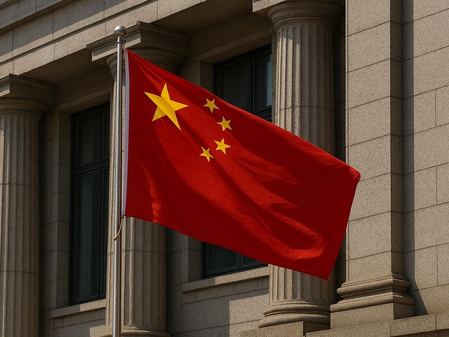
New Delhi, Aug 1 (IANS) China’s factory activity unexpectedly slipped into contraction in July for the first time since February as weak domestic demand and weather-related disruptions weighed on production, increasing pressure on policymakers to roll out additional measures to support the economy, according to a report.

According to CNBC’s analysis, the official manufacturing Purchasing Managers’ Index (PMI) fell to 49.2 in July from 50.3 in June.

A reading below the 50-mark indicates contraction in manufacturing activity.

The latest reading also came in below market expectations and marked the weakest factory activity since February, ending a four-month period of expansion that had been supported by exporters accelerating shipments ahead of higher US tariffs.

Moreover, the slowdown was driven primarily by weaker domestic demand with the sub-index for new orders falling to 48.5, its lowest level in more than three years.

Export orders also softened during the month, indicating easing external demand after a period of front-loaded shipments.

Beyond manufacturing, economic activity also weakened across other sectors.

China’s construction PMI dropped to a record low, while the services sector expanded at its slowest pace since the initial Covid-19 lockdowns.

The composite PMI — which combines manufacturing and non-manufacturing activity –also slipped below the 50-point threshold, reflecting a broader slowdown in business activity.

Additionally, Chinese authorities partly attributed the weaker readings to typhoons that disrupted factory operations and construction projects in several regions during July.

The data comes a day after China’s top policymakers acknowledged growing challenges facing the economy and pledged to accelerate fiscal spending and introduce additional policy measures to support growth in the second half of the year.

–IANS

ag/

India’s impressive maritime model offers lessons for South Africa: Report

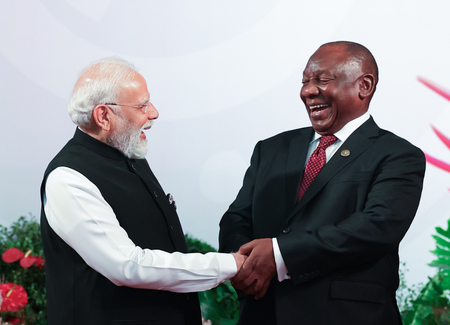
Cape Town, Aug 1 (IANS) As it seeks to unlock the potential of its Blue Economy, South Africa can learn a lot from India on how stronger maritime security can support economic growth and also help in becoming a leading maritime power, a report has detailed.

It noted that India inducted four new-generation indigenous naval platforms recently – INS Mahendragiri, INS Dunagiri, INS Sanshodhak and INS Agray – thus significantly enhancing the country’s maritime defence capabilities.

Speaking at the launch, Prime Minister Narendra Modi had said that the new naval vessels would significantly strengthen the country’s operational capabilities, enhance domain awareness, and bolster the security of its coastal waters amid growing geopolitical threats.

Threats such as piracy, trafficking, and illegal fishing have underscored the need for South Africa to align maritime security with the growth of its Blue Economy. With over 90 per cent of the country’s trade by volume depending on safe Sea Lines of Communication, the South African Navy is bolstering its Maritime Domain Awareness through integrated coastal radar networks and satellite monitoring, South Africa’s leading media outlet ‘Independent Online’ (IOL) detailed.

The report mentioned that, in order to grow its Blue Economy and increase global trade resilience, South Africa is upgrading its port infrastructure and ship-repair facilities in hubs like Durban and Cape Town. Operation Phakisa, which focuses on unlocking the economic potential of South Africa’s oceans, marine aquaculture and fish processing are receiving targeted investment to create coastal jobs and support food security.

South Africa has also expanded its Marine Protected Areas to help replenish fish stocks and boost coastal tourism. Through the SADC Integrated Maritime Security Strategy, South Africa is working alongside neighbouring African countries to conduct joint patrols and harmonise standards against maritime crimes,” the report detailed.

According to the report, South African President Cyril Ramaphosa has emphasised the importance of the maritime domain and its impact on South Africa’s economy, noting that the country’s abundant natural resources must be harnessed to a greater level to “boost economic growth and job creation.”

“South Africa has got huge and wonderful natural resources, which we need to exploit to a higher level… we can grow our economy enormously and make South Africa a hub as far as the ocean economy is concerned,” IOL quoted Ramaphosa as saying, following a guided tour of the Port of Ngqura’s operations in April.

The report noted that countries such as India and South Africa are increasingly acknowledging the maritime sector’s vast job-creation potential, viewing it not merely as an isolated industry. but a catalyst for employment and broader economic growth.

–IANS

scor/as

Spanish PM urges EU unity over Ceuta migrant crisis

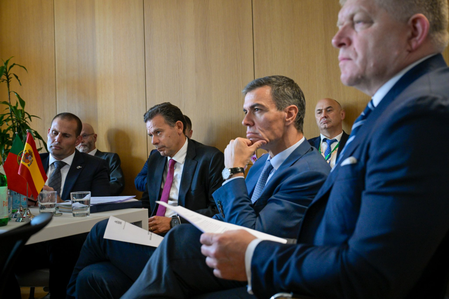
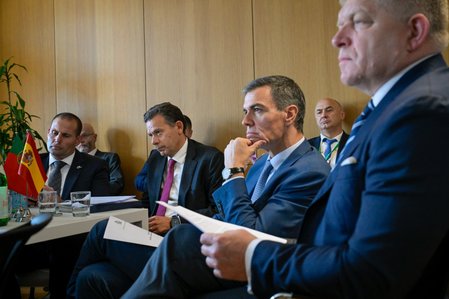
Madrid, Aug 1 (IANS) Spanish Prime Minister Pedro Sanchez on Saturday called on the European Union to convene an extraordinary meeting of interior ministers to coordinate a common response to the recent migrant crisis in Spain’s North African enclave of Ceuta, while criticising what he described as the “selfish” attitude of some member states.

In a letter addressed to European Commission President Ursula von der Leyen, Sanchez expressed his “serious concern” over the reaction of some European governments following the mass irregular crossings into Ceuta.

Sanchez said around 50,000 migrants had entered Ceuta irregularly, but that Spain had restored control of the border in less than 48 hours, provided humanitarian assistance, returned virtually all of those who had crossed illegally, and prevented any unauthorized onward movement to mainland Europe.

He said these efforts were made possible through close cooperation with Moroccan authorities and with the support of other EU member states, while highlighting Spain’s long-standing migration policy, which he said had made the country one of the EU’s most secure external borders.

However, Sanchez said that while most EU governments had expressed solidarity and offered assistance, others had chosen to “attack Spain” and call for its temporary exclusion from the Schengen Area, Xinhua news agency reported.

He argued that such a reaction, “driven by prejudice, fake news, ignorance, or political interest,” was contrary to European law, humanitarian law and the principle of solidarity, adding that “the European Union cannot afford this kind of selfish, polarising and unlawful reaction.”

Sanchez urged the Irish Presidency to convene, as a matter of urgency, an extraordinary videoconference of EU interior ministers to establish a common response to similar situations and reaffirm that protecting the bloc’s external borders is a shared responsibility of all member states.

The letter came after one of the largest irregular migration incidents on Spain’s southern border in recent years. According to the Spanish government, at least 67 people died during the crisis, while more than 48,000 of the nearly 50,000 migrants who entered Ceuta had returned to neighboring Morocco within 48 hours.

–IANS

/as

Portugal maintains Schengen rules with Spain but tightens border controls over Ceuta crisis

Lisbon, Aug 1 (IANS) Portuguese Prime Minister Luis Montenegro has said that Portugal will not suspend Schengen free movement rules with Spain over deadly migrant crossings into Ceuta, but will strengthen border controls along the country’s southern maritime and land frontiers.

“There is no reason to take any measure to suspend the rules of the Schengen area, but there are reasons to reinforce the presence of security forces at border controls closest to this event, on the maritime and land borders of southern Portugal,” Montenegro said.

Some 60,000 migrants are estimated to have entered Spain’s North African enclave of Ceuta from Morocco over the past 24 hours, local media reported on Friday, with at least 57 people dying in attempts to make the crossing, Xinhua news agency reported. Montenegro called the situation “serious” and said it required close monitoring, while urging against “hysteria” and calling for measured, realistic decisions.

Spain’s Interior Ministry estimated that 48,300 migrants have returned to Morocco by 6 pm (1600 GMT) on Friday, many of them voluntarily after realizing they will not be able to stay in Spain or continue on to the mainland.

The Portuguese government said on Friday it is following the migration crisis in Spain’s North African enclave of Ceuta “with great concern” and reaffirmed its commitment to rigorous border control as a cornerstone of the Schengen area’s integrity.

In a statement published by Portuguese Prime Minister’s office, the government expressed condolences for the lives lost in the crisis and said it has been kept informed by the Spanish government since the beginning of the crisis.

“The Portuguese government reaffirms that the integrity of the Schengen system depends on rigorous border controls and a determined fight against all forms of illegal immigration,” the statement read.

The Portuguese authorities said it remains in contact with both the Spanish and Moroccan governments, with Portuguese security forces, including the GNR gendarmerie and the Maritime Police, coordinating with their Spanish counterparts.

It said Spain has given assurances that, in close coordination with Moroccan authorities, it will reverse the flow of thousands of migrants that has intensified over recent weeks and particularly over the past two days.

The death toll of those attempting to reach Spain’s North African enclave of Ceuta by sea rose to at least 34 on Friday, while around 50,000 migrants have entered the enclave from neighbouring Morocco over the past two days.

Spanish Prime Minister Pedro Sanchez has described the incident as a violation of Spain’s territorial integrity.

Most of the victims drowned while attempting to swim around the El Tarajal border breakwater separating Morocco and Ceuta, according to the Spanish authorities.

Sanchez travelled to Ceuta on Friday together with Spanish Interior Minister Fernando Grande-Marlaska to inspect the situation. During the visit, he announced new measures to strengthen border security, including the installation of floating barriers near the El Tarajal breakwater to prevent further sea crossings.

The influx has also triggered diplomatic tensions between Spain and Italy. Italian Foreign Minister Antonio Tajani called for the suspension of Schengen arrangements with Spain, while Spanish Foreign Minister Jose Manuel Albares rejected Tajani’s remarks as “partisan demagoguery” and said he would summon the Italian ambassador in Madrid on Friday.

France, meanwhile, ordered the immediate reinforcement of checks along its border with Spain and activated a rapid-response border unit to conduct more extensive inspections.

–IANS

/as

Kuwait says air defences destroy hostile drones, facilities damaged

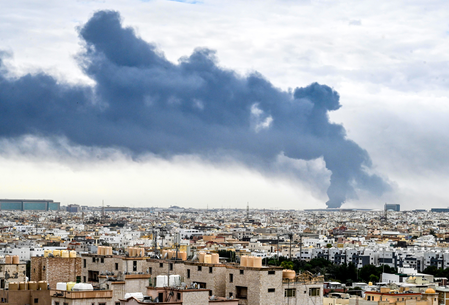
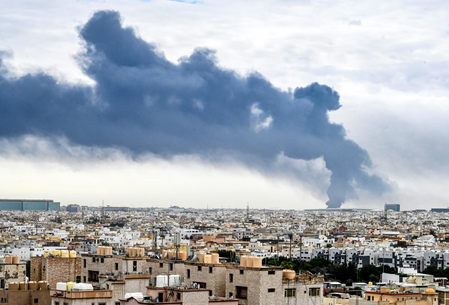
Kuwait City, Aug 1 (IANS) Kuwait said on Saturday that its armed forces had detected and destroyed hostile drones in the country’s airspace, while several vital installations were targeted in what it described as “Iranian aggression.”

The drones, which had been detected since early Saturday, targeted several vital installations, including a government facility in northern Kuwait and civilian vehicles on Bubiyan Island, said the General Staff of the Kuwaiti Armed Forces in a statement posted on social media platform X.

Falling debris caused material damage, with no casualties reported, according to the statement.

Earlier on Saturday, the General Staff said air defence systems were intercepting hostile targets, adding that explosions heard across the country were caused by the interceptions, Xinhua news agency reported.

Kuwait has faced repeated drone and missile attacks in recent weeks, which its authorities have attributed to Iran.

The attacks occurred amid escalating regional tensions and a growing Iran-US confrontation that is spilling over into regional states.

On Friday, the Kuwaiti Army said that “hostile drones” entering the country’s airspace and targeting several vital and military facilities were detected and destroyed.

The falling debris caused material damage, with no casualties reported, it said, attributing the attacks to Iran. It did not specify the number of drones destroyed, the targeted sites, or the extent of the damage.

The incident came amid renewed exchanges of airstrikes between the United States and Iran after days of pause, as well as the emergence of a new Red Sea front involving Yemen’s Houthis and Saudi Arabia.

One person was killed in northern Kuwait on Thursday during an Iranian attack, the Kuwaiti military said.

According to Kuwait’s armed forces and the Chinese Embassy in Kuwait, the attack resulted in the death of a Nepalese driver employed by a subcontractor of a Chinese company in the region and caused property damage to the company.

On Thursday, Iran’s Islamic Revolutionary Guard Corps (IRGC) announced that the IRGC fighters attacked the US air base in Ali Salem in Kuwait, setting fire to and destroying two drone hangars and a fuel tank for aircraft and military helicopters, Sepah News Agency reported.

Last week, the IRGC said its forces had struck and completely destroyed a “very large” US ammunition depot at Ali Al Salem Air Base with “advanced and ultra-heavy” kamikaze drones.

It added that its forces also attacked facilities housing US forces at the base, causing casualties.

According to the IRGC, its forces completed an earlier military operation against the data centre of US company Amazon in Bahrain, destroying its remaining building.

It further claimed to have demolished three US ammunition and equipment depots at the Al-Adiri Camp in Kuwait, and struck the watchtower of the US Fifth Fleet headquarters in Bahrain, causing significant damage.

–IANS

/as