
Chinese govt fears open-source AI could undermine information control

New Delhi, Aug 1 (IANS) Even as China presents itself as a global champion of low-cost, open-source artificial intelligence, the Chinese Communist Party is increasingly concerned that advanced artificial intelligence could undermine its control over information and national security, a new report has said.

A report from The New York Times said party officials fear advanced AI could be exploited by hackers for cyberattacks, scams and terrorism bypassing censorship. The Chinese administration even fears that advanced AI could assist in the development of dangerous biological agents.

Chinese experts reportedly warned about deepfakes, data breaches and AI data poisoning at a recent Cybersecurity Conference in Beijing and that it could spread information that challenges the Communist Party’s version of events, the publication said.

China’s ministry of state security had reportedly indicated that hostile forces could exploit AI to spread information about domestic protests, crackdown on Muslim ethnic groups, or Taiwan contrary to official narratives.

“AI data poisoning reportedly manipulates training data to influence AI responses, reportedly raising concerns that chatbots could generate politically sensitive or anti-government content,” the report said.

Beijing has promoted low‑cost, open‑source AI as an AI outreach strategy to developing countries similar to its Belt and Road initiative.

Unlike closed AI systems, open-source models can be downloaded, modified and used by anyone, even after safety protections are removed.

As AI grows in advancement, Beijing faces a dilemma of whether it should promote open technology to lead the global race or tighten control to protect the Communist Party’s hold on power, the media house said.

The report said the administration has blocked a Singapore‑based AI acquisition on national security grounds in April and held meetings with leading domestic AI firms to discuss restricting foreign access to top models.

—IANS

aar/ag
China calls for ‘more proactive’ tax policy as economy falters: Report

New Delhi, Aug 1 (IANS) Leaders in China have stressed need to strengthen economy which is stumbling amid weak consumer spending, high youth unemployment and a weakening stock market, according to a new report.

The New York Times report that China’s Communist Party leadership has urged the government to pursue more proactive tax and spending policies, while tackling joblessness.

“Politburo statements rarely detail specific policy measures, instead setting the broad direction for government action,” said the report. The Politburo said it would “fully leverage the effectiveness of existing policies, promptly plan and introduce practical and effective incremental policies.”

The discussions came as China’s domestic economy has faltered. Data showed that economic growth in the second quarter is at its slowest in more than three years at 4.3 per cent.

China’s industrial profits stood at 15.1 per cent in June from the previous year, data from the National Bureau of Statistics (NBS) showed, pointing to a two‑month slowdown as easing energy costs trimmed the price gains that helped drive a rebound earlier this year.

The June deceleration followed a 21.1 per cent gain in May, the first slowdown since November, reports said. The reflationary boost showed signs of weakening, as price recovery was largely driven by surging global energy costs, while domestic demand lags, according to experts.

Beijing may refrain from forceful action due to resilient exports and its focus on curbing excess factory capacity, economists said, forecasting a stronger easing language, with low expectations for a large stimulus package.

Meanwhile, officials said that China’s steady first-half growth in 2026 underscored the resilience of the world’s second-largest economy and the growing role of new growth drivers as it embarked on a new five-year development period, reports Xinhua news agency.

Despite mounting external uncertainties, the country’s gross domestic product (GDP) grew 4.7 per cent year on year to 69.6 trillion yuan (about 10.25 trillion US dollars) in the first half of 2026, according to the NBS.

–IANS

na/

Nepal: Construction of another school building begins with Indian assistance

Kathmandu, Aug 1 (IANS) Construction of a school building at Khajura Rural Municipality in the western Banke district of Nepal’s Lumbini Province has begun with financial assistance from the Government of India, the Indian Embassy said.

Gitanjali Brandon, Counsellor at the Embassy of India in Kathmandu, and Dambar Bahadur B K, Chairman of Khajura Rural Municipality, jointly laid the foundation stone for a new building for Shree Jana Kalyan Secondary School.

The Indian government will provide approximately NPR 32 million under its High Impact Community Development Project (HICDP) programme to construct the infrastructure.

According to the Embassy, the project will be implemented through Khajura Rural Municipality. It is the eighth HICDP undertaken in Banke district with Indian assistance.

Local representatives and stakeholders welcomed India’s support, saying the new school infrastructure would improve the learning environment for students and provide better facilities for teachers.

The Embassy said the project forms part of India’s continued development partnership with Nepal, aimed at strengthening infrastructure in priority sectors and supporting the Nepal government’s socio-economic development efforts.

Meanwhile, an operation theatre building constructed at Rapti Eye Hospital in Dang district of Lumbini Province with financial assistance from the Government of India was inaugurated on Thursday,

Brandon, Counsellor at the Embassy of India in Kathmandu, and Tikaram Khadka, Mayor of Tulsipur Sub-Metropolitan City, jointly inaugurated the double-storey operation theatre building at Rapti Eye Hospital in Tulsipur Sub-Metropolitan City, Dang.

The project is aimed at strengthening eye care services in western Nepal.

The operation theatre building was implemented under the HICDP through Tulsipur Sub-Metropolitan City with funding from the Government of India. It is the seventh HICDP completed in Dang district.

India has been supporting the implementation of HICDPs across Nepal in sectors such as health, education and community infrastructure under its development cooperation programme.

Launched in 2003, HICDPs were previously known as Small Development Projects. The initiative supports small-scale infrastructure and community-based projects through local authorities, focusing on priority sectors identified by the Government of Nepal, including health, education, drinking water, sanitation and drainage, rural electrification, hydropower, and river training.

Since the inception of the HICDP programme, nearly 600 projects have been undertaken by the Government of India across all seven provinces and 74 districts of Nepal, according to the embassy.

–IANS

scor/as

South Australia investigates mass tern deaths amid suspected H5 bird flu

Canberra, Aug 1 (IANS) South Australian state authorities are investigating a mass bird mortality event after more than 80 dead and sick greater crested terns were found on an island off the state’s southeast coast.

Testing is underway to determine whether the birds were infected with the H5 strain of avian influenza, the Australian Broadcasting Corporation (ABC) reported on Saturday.

State aerial surveillance on Friday detected 49 dead and 35 sick greater crested terns on Baudin Rocks, about five km south of Cape Jaffa, the ABC reported.

The state’s Chief Veterinary Officer Skye Fruean said it was “very unlikely” the birds would test negative for H5, although laboratory results were still pending.

The state of South Australia has now recorded 39 of Australia’s 53 confirmed H5 bird flu cases, according to official updates, Xinhua news agency reported. Australian Chief Veterinary Officer Beth Cookson said the risk to agriculture and humans remained low.

On Friday, an expert had warned that a growing outbreak of H5N1 avian influenza in South Australia will “almost certainly” spread to an endangered species of sea lion.

Authorities in SA reported that Australia’s first suspected case of the highly pathogenic strain in a seagull has been detected on the state’s southeast coast.

One of the Kangaroo Island cases was detected at Seal Bay, which is home to about five per cent of the global population of the endangered Australian sea lion.

Wayne Boardman, a wildlife veterinarian from the University of Adelaide, told the Australian Broadcasting Corporation on Friday that historical events in South America have shown that sea lions and fur seals are particularly susceptible to the strain.

“The issue now with bird flu being found on Seal Bay is that it’s almost certainly going to go from the birds into the sea lions,” he said.

The H5N1 strain killed an estimated 30,000 sea lions in South America within six months in 2022 and killed an estimated 13,359 southern elephant seal pups on Australia’s Heard Island in the Southern Ocean between August 2025 and January 2026.

The SA government on Wednesday announced that beach tours on Seal Bay would be temporarily suspended to protect local sea lion and seal populations.

Minister for Agriculture, Fisheries and Forestry Julie Collins told reporters on Friday that the government would continue working with experts to contain the spread of the strain. She said there has been no evidence of the virus in agricultural or poultry systems and the threat to human health remains low.

–IANS

/as

China faces first major EV battery retirement wave amid recycling concerns

New Delhi, Aug 1 (IANS) China is entering its first major wave of electric‑vehicle battery retirements, a new report has said, pointing to instances of the country’s failures to safely recycle millions of tonnes of used lithium‑ion cells.

China reported 4 lakh metric tonnes of EV battery waste last year, the report from the US-based publication Inside Climate News said — citing a joint China‑US study — adding that the figure could rise to 1.69 million tonnes by 2030 and 22.39 million tonnes by 2040.

Annual sales of battery‑powered vehicles in China had skyrocketed from nearly 1 million in 2018 to over 16 million in 2025, and with EV batteries typically lasting about eight years, the country is facing its first major wave of battery retirements.

The number of batteries requiring disposal or reprocessing is expected to grow rapidly in the years ahead, which poses a major waste-management and recycling challenge for the nation.

China began building a formal recycling system in 2018 and by 2023 had placed more than 150 companies on a government “white list”, which collectively had certified a combined annual processing capacity of 6,23,000 tonnes.

The capacity was over 1.5 times the volume retired that year, but certified recyclers handled only about 25% of retired batteries, leaving a large share to informal operators, the report alleged.

An investigation published earlier in 2026 by Yicai, a Chinese financial news outlet, mentioned its reporters trying to contact every company on the white list, finally realising that 100 were no longer operating or could not be reached, the media house said.

China’s used-battery supply largely flows through uncertified recyclers, creating serious environmental and safety risks linked to contamination and improper disposal.

“In a case announced in Jiangxi Province in 2024, an uncertified company was found to have improperly dismantled 364 metric tons of waste lithium iron phosphate batteries. The resulting contamination caused vegetation to die across six acres of forest and killed more than 420 cubic feet of standing timber,” the report said.

—IANS

aar/ag

Iran has plan ready for responding to potential attacks on infrastructure: Report

Tehran, Aug 1 (IANS) Iran has prepared an “extensive” plan for responding to potential attacks on Iranian infrastructure, the country’s semi-official Tasnim news agency reported Saturday.

Tasnim cited a senior security official as saying that Iran has prepared an “extensive” plan in response to US media’s recent claims about possible US and Israeli strikes against its infrastructure. The plan involves targeting vital Israeli infrastructure and US energy infrastructure in the West Asia region.

The Wall Street Journal on Friday cited US officials as saying that President Donald Trump “has ordered the military to launch a fresh attack on Iran that could begin as soon as this weekend and last a few days.”

Also, CBS News reported on Friday that the United States and Israel are preparing for intense strikes against Iranian energy infrastructure, which could begin during the weekend, Xinhua news agency reported.

Secretary of Iran’s Supreme National Security Council Mohammad Baqer Zolqadr warned early Saturday in a message carried by Iranian media that the US continuation of its naval blockade and warmongering against Iran will only “further tighten the lock on the Strait of Hormuz” and lead to the closure of other straits.

He added that the global economy and energy market, as well as American voters, will be the ones to pay the price.

Meanwhile, Iranian Foreign Minister Seyed Abbas Araghchi has warned Britain against any military cooperation with the United States in carrying out strikes on Iran.

Araghchi made the remarks during a phone call with British Foreign Secretary Ed Miliband late Friday, stressing that any cooperation with “aggressors,” including under the pretext of existing defence agreements, would be “unacceptable,” according to a statement issued by the Iranian Foreign Ministry on Saturday.

Araghchi criticised what he described as the British government’s “unjustified and inappropriate” policies toward Iran, citing London’s recent designation of Iran’s Islamic Revolution Guard Corps (IRGC) as a national security threat and its “complicity” in two wars imposed by the United States and Israel against Iran in recent months. He called on Britain to reconsider its approach toward Tehran.

He said that under international law and the Convention for the Definition of Aggression, allowing a country’s territory and facilities to be used for illegal attacks against another state constitutes an act of aggression and gives the attacked country the right to self-defence.

Araghchi said Iran had entered a diplomatic process with the United States in good faith and signed a memorandum of understanding with Washington in June aimed at ending the conflict, but Washington failed to honour its commitments, Xinhua news agency reported.

He also highlighted Iran’s efforts to establish operational mechanisms with Oman to manage shipping traffic in the Strait of Hormuz, warning that third-party interference would only further complicate matters.

For his part, Miliband said his country was not involved in the war against Iran and maintained that diplomacy was the way to resolve disputes.

Last month, British Prime Minister Andy Burnham approved the continued US use of British military bases for operations related to Iran, maintaining a policy established by his predecessor.

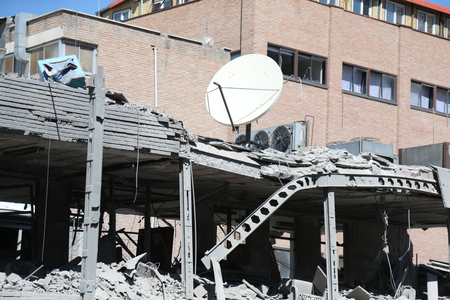
On February 28, the United States and Israel launched joint attacks on Tehran and other Iranian cities, killing Iran’s then-Supreme Leader Ali Khamenei, senior military commanders and civilians. Iran responded with waves of missile and drone attacks on US and Israeli bases and assets in the region, while tightening control over the Strait of Hormuz.

–IANS

/as

Iranian FM warns Britain against cooperation with US strikes on Iran

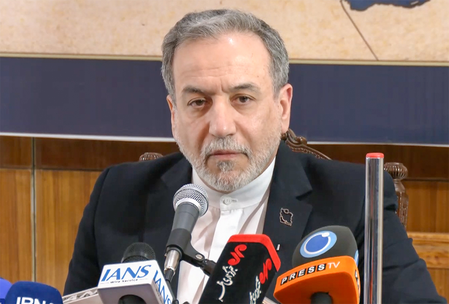
Tehran, Aug 1 (IANS) Iranian Foreign Minister Seyed Abbas Araghchi has warned Britain against any military cooperation with the United States in carrying out strikes on Iran.

Araghchi made the remarks during a phone call with British Foreign Secretary Ed Miliband, stressing that any cooperation with “aggressors,” including under the pretext of existing defence agreements, would be “unacceptable,” according to a statement issued by the Iranian Foreign Ministry on Saturday.

Araghchi criticised what he described as the British government’s “unjustified and inappropriate” policies toward Iran, citing London’s recent designation of Iran’s Islamic Revolution Guard Corps (IRGC) as a national security threat and its “complicity” in two wars imposed by the United States and Israel against Iran in recent months. He called on Britain to reconsider its approach toward Tehran.

He said that under international law and the Convention for the Definition of Aggression, allowing a country’s territory and facilities to be used for illegal attacks against another state constitutes an act of aggression and gives the attacked country the right to self-defence.

Araghchi said Iran had entered a diplomatic process with the United States in good faith and signed a memorandum of understanding with Washington in June aimed at ending the conflict, but Washington failed to honour its commitments, Xinhua news agency reported.

He also highlighted Iran’s efforts to establish operational mechanisms with Oman to manage shipping traffic in the Strait of Hormuz, warning that third-party interference would only further complicate matters.

For his part, Miliband said his country was not involved in the war against Iran and maintained that diplomacy was the way to resolve disputes.

Last month, British Prime Minister Andy Burnham approved the continued US use of British military bases for operations related to Iran, maintaining a policy established by his predecessor.

On February 28, the United States and Israel launched joint attacks on Tehran and other Iranian cities, killing Iran’s then-Supreme Leader Ali Khamenei, senior military commanders and civilians. Iran responded with waves of missile and drone attacks on US and Israeli bases and assets in the region, while tightening control over the Strait of Hormuz.

–IANS

scor/as

Escalating unrest in PoK leaves over 50 dead, hundreds injured in Pakistani crackdown

Islamabad, Aug 1 (IANS) As unrest in Pakistan-occupied Kashmir (PoK) continues to escalate, more than 50 people have been killed and hundreds injured over the past four days in a brutal crackdown by Pakistani forces in the occupied territory.

Taking to social media platform X on Saturday, Joint Awami Action Committee (JAAC) member Sardar Umar Nazir Kashmiri said, “In the past 4 days, the forces have killed more than 50 of our people through brutal terrorism, and hundreds are injured…”

In a separate post, the JAAC said that late-night protests continued across the Muzaffarabad region in PoK, with people remaining on the streets, while demanding the protection of their fundamental rights and the implementation of commitments made by the local authorities.

Meanwhile, US-based rights body Human Rights Foundation (HRF) on Saturday strongly condemned the reported use of force by Pakistani forces against unarmed peaceful protesters in PoK, which left over 50 dead and hundreds injured in the region.

The organisation called on Pakistani authorities to end the violent crackdown, restore mobile communications, and ensure accountability for all unlawful use of force.

Citing a local civil society group, the HRF said Pakistani security forces opened fire on thousands of peaceful protestors during demonstrations in PoK.

“Protest organisers claimed that Pakistani officials removed bodies from hospitals and detained activists in an apparent attempt to conceal evidence,” it stated.

The rights body further said that “the crackdown has been accompanied by an internet blackout and severe restrictions on media access, making independent reporting nearly impossible.”

Expressing solidarity with the people of PoK and those peacefully exercising their rights to freedom of expression and peaceful assembly, the HRF said Pakistani authorities must promptly investigate the reported killings, ensure accountability, and uphold due process for all those detained in the occupied territory.

Furthermore, a delegation of United Kashmir People’s National Party (UKPNP) led by its Chairman Sardar Shaukat Ali Kashmiri, held a series of meetings at the United Nations Headquarters in New York to brief the UN officials about the brutalities committed by Pakistani forces in PoK.

During these meetings, the delegation expressed grave concern over the deteriorating human rights situation in PoK. It urged the UN, the international community, governments, human rights organisations, and democratic institutions “to take prompt and effective action to prevent further loss of life and protect fundamental human rights” in the region.

The delegation called on Pakistani authorities to exercise maximum restraint and immediately cease all excessive, direct, or lethal force against peaceful protesters in PoK, placing the protection of civilian lives above all other considerations.

It further urged the authorities to unconditionally hand over the bodies of all civilians killed during the unrest to their families, disclose the whereabouts of all individuals subjected to enforced disappearance or unacknowledged detention and release those “unlawfully” detained by Pakistani forces.

–IANS

scor/rs

American company faces China AI scrutiny

Washington, Aug 1 (IANS) Two powerful House committees have launched a fresh investigation into DoorDash’s use of a Chinese-developed artificial intelligence model, raising concerns that the growing adoption of Chinese AI by American companies could pose national security, cybersecurity and economic security risks.

The House Select Committee on China and the House Committee on Homeland Security said on Friday they had written to DoorDash co-founder and Chief Executive Officer Tony Xu seeking detailed information about the company’s evaluation and deployment of artificial intelligence models developed in China.

The move expands a congressional investigation that began in April and has already examined other American companies’ use of Chinese open-weight AI models.

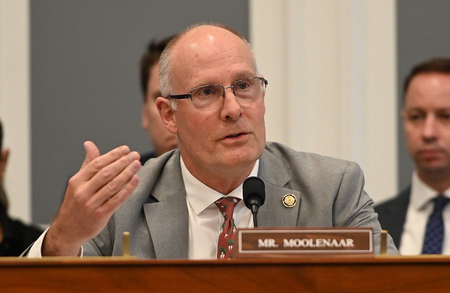
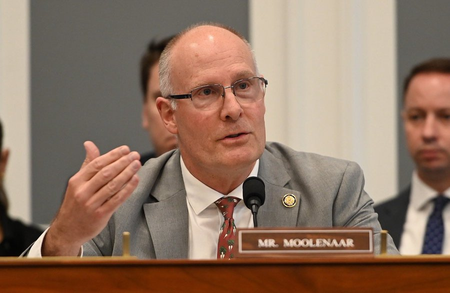
In their letter, House Select Committee on China Chairman John Moolenaar and House Homeland Security Committee Chairman Andrew R. Garbarino acknowledged why American companies may be drawn to such models but argued that the security implications require closer examination.

“[T]he Committees recognize that U.S. companies, from large technology firms to startups, may evaluate and deploy PRC-developed open-weight models because they can provide competitive capabilities, lower costs, greater customization, and alternatives to reliance on a small number of proprietary model providers,” they wrote.

“Those practical considerations do not eliminate the need for risk-based safeguards or diminish the national security concerns associated with growing dependence on models developed by entities subject to PRC jurisdiction,” said the letter.

“An effective federal approach should therefore reduce U.S. companies’ reliance on PRC-developed models by strengthening the availability, security, and competitiveness of American open-weight alternatives, while applying appropriately tailored safeguards in sensitive and high-risk applications. This investigation is intended to establish the factual record necessary to inform that approach,” it said.

According to the committees, the investigation is focused on the national security, cybersecurity and economic security implications of American companies integrating Chinese open-weight AI models into consumer platforms, enterprise software and systems that handle sensitive commercial or personal information.

Unlike proprietary AI systems, open-weight models make their underlying parameters publicly available, allowing developers to download, modify and deploy them independently. The committees said this flexibility can reduce costs and increase customisation but also raises concerns about software integrity, supply chain security and the provenance of the underlying technology.

The congressional letter cites public statements by DoorDash co-founder Andy Fang that the company incorporated open-weight models into an internal AI-assisted code review system. According to the committees, DoorDash said it routed more difficult tasks to a US-developed frontier model while assigning lower-level work to Kimi K2.6, an open-weight model developed by China’s Moonshot AI. The company also stated that the new configuration outperformed an earlier setup while lowering costs.

Lawmakers also referred to public statements by the White House Office of Science and Technology Policy alleging that Moonshot AI operated a covert platform to conduct large-scale distillation against American AI models and trained models using advanced computing systems it was not authorised to obtain.

Chinese open-weight AI models have become increasingly attractive to businesses because they offer lower operating costs, greater flexibility and the ability to run on a company’s own computing infrastructure rather than through proprietary cloud services. At the same time, policymakers in Washington have intensified scrutiny of Chinese AI developers amid broader strategic competition with Beijing over advanced technologies.

–IANS

lkj/rs

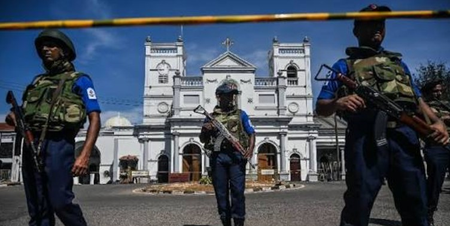
Sri Lankan court sentences ex-police chief to death over 2019 Easter attacks

Colombo, Aug 1 (IANS) A three-judge High Court panel in Sri Lanka has sentenced former Inspector General of Police Pujith Jayasundara to death after a majority of judges found him guilty of failing to prevent the 2019 Easter Sunday terror attacks despite receiving prior intelligence.

The court on Friday convicted Jayasundara of dereliction of duty and aiding and abetting murder over his failure to act on warnings that suicide bombers planned to attack Catholic churches and tourist hotels in Colombo and surrounding areas.

Judges Priyantha Liyanage and Thilakaratne Bandara delivered the majority verdict, while Judge Viraj Weerasuriya issued a dissenting judgment, reports Xinhua news agency.

Announcing the majority decision, presiding Judge Liyanage said Jayasundara had served as the country’s police chief at the time and was responsible for protecting citizens and maintaining public security.

The court said Nilantha Jayawardena, then director of the State Intelligence Service, had informed Jayasundara on the evening of April 20, 2019, that suicide attacks were expected against Catholic churches and tourist hotels the following day.

However, Jayasundara failed to take measures to prevent the attacks, the court said.

The majority judges said Jayasundara had neglected his responsibilities as the state official appointed to prevent crime and protect the public. They imposed the death sentence after considering the seriousness of the offences.

In his dissenting judgment, Weerasuriya said the prosecution had failed to prove the charges against Jayasundara beyond a reasonable doubt and acquitted him. The court took more than four hours to deliver the judgment.

Later on the same day, the court also found former Defence Secretary Hemasiri Fernando guilty over his failure to act on intelligence warnings ahead of the 2019 terror attacks, and sentenced him to death.

The coordinated bombings, which took place on April 21, 2019, killed over 260 people and injured more than 500 others, according to the judgment.

–IANS

sd/