Addis Ababa, June 9 (IANS) Confirmed Ebola cases in the Democratic Republic of the Congo (DRC) and Uganda have surpassed 600 as response efforts face operational constraints, the Africa Centres for Disease Control and Prevention (Africa CDC) said Tuesday.
In its latest outbreak update, the African Union’s specialised continental public health agency said confirmed Ebola cases in the DRC and Uganda have reached 608, with the death toll climbing to 102 as of Monday, representing a case fatality rate of 16.7 per cent, Xinhua news agency.
Uganda has reported 19 cumulative cases and no new confirmed cases in the last 24 hours. In the DRC, 45 new confirmed cases were reported during the past 24 hours, all in Ituri Province, according to the Africa CDC.
The outbreak’s transmission is currently concentrated in Ituri Province in eastern DRC, which accounts for more than 94 per cent of the country’s total caseload, it said.
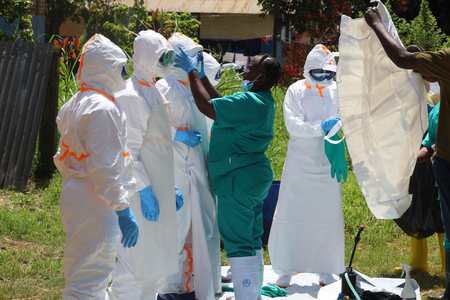
The Africa CDC warned that ongoing response efforts are “facing significant operational constraints,” noting that health facilities in several affected areas are in poor condition and often lack potable water, incinerators, personal protective equipment, and decontamination supplies.
Insecurity, shortage of ambulances, growing staffing pressures with some health workers unpaid or without incentives, and poor roads are further slowing access and response operations, it said, while highlighting the existing lack of community trust as “a critical challenge” jeopardising ongoing response efforts.
The agency also expressed concern over the negative impacts of travel restrictions imposed on affected and at-risk African countries despite guidance from the World Health Organisation (WHO) and the Africa CDC.
The Africa CDC outlined several “immediate priorities,” including strengthening community engagement and risk communication, fast-tracking multidisciplinary rapid response teams to high-risk areas, addressing gaps in infection prevention and safe burial, as well as enhancing surveillance and contact follow-up.
–IANS
ksk/dan