
‘Expired’ saline case: Suspended doc moves Calcutta HC alleging harassment by CID

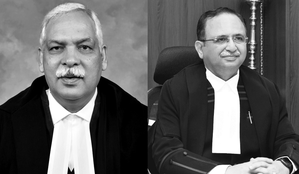

New Delhi, Jan 14 (IANS) The Centre on Tuesday cleared the appointment of Justice Devendra Kumar Upadhyaya as the Chief Justice of Delhi High Court, and of Justice Alok Aradhe as the Chief Justice of the Bombay High Court.
“In exercise of the power conferred by clause (1) of Article 222 of the Constitution of India, the President, after consultation with the Chief Justice of India, is pleased to transfer Shri Justice Devendra Kumar Upadhyaya, Chief Justice, Bombay High Court as the Chief Justice of the Delhi High Court and direct him to assume charge of the office of the Chief Justice of the Delhi High Court,” said a notification issued by the Union Ministry of Law and Justice.
Last week, the Supreme Court Collegium had recommended the transfer of Justice Upadhyaya to the Delhi HC.
Born on June 16, 1965, Justice Upadhyaya was appointed as an additional judge of the Allahabad High Court in November 2011 and became a permanent judge in August 2013.
He took oath as the Chief Justice of the Bombay High Court on July 29, 2023.
The SC Collegium had also recommended that the Chief Justice of the Telangana High Court, Alok Aradhe be transferred to the Bombay HC.
Acting on the apex court Collegium recommendation, the Centre on Tuesday cleared the appointment of Justice Aradhe as the Chief Justice of the Bombay High Court.
“In exercise of the power conferred by clause (1) of Article 222 of the Constitution of India, the President, after consultation with the Chief Justice of India, is pleased to transfer Shri Justice Alok Aradhe, Chief Justice, Telangana High Court, as the Chief Justice of the Bombay High Court and to direct him to assume charge of the office of the Chief Justice of the Bombay High Court,” said a notification issued by the Union Ministry of Law and Justice.
Born on April 13, 1964, Justice Aradhe was appointed as an additional judge of the Madhya Pradesh High Court in December 2009 and a permanent judge in February 2011. He took oath as the Chief Justice of the Telangana High Court on July 23, 2023.
–IANS
pds/vd

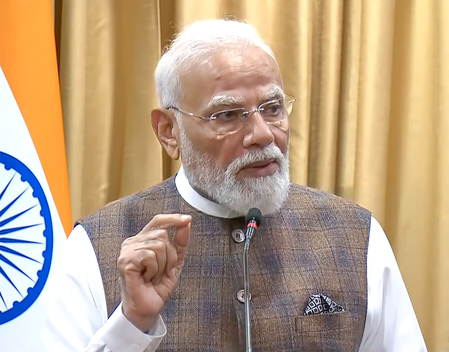
New Delhi, June 30 (IANS) Prime Minister Narendra Modi will chair a high-level meeting with the secretaries of all Central government ministries and departments on Tuesday to review the progress of key reforms and regulations aimed at improving the country’s Ease of Doing Business and Ease of Living.
According to sources, the meeting will focus on advancing the government’s vision of a ‘Viksit Bharat’ by simplifying regulations, promoting ‘Atmanirbhar Bharat’ and enhancing administrative efficiency across ministries and departments.
The meeting will mark the Prime Minister’s second comprehensive interaction with the country’s top civil servants. It is expected to begin at 4.30 p.m. and will include presentations by secretaries on the progress of reforms, policy implementation and developmental initiatives undertaken by their respective ministries.
Discussions are expected to centre on the government’s flagship reform agenda, particularly measures to further improve the Ease of Doing Business and Ease of Living. Senior officials are also likely to present updates on structural reforms, assess implementation progress and identify areas requiring greater attention to ensure timely execution of key policy initiatives.
The review assumes added significance as the Centre has recently launched the ambitious “52 Reforms in 52 Weeks” initiative across several ministries, including Railways, with clearly defined implementation timelines. Prime Minister Modi has consistently emphasised the importance of achieving measurable outcomes within stipulated deadlines, making periodic reviews a crucial component of the government’s governance.
The meeting is expected to provide an opportunity for ministries to assess progress, address implementation challenges, and strengthen coordination to accelerate reforms that improve public service delivery, reduce regulatory burdens, and enhance the ease of doing business for industries, as well as the ease of living for citizens.
Earlier on Monday, Prime Minister Modi concluded his three-day State visit to the Seychelles.
Before departing for New Delhi, he greeted members of the Indian community gathered outside the airport to bid him farewell. People carrying Indian flags chanted “Modi, Modi” and “Vande Mataram” as the Prime Minister interacted with them. PM Modi paid floral tributes at the Mahatma Gandhi statue at Peace Park in Seychelles.
On Sunday, PM Modi attended the golden jubilee celebrations of Seychelles’ National Day as the Guest of Honour at the invitation of Seychelles President Patrick Herminie.
–IANS
rs/dpb

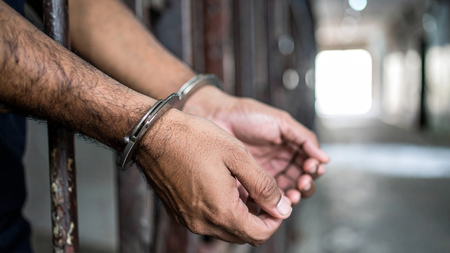
Jaipur, July 22 (IANS) In a breakthrough in the ongoing crackdown against drug trafficking, the Hanumangarh Police in Rajasthan have seized 268.6 grams of heroin (commonly known as chitta) valued at approximately Rs 1 crore in the international market.
The operation, carried out by Sangaria Police, led to the arrest of a drug smuggler from Punjab.
A district-wide campaign is being carried out to combat drug smuggling, illegal weapons, gambling, betting, and other unlawful activities. The recent action is part of this intensified drive.
“All officers have been instructed to take strict action in their respective jurisdictions to prevent drug smuggling, illegal narcotics, illegal weapons, gambling, betting, illegal businesses and property-related crimes in the district. This action is part of this comprehensive campaign,” said SP.
The Sangaria Police team made the arrest while patrolling in the Rohi Indragarh area. Acting on suspicion, they apprehended a man identified as Sanju Kumar alias Sanjay Nayak (22), son of Mahendra, a resident of Satirwala village under Khuikheda Police Station, Fazilka district, Punjab. Upon search, 268.6 grams of heroin were recovered from his possession.
The operation was conducted under the supervision of Additional Superintendent of Police Janesh Tanwar and Circle Officer Karn Singh, and led by SHO Amar Singh.
A case has been registered against the accused under relevant sections of the NDPS Act at Sangaria Police Station. Further investigation is being conducted by Tibbi Police Station SHO Hansraj Luna.
Sub Inspector Pramod Singh, along with Constables Mandeep Singh, Manoj Kumar, Ravindra Kumar, and Driver Constable Deendayal, played key roles in the operation.
Constables Saheb Ram and Devkaran from the District Special Team Hanumangarh also contributed significantly to the success of the raid.
–IANS
arc/dan