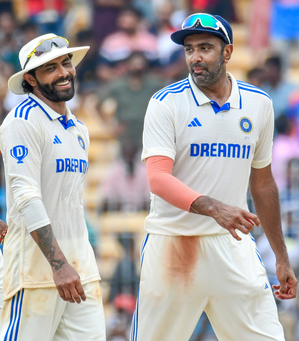
The fourth Test between India and Australia will kick off on December 26 at MCG.
–IANS
hs/ab


Diu, May 20 (IANS) Beach kabaddi is looking to leave a long-lasting impression when the popular indigenous sport moves from the mat to the stand for an exciting debut in the Khelo India Beach Games 2025 in Diu.
Kabaddi’s main form that’s played on a mat is quite popular in India, is a medal sport in the Asian Games, and hosts a very popular kabaddi league. However, beach kabaddi is a new concept. Last year, when the Diu Beach Games were organized, beach kabaddi was also a part of the programme.
Simrat Gaikwad, working in the capacity of a venue coordinator and senior coach at the Ghoghla beach, the epicenter for all eight KIBG games, including two demonstration ones, believes these are exciting times for beach kabaddi.
“It’s a new concept. Khelo India Beach Games are a great platform for the sport. It will definitely help popularize the sport,” she said.
Delhi girls kabaddi team coach Sunita also has high hopes. “It’s a totally different setting with the beautiful sea in the background. Kabaddi is, anyway, quite popular in India. Hopefully, beach kabaddi will make a mark too,” she said.
Beach kabaddi is more challenging than the popular kabaddi in that here you are dealing with the elements.
For example, if a player’s feet are partially or fully buried in sand and it makes movements difficult. The matches are played in the open under the sun and require more stamina. Sea breeze also picks up at times, and at other times, there is no sign of it. So, all these aspects affect a player’s performance, making beach kabaddi all the more challenging.
Sunita also added that non-coastal states have a little extra to deal with since the conditions here are totally alien to them. “The artificial sand turf that we have is good, but the environment here is totally different and much more challenging,” she told SAI Media.
Gaikwad, who has participated in seven national championships and has multiple laurels to her name, is currently based in Thane, Mumbai. She believes the sport has a future, even though at present there is a lot of progress to be made.
“Once these events happen often, more and more people will gravitate towards it. You want to have a viable career option. Once that happens, beach kabaddi can grow in a desired way,” she said.
While the essence of beach kabaddi is pretty similar to that of popular kabaddi but in terms of rules and regulations, it’s slightly different.
For example, it has four players on a side, instead of seven. Instead of 20 minutes each, both halves here are 15 minutes each. Players can’t be revived either. It’s a smaller field of play to boot. All these have been incorporated into the sport, keeping in mind the challenging conditions at beaches.
At KIBG 2025, teams have been divided into two pools, across boys and girls, with eight teams each. The top two teams from these groups will advance to the semifinals. The beach kabaddi matches kicked off on Tuesday, and both the finals will be played on the last day of the KIBG on Saturday.
–IANS
bsk/


Madrid, March 16 (IANS) Raphinha scored a hat-trick as FC Barcelona maintained its four-point lead over Real Madrid at the top of La Liga with a 5-2 home win over Sevilla on Sunday afternoon
Barcelona coach Hansi Flick rested Lamine Yamal and Fermin Lopez ahead of next Wednesday’s Champions League tie at home to Newcastle United, but his side quickly took control thanks to two penalties from Raphinha.
The first came after Joao Cancelo had his shirt pulled in the Sevilla penalty area after seven minutes, while the second followed a handball after another Cancelo run into the box.
Dani Olmo made it 3-0 in the 38th minute after an assist from Marc Bernal, before Oso pulled a goal back for the visitors in injury time.
Raphinha completed his hat-trick with a shot that took a big deflection early in the second half, and Cancelo got the goal his display deserved after cutting inside his marker and scoring with an accurate shot with half an hour still to play.
Djibril Sow scored Sevilla’s second with a header in virtually the last action of the game.
Betis and Celta Vigo, Spain’s two representatives in this season’s Europa League, drew 1-1 in Seville. Ferran Jutgla opened the scoring for Celta in the fourth minute with a long-range shot that Betis goalkeeper Alvaro Valles should have kept out.
Betis full-back Hector Bellerin equalized three minutes into the second half with a finish from a narrow angle after a good pass from Aitor Ruibal.
Real Sociedad won its local derby 3-1 at home to Osasuna, with Mikel Oyarzabal opening the scoring from the penalty spot after 24 minutes, before Benat Turrientes and Goncalo Guedes combined twice for Guedes to make it 3-0.
Victor Munoz scored a consolation goal for Osasuna in the 77th minute.
Mallorca climbed out of the bottom three after coming from behind to beat Espanyol 2-1.
Charles Pickel put Espanyol ahead in the 35th minute, but was then sent off for a bad foul in the 53rd minute. Pablo Torre equalized for Mallorca in the 64th minute, with Espanyol appealing for what looked like a clear foul by Samu Costa in the build-up. Costa then scored the winner in the 87th minute.
On Saturday, Real Madrid coach Alvaro Arbeloa gave minutes to some B-team players and was rewarded with a comfortable 4-1 home win over a poor Elche side.
Antonio Rudiger and Fede Valverde put Real Madrid 2-0 up before halftime, with Dean Huijsen scoring a 66th-minute header.
Although youngster Manuel Angel scored an own goal, Arda Guler then netted the goal of the game from inside his own half to make it 4-1. Elche replaced Mallorca in the relegation zone, with the two sides due to play each other next weekend, reported Xinhua.
Atletico Madrid beat Getafe 1-0 thanks to Nahuel Molina’s stunning seventh-minute strike in a match that also saw Getafe defender Abdel Abqar sent off for touching Atletico striker Alexander Sorloth in the genitals.
David Costas’s powerful shot was enough to give Oviedo a 1-0 home win over Valencia, while Girona beat Athletic Bilbao 3-0 with Hugo Rincon, who is on loan at Girona from Athletic, Azz-Eddine Ounahi and Claudio Echeverri all scoring.
On Friday night, Nicolas Pepe’s 98th-minute strike saved a point for Villarreal in a 1-1 draw away to Alaves, which had led through Rafa Marin’s own goal.
–IANS
hs/
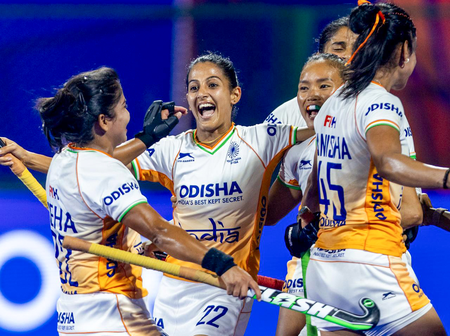
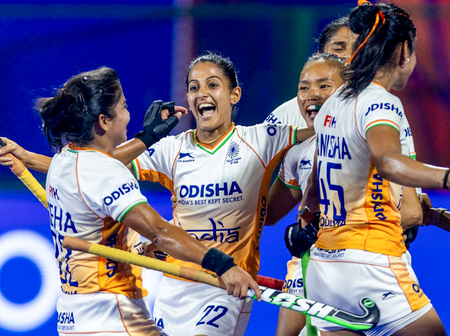
New Delhi, Aug 10 (IANS) The FIH Hockey Men’s and Women’s World Cup 2026 will feature a revamped competition structure, with the traditional quarterfinal stage scrapped and the top two teams from each of the two crossover pools advancing directly to the semi-finals as Belgium and the Netherlands jointly host the tournament from August 15 to 30.
The new format means teams will have little margin for error from the outset, with results from the opening pool stage potentially carrying over into the next phase. India’s men have been drawn alongside England, Pakistan and Wales in Pool D, while the Indian women will face China, England and South Africa in their Pool D campaign.
The tournament will begin with the 16 teams in each competition split across four pools of four. From August 15 to 20, every team will play three matches against the other sides in its pool, with the final standings determining the composition of the next phase.
The top two teams from Pools A and D will move into Pool E, while the leading two teams from Pools B and C will form Pool F. The teams finishing third and fourth in Pools A and D will make up Pool G, with the corresponding teams from Pools B and C placed in Pool H.
The second phase, scheduled from August 21 to 24, will see teams play three more matches. However, one result from the opening phase will carry forward — the outcome of the Phase 1 match between the two teams that progress from the same original pool.
This makes every pool match particularly significant, especially for sides targeting the semi-finals.
The top two finishers from Pool E and Pool F will advance directly to the last four. The semi-final match-ups will be Pool E winners vs Pool F runners-up and Pool F winners vs Pool E runners-up.
The remaining teams will compete in classification matches for positions 5th to 16th.
Indian women’s team’s chief coach Sjoerd Marijne acknowledged that while he would have preferred the traditional quarterfinal route, the new structure presents opportunities that his team must exploit.
“It’s an interesting schedule, but my preference is to have quarterfinals in a tournament format. I understand that for higher-ranked teams in the world they will prefer this, but I think quarterfinal matches are among the most exciting matches in a tournament. But it is how it is, and we will deal with this and make the best of this format. I am always thinking in opportunities, and there are opportunities also within this format,” Marijne said.
For the Indian men’s team, coach Craig Fulton stressed that the importance of the opening pool matches has increased considerably because of the carry-forward system.
“The format of this tournament has obviously changed drastically — from having quarter-finals to not having them. So the emphasis on the pool games is really, really important, because it’s obviously the top two that go through. And the head-to-head result between those two teams matters: if one beats the other, those three points carry into the next round, and that puts you in the driving seat to get out of the next group and into the semi-finals,” said Fulton.
Fulton also highlighted the significance of goal difference, particularly in a format where a tightly contested pool could be decided by fine margins, adding,
“So yes, it’s different — it’s not good or bad. We can make it an advantage for us if we start well. We really have to manage our goal difference well. The team that finishes top of the group is decided by the most wins, and then it goes to goal difference — so if there’s a draw, goal difference decides it.”
Following the crossover phase, the classification matches and semi-finals will be held on August 27 and 28. The women’s tournament will conclude in the Netherlands on August 29, with the bronze-medal match followed by the final.
The men’s World Cup will conclude in Belgium a day later, on August 30, with its bronze-medal match and final.
With the quarterfinals removed, the 2026 World Cup places a premium on consistency across both preliminary phases. For teams harbouring title ambitions, a strong opening pool campaign could provide not only progression but also a crucial advantage heading into the decisive crossover stage.
–IANS
vi/bsk/