Banaskantha, Oct 28 (IANS) A cattle breeding centre in Gujarat’s Banaskantha district aims to produce 25,000 embryos annually using advanced reproductive technology, allowing genetically superior cows to produce up to 10-20 calves a year instead of one through traditional breeding methods.
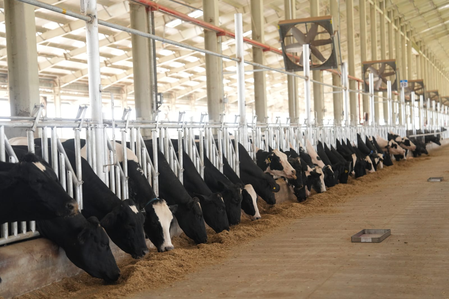
The Bharat Bovine Breeding and Research Centre (BBBRC), spread across 127 acres at Bhildi, is designed to improve milk productivity per animal and reduce production costs by multiplying superior livestock genetics.
Prime Minister Narendra Modi will inaugurate the centre on October 30.
The project has received technical support from the National Dairy Development Board (NDDB), while the Centre has sanctioned Rs 38.83 crore under the ‘Rashtriya Gokul Mission’.
Banaskantha, one of the state’s major dairy-producing regions, has a livestock population of around 28 lakh animals. These include approximately four lakh Kankrej cows, 14 lakh buffaloes and 10 lakh crossbred Holstein-Friesian (HF) cows.
The region’s livestock already produces milk at levels exceeding the national average, and the centre aims to further improve productivity through genetic selection and advanced breeding techniques.
The facility will use technologies such as Ovum Pick-Up, In Vitro Embryo Production and Embryo Transfer (OPU-IVEP-ET).
Eggs collected from elite donor animals are matured and fertilised in a laboratory using semen from high-quality bulls. The resulting embryos are preserved through vitrification, an ultra-rapid freezing technique, until a suitable recipient animal is available.
The frozen embryos can be transported to villages and transferred into healthy recipient cows or buffaloes.
While conventional breeding generally allows a cow to produce one calf a year, the technology can allow a single elite donor cow to contribute to the production of 10-20 calves annually through multiple embryos and recipient animals.
The centre plans to develop embryos from indigenous cattle breeds, including Kankrej, Gir, Punganur, Sahiwal, Red Sindhi, Rathi, Tharparkar and Ongole; buffalo breeds such as Mehsani, Banni, Murrah and Jafarabadi; and high-yielding exotic and crossbred cattle, including Holstein-Friesian, HF-cross and Jersey.
To make the technology accessible to farmers, the initial price will be Rs 1,000 per embryo.
Once pregnancy is confirmed, the remaining cost will be covered through subsidies jointly provided by the state government, the Gujarat Cooperative Milk Marketing Federation (GCMMF) and Banas Dairy. The centre will also supply disease-free bulls with superior genetic traits for breeding.
The objective is to improve the genetic quality of existing livestock across the Banaskantha milk-shed, increasing milk production per animal without requiring a corresponding expansion in the number of animals.
The initiative also includes a Bovine Breedpreneur Club, which encourages dairy farmers to rear and breed high-quality livestock.
As many as 316 breedpreneurs are currently associated with the centre and have access to animals with superior genetic traits under agreements with the BBBRC.
Under these arrangements, the centre receives first preference to purchase calves, embryos and bulls born on participating farms, while farmers remain free to sell other animals in the open market.
Members must maintain records of birth dates, lineage, growth, daily milk yields and health status, and ensure that their animals undergo annual health screenings.
The farms are intended to function as local breeding centres, extending the reach of improved livestock genetics beyond the facility at Bhildi.
The BBBRC brings together farmer cooperatives, technical support from the NDDB and government funding. The model could also support the wider use of Indian livestock genetics, with potential applications in breeding programmes that prioritise climate resilience, animal health and efficient conversion of feed into milk.
The initiative is aligned with the Centre’s ‘Sahkar Se Samruddhi’ vision, which seeks to strengthen rural development through cooperation. Its stated goal is to improve the productivity and economic returns of dairy farming by combining superior genetics with better breeding practices.
–IANS
mys/dan