
‘Honour to serve our nation‘, PM Modi thanks VP Radhakrishnan for greetings


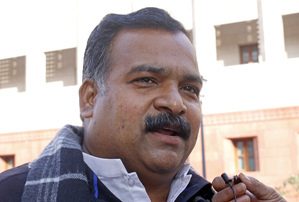
Amaravati, July 20 (IANS) All India Congress Committee in-charge for Andhra Pradesh Manickam Tagore has alleged that former Chief Minister Y. S. Jagan Mohan Reddy was the real mastermind of the liquor scam during YSR Congress Party rule in the state.
He alleged that Jagan’s liquor mafia devastated one crore of poor families in the state.
In a post on social media platform X on Sunday, he claimed that trusted liquor brands were replaced with low-grade, harmful ones for Rs 3,200 crore in bribes.
Reacting to the arrest of YSR Congress Party MP, P. V. Midhun Reddy, Manickam Tagore stated that the MP is just a pawn. He wrote that the real masterminds were Mr and Mrs Jagan.
“This wasn’t a scam by accident. It was a well-planned, top-down operation by Jagan’s scientific corruption. “Liquor brands were handpicked. The distribution network was fixed. Kickbacks were pre-negotiated. Dummy firms were created. Policy was rewritten to legalise the loot,” he wrote.
According to him, Jagan’s party leaders coordinated with handpicked liquor suppliers, established, trusted liquor brands were removed from shelves, their own lesser-known brands owned by benamis took their place, and these brands were sold at inflated prices via state retail.
The MP alleged that the profit margin was artificially jacked up. “Commissions were routed through fake invoices and service contracts. Shell companies were floated in Hyderabad, Bengaluru, and Visakhapatnam to launder the money,” he said.
He claimed that even transportation and warehousing contracts were awarded to proxy firms. These were shown as logistics expenses — in reality, they were channels to drain public money, he said.
The Congress leader alleged that the ecosystem was created to benefit 3 groups – Mr and Mrs Jagan, few ministers and friendly contractors.
“SIT findings say at least Rs 3,200 crore was diverted between 2020-2024. A portion of this was pumped into the 2024 election campaign. Distributed across constituencies as cash and liquor freebies and used for vote buying and booth management,” he said.
According to him, several of the fake liquor brands had no manufacturing infrastructure. They borrowed licences, operated out of shady bottling units, and paid lakhs per day in bribes to stay in the system. “Midhun Reddy’s name is on record — not just as a participant, but as a chief operator. He helped coordinate between the Excise Department and political offices. He managed shell companies used to hide the inflow of bribes,” he said.
The AICC-in-charge remarked that this is not Jagan’s first scam. “He is already the prime accused in a Rs 43,000 crore illegal assets case filed by the CBI. He was arrested in 2012 and spent over 16 months in jail. Corruption is not new to Jagan. It’s how he operates,” he posted.
Manickam Tagore stated that the liquor scam is just the latest in a series of betrayals. “Sand mafia, Mining and land allotment scams, Insider trading around Amaravati. Now, liquor loot with public health as collateral. The victims remain the same: the poor, the voiceless, the voters,” he added.
–IANS
ms/uk


Gurugram, Dec 27 (IANS) The Commission for Air Quality Management in NCR and Adjoining Areas (CAQM) reviewed dust mitigation steps, road-cleaning and sweeping operations and upkeep of road stretches maintained by the Municipal Corporation Gurugram (MCG), an official said on Saturday.
The inspection was done on Friday as part of its continuous monitoring and enforcement efforts under the statutory framework of the extant Graded Response Action Plan (GRAP), with the objective of evaluating on-ground compliance with dust mitigation measures and identifying associated issues such as accumulation of road dust, municipal solid waste, construction and demolition (C&D) waste and instances of open burning.
A total of 17 inspection teams, comprising 15 teams of the Haryana State Pollution Control Board (HSPCB) and two teams of the Central Pollution Control Board (CPCB), were directed by the Commission for inspection of 125 road stretches under the jurisdiction of MCG in Gurugram.
Geo-tagged and time-stamped photographic documentation was collected by the inspection teams and submitted to the Commission as part of the consolidated inspection report.
The findings of the inspection revealed that out of the 125 road stretches inspected, 34 stretches exhibited high visible dust levels, 58 stretches showed moderate dust, 29 stretches recorded low dust intensity, while only four stretches were found to have no visible dust, a statement said.
A large number of stretches with high visible dust were also found to have significant accumulation of municipal solid waste and C&D waste, along with multiple instances of open burning, indicating serious deficiencies in routine road maintenance, waste management and enforcement at the field level.
Several road stretches across different wards and sectors of Gurugram, including residential colonies, internal roads and arterial stretches, were identified with persistent dust accumulation and waste dumping, the statement added.
The presence of open burning and unmanaged waste on multiple stretches further aggravated the dust conditions, highlighting the need for immediate corrective measures and strengthened supervision by the concerned agency.
The Commission observed that the overall inspection results point towards the need for significant strengthening of on-ground operations by MCG, particularly with respect to regular mechanical sweeping, timely lifting and scientific disposal of collected dust and waste, active water sprinkling and dust-suppression measures, and strict prevention of open burning.
The Commission emphasised that sustained and focused efforts are essential to ensure visible improvement in road conditions and to prevent re-accumulation of dust and waste.
–IANS
rch/khz
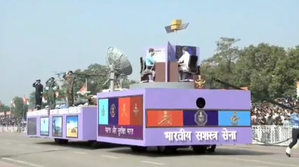

New Delhi, Jan 26 (IANS) For the first time, a tri-services — Indian Army, Indian Air Force and Indian Navy — tableau symbolising the unity of the armed forces was presented during the 76th Republic Day celebrations at Kartavya Path on Sunday, showcasing the nation’s military strength.
With the theme “Shashakt aur Surakshit Bharat” (Strong and Secure India), the tableau depicted a battlefield scenario demonstrating synchronised land, water, and air operations.
It featured indigenous defence assets such as the Arjun main battle tank, Tejas MKII fighter aircraft, Advanced Light Helicopter, destroyer INS Visakhapatnam, and a remotely-piloted aircraft.
This initiative coincides with the Ministry of Defence declaring 2025 as the year of defence reforms, with a focus on enhancing tri-services synergy to maximise India’s military potential in contemporary and future conflicts.
A total of 31 tableaux, including 16 from states and Union Territories and 15 from central ministries and organisations, paraded under the theme “Swarnim Bharat: Virasat aur Vikas” (Golden India: Heritage and Progress).
The Defence Research and Development Organisation (DRDO) showcased its ‘Raksha Kavach’ tableau, featuring advanced multi-domain defence technologies, while the Corps of Signals’ Daredevils thrilled the audience with motorcycle stunts, marking the conclusion of the 90-minute parade.
The 76th Republic Day celebrations also highlighted India’s military prowess with advanced platforms like BrahMos missiles, Pinaka rocket systems, Akash air defence systems, and new additions such as the ‘Sanjay’ Battle Surveillance system and DRDO’s ‘Pralay’ tactical missile. A grand finale featured a flypast by 40 Indian Air Force aircraft, including the Su-30 jets and C-130J Super Hercules.
The Republic Day parade also emphasised women’s empowerment, with the CRPF’s all-women contingent led by Assistant Commandant Aishwarya Joy M. The 148-member contingent, comprising women deployed in anti-Naxal and law enforcement operations, exemplified the spirit of ‘Nari Shakti.’
The Ministry of Women and Child Development’s tableau showcased a girl’s journey from childhood to becoming a self-reliant woman, while the Ministry of Rural Development highlighted its ‘Lakhpati Didi Yojana,’ empowering rural women through self-help groups.
The Delhi Police All-Women Band, led by Band Master Ruyangunuo Kense, also drew attention with their performance, marking their second participation in the Republic Day parade.
The ceremony began with 300 cultural artists performing “Sare Jahan Se Achha” on traditional instruments, representing India’s regional diversity. A flower-petal shower by Mi-17 1V helicopters added grandeur to the celebrations.
The event was presided over by President Droupadi Murmu, who unfurled the national flag and led the nation in commemorating the day.
Indonesian President Prabowo Subianto, the Chief Guest, was welcomed alongside President Murmu in a ‘Traditional Buggy,’ a practice revived in 2024 after a 40-year gap.
Vice President Jagdeep Dhankhar, Prime Minister Narendra Modi, and other dignitaries graced the occasion, which celebrated 75 years of the Constitution’s enactment under the theme of “Jan Bhagidari” (public participation), reflecting India’s unity, diversity, and development.
–IANS
sd/dan