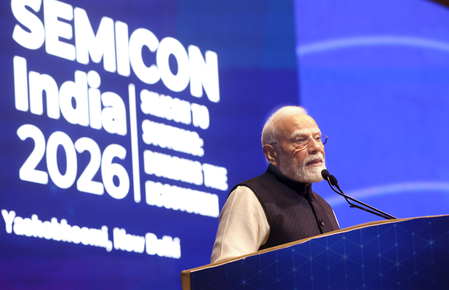
New Delhi, Sep 17 (IANS) India’s semiconductor story has advanced rapidly in a short period. In 2021, the country had no commercial chip plant. By 2026, 12 units have been approved, and five are in production. Students across hundreds of colleges are now designing chips. Semicon 2.0 is the natural next chapter in this account. It does not begin afresh — it takes a functioning ecosystem and completes it, according to a factsheet issued by the government on Wednesday on the occasion of the ‘SEMICON India 2026’ event.
Semiconductors form the core of modern electronic systems as smartphones, computers, medical equipment, automobiles, defence systems, satellites and data centres use semiconductor-based components. Establishing a strong semiconductor ecosystem is, therefore, essential for technological resilience, economic security, and national self-reliance.
Building on the successful implementation of Semicon 1.0, the Union Cabinet approved Semicon 2.0 on July 15, 2026 with an outlay of Rs 1,27,500 crore. While the first phase laid the foundation for India’s semiconductor manufacturing ecosystem, Semicon 2.0 advances the next phase through six strategic pillars.
These include research and development, chip design, machines and materials, setting up more fabs, talent development, and further strengthening the ATMP/OSAT industry, the factsheet states.
It highlights that India is witnessing rapidly rising semiconductor demand. It is projected to reach $110 billion by FY2030 and exceed $200 billion by FY2035, while domestic manufacturing remains at a nascent stage. India spent almost $150 billion on semiconductor product imports during FY17–FY25.
Imports grew at a compound annual growth rate of 23 per cent during this period. If this trend continues, annual imports could reach $240 billion by 2035. Building a comprehensive semiconductor ecosystem is, therefore, an urgent national priority, the factsheet states.
Semicon 2.0 rests on six pillars: design, machines and materials, setting up new fabs, further advanced packaging, research and talent development. Its purpose is to build the complete chip value chain within the country, and not merely its closing stages. This effort carries India towards supply chain resilience, strategic autonomy and high-value employment in a technology that now underpins every modern industry.
The global semiconductor market grew at a compound annual growth rate (CAGR) of 6.5 per cent between 2014 and 2024. It is projected to grow at 8.5 per cent over the next 5–10 years. However, recent disruptions have exposed vulnerabilities in the interconnected global semiconductor value chain. Geopolitical tensions have further highlighted the risks of supply dependence.
The road ahead is demanding. Chip manufacturing ranks among the most complex industries in the world. It requires patience, precision, and steady policy support. Semicon 2.0 provides that support for the long term. For citizens, the gain will be quiet but real. Devices will be manufactured more fully within India. Critical systems will depend less upon distant supply chains. Young engineers will find high-value work closer to home, the factsheet said.
–IANS
sps/na