
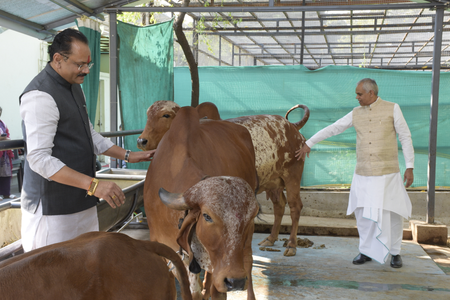
Gandhinagar, Nov 17 (IANS) Gujarat Agriculture and Animal Husbandry Minister Jitu Vaghani has brought two indigenous Gir cows and two female calves to his official residence in Gandhinagar, where he has also developed a kitchen garden using cow dung and cow urine-based natural farming methods.
The initiative, undertaken at the beginning of the Gujarati New Year following Diwali, was inspired by Prime Minister Narendra Modi’s practice of keeping cows at his Delhi residence and Governor Acharya Devvrat’s campaign to promote indigenous cattle conservation and natural farming.
Governor Devvrat visited Vaghani’s residence and performed traditional worship of the Gir cows, offering them fodder. He also guided the minister on their care, nutrition, and scientific methods of cattle conservation and breeding.
The cows and calves were brought from Bala Hanuman Gaushala in Porbandar, run by Ketan Gajjar.
Arrangements have been made for their care, including a well-ventilated shelter, open space for movement, seasonal fans and lighting, and an automatic water tank that refills when the water level drops.
The facilities also include nutritious feed, regular health check-ups, and vaccinations. During the visit, the Governor also inspected the kitchen garden developed at the minister’s residence through cow-based natural farming.
Vegetables such as tomatoes and bottle gourds, as well as fruits such as papayas, have been cultivated there using Jeevamrut prepared from cow dung and cow urine.
Impressed by the garden, Devvrat offered suggestions for its further development.
He has been campaigning across Gujarat to encourage farmers to adopt natural farming and conserve indigenous cattle.
The minister’s initiative comes amid the state government’s efforts to expand natural farming, in line with the Prime Minister’s call for a return to traditional practices and chemical-free agriculture, and Chief Minister Bhupendra Patel’s emphasis on promoting natural farming in Gujarat.
The Governor said, “Such initiatives undertaken by public representatives spread a positive message in society about environmental protection and a healthy lifestyle.”
The visit also highlighted the role of indigenous cattle in natural farming, particularly the use of cow dung and urine-based preparations such as Jeevamrut as agricultural inputs.
–IANS
mys/dan


