
MGNREGA renaming: Why remove Gandhi’s name, asks SP’s Ram Gopal Yadav


New Delhi, Dec 16 (IANS) There are 21 “fake universities” operating in the country and the respective state governments are taking action against them, the Parliament was informed on Monday.
Education Minister Dharmendra Pradhan said in a reply in Lok Sabha that the list of fake universities is available on the website of the University Grants Commission (UGC) at https://www.ugc.gov.in/universitydetails/Fakeuniversity.
Out of these 21 “fake universities”, a maximum of eight are functioning in Delhi, according to the website.
The Minister said that to prevent these institutions from defrauding and cheating students by misrepresenting themselves as “Universities,” the Central government has requested Chief Secretaries of all the states and Union Territories to take legal action for the closure of these institutions.
In a reply to questions from Sudheer Gupta and Dhairyasheel Sambhajirao Mane, the Minister said that apart from issuing public notices for general awareness through social media and UGC website for cautioning the general public, students, parents and other stakeholders, other steps have also been taken by the UGC/government against such “fake Universities.”
He said that FIRs have been lodged against several self-styled institutions/universities and show cause notices/warning notices have also been issued to the unauthorised institutes awarding invalid degrees.
In response to another question, Minister of State for Education Sukanta Majumdar told the Lok Sabha that there has been an overall increase of Rs 2875.29 crore in the budget allocation to the Department of Higher Education in 2024-25 as compared to 2023-24.
The Department’s total budget in 2024-25 was Rs 47,619.77 crore as compared to Rs 44,744.48 crore in 2023-24, MoS Majumdar said in reply to a question from Dushyant Singh.
In response to a question on public expenditure on institutions of higher education in Rajasthan, the MoS said that a total of Rs 556.86 crore has been released in FY 2024-25 till November 30, 2024, to three Centrally Funded Higher Education Institutions in Rajasthan, namely IIT Jodhpur, Malaviya National Institute of Technology Jaipur and Central University of Rajasthan.
Further, Rs 535.99 crore was provided for setting up IIM Udaipur and IIIT Kota in Rajasthan, the MoS said.
–IANS
rch/kvd

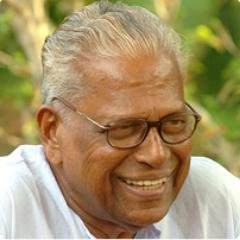
Thiruvananthapuram, July 21 (IANS) One of India’s tallest and oldest living Communist leaders, V.S. Achuthanandan, passed away at a private hospital here on Monday at 3.20 p.m. He was 101.
Affectionately known as “VS” by friends and adversaries alike, Achuthanandan was the last surviving member among the founding leaders of the Communist Party of India (Marxist), which was formed in 1964 following a split from the CPI.
He, along with a group of comrades, had then walked out of the original Communist Party of India, marking a historic ideological shift.
He is survived by his wife, son, and daughter.
CPI(M) state secretary M.V. Govindan, addressing the media after the announcement of his death, outlined the funeral plans.
“The body will be moved to the AKG Centre shortly, which was his political base for decades. It will then be taken to his residence in Thiruvananthapuram. On Tuesday morning, the body will be placed at the Secretariat Durbar Hall for the public to pay their respects. Later in the afternoon, it will be transported to his hometown in Alappuzha,” he said.
“On Wednesday, the mortal remains will be kept at the CPI(M) district office in Alappuzha, and the funeral will be held at the Valiyachudukad cremation ground,” he added.
Following the announcement of his death, CPI(M) party flags across the state were lowered to half-mast, and black flags were raised in mourning.
Born on October 20, 1923, in Punnapra, Alappuzha, Achuthanandan lost his parents at a young age and dropped out of school in Class 7.
Despite limited formal education, he rose through the ranks of the Communist movement — from a tailoring apprentice and a trade union activist to becoming Kerala’s Chief Minister and one of its most enduring political icons.
His political journey gained momentum during the 1946 Punnapra-Vayalar uprising against the then Travancore Diwan, Sir C.P. Ramaswami Iyer. His arrest during this period only strengthened his public appeal.
He went on to serve as Alappuzha district secretary, and by 1957, had become a member of the CPI(M)’s state committee and secretariat.
Achuthanandan contested his first election in 1965 but lost. He tasted victory two years later. However, a major turning point in his career came in 1996 when, despite being the CPI(M)’s projected Chief Ministerial face, he was denied the position following an unexpected defeat.
His popularity soared when he served as Leader of the Opposition from 2001 to 2006. Known for his uncompromising stands on corruption, women’s rights, and public welfare, he emerged as a mass leader, transcending party lines.
But tensions with Pinarayi Vijayan, then state party secretary and now Chief Minister, cast a shadow on his political trajectory.
In 2006, when the party initially denied him a ticket, statewide protests erupted. Bowing to public pressure, the CPI(M) reinstated him as a candidate. He led the Left Democratic Front to victory and assumed office as Chief Minister.
However, the friction between VS and Vijayan continued. Both were suspended from the CPI(M) Politburo during their tenure. Vijayan was later reinstated, but Achuthanandan was not.
In 2011, a similar outpouring of support from party workers ensured his candidature, and he returned as Leader of the Opposition. Although he led the LDF’s campaign in the 2016 Assembly polls, the party chose Vijayan to head the government after their victory.
As a conciliatory gesture, the Politburo appointed Achuthanandan as Chairman of the Administrative Reforms Commission with cabinet rank. He held the post until January 2020, after which he retired from active public life due to health issues.
Chief Minister Vijayan, who remains at the hospital, is expected to accompany Achuthanandan’s body to the AKG Centre.
Condolences have been pouring in from across the political spectrum, with leaders remembering VS as a principled, unwavering, and immensely popular figure — a rare breed of politician who remained a people’s man to the very end.
–IANS
sg/skp

Bengaluru, April 15 (IANS) Union Minister for Heavy Industries and Steel, H.D. Kumaraswamy on Tuesday expressed serious concern over the data emerging from the Karnataka caste census report.
Speaking to the media, Kumaraswamy declared on Tuesday, “I do not agree with the caste census report. I am fully ready to fight against this injustice.”
He also took a dig at Deputy Chief Minister D.K. Shivakumar, who had earlier opposed the caste census report but has now taken a U-turn.
“What is the number of people from the Vokkaliga community living in Old Mysuru districts like Mandya, Kolar, Chikkaballapur, Ramanagara, Bengaluru Rural, Tumakuru, Chitradurga, and others?”
He further said, “The caste census, a monstrous delivery, was ceremoniously received in the Cabinet. The data — claimed to be from that report — is now floating everywhere. Some unknown hand has systematically leaked it. Not just the Vokkaliga numbers, even the figures of Veerashaiva-Lingayat and other communities have shocked me.”
“Is this census a conspiracy designed to stir unrest across the state? Or is it a ploy to distract people from the rising prices and corruption scandals?” he asked.
Targeting Deputy CM Shivakumar he said, “Desperate for the Chief Minister’s chair, the man who once bowed before his community like a thirsty bird begging for ‘just one chance with pen and paper’ — is he now nodding along with this cunning report?”
“Once at the Kempegowda International Airport, he (Shivakumar) weakly opposed the caste census report. Now his tongue has changed. Shiva… Shiva…” he mocked.
“Shivakumar once said, ‘I’m a national party’s state president, everyone is equal to me! We’ve just opened our eyes. There’s no opposition to the census— why should there be?’ —and then shoved aside questioning reporters and fled, didn’t he?” Kumaraswamy asked.
“For the sin of giving him power, the Vokkaliga community is paying the price. Just for the sake of a chair, this man is writing a death sentence for the community,” he alleged.
The caste census report was submitted to the state Cabinet on April 10, and the state government is convening a special Cabinet meeting on April 17 to decide on the report’s recommendations.
However, no official statement has been issued to the media regarding the report’s contents. Nonetheless, details presented in the Cabinet meeting have surfaced in the public domain.
The caste census report submitted by the Backward Classes Commission to the Karnataka government has allegedly pegged the Muslim population in the state at 18.08 per cent and recommends 8 per cent reservation for the community, sources stated.
This is higher than the Vokkaliga community, which is currently considered the second-largest population group in the state.
The Vokkaliga population is recorded at 61.68 lakh, comprising 10.31 per cent of the total. The report suggests increasing their reservation to 7 per cent, according to sources.
The census report lists the Lingayat community population at 66.35 lakh, comprising 11.09 per cent — lower than the Muslim population. The report recommends increasing their reservation to 8 per cent. Currently, the Lingayat community is considered the largest in the state.
–IANS
mka/rad