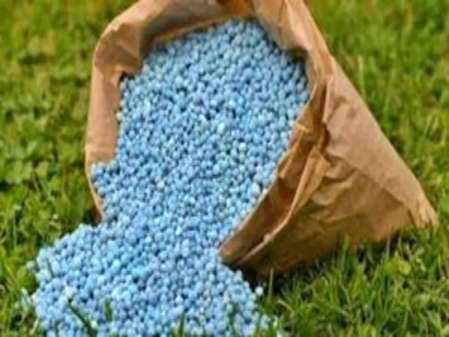
Kathmandu, May 4 (IANS) The Nepal government is seeking to procure 80,000 tonnes of chemical fertiliser from India under a government-to-government (G2G) arrangement, as disruptions in global supply and soaring prices triggered by the West Asia war strain Nepal’s farm input system.
Prime Minister Balendra Shah’s Cabinet on Monday decided to approve, in principle, a proposal allowing the state-owned Agriculture Inputs Company to procure 80,000 tonnes of chemical fertiliser from India under a G2G arrangement.
“This one-time procurement will be made within the framework of the 2022 G2G agreement, which includes 60,000 tonnes of urea and 20,000 tonnes of Di-Ammonium Phosphate (DAP),” said Minister for Education, Science and Technology Sashmeet Pokharel, who is also the government spokesperson.
Nepal had originally requested 150,000 tonnes.
After shipments of 94,500 metric tonnes of chemical fertiliser bound for Nepal were halted due to the blockade of the Strait of Hormuz amid the ongoing conflict between the US–Israel alliance and Iran, Nepal turned to its familiar route of fertiliser supply under a G2G arrangement with India.
According to the Ministry of Agriculture and Livestock Development, consignments including 62,500 metric tonnes of urea and 32,000 metric tonnes of DAP — already contracted with international suppliers — have been stalled due to the conflict.
Nepal relies on West Asia for 60–70 per cent of its fertiliser imports, making it highly vulnerable to global disruptions.
Following the Cabinet decision, Ram Krishna Shrestha, Joint Secretary at the Ministry of Agriculture and Livestock Development, told The Kathmandu Post that the Ministry would move ahead with the import process immediately after receiving the Cabinet’s formal approval.
“The Agriculture Inputs Company will place purchase orders once all procedures are completed,” he said.
Shrestha, who also chairs the Agriculture Inputs Company, said the Ministry sought Cabinet approval following a positive response from an Indian state-owned supplier, Rashtriya Chemicals and Fertilisers Limited.
He added that the consignment is expected to arrive by mid-August, aligning with the critical top-dressing period for paddy cultivation.
The Nepali government has allocated NPR 28.82 billion in subsidies for fertiliser imports in the current fiscal year 2025–26, initially targeting procurement of 550,000 tonnes.
However, escalating global prices — largely driven by geopolitical tensions — have reduced purchasing capacity to around 440,000 tonnes.
At present, the Agriculture Inputs Company holds 171,000 tonnes of fertiliser in stock, while contracts for 94,450 tonnes are likely to be cancelled due to suppliers’ inability to deliver.
–IANS
scor/khz