Lucknow, May 27 (IANS) Islamic religious scholars on Wednesday welcomed the Supreme Court judgment on Special Intensive Revision (SIR) of electoral rolls, saying no one should now have any objection to the electoral process.
The apex court on Wednesday upheld the Election Commission of India’s decision to undertake an SIR of electoral rolls, saying that the voter revision exercise was within the constitutional and statutory powers of the poll body and was aimed at preserving the integrity of the electoral process.
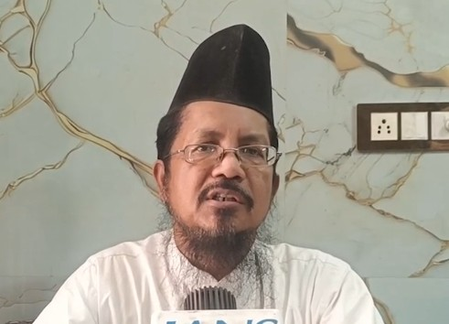
Welcoming the Supreme Court’s verdict on the SIR, All India Muslim Jamaat President Maulana Shahabuddin Razvi Bareilvi said that recent Assembly elections conducted by the Election Commission in Assam, West Bengal, Puducherry, Kerala and Tamil Nadu were “completely impartial”.
According to Maulana Bareilvi, it is important to conduct SIR in order to create “clean and clear” electoral rolls as there are several voters who are either dead or have migrated to other places.
“There is no question of any discrepancy by the Election Commission of India in this. There are no grounds of any objection by anyone,” he told IANS.
All India Shia Personal Law Board General Secretary, Maulana Mirza Mohammad Yasoob Abbas, said: “There is no need for anyone to cast aspersions on the judgment of the country’s apex court. There is no point in commenting on it now.”
“When the matter became contentious, it went to the Supreme Court. The Court has now upheld its validity,” he told IANS.
He said that if objections are raised at the highest court of the country, that means we are questioning the nation’s judicial system.
A bench of Chief Justice of India (CJI) Surya Kant and Justice Joymalya Bagchi said that the impugned SIR exercise did not violate the provisions of the Representation of the People Act (RPA), 1950, or the rules framed there under, and held that the ECI was empowered to undertake such a revision under Article 324 of the Constitution read with Section 21(3) of the RPA.
–IANS
cg/khz