Islamabad, Oct 26 (IANS) The food supply of Pakistan has not been able to achieve its own national dietary guidelines, with shortages of fruits, vegetables, pulses and tubers, while cereals and sugar are in excess of dietary requirements, local media reported on Monday, citing the Food and Agriculture Organisation (FAO) policy brief.
Ensuring equitable access to nutritious, diverse, safe and affordable foods is a policy imperative. However, over 60 per cent of people in Pakistan cannot afford a healthy diet, and this contributes to high rates of malnutrition while diet-related non-communicable diseases are increasing, a report in leading Pakistani daily Dawn mentioned.
Pakistan adopted its food-based dietary guidelines in 2018. However, Pakistan’s efforts to promote healthy eating cannot be achieved until people have access to nutritious food, according to the policy brief, Dawn reported. The report compared Pakistan’s annual food supply with the requirements of people across 10 dietary guideline food groups from 2010-2023, showcasing surpluses and gaps.
The increasing population of Pakistan has further placed pressure, as the population rose from 189.3 million in 2010 to 235.2 million in 2023 and is estimated to increase to about 330 million by 2050. The demands on the agri-food system are expected to further increase due to climate change and other challenges.
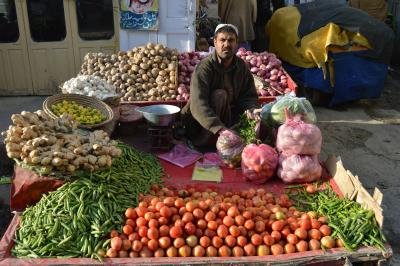
According to the report, there is a continuous shortage of several nutritious food groups, especially fruits, vegetables, pulses, roots and tubers, in Pakistan. The vegetable supply gap in Pakistan increased from 10.9 million to 17.8 million tonnes in 2010 to 13 million to 21.6 million tonnes in 2023. During the same period, the fruit supply gap rose from 1.9 million to 10.3 million tonnes to 3.9 million to 14.3 million tonnes. Meanwhile, milk, milk products, meat and eggs showed improvement.
In order to address imbalance, the FAO urged Pakistan to take coordinated fiscal and regulatory measures to realign agricultural production and trade priorities, improve food distribution, reduce post-harvest losses and food waste, and strengthen demand for healthy foods, Dawn reported.
Earlier this month, Pakistan was ranked second-worst in South Asia on the Global Hunger Index (GHI) 2026 with a score of 25.5, trailing only Afghanistan, showcasing the country’s deteriorating food insecurity and malnutrition challenges, local media reported.
The report published on the GHI website stated, “With a 2026 Global Hunger Index score of 25.5, Pakistan has a serious level of hunger,” Pakistan’s Geo News reported.
Pakistan was only behind Afghanistan, which had a score of 28.6 on the GHI. Pakistan was placed at the 106th position out of 122 countries globally on the GHI. Pakistan’s score dropped from 36.2 in 2002 to 25.5 in 2026, showing some improvement, as per the report. The GHI score of Pakistan is based on four components: child stunting, undernourishment, child wasting and child mortality.
–IANS
akl/as