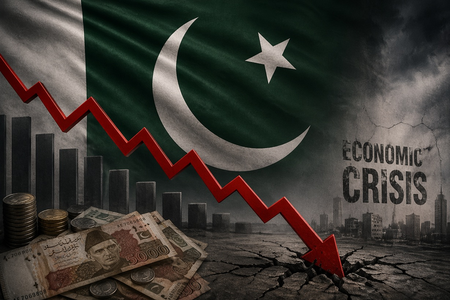
New Delhi, May 8 (IANS) Pakistan has entered into a difficult phase of economic management as petrol and high‑speed diesel near Rs 400 a litre, compounding pressures on households and the government, a report has said.
Pakistan-based The News International said in the report that State Bank of Pakistan’s policy rate hike to 11.5 per cent adds strain on borrowers.
“While citizens are bearing the brunt of inflation, the government is risking its political capital by making unpopular decisions,” it said.
The neighbouring nation’s central bank rate hike aimed to rein in inflation that surged to 10.9 per cent year‑on‑year in April from 7.3 per cent in March.
The country’s heavy exposure to the Gulf economy — through energy imports and remittances from workers in the region — leaves it highly vulnerable to fallout from the Middle East conflict, the report added.
“Besides expensive energy shipments, a slowdown in Gulf construction, tighter regional financial conditions or delayed hiring due to the ongoing war can hit Pakistan through workers’ income as well as capital flows,” it said.
The report cited IMF has estimated that a 10 per cent average rise in oil prices typically trims GDP by about 0.5 percentage points and lifts inflation by roughly 1 percentage point for the average MENAP (Middle East, North Africa, Afghanistan, and Pakistan) oil‑importer.
However, for Pakistan, such a shock would worsen the current‑account balance by about 0.3 percentage points of GDP and the fiscal balance by about 0.1 percentage points.
Based on Pakistan’s nominal GDP in FY25 of about Rs 114.7 trillion, analysts estimated that a sustained oil price near $100 per barrel could translate into a full‑year stress of around Rs 1.38 trillion on its current account and a fiscal hit of about Rs 459 billion, with much of the burden likely to spill into FY27 if prices stay elevated.
The Middle East conflict has pushed an already fragile inflation outlook back into more dangerous territory.
“The closure of the Strait of Hormuz and the Iran war have caused the largest oil-supply disruption on record, measured by daily output lost. Peak losses have exceeded 12 million barrels per day, equal to about 11.5 per cent of global oil demand,” the report said.
While previous earlier oil shocks were centred on crude, the current disruption has impacted crude, natural gas, refined fuels and fertiliser imports, the report noted.
—IANS
aar/ag