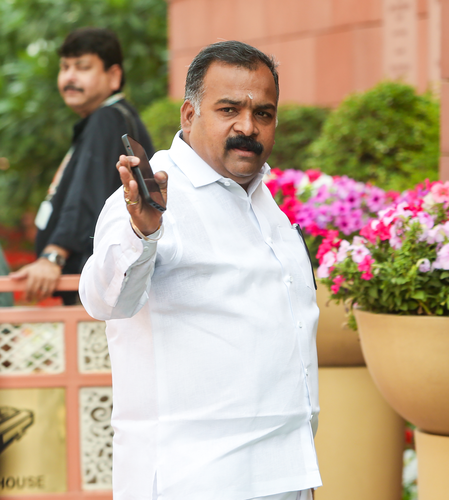
Warning against repeated interference in issues linked to Tamil identity, Tagore said the people of Tamil Nadu would respond firmly to any attempt to undermine their cultural sentiments.
–IANS
aal/dpb

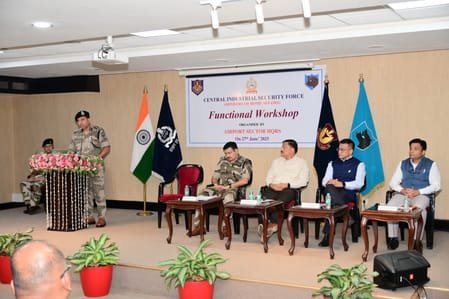
New Delhi, June 28 (IANS) In a major step toward enhancing airport security and improving passenger experience, the Central Industrial Security Force (CISF) hosted a high-level workshop that brought together all key stakeholders in India’s civil aviation ecosystem.
The “Functional Workshop of Airport Sector,” held at the CISF Airport Sector Headquarters on Friday, saw participation from top CISF officials, security heads of 69 airports, and senior representatives from the Ministry of Civil Aviation (MoCA), Directorate General of Civil Aviation (DGCA), Bureau of Civil Aviation Security (BCAS), Airports Authority of India (AAI), Delhi Police, Bureau of Immigration (BOI), Special Protection Group (SPG), National Security Guard (NSG), Delhi International Airport Limited (DIAL), as well as major airlines such as Air India Express and IndiGo.
The workshop focused on making airport security not only more robust but also smarter and more passenger-centric. Here are the key takeaways and how they will benefit different categories of air travellers.
Security checks are set to become more seamless. Discussions focused on integrating biometric entry passes with facial recognition, closed-circuit television (CCTV) systems, Automatic Number Plate Recognition (ANPR), and FASTag integration for vehicles. These measures aim to speed up airport entry and reduce wait times at checkpoints. Digitized Standard Operating Procedures (SOPs) will ensure quicker, more effective responses to any security concerns.
A major focus was placed on “training synergy” among all airport stakeholders. Unified training for airport personnel — from CISF to airline staff — will standardize procedures and create a smoother, more consistent experience for passengers. Plans to set up more Aviation Security Training Institutes (ASTIs) in tier-2 and tier-3 cities will also prepare for rising passenger traffic while maintaining uniform security standards nationwide.
VIP security protocols are being upgraded with an emphasis on layered protection, insider threat mitigation, and advanced anti-drone technologies. These enhancements aim to ensure high-profile individuals travel safely, with minimal disruption to general airport operations.
The workshop also reviewed the Passenger Grievance Redressal Mechanism, with a focus on “balancing customer expectations without compromising security.” Stakeholders agreed on the need for a prompt, humane, and proactive approach to handling complaints. Platforms like AirSewa will be leveraged for real-time feedback and faster resolution.
A key theme was the integration of artificial intelligence (AI) in threat analysis — using predictive analytics to anticipate risks before they materialize. The goal is “mindful use of technology,” resulting in more efficient security checks without compromising safety.
Praveer Ranjan, Special Director General, CISF Airport Sector, called the workshop “timely,” citing evolving global challenges in aviation security. He stressed the importance of continuous knowledge-sharing among agencies.
Vijay Prakash, IG, CISF Airport Sector-I, emphasized the need for “seamless coordination, intelligence-led interventions, and technological integration” to anticipate and manage threats effectively.
DGCA’s Director General, Faiz Ahmed Kidwai, called for deeper collaboration among aviation regulators, operators, and security agencies to create a safe and passenger-friendly ecosystem.
In his concluding remarks, Jose Mohan, IG, CISF Airport Sector-II, stated, “Standardization in aviation security can only be achieved through a shared commitment to innovation, collaboration, and continuous improvement. This workshop is not the conclusion, but the beginning of a coordinated push toward smarter infrastructure, enhanced cooperation, and a more secure and seamless passenger experience.”
–IANS
skp/


New Delhi, Feb 1 (IANS) Union Finance Minister Nirmala Sitharaman, presenting the eight consecutive Budget of the NDA government, shared the blueprint of a ‘Viksit Bharat’ and made key announcements, centering primarily on four key segments — women, youth, farmers and the poor.
The Finance Minister announced implementation of schemes to facilitate and scale up toy manufacturing, thus giving an impetus to the ‘Make in India’ campaign.
She also announced the setting up of a toy manufacturing ecosystem and clusters for creating skilled labour.
FM Sitharaman highlighted that this is the budget to meet the aspirations of the GYAN (Garib, Yuva, Annadata and Nari shakti) the poor, farmers, women and the youth.
Underlining the government’s focus on empowering the marginalised, she announced a new scheme for 5 lakh women, SCs, STs, where first-time entrepreneurs will be given loans up to Rs 2 crore.
She announced social security for 1 crore gig workers and also informed that ID cards would be issued to gig workers to avail government services.
For the agriculture sector, she announced measures, aimed at benefitting 1.75 crore farmers in the country
“Motivated by the success of the Aspirational Districts Programme, the Centre in collaboration with state governments, will launch the Prime Minister Krishi Yojana to enhance agricultural development,” said FM Sitharaman.
Besides a slew of announcements, the Finance Minister also disclosed transformative reforms across 6 domains, which will augment the country’s growth potential and global competitiveness. The domains include: Taxation, power sector, urban development, mining, financial sector and regulatory reforms.
The Budget Session of Parliament, which commenced on Friday, will be conducted in two phases. The first started on January 31 and will conclude on February 13, while the second phase will begin on March 10 and end on April 4.
–IANS
mr/rad

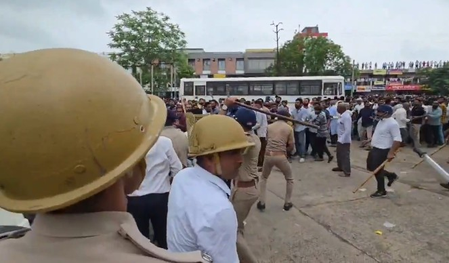
Himmatnagar, July 15 (IANS) At least 74 people, including a former Congress MLA, have been booked in connection with the violence during the protest demanding a hike in milk procurement price in Gujarat’s Sabarkantha district.
Sabar Dairy Board Director and former Bayad MLA Jashubhai Patel was among those booked.
The agitation was sparked by discontent over the annual revision of milk prices based on fat content.
Protesters, reportedly incited through social media posts, converged on Sabar Dairy around 10 a.m., forcing their way through police barricades.
Witnesses say the crowd, armed with sticks, iron rods, and stones, chanted slogans and demanded transparency in profit distribution by the dairy’s leadership. What began as a demonstration escalated rapidly when the mob pelted stones, damaged public property, and blocked the national highway using stones and tree branches.
In response, police fired nearly 70 rounds of tear gas to disperse the crowd. At least one officer, Head Constable Jignesh Kumar Sureshbhai, was pulled into the mob and beaten.
According to the FIR filed at the Himmatnagar A-Division Police Station, Jashubhai Patel and Idar taluka’s Dharmendrasinh Jetawat allegedly used provocative messages on social media to mobilise protesters.
This comes despite Sabar Dairy disbursing retention payments to farmers on July 11, a move the accused reportedly criticised as arbitrary and insufficient.
The violent gathering caused significant damage to the dairy’s infrastructure, including the main gate, fencing, and government vehicles stationed at the site.
Authorities have invoked serious legal sections in the case and launched an investigation to trace all those involved. Identification efforts are ongoing, and arrests are expected in the coming days.
Established in 1964, Sabar Dairy, officially the Sabarkantha District Cooperative Milk Producers’ Union, today ranks among Gujarat’s largest milk cooperatives.
It boasts a milk processing capacity of approximately 750,000 litres per day from procurement across more than 1,700 villages. As part of the Amul/GCMMF network, the union logged an impressive turnover of Rs 8,939 crore (around $1.1 billion) in the 2023–24 financial year, cementing its position in the billion‑dollar dairy club alongside other major Gujarat cooperatives.
–IANS
janvi/svn