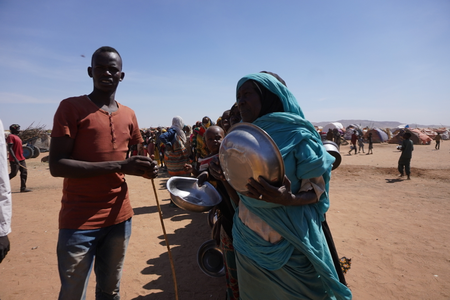
Washington, Oct 27 (IANS) The United States, Canada and more than two dozen international partners have warned that Sudan faces a growing risk of famine, with nearly 20 million people struggling to obtain enough food, and demanded that the country’s warring parties immediately remove restrictions preventing humanitarian assistance from reaching civilians.
In a joint statement circulated by the US State Department on Monday, the governments said 19.5 million Sudanese, representing 41 per cent of the population, were experiencing high levels of acute food insecurity. Of these, five million were facing emergency conditions.
The warning, originally issued on October 23, was endorsed by European governments, Australia, Canada, the United States, Britain and the European Commission.
The signatories cautioned that the humanitarian situation could deteriorate sharply in the coming months unless international assistance reaches vulnerable communities.
“There is no time to lose to save lives and prevent famine,” the joint statement said.
The governments warned that the number of children suffering from severe acute malnutrition could exceed the projected 825,000 if conditions continued to deteriorate.
They also cautioned that the number of areas facing serious food insecurity, initially assessed at 14, could double.
The figures were drawn from the international food security assessments cited by the signatories.
The statement identified the continuing armed conflict as the principal cause of Sudan’s hunger crisis.
Fighting has displaced millions, destroyed essential infrastructure and disrupted healthcare, agricultural production, food distribution networks and local markets.
The governments said the situation was being aggravated by restrictions on humanitarian assistance and adverse weather conditions.
They cited the effects of El Niño, including reduced rainfall and worsening drought across more than half the country.
The international partners called on the parties to Sudan’s conflict to allow humanitarian organisations to operate safely across front lines and international borders.
They specifically demanded air access into Darfur, where insecurity and logistical restrictions have complicated relief operations.
Such access, the statement said, would allow aid organisations to deploy emergency supplies more quickly and evacuate humanitarian personnel requiring medical attention.
The governments also urged the removal of administrative restrictions that delay humanitarian operations.
These include lengthy visa procedures, customs clearance delays, additional travel permits and taxation requirements affecting aid organisations.
They called for longer visa validity periods and simplified travel authorisations to enable humanitarian workers to remain operational.
The signatories also urged armed groups to avoid attacks on civilian infrastructure, particularly agricultural facilities and food production systems.
The governments called for an urgent increase in international humanitarian funding to prevent further deterioration.
They urged development banks and financial institutions to adjust their programmes to address Sudan’s worsening food security situation.
Particular emphasis was placed on supporting the winter cropping season, which could help restore agricultural production and reduce dependence on emergency food assistance.
The statement also called for strengthening locally led humanitarian responses.
The governments said the parties to the conflict bore primary responsibility for protecting civilians and ensuring that assistance reached people in need.
Sudan has been engulfed in fighting since April 2023.
The fighting has devastated parts of the country, displaced millions of civilians and severely weakened public services. Darfur has been among the regions hardest hit by violence, displacement and restrictions on humanitarian operations.
–IANS
lkj/rs